








For Jeff Smart, a long-time Nocpix user and active member of the UK hunting community, innovation is about more than introducing new technology. It is about listening to the people who use it, understanding their real-world challenges, and continuously improving the experience. From sharing detailed feedback on the ACE to testing new devices and helping fellow users, Jeff has become a valued contributor to the Nocpix journey.
In this interview, Jeff shares his experiences with Nocpix, his perspective on the importance of user involvement in product development, and why responsive service and reliable support matter just as much as innovation itself.
Q1: Do you remember roughly when you started using Nocpix products? Which models are they, and how long have you been using thermal imaging products?
I’ve been involved in evaluating thermal imaging products for around ten years. I initially became involved as part of a regional demonstration team, which gave me the opportunity to use and evaluate a wide range of equipment.
From there, I went on to purchase and use a number of different thermal and digital devices from various manufacturers. I’ve experienced both very good and very poor products over the years, so I’ve developed a good understanding of what works in the field and, perhaps just as importantly, what doesn’t.
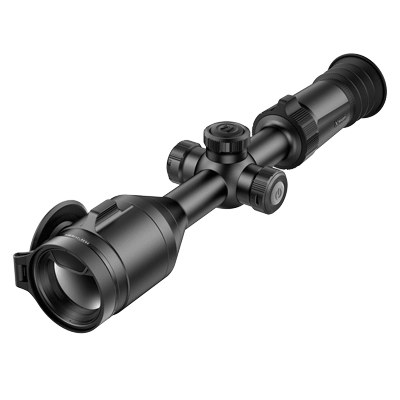
I purchased my first Nocpix device, the ACE H50R, around three years ago. I was immediately blown away by the clarity of the image and the features that Nocpix had incorporated into the device. Having already used so many different products, I could appreciate very quickly what Nocpix had achieved.
Q2: We remember you gave us detailed feedback on the ACE ballistic calculation display — including the size and position of the aiming marker and how long it stays on screen. Then we took your advice and made optimizations. Was there a particular real-world situation that made you notice these details? How did they affect the shooting experience?
The issue became apparent through actual field use. The ballistic information itself was useful, but the way it was presented on the screen wasn’t ideal. The information was positioned and displayed in a way that made it too prominent and, at times, it almost dominated the screen.
When you’re using a thermal device, the image and aiming point need to remain the priority. Additional information should be useful without distracting from what you’re actually looking at.
I therefore started looking at the finer details of the display — not just whether the ballistic information was there, but its size, position, style, and how long the aiming marker remained visible.
These might seem like small things when looking at a specification sheet, but in real-world use they can make a significant difference.
What impressed me was that Nocpix listened to the feedback and acted on it. That demonstrated to me that feedback from someone actually using the equipment in the field could have a direct influence on the development of the product.
Q3: What keeps you motivated to spend your time and continue sharing your thoughts and feedback with us?
The main reason is simple: Nocpix listens to its end users and, importantly, it acts on what they are told.
I’ve used products from a number of different manufacturers over the years. Although some are happy to receive feedback, I haven’t experienced the same level of engagement I’ve had with Nocpix.
There’s little point in spending time testing equipment and providing detailed feedback if it simply disappears into a system and nothing changes.
With Nocpix, I’ve seen that constructive feedback can actually lead to changes and improvements. That gives me the motivation to continue putting the time in.
I’m not interested in simply telling a manufacturer that everything is good. If I find something that could be improved, I’ll explain what the problem is, why it matters in the field and, where possible, what I think could make it better.
For me, it’s a two-way process. I’m able to share what I experience as an end user, and Nocpix is prepared to listen and use that information to improve its products.
Q4: You’re currently testing a new Nocpix device before launch. What does your testing process usually look like?
My testing starts with simply getting to know the device. I go through all of the functions and features and see how intuitive they are to use.
I look at things that can easily be overlooked on a specification sheet: how the device feels in my hand, whether the controls are in the right places, whether functions are easy to access and whether I can operate everything naturally without having to think about it.
I then use the device extensively in as many different conditions and environments as possible. I deliberately try to stretch the device and find out how it performs outside of ideal conditions.
Throughout the process I make notes about what works well and what could be improved.
Most importantly, I try to use the device exactly as a normal end user would. It isn’t kept in a case and brought out for a five-minute demonstration. It gets put in bags, carried around in vehicles, put down, packed away and handled repeatedly. It gets used, moved around and passed about just as equipment would be during normal use.
The device gets treated as a user would actually treat it.
That allows me to assess not only the headline performance, but also the small things that affect the experience of using a product day after day.
Q5: What kinds of things do you deliberately look for that might be missed in a lab or specification sheet?
One of the biggest things I look for is how a product performs after it has been used properly and repeatedly in the real world.
I think this is something the industry as a whole needs to improve.
Quite often a new product is tested by influencers or reviewers who may produce a relatively short review or video before the product is launched. In my opinion, that isn’t always enough time to uncover the problems that become apparent after weeks or months of genuine use.
The manufacturer can then believe the product is ready, it gets launched, and the customers who buy it end up becoming the real-world testers.
I’ve experienced this myself. You can end up with firmware updates, fixes and, in some cases, recalls after customers have already spent a considerable amount of money on the product.
I’ve been a guinea pig before. I don’t mind doing it if the manufacturer genuinely wants to listen and act on what you find, but I don’t think customers should have to pay a lot of money to become product testers.
That’s why I believe manufacturers should put more emphasis on proper end-user field testing before launch.
Give products to people who are going to use them properly, in different environments and over a meaningful period of time, and encourage them to find the faults rather than simply asking whether they like the product.
I think Nocpix’s approach with its recent new product is a positive step. By putting the device into the hands of genuine users before launch, hopefully the bugs and shortcomings can be identified and addressed before the wider customer base gets the product.
For me, there’s a big difference between a product being demonstrated and a product actually being tested.
Q6: You’ve said that putting products directly into users’ hands before launch is important. What can experienced users discover in the field that engineers or lab testing sometimes can’t?
Engineers and laboratory testing obviously have an important role, but there are things you only discover when a device is used properly in the real world over an extended period.
An experienced end user will pick up on the small things that don’t necessarily show up during controlled testing. How the device feels in your hand, whether the controls are naturally positioned, whether you can find a function quickly when you need it, how intuitive the menus are and whether something that looks good on paper actually works well when you’re using it.
Then there are environmental factors. You can test a device in controlled conditions, but real-world use means different temperatures, weather conditions, backgrounds and environments, as well as the simple wear and tear that comes from actually carrying and using the equipment.
Most importantly, an experienced user can identify how an issue affects the actual user experience. It isn’t just about finding a fault; it’s understanding whether that fault or design decision is something that will frustrate the end user or affect how they use the product.
That’s why I think manufacturers should get products into the hands of genuine users before launch.
Find the problems before the customer does.
Q7: Looking back from your first ACE H50R to the Nocpix products you use today, what changes have you noticed in Nocpix? And is there anything you feel has never changed? What change or improvement has impressed you most?
I bought my first Nocpix, the ACE H50R, around three years ago. I had already been using and evaluating thermal equipment for around ten years, so I had plenty of experience to compare it with.
I was immediately impressed by the clarity of the image and the features Nocpix had incorporated into the device.
I also use a Nocpix LUMI H35R thermal spotter, which is a great little device. I’ve used it extensively and it has never missed a beat. For me, that is just as important as having the latest technology and features. Reliability matters.
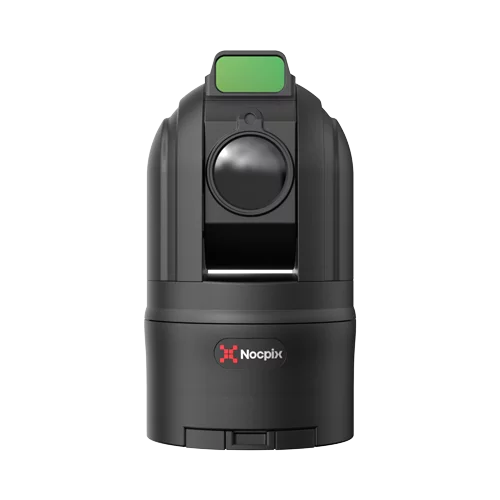
I’ve also recently tested a new Nocpix multispectral device, so I’ve been able to see how Nocpix’s technology and capabilities continue to develop.
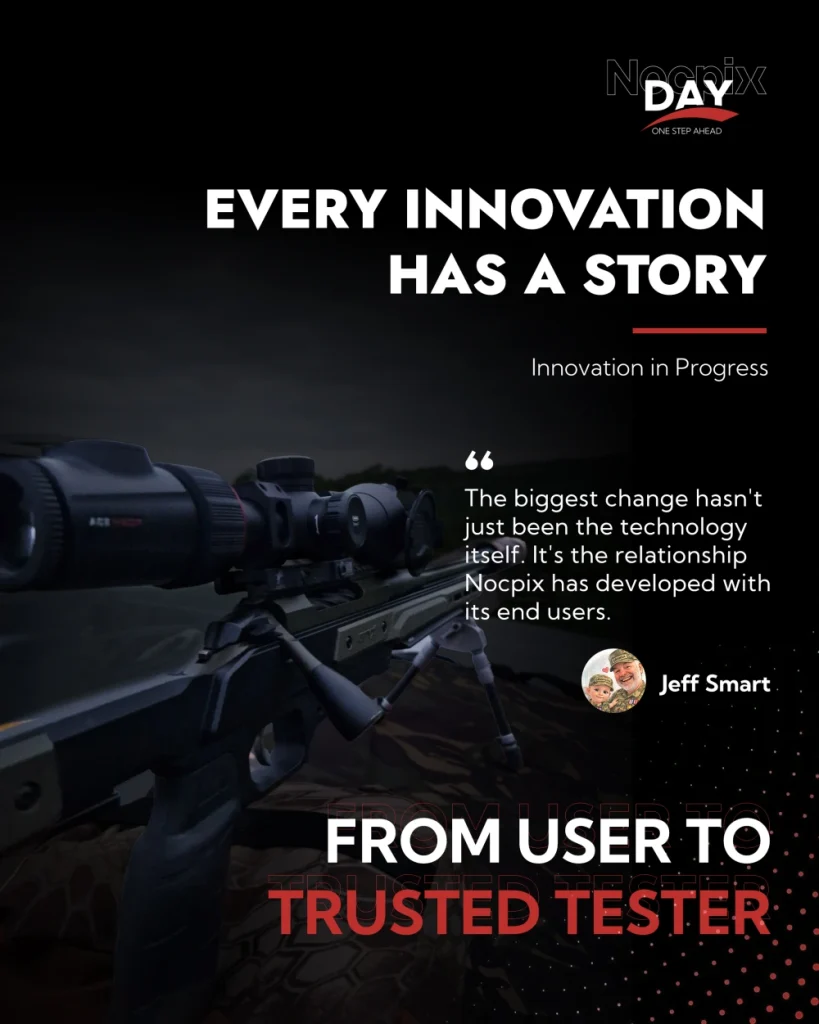
But for me, the biggest change hasn’t just been the technology itself. It’s the relationship Nocpix has developed with its end users.
I’ve always believed that you shouldn’t judge a manufacturer simply by how good its product is when everything is working perfectly.
I judge a manufacturer by how they treat you when the product isn’t working.
After-sales service is absolutely key to me. I’ve had experience with other manufacturers where returning defective equipment became unnecessarily complicated, with customers being asked to go through lengthy checks even when the fault was obvious. That can quickly change your opinion of a brand.
What has impressed me about Nocpix is that they listen to their users. When I’ve identified something that I believe could be improved, I’ve been able to give that feedback and, importantly, I’ve seen Nocpix act on it.
Technology will always continue to change, and products will inevitably have faults from time to time. What matters to me is what a manufacturer does when something goes wrong and whether they genuinely listen to the people using their products.
The LUMI H35R is a good example of the other side of that equation: a product that simply works and continues to do so.
That’s something I feel Nocpix has consistently understood, and it’s probably the biggest reason I’ve continued to use and test Nocpix products.
For me, that’s what separates Nocpix from many of the other manufacturers I’ve dealt with.
Thanks again for giving me the opportunity to share my experiences. I’m happy to continue providing honest feedback because I believe that’s ultimately how products get better.
Innovation is not just about what we create, but how we listen, respond, and improve.