





An April roebuck stalk on mixed English farmland has little in common with an October red-deer day on a Scottish hill. The species, season and terrain affect how much cover you face, how far you need to scan and how long a deer may stay visible.
In the UK, deer hunting is more commonly called deer stalking. Visiting hunters usually need to know which deer are on the ground, whether they are in season and what the ground will look like when the trip takes place.
Thermal imaging plays a different role in each setting. Woodland stalking often involves short scans along rides and field edges. Open Highland ground can mean watching much larger areas for longer periods.
When Can You Stalk Deer in the UK?
Deer seasons differ between England and Wales, Scotland and Northern Ireland. The dates below show the normal statutory open periods rather than control carried out under a specific licence or authorisation.
Nocpix legal note: This guide is for general information and is not legal advice. Check current legislation, permissions and any required licence or authorisation before stalking; thermal equipment does not itself authorise night shooting or other restricted activity.
England and Wales
| Deer | Normal open season | Statutory close season |
| Red, fallow and sika males | 1 Aug–30 Apr | 1 May–31 Jul |
| Red, fallow and sika females | 1 Nov–31 Mar | 1 Apr–31 Oct |
| Roe buck | 1 Apr–31 Oct | 1 Nov–31 Mar |
| Roe doe | 1 Nov–31 Mar | 1 Apr–31 Oct |
| Chinese water deer, both sexes | 1 Nov–31 Mar | 1 Apr–31 Oct |
| Muntjac, both sexes | Year-round | No statutory close season |
These dates follow the Deer Act 1991 as amended. The current GOV.UK firearms guidance also lists the applicable close seasons and firearm requirements.
Night shooting is covered separately. The Act normally prohibits taking or intentionally killing deer between one hour after sunset and one hour before sunrise, although licences can allow it in defined circumstances.
Scotland
| Deer | Normal open season | Statutory close season |
| Male deer | Year-round | No statutory close season |
| Red, fallow and sika females | 21 Oct–15 Feb | 16 Feb–20 Oct |
| Roe doe | 21 Oct–31 Mar | 1 Apr–20 Oct |
Scotland removed the statutory close season for male deer on 21 October 2023. Female close seasons remain.
Night shooting and some out-of-season control still require authorisation. NatureScot also allows thermal and other special sighting devices under an appropriate night-shooting authorisation. Check the current NatureScot deer authorisation guidance before planning either activity.
Northern Ireland
| Deer | Normal open season | Statutory close season |
| Red, fallow and sika males | 1 Aug–30 Apr | 1 May–31 Jul |
| Red, fallow and sika females | 1 Nov–31 Mar | 1 Apr–31 Oct |
Northern Ireland has separate deer legislation covering red, fallow and sika. The relevant framework is the Wildlife (Northern Ireland) Order 1985 as amended.
Which Deer Can You Stalk in the UK?
Six wild deer species are established in Great Britain. Which ones matter to a stalk depends heavily on where you are going.
| Deer | Where it is most relevant | What matters when planning the stalk |
| Red deer | Scotland and local populations in England and Wales | Open hill or large woodland are common settings. Autumn rutting activity, longer viewing distances and recovery can shape the day. |
| Roe deer | Widespread across Great Britain | Common around woodland edges, scrub, hedges and farmland. Spring vegetation and the summer rut can change visibility within weeks. |
| Fallow deer | Especially England and Wales; more local elsewhere | Often move between woodland and open ground. Larger groups and autumn rutting activity become more relevant later in the year. |
| Sika deer | Scotland and local areas of England, Wales and Northern Ireland | Often associated with conifer woodland, heath and moor. Red and sika may use the same wider area in some locations. |
| Muntjac | Mainly southern and central England and parts of Wales | Small and often found in dense woodland or scrub. No statutory close season in England and Wales. |
| Chinese water deer | Mainly Bedfordshire, Cambridgeshire and Norfolk | A localised quarry with a Nov–Mar open season. Reed beds, wet grassland and Fenland fields are typical ground. |
The British Deer Society species guidance provides a broader view of distribution and habitat.
A visiting hunter still needs local information from the estate, farm, forestry block or deer manager before the trip.
A Highland stalk may revolve almost entirely around red deer. Mixed woodland in southern England can hold roe, fallow and muntjac on the same permission. In parts of Bedfordshire and Cambridgeshire, Chinese water deer may be the reason for the visit.
How Does the Stalking Year Change What You See?
The same ground can look very different between April and December. Vegetation closes views through spring and summer, harvesting opens fields again in autumn, and winter removes leaves while cutting the available daylight.
Spring Roe Stalking Before the Cover Closes
The roe buck season opens on 1 April in England and Wales while much of the countryside still has its winter visibility.
Woodland rides may remain open. Hedgerows are thinner, grass is lower and a buck moving between cover and a field margin may stay visible for longer.
Fresh leaves, nettles, bramble and rising grass narrow those views through April and May. A ride that gave a clean view early in the season may show only a head, back or a few seconds of movement several weeks later.
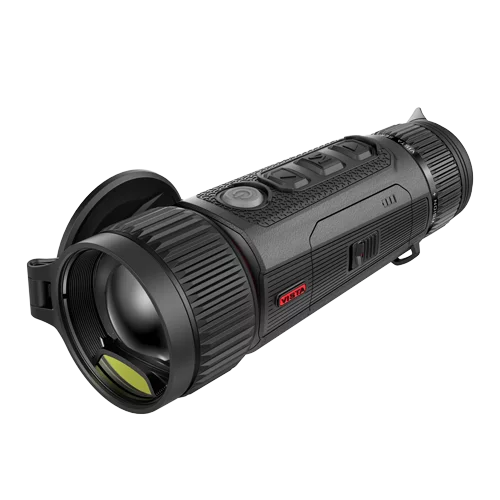
Shaded rides and woodland edges can also be difficult to search with normal glass. A compact thermal imaging monocular can quickly show whether a deer is standing just inside the vegetation before the stalker spends longer studying that area.
Thermal can tell you that an animal is there before it gives you enough information to identify it. The Nocpix guide to thermal detection and identification explains why finding a heat source and confirming the animal are separate steps.
Summer Cover and the Roe Rut
By June, long grass, crops and bramble can turn familiar ground into a series of short viewing gaps.
Freshly cut rides, gateways and narrow grass tracks become useful because they are among the few places where a deer may remain visible long enough to watch properly.
Warm weather can keep deer in shade or thicker cover through more of the day. A wood may look empty while animals are lying only a short distance behind the visible edge.
Thermal is useful here because it can check dense or shaded cover without requiring the animal to step fully into the open.
The roe rut usually falls from mid-July into mid-August, although timing varies with location and conditions.
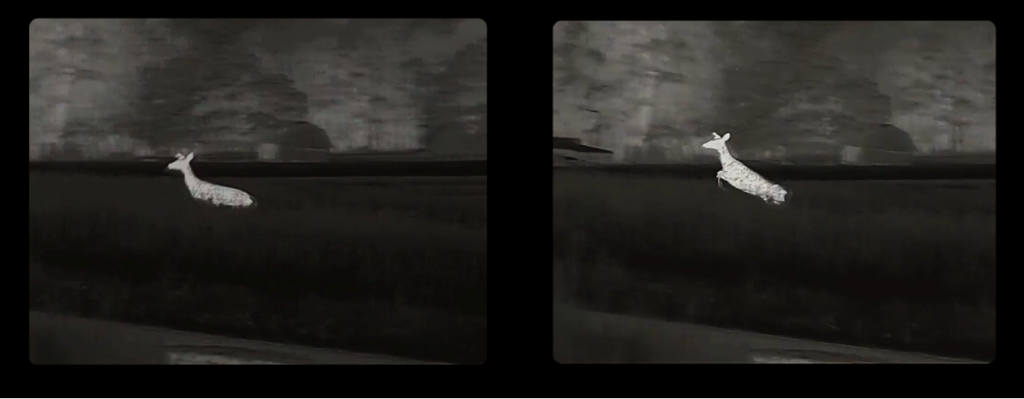
Bucks become more territorial and may move more often across rides, field margins and open patches. A buck can cross one opening in seconds and disappear into the next block of cover.
Its heat signature can still show which direction it took, giving the stalker a better idea of which gap to watch next.
Autumn Red, Fallow and Sika Stalking
August opens the male season for red, fallow and sika in England, Wales and Northern Ireland. Rutting activity becomes more noticeable through September and October.
The timing differs between species and locations. Red, fallow and sika do not follow one fixed rut calendar, and local weather, habitat and population density can shift the pattern.
Crops come off and leaves begin to thin. Views into woodland gradually improve, while cooler weather makes longer periods of glassing and thermal scanning more comfortable than they were in summer.
Mixed estates may hold several deer species across the same wider area. A thermal scan can show animals holding along a dark woodland edge or crossing open ground around first and last light.
Daylight glass remains useful for species, sex and antler detail.
Rutting deer may also shift position during the same morning or evening. A field edge that was empty on the first scan can hold animals later, so returning to the same ground can be worthwhile.
Winter Stalking and Shorter Days
Winter improves some sightlines and reduces the amount of daylight available to use them.
Leaves fall, crops disappear and woodland that felt closed in June may offer much longer views through the trees.
An animal found late in the afternoon can leave little time for recovery before dark. Mud, wet tracks and standing water can also slow the route back.
Winter is the main open period for many female deer categories. Stalkers may spend longer watching groups before selecting the animal required by the management plan.
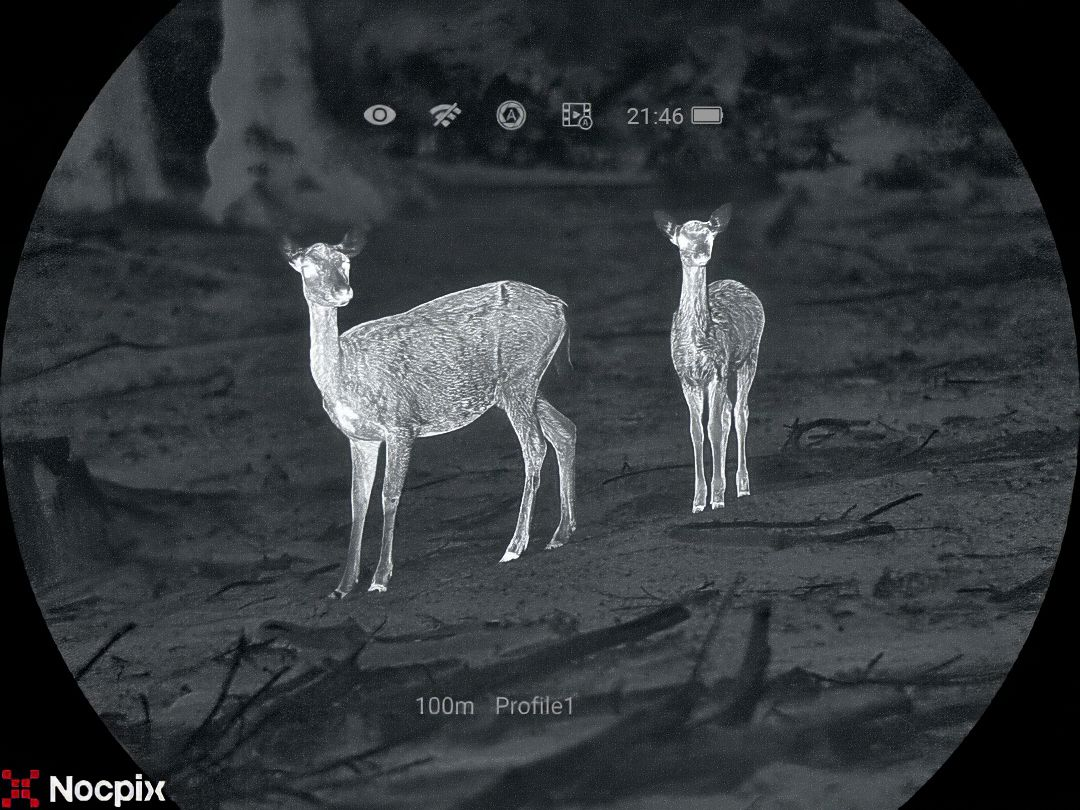
As the light drops, deer can remain obvious through thermal after coat colour and body outline become difficult to pick out with the eye.
The animal may stand out more clearly than the terrain around it. Ditches, fences, roads, livestock and buildings still need to be understood from the ground and through normal optics.
Muntjac and Chinese water deer do not fit this seasonal pattern in quite the same way. Muntjac have no statutory close season in England and Wales, while Chinese water deer are mainly a winter quarry with an open season from November through March.
How Does the Ground Change the Way You Use Thermal?
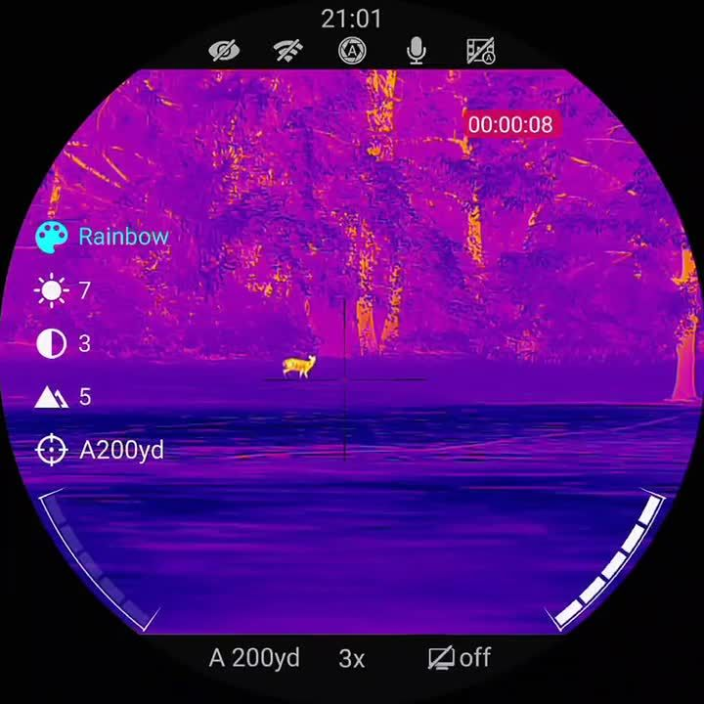
Season affects cover and deer movement. Terrain changes how long you scan, how much ground you need to cover and which thermal format is comfortable to carry and use.
Open-Hill Stalking
On open hill, finding red deer can be easier than getting close to them.
A group may stay visible across a glen while wind, water or folds in the ground leave no sensible approach. Another group can disappear behind a shoulder and reappear much farther away.
Large faces often need to be checked more than once. Rain or low cloud can reduce detail within minutes, and wind near the deer may behave differently from the wind at the first viewing point.
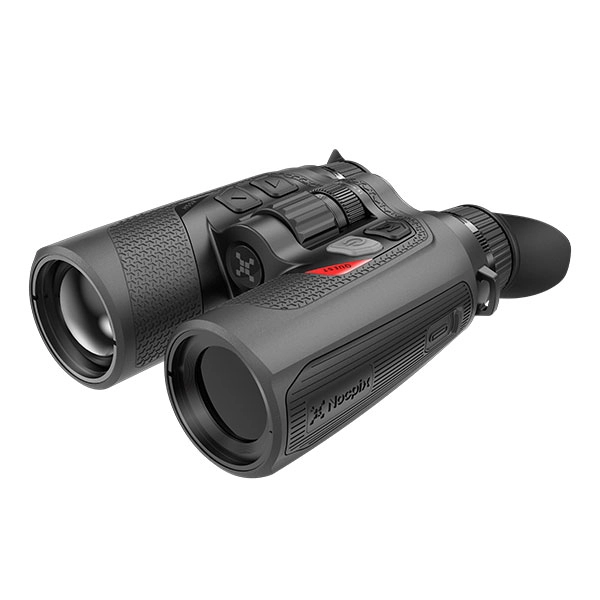
Longer scanning makes thermal imaging binoculars worth considering. Two-eye viewing is better suited to extended observation than repeatedly holding a compact monocular to one eye, while a wider field of view can keep more of the slope visible at once.
The Nocpix QUEST Series is the relevant series here. Its binocular format is designed for longer periods of observation across broad ground.
Thermal helps find deer across the landscape. Daylight glass still provides colour, antler detail and terrain information that thermal does not show in the same way.
Open hill also makes recovery part of the plan. Distance from the vehicle, remaining daylight, weather and the route off the hill matter before committing to an approach.
Woodland and Farmland Stalking
Woodland rarely gives a long, uninterrupted view.
A deer may appear for a few seconds on a ride, show only its head above vegetation or cross one gap before disappearing again.
Farmland can be similar where hedges, gateways and crops divide one field from another.
The thermal often spends as much time being carried as being looked through. Small size and quick handling therefore matter more than they do during a long scan from one position.
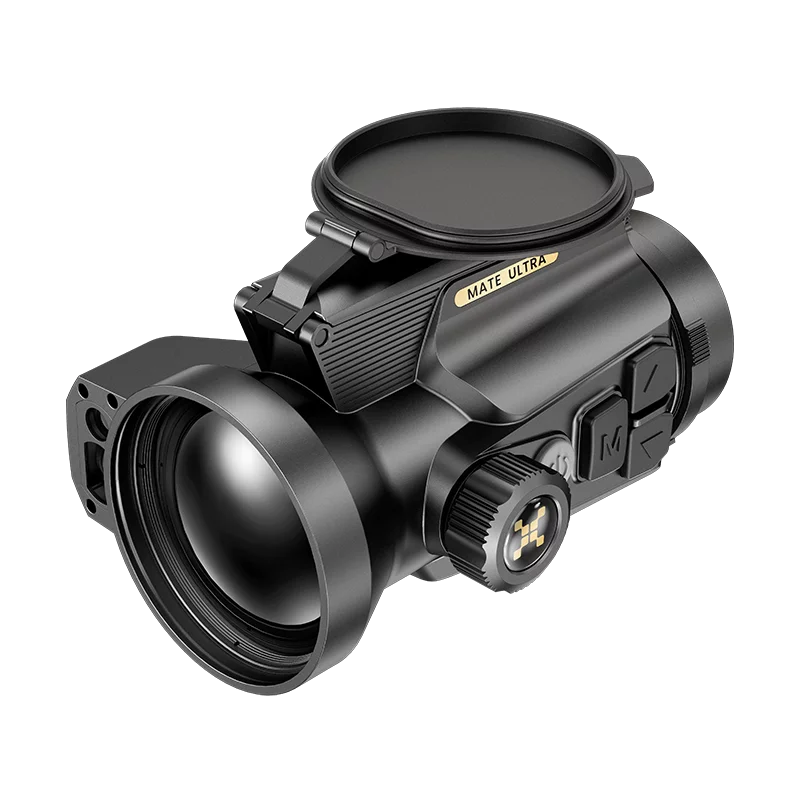
The Nocpix LUMI Series fits this type of mobile observation. A compact handheld thermal can stay accessible while moving between rides and field edges, then be put away when normal glass gives the clearer view.
Shorter viewing distances also make field of view and focus easier to notice. A wide view helps find an animal in nearby cover, while focus becomes important when one sighting is close and the next is across a field.
The Nocpix guide to thermal imaging terms for hunting explains field of view, focus, detection distance and image detail in more depth.
Which Thermal Optic Fits the Stalk?
The stalking situations above point to three different equipment roles.
| Format | Where it fits | What to compare |
| Thermal monocular | Mobile observation, woodland, farmland and frequent repositioning | Size, handling, field of view, focus and battery setup |
| Thermal binoculars | Longer observation sessions and wide open ground | Viewing comfort, field of view, weight and battery life |
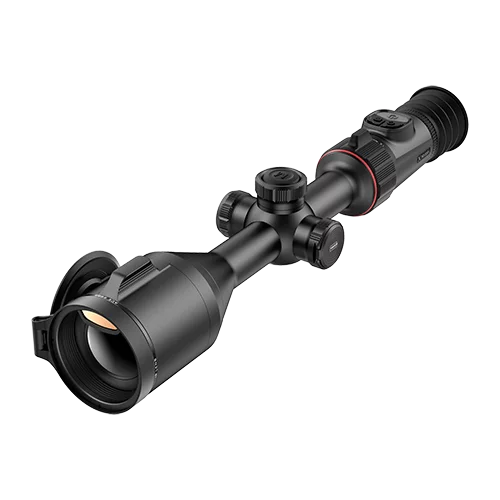
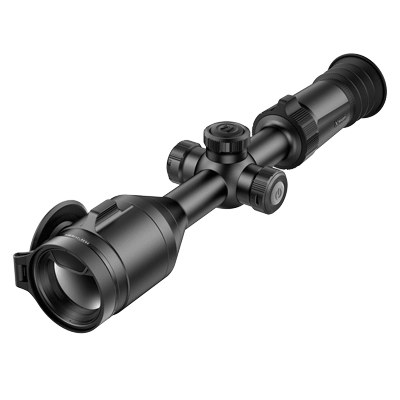
| Thermal riflescope | The shooting stage, where its use is lawful and authorised | Image detail, magnification, mounting, zero retention and legal conditions of use |
The monocular and binocular roles appear throughout the stalking situations above.
A thermal imaging riflescope has a different role because it is mounted to the firearm rather than carried as a handheld observation device. Its use should be considered only after the legal position, intended method and any required authorisation are clear.
Specifications still need to match the ground. Field of view, focus, sensor performance and detection distance do not have the same importance on a tight woodland ride as they do across a large open slope.
What Should You Check Before Setting Out?
Confirm which deer are on the permission, whether the relevant category is in season and what the landowner or deer manager expects.
Then look at the conditions you will actually meet: current cover, weather, access, likely viewing distances and the route back after a successful stalk.
Choose the thermal around those conditions rather than around one specification. A compact monocular may spend the day moving between woodland rides. Binocular thermal optics may stay in use much longer on open ground.
A thermal riflescope has a separate shooting role and only belongs where that use is lawful.