








Fresh rooting tells you hogs have used a field, but it does not tell you when they will return. Hog hunting at night starts with finding recent activity, learning the ground in daylight, and choosing somewhere you can watch clearly after dark.
At Nocpix, we develop thermal optics with input from experienced hunters. In this guide, we cover how to prepare for a night hunt and use thermal in the field—from choosing an observation point to keeping track of a sounder and checking the area around it.
Where Do Feral Hogs Move After Dark?
Feral hogs often feed and travel at night, particularly during hot weather or under human pressure. Food, water, temperature, and disturbance can all change feral hog activity patterns. Recent observations from your hunting ground are more useful than a universal “best hour.”
Start by looking for connections between food, water, and cover. A crop field beside woodland, a creek leading toward damaged pasture, or a trail between thick cover and a feeding area gives you somewhere specific to investigate.
During hot, dry periods, pay particular attention to permanent water. When food availability changes, revisit your earlier assumptions about where hogs will feed. A productive location from last month may no longer receive the same traffic.
Use trail-camera records to narrow the search. Review several recent visits rather than one photograph. Note the direction animals enter, whether they feed or simply pass through, and whether the same activity continues across different nights. Keep the camera’s date and time accurate so its records remain useful.
For example, repeated images of hogs entering the same crop corner are worth investigating. One image from several weeks ago gives you much less reason to spend the whole evening there. Compare camera records with the landowner’s latest reports and what you find during daylight scouting.
Hogs may travel in small family groups called sounders or appear alone. When several enter a field, keep watching the edge they came from rather than concentrating immediately on the first visible animal. Others may still be outside your view.
What Should You Scout Before Nightfall?
Walk the property with permission while you can still see the ground clearly. Look for several kinds of hog sign together, then check whether they connect to somewhere you can actually observe after dark.
| Sign | What to look for | What to investigate nearby |
| Rooting and crop damage | Turned soil, disturbed grass, damaged plants, or trampled crops | Cover and water connected to the damaged area |
| Tracks and trails | Rounded, cloven hoofprints and worn paths | Field entrances, creek edges, and fence crossings |
| Wallows and rubs | Muddy depressions, mud on trees or posts, and caught hair | Trails joining water, cover, and feeding areas |
Look for these signs together. Rooting near a crop corner is more useful when tracks connect it to cover or water. Do not choose the night’s position around one isolated mark.
Next, walk your intended access route. Locate gates, loose wire, ditches, livestock areas, and changes in footing. Choose recognizable landmarks for describing animal locations to a partner. A gate beside the creek is clearer than “over there on the left.”
From each possible hunting position, identify a safe backstop and the directions where shooting is off limits. A dark tree line is not proof of a safe backstop. Account for roads, buildings, neighboring land, and people beyond the visible field.
As the light fades, use a thermal monocular from a position you scouted in daylight. Compare the display with the field in front of you. Find the gate, tree line, and drainage cut you noted earlier.
Make a note of anything you can see with your eyes but cannot distinguish clearly on the display. A fence you walked beside earlier may be difficult to follow in the thermal image. Keep your daylight notes available rather than expecting the device to redraw every boundary.
Also check the practical details of the position. Can you sit or stand comfortably without moving equipment every few minutes? Can a partner reach you without entering the shooting area? Is there a usable route back to the vehicle after rain? Resolve those problems before settling in for the night.
Where Should You Set Up for Night Hog Hunting?
Choose your position around current hog activity, wind, visibility, and a safe shooting direction. The nearest place to sit is not necessarily the most useful.
Watch the wind on the approach
Hogs have a sensitive sense of smell, so check the wind before walking toward the feeding area. A downwind position generally places you where the breeze travels from the expected hog location toward you, rather than carrying your scent toward the animals.
Consider the whole approach, not just where you will sit. A position may suit the wind while the route to it takes you directly past the area hogs are using. Check current camera images when available, and do not assume the field is empty because the usual arrival time has not passed.
Recheck the wind when you reach your position. Prepare an alternative during daylight scouting so you have somewhere familiar to go when conditions change. Avoid improvising a route through unknown ground simply to keep the original plan.
Choose between waiting and moving
A fixed position makes sense when recent sightings show hogs regularly using a particular field edge, water access, or lawful feeding location. You can learn one view, settle your equipment, and avoid repeatedly changing the background behind the animals.
For a first outing on unfamiliar ground, consider watching one well-scouted location rather than trying to cover the entire property. Give yourself time to recognize the landmarks and check the surrounding ground without constantly packing up.
Moving between pre-scouted observation points can suit larger properties where activity is spread across several fields. Agree on the route before starting, including where you will stop and how you will communicate. Keep the movement between known locations rather than following every distant heat source.
For either approach, select a place where hogs can become fully visible. A feeder surrounded by tall grass or a narrow opening in dense cover may reveal movement without showing the whole animal or what is behind it. A useful place to watch does not automatically provide a suitable shot.
How Should You Use Thermal and Night Vision?
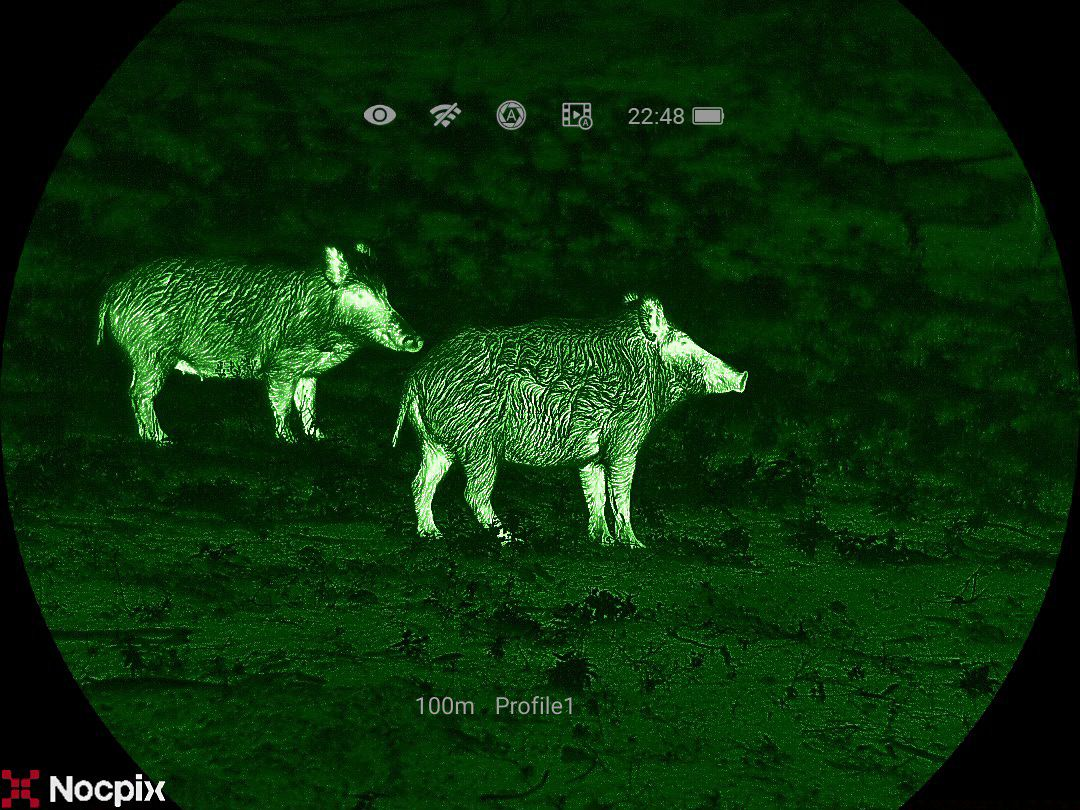
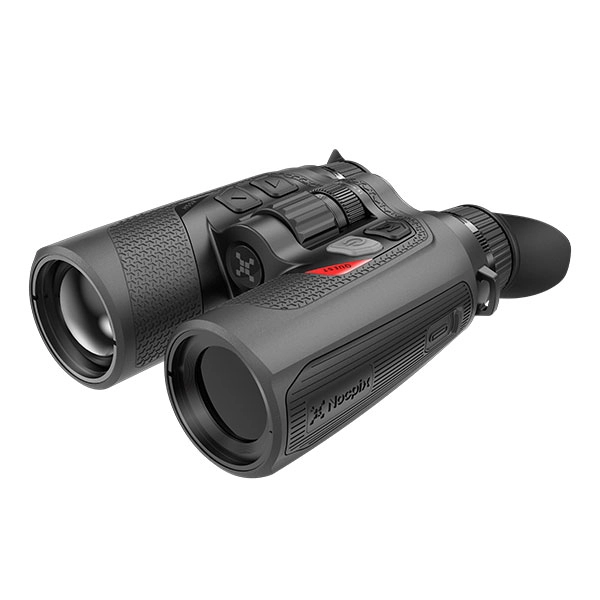
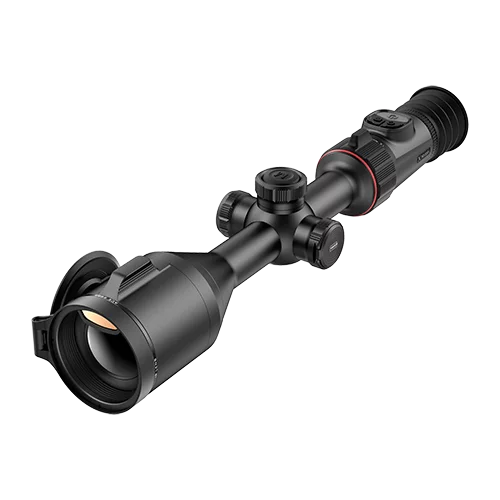
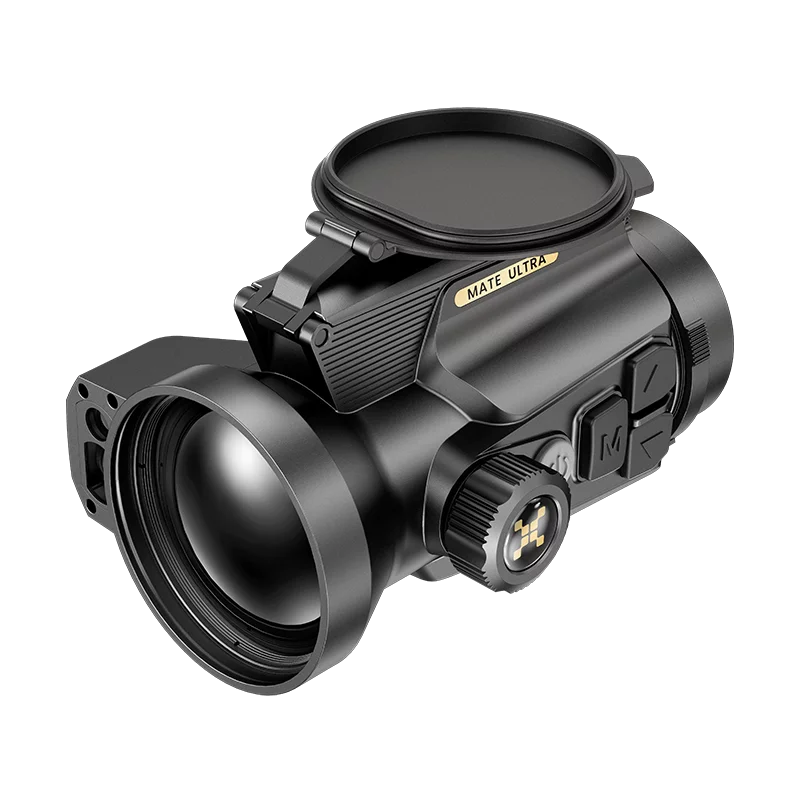
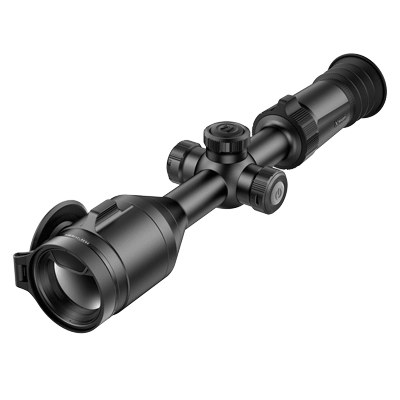
When choosing a thermal scope for hog hunting, consider your terrain and typical hunting distances.
At a safe shooting range, practice mounting the rifle, finding the target in the optic, and operating its controls after dark. Confirm the zero with the ammunition you will take hunting. Before leaving for the field, secure the handheld and its strap and pack charged spare batteries.
Keep a handheld available throughout the hunt
Use the handheld to investigate unidentified movement. Keep the rifle pointed in a safe direction while checking an unfamiliar shape, livestock, or another person’s location. A mounted optic should not become your general-purpose scanner.
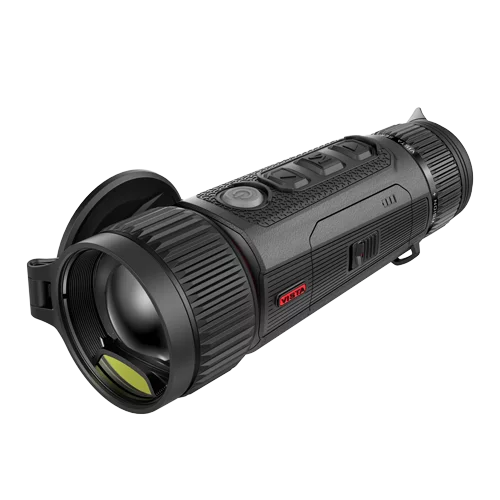
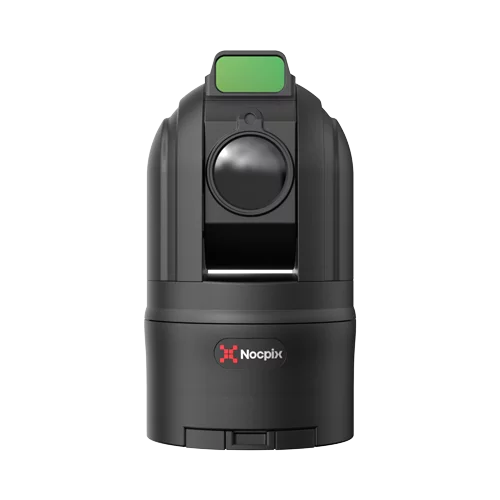
Our LUMI thermal monocular is a compact handheld option for spotting hogs at night, especially when moving between observation points. Its pocket-size body is easy to keep within reach, while quiet buttons help reduce noise when adjusting the controls.
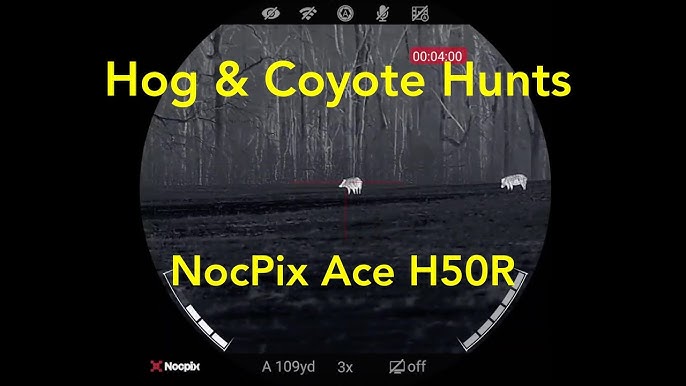
From a fixed position, watch the openings around your chosen feeding area as well as the area itself. For example, when observing a crop corner, include the adjacent woodland edge and the open ground between them. After noticing movement, pause to study it rather than immediately switching equipment.
When several hogs enter the view, continue checking the surrounding ground. Do not spend the entire observation looking at one animal while losing track of the rest.
For a mobile hunt, stop on stable ground before scanning. Lower the handheld before walking to the next pre-scouted point, and use an appropriate light to check your footing. Keep the device secured and accessible rather than packing it away after each stop.
Set the display and prepare spare power
During practice, set the display on your handheld and thermal riflescope. Try the available color palettes and brightness levels. Choose a setting you can read comfortably while still distinguishing the field edge and cover. Practice finding the focus and power controls without looking down at the device.
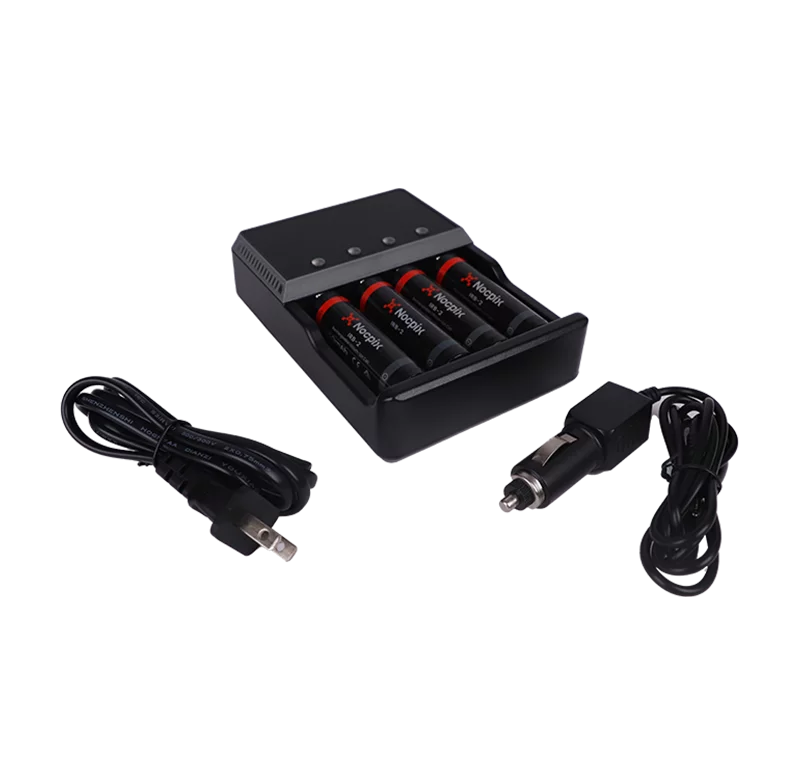
Charge the batteries before leaving and check the power arrangement for each device. LUMI uses a replaceable 18650 battery, so carry a compatible charged spare in a protective case. Practice the change at home, and keep spare power where you can reach it without emptying your bag in the dark.
Check the view through your blind and cover
You cannot use thermal through ordinary window glass. From an enclosed blind, use a suitable open observation window rather than assuming that a clear pane will work. Check this before settling your equipment into position.
Tree trunks and solid wooden obstructions also block the view. Along a brushy edge, you may see part of an animal through a gap without seeing its complete outline. Wait for an unobstructed view rather than treating a bright patch as the whole animal.
Rain and fog can reduce thermal viewing distance. When conditions worsen, reassess what you can distinguish rather than relying on how clear the field looked earlier. An animal standing out against its surroundings does not necessarily make the background easy to read.
Test digital night vision after the light has faded
A day-and-night digital scope forms its image from visible or near-infrared light rather than heat. Its nighttime view depends on the available light and any infrared illumination used.
During practice, check the night mode and any permitted IR illuminator after daylight has gone. Look at the background as well as the practice target. Confirm that you can operate the controls without searching through menus, and check the illuminator’s power supply separately when it uses its own battery.
Test from the sort of position you expect to use. Include nearby vegetation and the blind opening in your checks, rather than testing only across an unobstructed field. Note any part of the image that becomes difficult to interpret.
Do this with the equipment you will actually take hunting. A daytime demonstration or someone else’s recording is not a substitute for checking your own nighttime view.
How Do You Confirm a Hog and a Safe Shot?
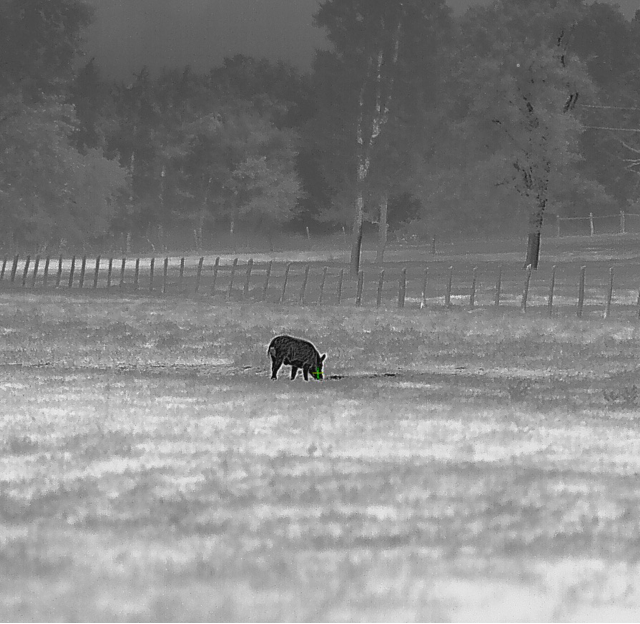
A heat source is an observation, not a confirmed target.
Wait until you can positively identify the animal. Do not rely on brightness, apparent size, or an earlier camera sighting. Never fire at movement without knowing what the animal is and what lies beyond it.
Keep track of the individual animal
When several hogs are present, describe the one you are observing using a fixed landmark and a clear position. “The hog beside the gate” is more useful to a partner than “that one.” If the animals change places, describe the position again rather than assuming you are both watching the same hog.
After switching from a handheld to a mounted optic, confirm the animal again. Do not assume that the shape now in view is the individual you were following a moment earlier.
If you lose it behind vegetation or among other animals, return to observation. Avoid rushing to recover the previous view simply because the animal was clear a few seconds ago.
Keep the identification separate from the opportunity to shoot. You may know that an animal is a hog while still lacking a clear view of the ground behind it.
Check the new direction whenever the hog moves
A safe backstop behind one part of a field does not cover every direction. Before a shot, check the hog’s current position, what is in front of it, and where the projectile would stop. Pass when animals overlap or the background is uncertain.
Keep partners informed before anyone changes position. If someone needs to move, pause the shooting opportunity until their location is clear.
Stay within distances and shooting positions you have practiced successfully. Do not turn an evening of observation into pressure to take a shot simply because a hog has finally appeared.
How Should You Plan Recovery After Dark?
Before the hunt, agree on who will move after a shot, how you will communicate, and which routes remain off limits. Keep a white-light headlamp, spare power, a first-aid kit, and the landowner’s contact details accessible.
After a shot, note the animal’s last visible location against a fixed landmark before leaving your position. Describe it to your partner and mark it on your map when practical. Confirm that everyone has stopped shooting and knows the recovery plan.
A handheld thermal may help locate an exposed animal, but it cannot reveal one through a tree trunk or prove that dense cover is empty.
Use a suitable light to inspect the ground as you move. Do not rush into thick cover or difficult terrain when you cannot locate the animal safely. Seek experienced assistance and arrange permission before entering neighboring property.
Think about removal as well as finding the animal. Check which gate a vehicle can use, whether the ground will support access, and how the carcass will be handled. A location that looks close across a field may require a much longer route around fences or drainage channels.
For carcass handling, pack protective gloves, eye protection, and suitable protective clothing. Wild hogs can carry brucellosis, and infected tissues or fluids can expose hunters through the eyes or broken skin. Follow the CDC’s brucellosis precautions when handling the animal.
Review your observations before the next visit
When your handheld supports recording, save a short observation clip when it is safe to do so. Review it afterward to see where the hogs entered, which landmarks remained visible, and where cover hid part of the group.
Keep notes on the time, wind, and location alongside the footage. Compare them with your trail-camera records before the next visit. Even a night without a shot can help you decide which field edge or camera position to check next.
What Night-Hunting Rules Should You Check?
Check the rules before choosing your equipment or setting out. Confirm landowner permission, hunting hours, license or permit requirements, and any restrictions on artificial light, infrared illumination, night optics, bait, and vehicle use. Also check reporting and carcass-disposal requirements where applicable.
In the United States, private-land permission and public-land regulations are not interchangeable. These examples show why the exact property matters.
| Location | Official guidance relevant to planning |
| Texas private property | A hunting license is not required to hunt feral hogs with landowner authorization. Applicable hunter-education requirements still apply. |
| Florida wild-hog hunting | With landowner permission, FWC allows wild-hog hunting at night with a gun and light without a night-taking permit. Wildlife management areas have separate seasons and area-specific regulations. |
Use these examples to check the rules for your own property with the wildlife agency or land manager. If a restriction on equipment or hunting method is unclear, get an answer before the hunt.
For land managers, coordinate the hunt with the wider control program. Agree on where and when to hunt so the outing supports the property’s other management work.