








If you already own a daytime riflescope you trust, a thermal clip-on lets you add thermal capability without giving up your existing setup. If you want one optic that handles everything from detection to shot placement, a dedicated thermal scope is the simpler path.
That’s the core of the thermal clip-on vs dedicated thermal scope decision. But the right choice depends on more than convenience. It depends on how many rifles you run, how fast you need to transition between day and night, what kind of hunting you do, and how much you’re willing to spend.
This guide breaks down the real differences between these two setups — mounting, image quality, zeroing, accuracy, and long-term value. We’ll also cover which format fits specific hunting scenarios like hog, coyote, and predator stalking, and point out the trade-offs most buyers overlook. If you want a broader overview first, the Nocpix guide on how to choose a thermal scope is a good starting point.
Table of Contents
Quick Answer: Thermal Clip-On vs Dedicated Thermal Scope
Choose a thermal clip-on if you want to keep your daytime scope, preserve your familiar shooting setup, and use one thermal device across multiple rifles. Choose a dedicated thermal scope if you want a simpler night-hunting setup, better rifle balance, cleaner image integration, built-in reticles, and fewer mounting variables.
In simple terms, a thermal clip-on adds thermal vision to your current rifle setup. A dedicated thermal scope replaces your day optic and becomes the complete aiming system.
Thermal Clip-On vs Dedicated Thermal Scope Comparison Table
| Factor | Thermal Clip-On | Dedicated Thermal Scope |
|---|---|---|
| How it works | Mounts in front of your daytime scope | Replaces your daytime scope |
| Best for | Hunters using multiple rifles or one rifle for both day and night | Hunters building one dedicated night-hunting rifle |
| Setup | Requires adapter, rail space, alignment, and secure mounting | Mount, zero, and use like a normal optic |
| Zeroing | Usually keeps your day scope zero, but mount alignment matters | Uses its own zero inside one integrated system |
| Image path | Thermal image passes through your day optic | Sensor, display, reticle, and eyepiece work as one system |
| Image quality | Strong with modern units, but day scope magnification can affect clarity | Usually cleaner, especially at longer ranges |
| Field speed | Slower because you attach and check the clip-on | Faster because the scope stays ready on the rifle |
| Weight balance | Adds weight in front of the day scope | Usually more balanced on the rifle |
| Multiple rifles | Easier to move between rifles if adapters and setup are compatible | Better suited to one main rifle |
| Mounting check | Objective diameter, adapter size, Picatinny rail space, and mount stability | Rail type, mount height, eye relief, and return-to-zero mount |
| Best choice | Choose it for flexibility and existing day optics | Choose it for speed, simplicity, and one-rifle performance |
Thermal Clip-On vs Dedicated Thermal Scope: Key Differences That Matter
Setup and Mounting Difference
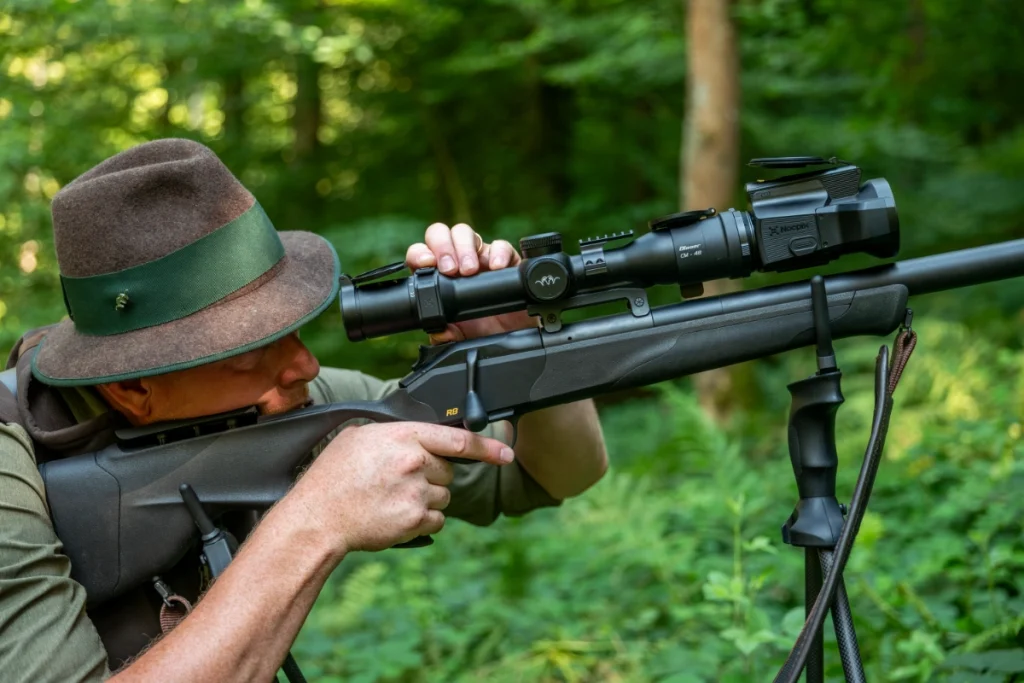
A thermal clip-on mounts in front of your existing daytime riflescope. It projects a thermal image through your day optic, so you can keep your familiar reticle, eye relief, cheek weld, and scope zero. When you are done hunting at night, you remove the clip-on and your rifle goes back to daytime mode.
Before choosing a clip-on, check your day scope’s objective diameter, front rail space, adapter compatibility, and useful magnification range. A clip-on works best when the adapter locks firmly, the optical axis stays aligned, and the day scope does not push magnification so high that the thermal image becomes soft or pixelated.
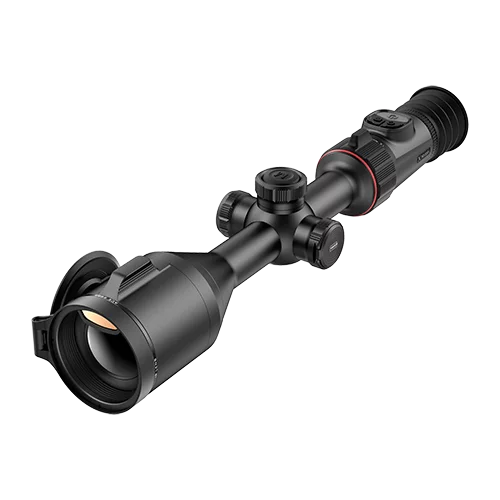
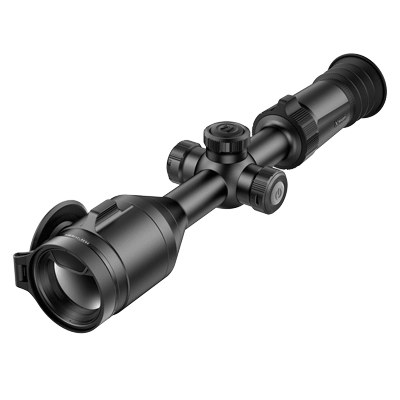
A dedicated thermal scope replaces your daytime optic entirely. It mounts directly to the rifle using standard rings or a quick-detach rail system. The sensor, display, reticle, rangefinder, and eyepiece are all built into one housing. There is nothing to attach or remove between day and night use, but you lose access to your daytime glass on that rifle.
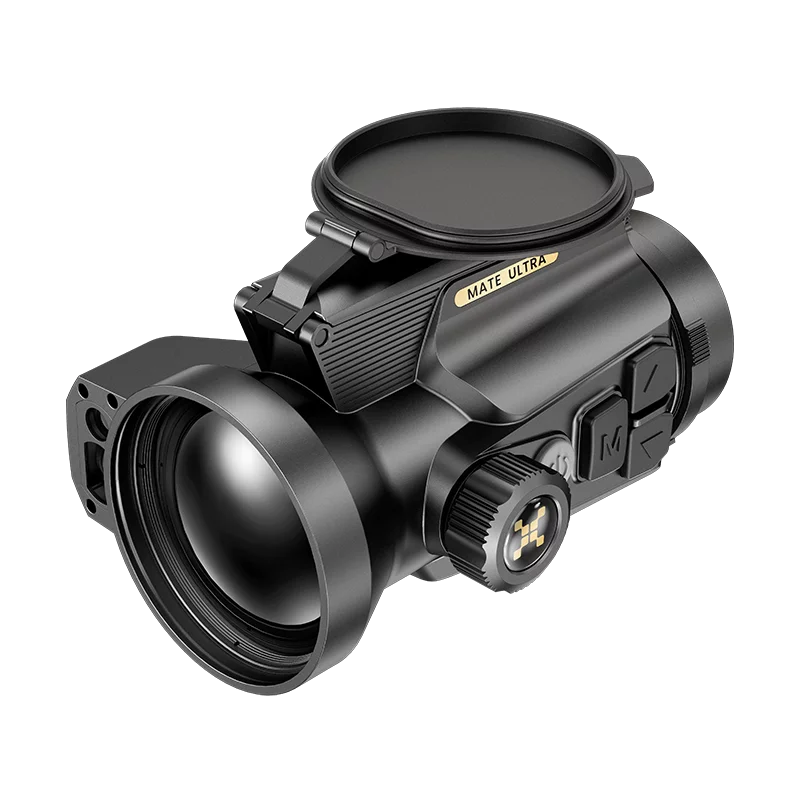
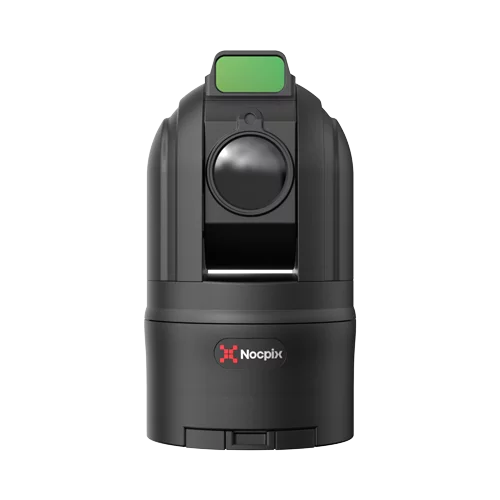
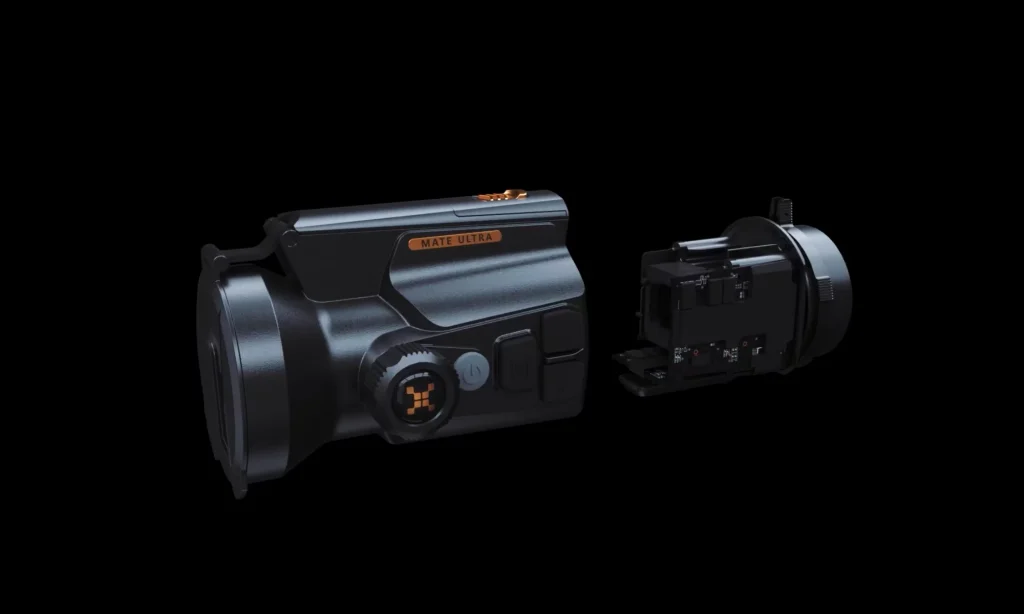
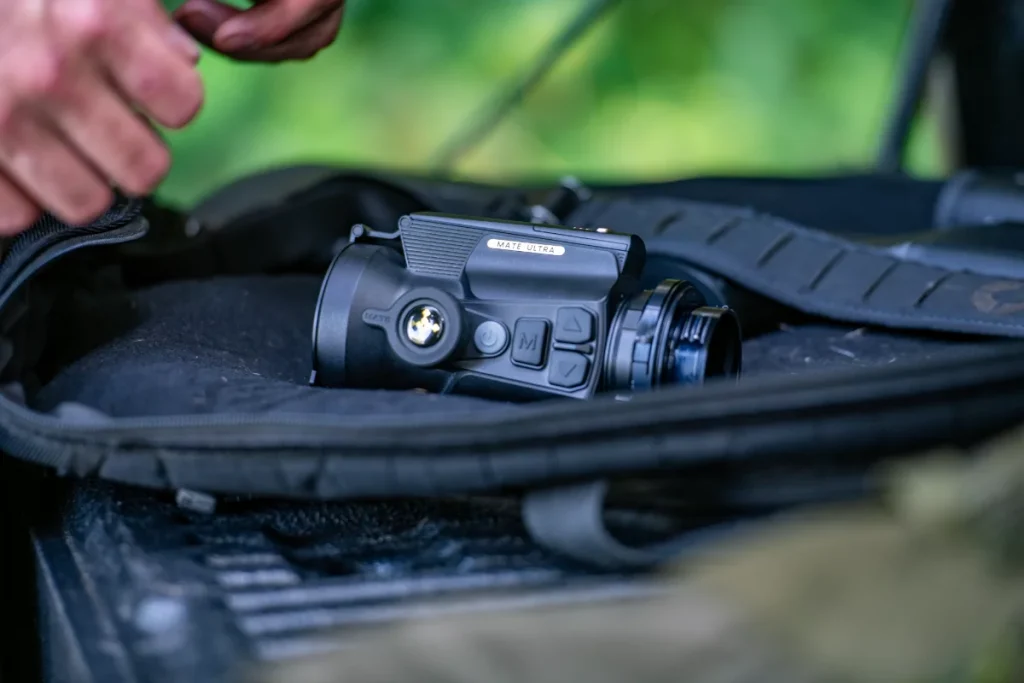
The Nocpix MATE series is designed for hunters who want clip-on flexibility. It can be mounted in front of a day scope and moved between compatible rifle setups. A dedicated scope like the Nocpix ACE is better for hunters who want a thermal optic to stay on one rifle permanently with no extra setup before a night hunt.
Image Quality and Field of View
Dedicated thermal scopes generally deliver a cleaner image path because the sensor, display, eyepiece, and reticle are engineered as one integrated system. There is no secondary day optic between the thermal image and your eye. This usually gives the hunter sharper detail, stronger contrast, and a more stable viewing experience.
Clip-ons have improved a lot, especially in higher-end models. The Nocpix MATE Ultra uses a 1280×1024 sensor, ≤15mK NETD, a 60mm F1.0 lens, and a 60 Hz refresh rate. Its Magic Zoom feature adjusts the thermal image as you change magnification on your day scope, helping the image stay sharp and aligned at different zoom levels. Reality+ AI processing also improves contrast and detail in fog, drizzle, or low light.
That said, a clip-on still sends its image through your day optic. That extra optical layer can create some softness, edge distortion, or vignetting at certain magnification levels. A dedicated thermal scope avoids this because the whole optical system is built around thermal use from the start.
Accuracy, Zeroing, and Point-of-Impact Shift
Zero and point-of-impact shift are the biggest concerns for many hunters comparing clip-ons and dedicated thermal scopes.
A dedicated thermal scope zeroes like a normal riflescope. You mount the scope, adjust the internal reticle, confirm your point of impact at the range, and keep the scope on the rifle. As long as the mount stays tight, the zero process is familiar and easy to repeat. If you need a full step-by-step process, read Nocpix’s guide on how to sight in a thermal scope.
A clip-on adds a second optical system in front of your day scope. If the clip-on shifts because of recoil, transport, poor alignment, or a loose mount, your point of impact can move. This was one of the main weaknesses of older clip-on designs.
Modern clip-ons reduce this problem with stronger mounting systems and better factory calibration. The Nocpix MATE series uses a two-piece magnesium alloy housing, recoil resistance up to 7,000 joules, and factory calibration designed to maintain 1 MOA accuracy through repeated mounting and removal. A Picatinny rail-mounted setup can also give better stability than some objective-thread adapter systems.
Still, a dedicated thermal scope has fewer variables. There is no extra optic in front of the scope and no adapter between the thermal device and the day optic. For hunters who want the simplest zeroing process, the dedicated thermal scope has the advantage.
Field Use and Hunting Style
The better choice depends less on the device name and more on how you hunt.
A thermal clip-on makes sense if you already like your daytime scope and want to keep the same rifle setup for day and night use. It is also useful if you own several rifles and want one thermal device that can move between them. For example, a hunter may use a .308 bolt-action rifle for hogs and a .223 AR for coyotes. One compatible clip-on can serve both setups if the mounts and adapters are prepared correctly.
A dedicated thermal scope makes more sense if you use one rifle mainly for night hunting. It stays mounted, stays zeroed, and is ready when you pick up the rifle. There are fewer parts to attach in the dark, fewer checks before the shot, and less weight hanging in front of the day optic. A model like the Nocpix ACE fits this type of dedicated night-hunting setup.
For fast night hunting, calling predators, or shooting from a fixed setup, many hunters prefer the simplicity of a dedicated thermal scope. For hunters who split time between daytime glass and nighttime thermal use, a clip-on gives more flexibility.
Price and Long-Term Value
A dedicated thermal scope is usually a single purchase for one rifle. Nocpix dedicated thermal scopes range from entry-level models like the Nocpix BOLT L35R to high-end options like the RICO 2 S75R. This route makes sense if you want one rifle to be fully built around thermal hunting.
A thermal clip-on can cost about the same as a mid-tier or high-end dedicated thermal scope, but it can protect your investment in daytime optics. You do not need to remove your day scope, change your reticle, or rebuild your rifle setup.
Long-term value favors the clip-on if you own multiple rifles, already have quality daytime scopes, and want one thermal device for several setups. Long-term value favors the dedicated scope if you mainly hunt with one rifle and want the least setup time, the cleanest image path, and the most stable night-hunting experience.
Which Thermal Setup Is Better for Your Hunting Style?
The best format depends on the species, the terrain, and the pace of your hunt.
Hog Hunting
Hog hunting often involves extended sits overlooking feeders, field edges, or travel corridors. Shots typically range from 50 to 300 yards. You need a clear image, fast target identification, and reliable shot placement.
A dedicated thermal scope works well here. It stays on your rifle, powers up instantly, and keeps everything integrated. The Nocpix BOLT L35R, with its 384×288 sensor, 3.5× base magnification, built-in LRF, and ballistic calculator, covers most hog-hunting distances at a price point that makes sense for a dedicated hog rig.
If your hog rifle doubles as a daytime deer rifle, a clip-on gives you flexibility without swapping optics every season.
Coyote Hunting
Coyote hunting demands longer range and faster target acquisition. Coyotes appear at distance, move quickly, and give you a short window to identify and shoot. A 640 or 1280 sensor with strong NETD performance helps separate a coyote’s heat signature from warm ground clutter.
A dedicated scope like the Nocpix ACE H50R — with its 640×512 sensor, ≤15mK NETD, 60 Hz refresh rate, and integrated 1,200-meter LRF — delivers the combination of range and reaction speed coyote hunters need. The 3× base magnification with up to 24× digital zoom covers close callers and long-range standoff equally.
A clip-on also works well for coyote hunters who run different rifles for different setups — a bolt gun for long sits and an AR for calling. The MATE H50R or MATE H38R lets you switch between platforms while keeping thermal capability consistent. To learn more about how Nocpix MATE pushes image quality across different conditions, that breakdown is worth reading.
Predator and Nighttime Stalking
Active stalking at night puts a premium on quick transitions. You may need to scan with a handheld monocular, then shoulder your rifle and engage in seconds. A dedicated scope eliminates switching between devices — your thermal view and your aiming system are one unit.
For hunters who stalk with multiple weapons or switch between a shotgun and a rifle depending on terrain, a clip-on provides consistency. One thermal device, two or more platforms.
Which Should You Choose?
Choose a Thermal Clip-On If…
A clip-on makes sense in these situations:
- Multiple Rifles: You hunt with two or more rifles and want thermal capability on all of them without buying separate scopes.
- Daytime Scope Investment: You already own a high-quality day scope and don’t want to lose access to it.
- Seasonal Flexibility: You hunt during the day in some seasons and at night in others, and need to switch modes on the same rifle.
- Weight Sensitivity: A clip-on adds weight only when attached, keeping your daytime setup lighter.
Explore the full Nocpix thermal imaging attachment lineup to compare MATE models side by side.
Choose a Dedicated Thermal Scope If…
A dedicated scope is the better fit here:
- Single-Rifle Setup: Your thermal rifle stays configured for night use and doesn’t need to double as a daytime gun.
- Maximum Image Quality: You want the cleanest possible optical path with no compromises from secondary optics.
- Zero Confidence: You need absolute zero consistency with no risk of alignment shift between sessions.
- Simplicity: You prefer a single device that powers on and is ready to detect, range, and shoot.
For a broader comparison of which Nocpix optic fits your specific needs, check out the guide on best thermal optics by use case.
One Thing to Check Before You Buy
Thermal hunting regulations vary by state, species, and season. Over 35 US states permit thermal hunting in some form, but most restrict it for big game at night. Before investing in any thermal setup — clip-on or dedicated — check your state wildlife agency’s current regulations. Laws change, and what’s legal for hogs may not be legal for deer in the same county.
Final Thought
The thermal clip-on vs dedicated thermal scope decision isn’t about which is better overall. It’s about which fits your setup, your hunting style, and how many rifles you want thermal-equipped.
A clip-on like the Nocpix MATE series gives you flexibility across multiple platforms and protects your investment in daytime optics. A dedicated scope like the ACE, BOLT, or RICO 2 gives you an integrated, zero-maintained system that’s ready the moment you power on.
If you’re still weighing options, explore the Nocpix thermal imaging attachment category for clip-on models, or compare dedicated thermal riflescopes across the full lineup. And always confirm your state’s thermal hunting regulations before heading into the field.
Frequently Asked Questions About Thermal Clip-On vs Dedicated Thermal Scope
What is the difference between a thermal clip-on and a dedicated thermal scope?
A thermal clip-on mounts in front of your existing daytime scope and adds thermal vision to that setup. A dedicated thermal scope replaces your daytime scope and works as a complete thermal aiming system. The clip-on gives more flexibility, while the dedicated scope gives a simpler and more integrated night-hunting setup.
How does a clip-on thermal scope work?
A clip-on thermal scope detects heat through its own sensor, creates a thermal image, and projects that image through your daytime riflescope. You still look through your normal scope, use your familiar reticle, and keep your daytime zero. The clip-on must be mounted securely and aligned correctly for the best accuracy.
Is a thermal clip-on better than a dedicated thermal scope?
A thermal clip-on is better if you want to keep your day scope and use one thermal device across multiple rifles. A dedicated thermal scope is better if you want faster setup, better balance, fewer mounting checks, and a cleaner all-in-one thermal system. Neither option is always better. The right choice depends on your rifles, optics, and hunting style.
What thermal resolution do I need for coyote hunting?
A 640×512 sensor is the most common choice for coyote hunting. It provides enough detail to identify coyotes at typical calling and engagement ranges (200–500 yards). A 1280×1024 sensor offers even more detail for longer distances or harder-to-read backgrounds. For a deeper look at how resolution affects image quality, read what thermal scope resolution is best.
Can I use a thermal clip-on during the day?
Yes. Thermal clip-ons detect heat, not visible light, so they work in any lighting condition — full daylight, dawn, dusk, and complete darkness. During the day, you can remove the clip-on and use your day scope normally, or leave it attached and use the thermal overlay. This dual-mode flexibility is one of the main advantages of the clip-on format. For a practical walkthrough of field operation, see Nocpix’s guide on how to use a thermal scope.