






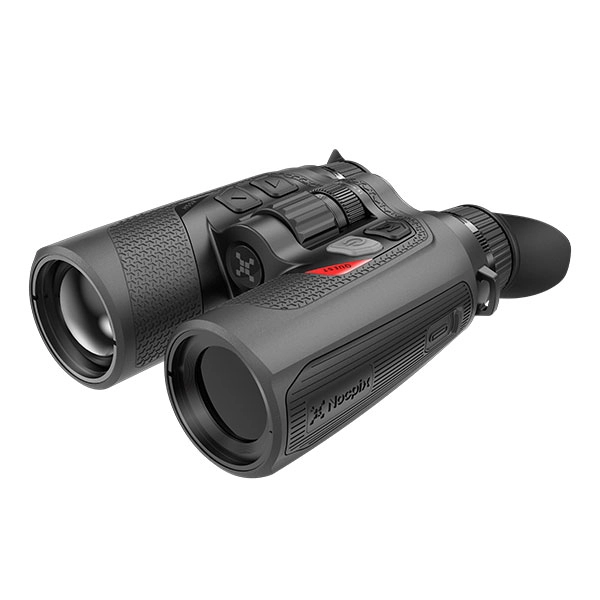
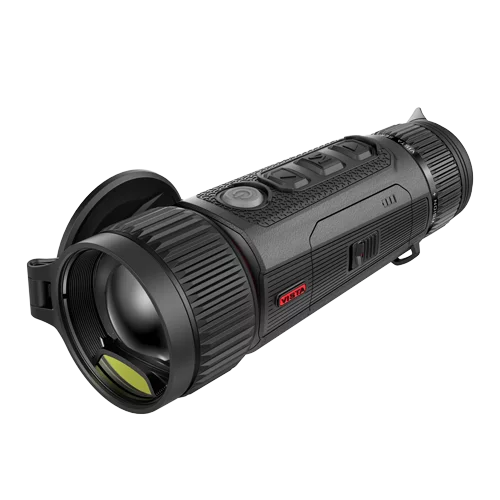
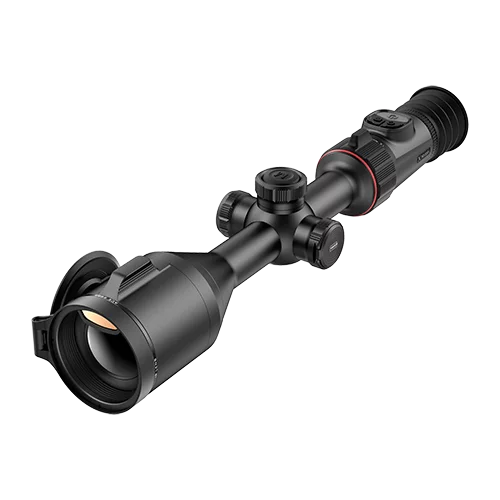
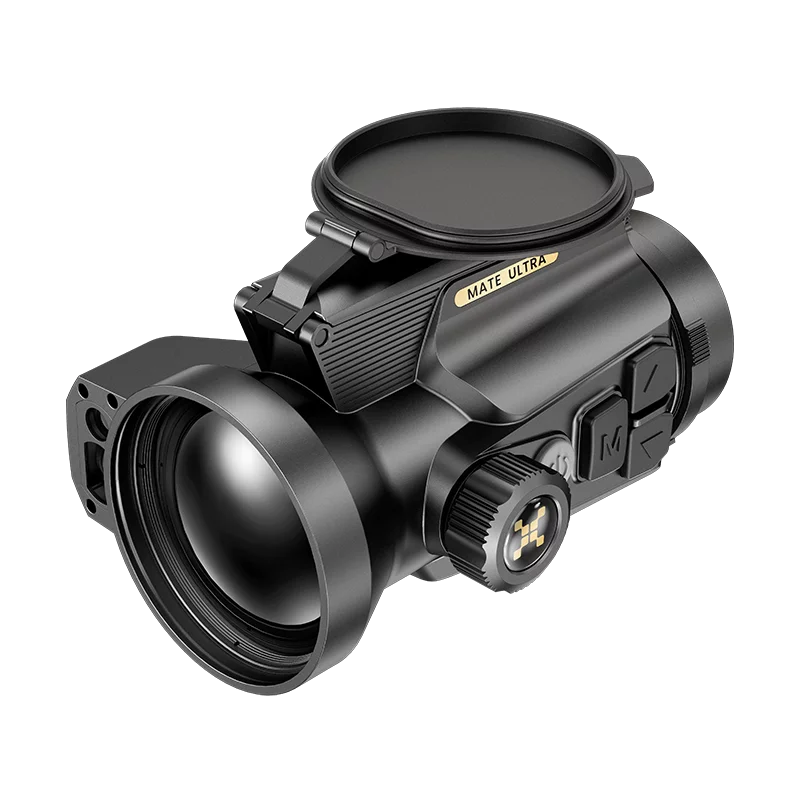


Se você já possui uma luneta de mira diurna confiável, um acessório térmico permite adicionar capacidade térmica sem abrir mão da sua configuração atual. Se você deseja uma única mira que cuide de tudo, da detecção à precisão do disparo, uma luneta térmica dedicada é a opção mais simples.
Essa é a essência da decisão entre um acessório térmico e uma mira térmica dedicada. Mas a escolha certa depende de mais do que apenas conveniência. Depende de quantos rifles você usa, da rapidez com que precisa alternar entre o dia e a noite, do tipo de caça que pratica e de quanto está disposto a investir.
Este guia detalha as diferenças reais entre essas duas configurações — montagem, qualidade de imagem, ajuste de mira, precisão e valor a longo prazo. Também abordaremos qual formato se adapta a cenários de caça específicos, como javalis, coiotes e predadores, e apontaremos as desvantagens que a maioria dos compradores ignora. Se você quiser uma visão geral mais ampla primeiro, consulte o guia da Nocpix sobre Como escolher uma luneta térmica É um bom ponto de partida.
Índice
Resposta rápida: Termoscópio de encaixe vs. Termoscópio dedicado
Escolha um dispositivo térmico acoplável se quiser manter sua mira diurna, preservar sua configuração de tiro habitual e usar um único dispositivo térmico em vários rifles. Escolha uma mira térmica dedicada se preferir uma configuração mais simples para caça noturna, melhor equilíbrio do rifle, integração de imagem mais nítida, retículos integrados e menos variáveis de montagem.
Em termos simples, um acessório térmico adiciona visão térmica à sua configuração atual de rifle. Uma mira térmica dedicada substitui sua mira diurna e se torna o sistema de mira completo.
Tabela comparativa entre osciloscópios térmicos de encaixe e osciloscópios térmicos dedicados
| Fator | Clipe térmico | Mira térmica dedicada |
|---|---|---|
| Como funciona | Monta-se na frente do seu telescópio diurno. | Substitui sua luneta diurna. |
| Ideal para | Caçadores que utilizam vários rifles ou um único rifle tanto para o dia quanto para a noite. | Caçadores montando um rifle dedicado para caça noturna |
| Configurar | Requer adaptador, espaço no trilho, alinhamento e montagem segura. | Monte, ajuste a mira e use como uma mira óptica normal. |
| Zerando | Geralmente mantém a mira zerada, mas o alinhamento da montagem é importante. | Utiliza seu próprio zero dentro de um sistema integrado. |
| Caminho da imagem | A imagem térmica passa pela sua lente diurna. | Sensor, visor, retículo e ocular funcionam como um único sistema. |
| Qualidade da imagem | Funciona bem com equipamentos modernos, mas a ampliação da luneta diurna pode afetar a nitidez. | Geralmente mais limpo, especialmente em alcances maiores. |
| Velocidade de campo | Mais lento porque você precisa conectar e verificar o clipe. | Mais rápido porque a mira permanece pronta no rifle. |
| equilíbrio de peso | Adiciona peso na frente da luneta de observação. | Geralmente, o equilíbrio é melhor no rifle. |
| Vários rifles | A troca entre rifles fica mais fácil se os adaptadores e a configuração forem compatíveis. | Mais adequado para um rifle principal. |
| Verificação de montagem | Diâmetro da objetiva, tamanho do adaptador, espaço no trilho Picatinny e estabilidade da montagem. | Tipo de trilho, altura de montagem, distância ocular e montagem com retorno a zero. |
| Melhor escolha | Escolha-o pela sua flexibilidade e ótica diurna existente. | Escolha-a pela sua velocidade, simplicidade e desempenho com um único rifle. |
Visor térmico de encaixe versus visor térmico dedicado: principais diferenças que importam
Diferença de configuração e montagem
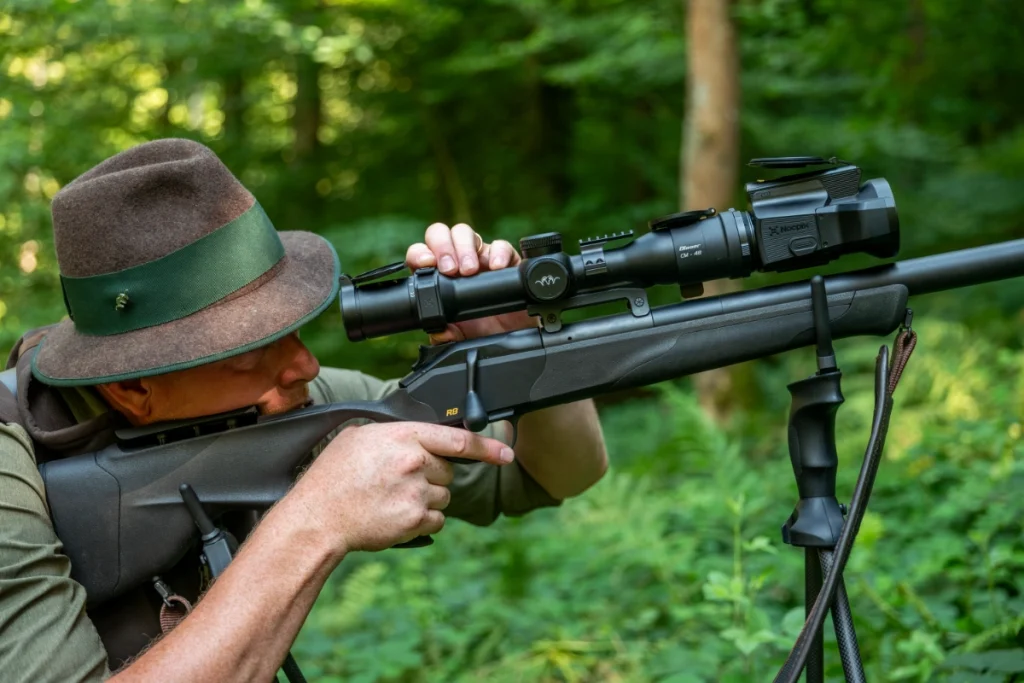
Um dispositivo térmico acoplável é montado na frente da sua luneta diurna. Ele projeta uma imagem térmica através da sua mira diurna, permitindo que você mantenha sua retícula, distância ocular, apoio de bochecha e mira calibrada. Ao terminar a caçada noturna, basta remover o dispositivo acoplável e seu rifle volta ao modo diurno.
Antes de escolher uma luneta de encaixe, verifique o diâmetro da objetiva da sua luneta diurna, o espaço disponível no trilho frontal, a compatibilidade com adaptadores e a faixa de ampliação útil. Uma luneta de encaixe funciona melhor quando o adaptador trava firmemente, o eixo óptico permanece alinhado e a luneta diurna não aumenta a ampliação a ponto de a imagem térmica ficar desfocada ou pixelizada.
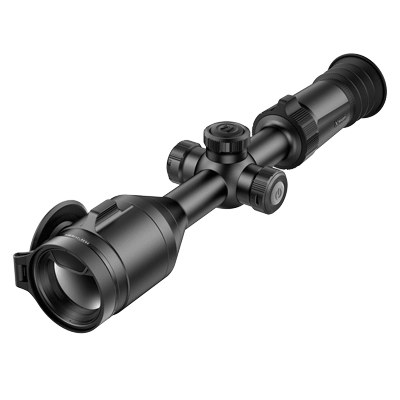
Uma mira térmica dedicada substitui completamente sua mira diurna. Ela é montada diretamente no rifle usando anéis padrão ou um sistema de trilho de liberação rápida. O sensor, o visor, a retícula, o telêmetro e a ocular estão todos integrados em uma única estrutura. Não há nada para conectar ou desconectar entre o uso diurno e noturno, mas você perde o acesso à sua mira diurna nesse rifle.
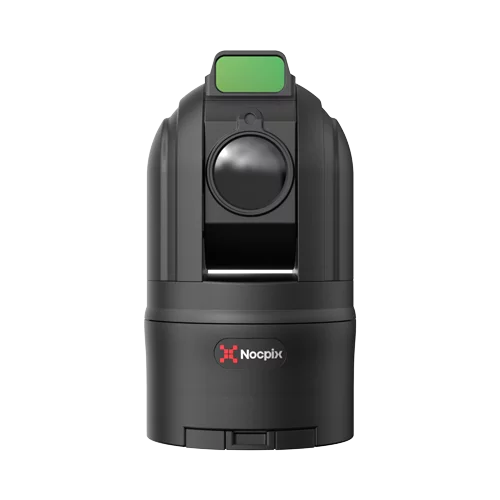
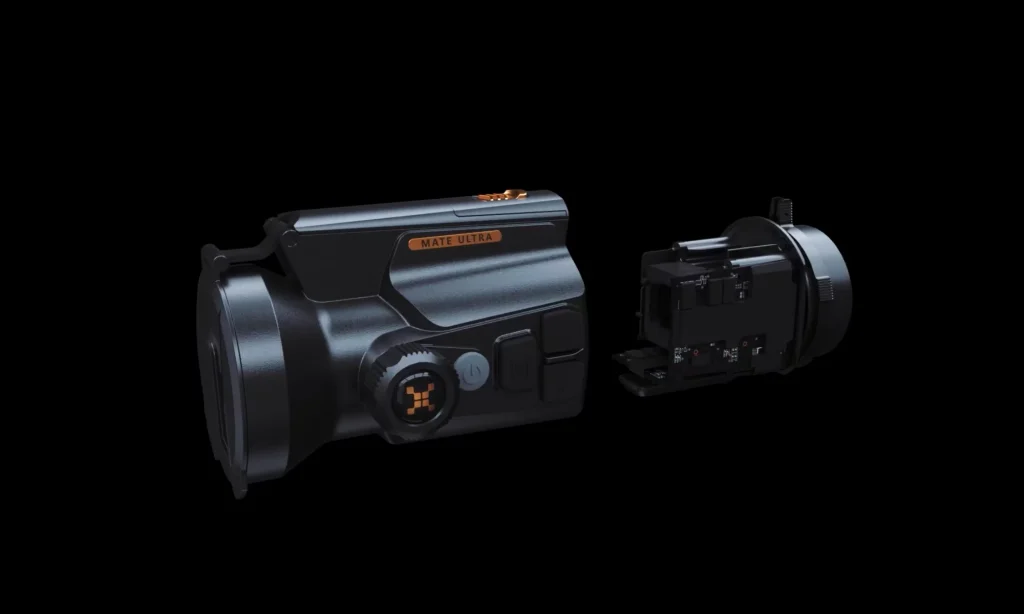
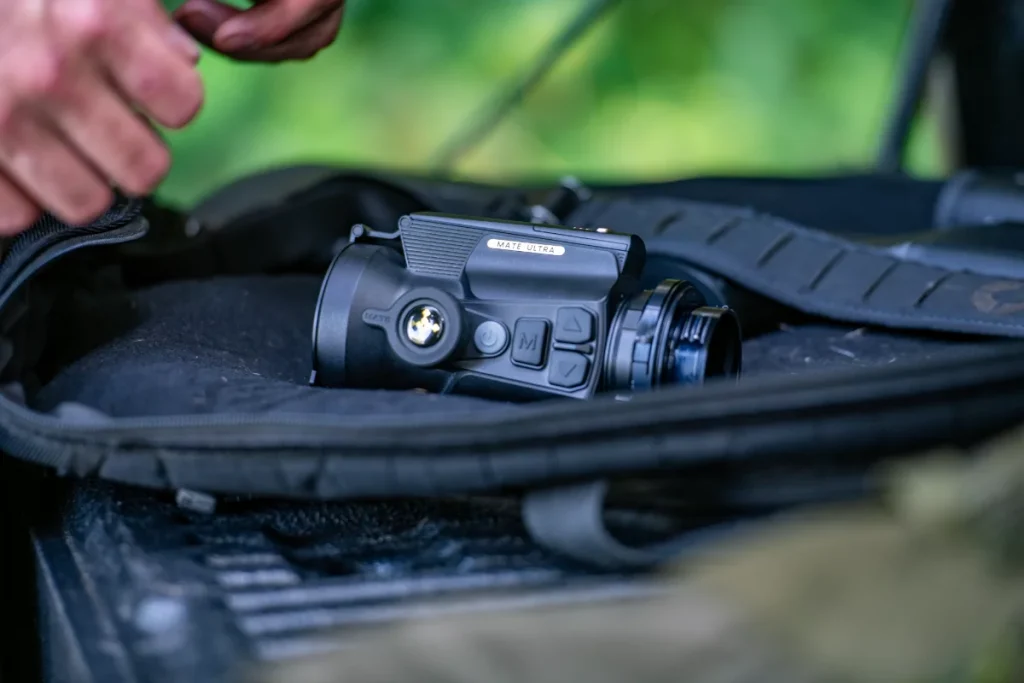
O Série Nocpix MATE É projetado para caçadores que desejam a flexibilidade de um acessório acoplável. Pode ser montado na frente de uma luneta diurna e transferido entre configurações de rifles compatíveis. Uma luneta dedicada como a Nocpix ACE É melhor para caçadores que desejam uma mira térmica que permaneça permanentemente em um rifle, sem necessidade de configuração adicional antes de uma caçada noturna.
Qualidade da imagem e campo de visão
As miras térmicas dedicadas geralmente oferecem uma imagem mais nítida porque o sensor, a tela, a ocular e a retícula são projetados como um sistema integrado. Não há uma lente diurna secundária entre a imagem térmica e o olho do caçador. Isso geralmente proporciona detalhes mais nítidos, maior contraste e uma experiência de visualização mais estável.
Os clip-ons melhoraram bastante, principalmente nos modelos de gama superior. Nocpix MATE Ultra Utiliza um sensor de 1280×1024, NETD ≤15mK, uma lente de 60mm F1.0 e uma taxa de atualização de 60 Hz. Seu recurso Magic Zoom ajusta a imagem térmica conforme você altera a ampliação em sua mira diurna, ajudando a manter a imagem nítida e alinhada em diferentes níveis de zoom. O processamento de IA Reality+ também melhora o contraste e os detalhes em neblina, garoa ou baixa luminosidade.
Dito isso, uma lente acoplável ainda envia sua imagem através da sua mira diurna. Essa camada óptica extra pode causar alguma perda de nitidez, distorção nas bordas ou vinhetas em certos níveis de ampliação. Uma mira térmica dedicada evita isso porque todo o sistema óptico é projetado para uso térmico desde o início.
Precisão, ajuste de zero e deslocamento do ponto de impacto
A mudança de ponto zero e de impacto são as maiores preocupações para muitos caçadores que comparam miras térmicas acopláveis e miras térmicas dedicadas.
Uma mira térmica dedicada é calibrada como uma mira telescópica normal. Você monta a mira, ajusta a retícula interna, confirma o ponto de impacto no alcance e mantém a mira no rifle. Contanto que a montagem permaneça firme, o processo de calibragem é familiar e fácil de repetir. Se precisar de um passo a passo completo, leia o guia da Nocpix sobre Como calibrar uma mira térmica.
Um acessório de encaixe adiciona um segundo sistema óptico à frente da sua luneta de uso diurno. Se o acessório de encaixe se deslocar devido ao recuo, transporte, desalinhamento ou uma montagem solta, o ponto de impacto pode mudar. Essa era uma das principais fragilidades dos modelos de acessórios de encaixe mais antigos.
Os clip-ons modernos reduzem esse problema com sistemas de montagem mais robustos e melhor calibração de fábrica. Série Nocpix MATE Utiliza uma estrutura de liga de magnésio em duas peças, resistência ao recuo de até 7.000 joules e calibração de fábrica projetada para manter a precisão de 1 MOA mesmo após repetidas montagens e desmontagens. Uma configuração com trilho Picatinny também pode proporcionar maior estabilidade do que alguns sistemas de adaptadores com rosca para objetiva.
Ainda assim, uma mira térmica dedicada apresenta menos variáveis. Não há uma óptica adicional na frente da mira nem um adaptador entre o dispositivo térmico e a óptica diurna. Para caçadores que desejam o processo de ajuste mais simples, a mira térmica dedicada oferece essa vantagem.
Uso do campo e estilo de caça
A melhor escolha depende menos do nome do dispositivo e mais de como você caça.
Um dispositivo térmico acoplável faz sentido se você já gosta da sua mira diurna e quer manter a mesma configuração de rifle para uso diurno e noturno. Também é útil se você possui vários rifles e deseja um dispositivo térmico que possa ser usado em todos eles. Por exemplo, um caçador pode usar um rifle de ação por ferrolho calibre .308 para javalis e um AR calibre .223 para coiotes. Um dispositivo acoplável compatível pode servir para ambas as configurações, desde que as montagens e adaptadores sejam preparados corretamente.
Uma mira térmica dedicada faz mais sentido se você usa um rifle principalmente para caça noturna. Ela permanece montada, calibrada e pronta para uso quando você pega o rifle. Há menos peças para instalar no escuro, menos verificações antes do disparo e menos peso pendurado na frente da mira diurna. Um modelo como o Nocpix ACE Adequado para este tipo de configuração dedicada à caça noturna.
Para caça noturna rápida, atração de predadores ou tiro a partir de uma posição fixa, muitos caçadores preferem a simplicidade de uma mira térmica dedicada. Para caçadores que dividem seu tempo entre o uso de miras convencionais durante o dia e miras térmicas à noite, uma mira acoplável oferece mais flexibilidade.
Preço e valor a longo prazo
Uma mira térmica dedicada geralmente é uma compra única para um rifle. As miras térmicas dedicadas da Nocpix variam de modelos básicos como a Nocpix BOLT L35R até opções de alta qualidade como a RICO 2 S75R. Essa opção faz sentido se você quiser um rifle totalmente voltado para a caça com visão térmica.
Um acessório térmico pode custar praticamente o mesmo que uma mira térmica dedicada de gama média ou alta, mas protege o seu investimento em equipamentos óticos para uso diurno. Você não precisa remover sua mira diurna, trocar a retícula ou reconfigurar seu rifle.
A longo prazo, o visor acoplável oferece melhor custo-benefício se você possui vários rifles, já tem miras telescópicas de qualidade para uso diurno e deseja um único dispositivo térmico para diversas configurações. Já a mira telescópica dedicada oferece melhor custo-benefício se você caça principalmente com um único rifle e busca o mínimo de tempo de preparação, a imagem mais nítida e a experiência de caça noturna mais estável.
Qual configuração térmica é melhor para o seu estilo de caça?
O melhor formato depende da espécie, do terreno e do ritmo da sua caçada.
Caça ao javali
A caça ao javali geralmente envolve longos períodos de espera com vista para comedouros, bordas de campos ou corredores de passagem. Os tiros normalmente variam de 50 a 300 metros. É necessário ter uma visão nítida, identificar rapidamente o alvo e acertar o alvo com precisão.
Uma mira térmica dedicada funciona bem aqui. Ela permanece acoplada ao seu rifle, liga instantaneamente e mantém tudo integrado. A Nocpix BOLT L35R, com seu sensor de 384×288, ampliação base de 3,5×, telêmetro a laser integrado e calculadora balística, cobre a maioria das distâncias de caça ao javali a um preço acessível para um equipamento dedicado a essa prática.
Se o seu rifle para caça de javalis também serve para caçar veados durante o dia, um acessório para acoplar a mira oferece flexibilidade sem a necessidade de trocar a mira a cada temporada.
Caça ao coiote
A caça ao coiote exige maior alcance e aquisição de alvo mais rápida. Os coiotes aparecem à distância, movem-se rapidamente e oferecem uma janela de tempo curta para identificá-los e atirar. Um sensor 640 ou 1280 com alto desempenho NETD ajuda a separar a assinatura térmica do coiote da interferência do solo quente.
Uma mira telescópica dedicada como a Nocpix ACE H50R — com seu sensor de 640×512, NETD ≤15mK, taxa de atualização de 60 Hz e telêmetro a laser integrado de 1.200 metros — oferece a combinação de alcance e velocidade de reação que os caçadores de coiotes precisam. A ampliação base de 3× com zoom digital de até 24× cobre tanto alvos próximos quanto alvos a longa distância.
Um acessório também funciona bem para caçadores de coiotes que usam rifles diferentes para configurações diferentes — um rifle de ferrolho para esperas prolongadas e um AR para chamar o alvo. O MATE H50R ou MATE H38R permite alternar entre plataformas, mantendo a capacidade térmica consistente. Para saber mais sobre Como o Nocpix MATE aprimora a qualidade da imagem Considerando as diferentes condições, vale a pena ler essa análise.
Predador e perseguição noturna
A caça noturna ativa exige transições rápidas. Pode ser necessário usar um monóculo portátil para fazer uma varredura, em seguida, apoiar o rifle no ombro e entrar em combate em segundos. Uma mira telescópica dedicada elimina a necessidade de alternar entre dispositivos — sua visão térmica e seu sistema de mira formam uma única unidade.
Para caçadores que usam várias armas para perseguir a presa ou que alternam entre uma espingarda e um rifle dependendo do terreno, um dispositivo de fixação acoplável oferece consistência. Um dispositivo térmico, duas ou mais plataformas.
Qual você deve escolher?
Escolha uma capa térmica de encaixe se…
Um acessório de encaixe faz sentido nestas situações:
- Vários rifles: Você caça com dois ou mais rifles e deseja capacidade térmica em todos eles sem precisar comprar miras telescópicas separadas.
- Investimento em Alcance Diurno: Você já possui uma luneta de observação diurna de alta qualidade e não quer perder o acesso a ela.
- Flexibilidade sazonal: Em algumas épocas do ano, a caça ocorre durante o dia, e em outras, à noite, sendo necessário alternar entre os modos de disparo no mesmo rifle.
- Sensibilidade ao peso: Um acessório de encaixe adiciona peso apenas quando conectado, mantendo seu equipamento diurno mais leve.
Explore tudo Acessório de imagem térmica Nocpix comparação lado a lado dos modelos MATE.
Escolha um visor térmico dedicado se…
Um osciloscópio dedicado é a melhor opção neste caso:
- Configuração de rifle único: Seu rifle térmico permanece configurado para uso noturno e não precisa funcionar também como arma diurna.
- Qualidade máxima de imagem: Você deseja o caminho óptico mais limpo possível, sem comprometer a qualidade dos componentes ópticos secundários.
- Confiança zero: Você precisa de consistência absolutamente zero, sem nenhum risco de alteração no alinhamento entre as sessões.
- Simplicidade: Você prefere um único dispositivo que ligue e esteja pronto para detectar, medir distância e disparar.
Para uma comparação mais abrangente de qual mira Nocpix melhor se adapta às suas necessidades específicas, consulte o guia em Melhores sistemas de óptica térmica por caso de uso.
Uma coisa a verificar antes de comprar
As regulamentações para caça com visão térmica variam de acordo com o estado, a espécie e a época do ano. Mais de 35 estados americanos permitem alguma forma de caça com visão térmica, mas a maioria restringe sua prática para animais de grande porte à noite. Antes de investir em qualquer equipamento de visão térmica — seja ele de encaixe ou dedicado —, verifique as regulamentações vigentes da agência de vida selvagem do seu estado. As leis mudam, e o que é legal para javalis pode não ser legal para cervos no mesmo município.
Considerações finais
A decisão entre um acessório térmico e uma mira térmica dedicada não se resume a qual é melhor no geral. Trata-se de qual se adapta melhor à sua configuração, ao seu estilo de caça e à quantidade de rifles que você deseja equipar com tecnologia térmica.
Um acessório como a série Nocpix MATE oferece flexibilidade em diversas plataformas e protege seu investimento em miras para uso diurno. Uma mira telescópica dedicada como a ACE, BOLT ou RICO 2 oferece um sistema integrado, com ajuste de zero, pronto para uso imediato.
Se você ainda está avaliando as opções, explore o Acessório de imagem térmica Nocpix categoria para modelos de encaixe ou compare modelos dedicados miras térmicas em toda a linha de produtos. E sempre confirme as regulamentações de caça térmica do seu estado antes de ir a campo.
Perguntas frequentes sobre visores térmicos de encaixe versus visores térmicos dedicados
Qual a diferença entre um dispositivo térmico de encaixe e um visor térmico dedicado?
Um acessório térmico acoplável é montado na frente da sua mira diurna existente e adiciona visão térmica à sua configuração. Uma mira térmica dedicada substitui sua mira diurna e funciona como um sistema completo de mira térmica. O acessório acoplável oferece mais flexibilidade, enquanto a mira dedicada proporciona uma configuração de caça noturna mais simples e integrada.
Como funciona um visor térmico acoplável?
Um visor térmico acoplável detecta o calor através de seu próprio sensor, cria uma imagem térmica e a projeta através da sua luneta de mira diurna. Você continua olhando através da sua luneta normal, usando a sua retícula habitual e mantendo o seu ponto zero diurno. O visor acoplável deve ser montado com segurança e alinhado corretamente para obter a melhor precisão.
Um dispositivo térmico de encaixe é melhor do que um visor térmico dedicado?
Um dispositivo térmico acoplável é melhor se você quiser manter sua mira diurna e usar um único dispositivo térmico em vários rifles. Uma mira térmica dedicada é melhor se você busca uma instalação mais rápida, melhor equilíbrio, menos verificações de montagem e um sistema térmico completo e mais organizado. Nenhuma das opções é sempre melhor. A escolha certa depende dos seus rifles, da sua mira e do seu estilo de caça.
Qual a resolução térmica necessária para caçar coiotes?
Um sensor de 640×512 é a escolha mais comum para a caça de coiotes. Ele fornece detalhes suficientes para identificar coiotes em distâncias típicas de chamada e engajamento (200–500 jardas). Um sensor de 1280×1024 oferece ainda mais detalhes para distâncias maiores ou fundos mais difíceis de visualizar. Para uma análise mais aprofundada de como a resolução afeta a qualidade da imagem, leia Qual a melhor resolução para um visor térmico?.
Posso usar uma máscara térmica de encaixe durante o dia?
Sim. Os dispositivos térmicos acopláveis detectam calor, não luz visível, portanto funcionam em qualquer condição de iluminação — plena luz do dia, amanhecer, entardecer e escuridão total. Durante o dia, você pode remover o dispositivo acoplável e usar sua luneta diurna normalmente ou deixá-lo acoplado e usar a sobreposição térmica. Essa flexibilidade de modo duplo é uma das principais vantagens do formato acoplável. Para um passo a passo prático de operação em campo, consulte o guia da Nocpix sobre Como usar uma luneta térmica.