


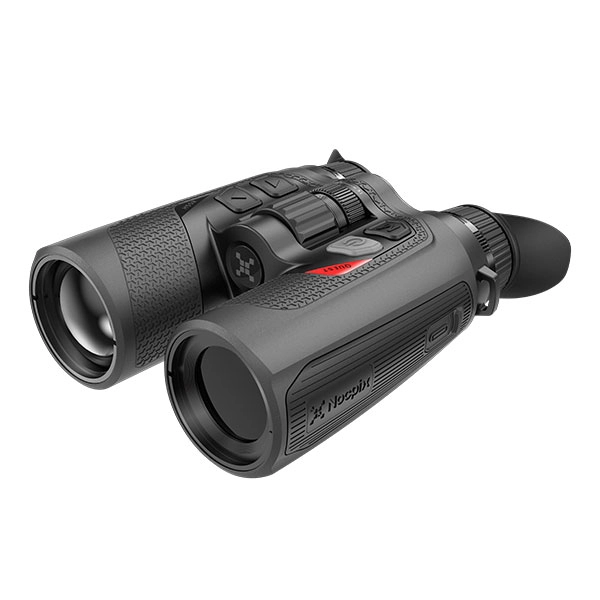
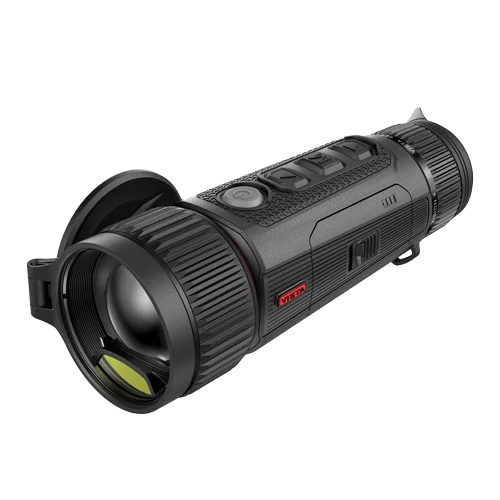
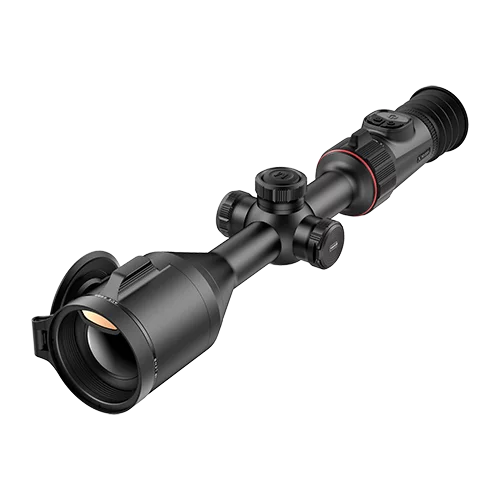
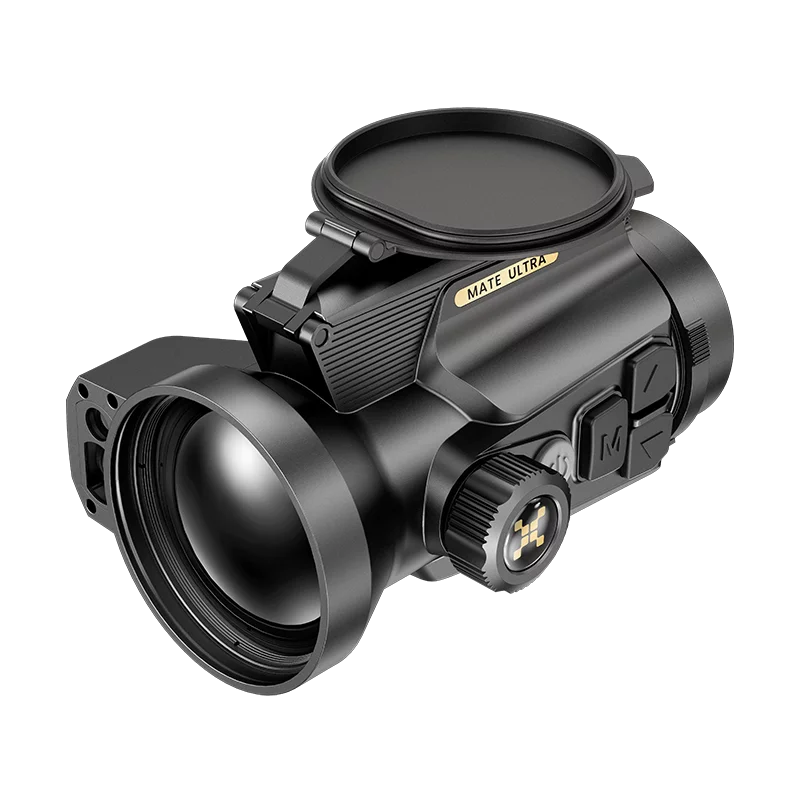
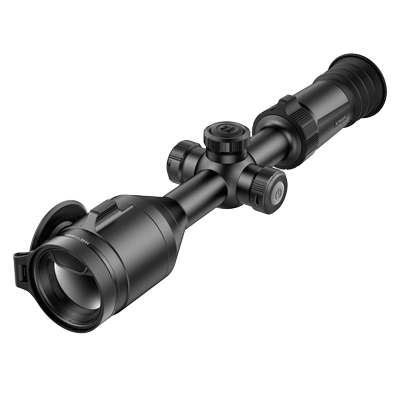


Thermal scope numbers describe how the device collects, processes, and displays heat information. A value such as 3×, 50 mm, 8.8° × 7.0°, o 640×512 refers to a different part of that process. Together, these numbers explain how large an animal appears, how much terrain is visible, how densely the thermal scene is sampled, and how the image is shown to the hunter.
The key is to match each number to its job. Magnification describes apparent image scale, focal length and field of view shape scene coverage, detector resolution records thermal samples, and display resolution presents the processed result.
Why Thermal Scope Numbers Do Not Follow 3-9×40
Conventional optical scopes often use a compact pattern such as 3-9×40. The first pair normally describes a variable magnification range, while 40 refers to the nominal objective-lens diameter in millimeters. A thermal model number may look similar, but its numbers can refer to a product series, lens focal length, detector format, or another manufacturer-defined feature.
Thermal imaging scopes combine a lens, detector, display, electronics, and processing. Their model names and specification sheets can therefore use several separate numbers. The current manufacturer specification sheet or manual is the authority for how a particular model uses its numbers.
What Do the Main Thermal Scope Numbers Mean?
| Number or field | What it describes | How it affects hunting use |
|---|---|---|
| Aumento de la base | Apparent enlargement at the native setting | Changes how large an animal appears and how much surrounding terrain remains visible |
| Distancia focal de la lente | A lens measurement in millimeters | Influences image scale and scene coverage |
| Field of view | The width and height of the visible scene | Shows how much ground can be scanned or monitored at once |
| Detector resolution | The grid used to sample the thermal scene | Affects how much thermal information is available for showing shape and movement |
| Paso de píxeles | Spacing between detector pixels, usually stated in micrometers | Helps explain how the detector and lens work together to sample the scene |
| Resolución de pantalla | The screen grid viewed through the eyepiece | Affects how the processed thermal image is presented to the eye |
| Zoom digital | Electronic enlargement of the displayed image | Makes a selected area larger on screen for closer viewing |
| Detection, recognition, identification | Different observation tasks attached to range figures | Explains whether a range refers to noticing, classifying, or identifying an object |
Each field describes one part of the viewing experience. Reading them separately makes it easier to understand what changes in the image when the scope is used in open ground, along a field edge, or in broken cover.
What Does Base Magnification Mean?
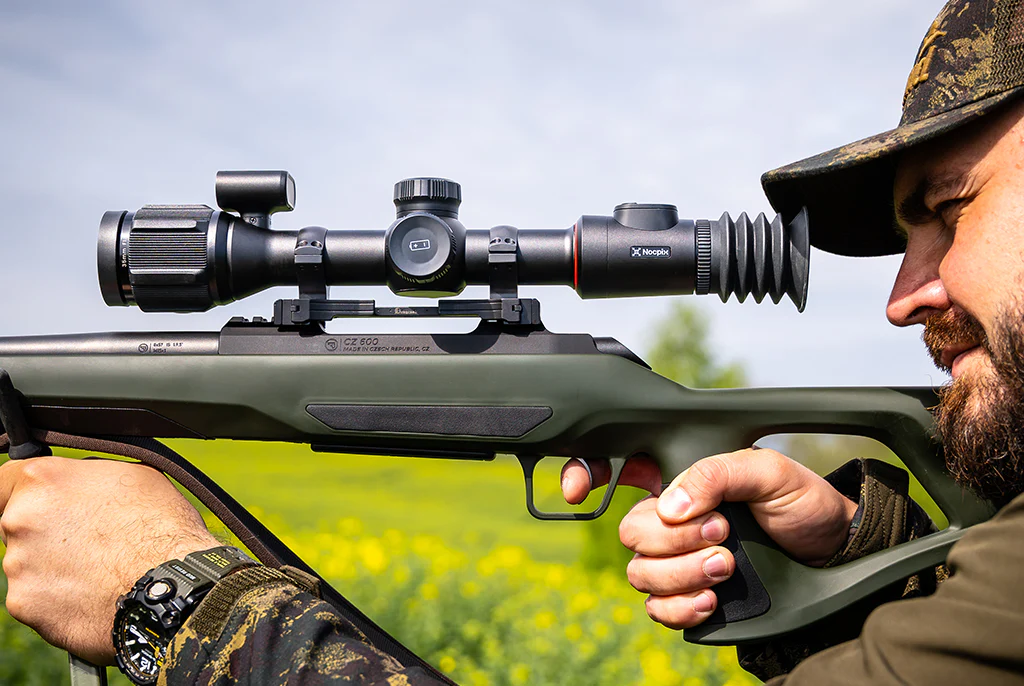
Base magnification is the starting apparent enlargement before additional digital zoom is applied. At 3×, for example, the thermal image appears larger than it does at 2×, but the visible area is usually smaller.
Thermal base magnification can be influenced by the detector, lens focal length, display size, and eyepiece factors. Field of view can also depend on detector size and lens focal length. That is why two thermal scopes with similar-looking lens numbers may present different views. For a deeper explanation, see thermal base magnification.
In the field, lower base magnification keeps more terrain in view when scanning for movement. Higher base magnification gives an animal more screen space when watching a known trail, feeder, or open lane. For example, the Nocpix BOLT P25R lists 3.5–14× magnification. Its 3.5× starting view supports scanning and target acquisition, while increasing the displayed magnification enlarges the selected area for closer inspection.
What Do Lens Focal Length and Field-of-View Numbers Mean?
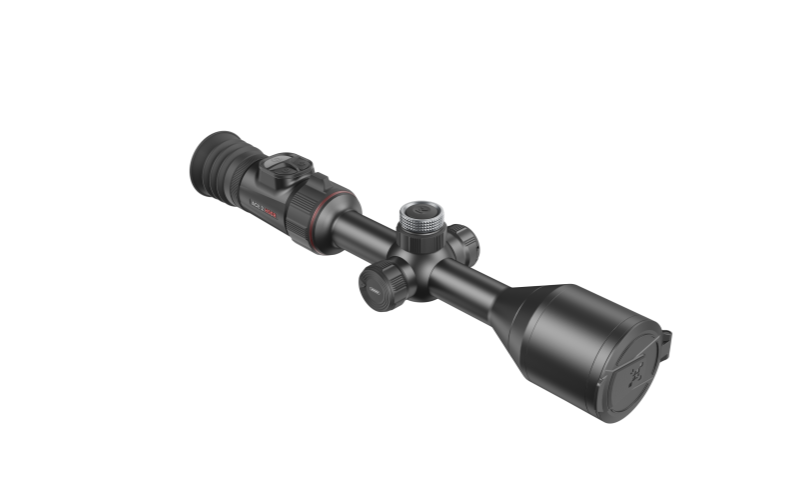
Lens focal length is normally stated in millimeters, such as 25 mm o 50 mm. With the detector held constant, a longer focal length generally produces a tighter view with a larger image scale. A shorter focal length generally shows more of the surrounding scene.
Field of view gives the visible width and height more directly. A value such as 8.8° × 7.0° means the view spans 8.8 degrees horizontally and 7.0 degrees vertically. Some specifications instead state the scene width at a fixed distance, so the unit belongs with the number.
El Nocpix ACE 2 H50R lists a 50 mm F0.9 lens, an 8.8° × 7.0° field of view, y 3–24× magnification. That combination keeps an animal prominent when watching a known lane or holding a distant sight picture. Because the listed field of view covers less terrain at once, scanning broken cover requires slower, more deliberate movement across the scene.
What Do 256×192, Pixel Pitch, and Display Resolution Mean?
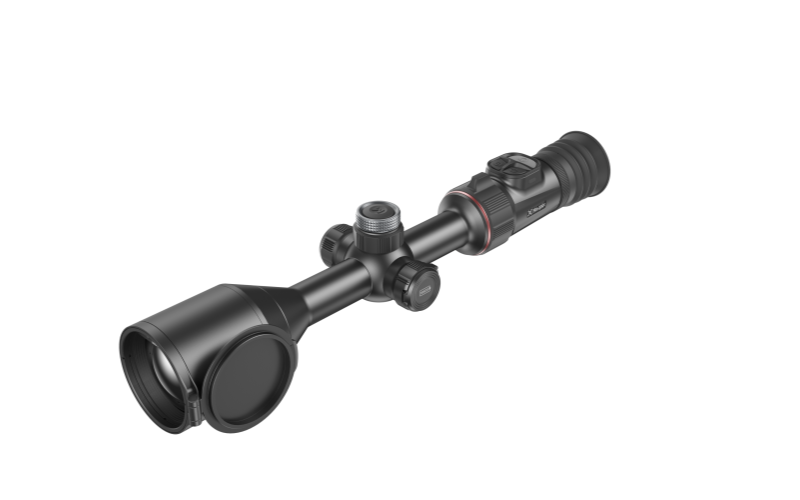
Detector resolution uses a format such as 256×192, 640×512, o 1280×1024. The first number is the horizontal pixel count and the second is the vertical pixel count. Multiplying them gives the number of detector positions used to sample heat across the scene.
Pixel pitch, often written as 12 μm o 17 μm, describes the spacing between detector pixels. It belongs to the detector, not the display. Display resolution is a separate number for the screen viewed through the eyepiece. The detector collects thermal information; the processor builds the image; the display presents that image to the hunter.
For a concrete example, the Nocpix ACE 2 S60R specification lists a 1280×1024, 12 μm thermal sensor. The 1280×1024 figure describes the detector’s sampling grid; it should not be confused with display resolution or thermal sensitivity. Its 60 mm F1.0 objective, 14.7° × 11.7° field of view, and 2–28× magnification explain how the sampled scene is framed and enlarged during observation.
What Do Digital Zoom and Range Numbers Mean?
Digital zoom enlarges part of the detector image on the display. A setting such as 2× digital zoom makes the selected area appear twice as large on screen, which can help inspect an animal’s outline or movement after it has been located. As zoom increases, less of the original scene remains visible and each captured detector sample occupies more display area.
Range numbers need a task label. Detección means noticing that an object is present. Reconocimiento means placing it into a broad class, such as an animal rather than a person or vehicle. Identificación means making a more specific judgment about what the object is. These distances change with target size, thermal contrast, atmosphere, focus, processing, and the criterion used in the test.
How to Read Thermal Scope Numbers Without Mixing Them Up
- Match the number to its field name. A bare 50 could refer to focal length, a model series, or another manufacturer-defined feature.
- Keep the unit attached. 50 mm, 50 Hz, y 50 m describe completely different things.
- Place the number in the imaging chain: lens, detector, processor, display, zoom, or range claim.
- Translate it into a visible effect, such as target size, scene width, sampled thermal detail, or on-screen enlargement.
- For a range figure, check whether it means detection, recognition, or identification and note the target and test conditions.
Conclusión
Thermal scope numbers become easier to read once each one is tied to a visible result. Magnification changes apparent target size, focal length and field of view shape scene coverage, detector resolution and pixel pitch describe thermal sampling, display resolution presents the processed image, and digital zoom enlarges part of that image.
Start with the field name and unit, then ask what part of the image changes for the hunter. That approach turns a specification sheet into a clear description of how the thermal view will look and behave in the field.