






A thermal scope’s NETD tells you how well its imaging system can separate a small temperature difference from noise. The figure appears in millikelvin (mK), and a lower number generally means greater thermal sensitivity when the test basis is comparable.
That advantage is easiest to see on a difficult night. Picture a hog moving along a warm field edge after the ground, brush, and air have settled near the same temperature. The animal may still look hot, but fine edges and texture can blend into the background. Lower NETD can help the scope retain more of that weak contrast.
NETD is not a complete image-quality score. It does not add pixels to the target, fix poor focus, widen the field of view, or guarantee identification at a stated distance. Hunters should read it as one part of the scope’s full imaging chain.
What Does NETD Mean on a Thermal Scope?
NETD stands for Noise Equivalent Temperature Difference. It is the temperature difference that produces a signal equal to the thermal imager’s noise level. In plain English, it describes the point where faint thermal contrast begins to emerge from electronic noise.
NETD can be expressed as RMS noise divided by responsivity. Responsivity is how much the detector output changes when the scene temperature changes. Less noise, more response, or both can produce a lower NETD value.
One millikelvin is one-thousandth of a kelvin. Temperature intervals in kelvin and degrees Celsius have the same size, so:
- 15 mK: A temperature interval of 0.015 K, equal to 0.015°C.
- 25 mK: A temperature interval of 0.025 K, equal to 0.025°C.
- 40 mK: A temperature interval of 0.040 K, equal to 0.040°C.
These conversions do not promise that a 15 mK scope will draw every 0.015°C change as a clean line. At the NETD threshold, the signal equals the noise. Test conditions and the rest of the device still shape what reaches the eye.
NETD also differs from temperature accuracy. A hunting scope can distinguish small relative changes without measuring an animal’s absolute temperature to the same numerical precision.
Published range figures deserve similar caution. A scope may detect a heat source past 1,000 yards while its image loses useful detail at 300. Laboratory numbers do not translate directly into field performance, and NETD-only comparisons can mislead.
When Does a Lower NETD Help a Hunter?
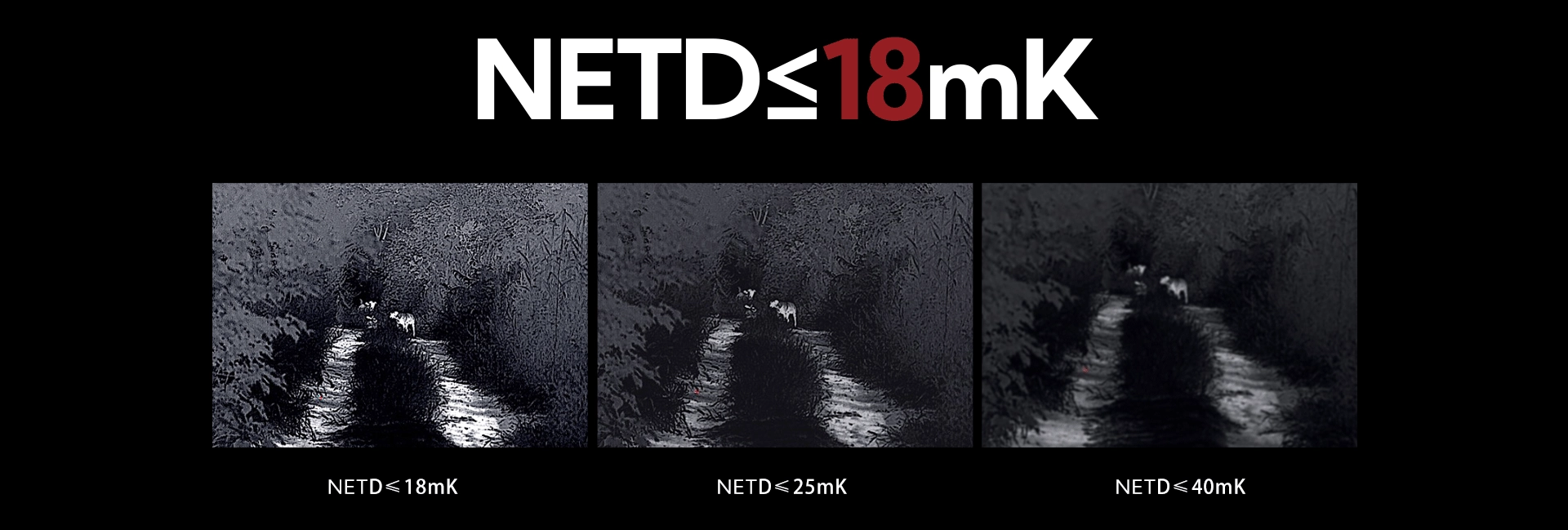
A lower NETD helps most when the animal and its surroundings produce only a small thermal contrast. The scope has less separation to work with, so detector noise can hide edges, fur texture, branches, and changes across the animal’s body.
Warm, Humid, and Thermally Uniform Scenes
Warm ground can hold heat after sunset. Vegetation and air may also settle toward similar temperatures. Add moisture, and the thermal signal arriving at the lens can lose contrast. In this kind of scene, a lower NETD gives the imaging chain more room to separate weak differences from noise.
The benefit may appear as a more stable outline against grass or better separation between legs and background. It does not mean the scope sees through moisture; part of the signal is already lost before reaching the lens.
Clear, High-Contrast Nights
A cold background and a warm animal create an easier scene. Both a 15 mK and a 25 mK scope may show an obvious heat source, so the visible gap can shrink.
Resolution, focal length, base magnification, and focus may then dominate the view. A low NETD figure cannot replace them.
Fog, Rain, Vegetation, and the Limit of Sensitivity
Fog, rain, and humid air can absorb or scatter infrared radiation, reducing image quality and detection range—though thermal systems may still outperform visible-light optics in these conditions.
Brush creates a different limit. Thermal scopes detect radiation from surfaces in view; they do not reveal an animal hidden behind an opaque tree trunk or dense cover. A sensitive scope may preserve faint exposed edges, but it cannot reconstruct blocked anatomy.
This field matrix keeps the role of NETD in proportion:
| Hunting situation | What lower NETD may help with | What NETD cannot control alone |
| Warm field after sunset | Weak animal-to-ground contrast | Pixels on the animal |
| Humid or misty air | Retaining subtle scene separation | Atmospheric signal loss |
| Cold, dry night | Fine tonal detail when present | Field of view or base magnification |
| Animal moving through grass | Edge and background separation | Motion blur, lag, or frame rate |
| Dense brush or solid cover | Visible exposed heat edges | Seeing through opaque objects |
| Long-range target | Faint contrast at the detector | Recognition or identification distance |
Give NETD more weight when low thermal contrast is common. Judge the complete system when range, movement, and terrain shape the shot.
Why NETD Cannot Predict Hunting Range by Itself
NETD describes sensitivity to small temperature differences. Hunting range also depends on how much scene detail the scope samples and how the complete device presents it.
Detection means noticing heat. Recognition places it in a broad class, such as an animal. Identification confirms enough detail for a safe decision. Lower NETD can support these jobs in low contrast, but it cannot set their distances alone.
Resolution and Pixels on Target
Sensor resolution controls how many pixels sample the scene. A distant coyote may be detectable while covering too few pixels for identification. Lower NETD can reveal the signal but cannot create missing shape information.
Digital zoom enlarges the sampled pixels; it does not collect new scene detail. Hunters planning longer shots should compare NETD with thermal scope resolution, focal length, base magnification, and realistic target size.
Lens F-Number, Focal Length, and Focus
The lens controls how much infrared energy reaches the detector. A lower F-number indicates a wider relative aperture and, with other factors equal, sends more energy to the detector.
Because the lens sits ahead of the detector, an NETD figure is only comparable when the optics behind it match. A value measured through an F1.0 objective and one measured through an F1.4 objective describe different systems. Values from different optics need an explained normalization method before they can be ranked.
Focal length changes the trade between reach and field of view. Focus can erase an apparent sensitivity advantage if target edges remain soft—a scope can report an excellent NETD figure while still producing an out-of-focus image.
Processing, Frame Rate, and Motion
Noise reduction can clean a static scene while softening texture or leaving trails during movement. Edge enhancement may add halos. Neither effect appears in a single mK number.
Frame rate affects movement continuity. Display, eyepiece, palette, and brightness shape interpretation. A polished screenshot cannot replace footage with panning and moving animals.
The useful buying sequence is:
- Scene: Estimate contrast, humidity, cover, range, and movement.
- Sensitivity: Compare NETD only when the reporting basis is similar.
- Spatial Detail: Check resolution, focal length, base magnification, and field of view.
- Image Chain: Review focus, processing, frame rate, display, and representative footage.
- Fit: Match weight, controls, recoil rating, battery system, and legal use to the hunt.
A full guide on how to choose a thermal scope should use this broader sequence. NETD earns a place near the top in low-contrast conditions, but it never stands alone.
How Should You Compare NETD Between Two Scopes?
Use five checks before giving the lower number an advantage:
- Identify the measurement layer: Is the figure for the detector, assembled system, or processed output? An unlabeled value is incomplete.
- Match the test basis: Look for scene temperature, F-number, integration time, image mode, and a named method.
- Compare the optics: Check objective F-number and focal length beside the sensor claim.
- Compare spatial detail: Read resolution, pixel pitch, base magnification, field of view, and digital zoom beside NETD.
- Review field-like footage: Look for low-contrast backgrounds, panning, moving animals, and practical magnification levels.
If two brands do not disclose a common basis, do not rank them from mK alone. Use the remaining specifications and comparable footage.
Make one comparison row for each check. Missing information then stays visible beside terrain fit and usable magnification.
How Can You Test the Difference Before a Hunt?
A useful test needs an easy scene and a difficult one. Match palette, brightness, magnification, focus effort, and image mode as closely as possible.
Static Low-Contrast Test
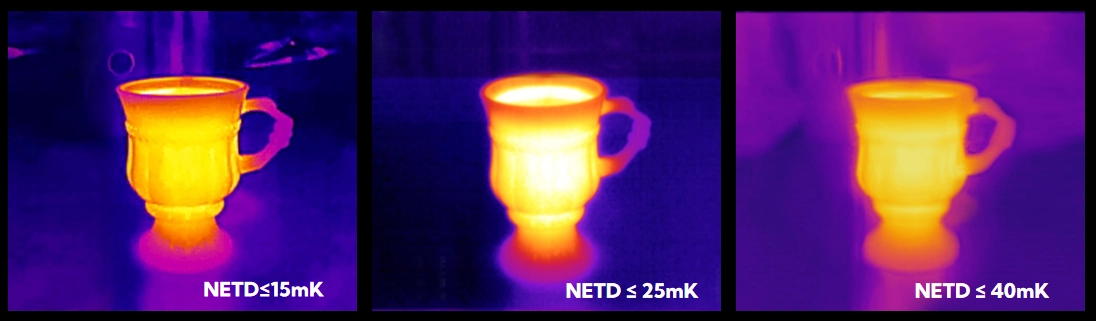
Aim both scopes at the same field edge as temperatures equalize. Include grass, brush, soil, and an animal-sized warm target at a safe distance. Compare outline stability, surface separation, and fine tonal changes.
Repeat at base magnification and one practical zoom level. Smoothing may hide small texture as the image enlarges.
Pan and Moving-Target Test
Pan at a controlled speed, then observe a safe moving subject. Watch for trails, smeared edges, pulsing contrast, halos, and detail that appears only after movement stops.
Favor the image that preserves useful information while scanning and tracking, not only in a freeze-frame.
Keep firearms unloaded and pointed safely during setup comparisons. Follow local thermal-optics and night-hunting rules.
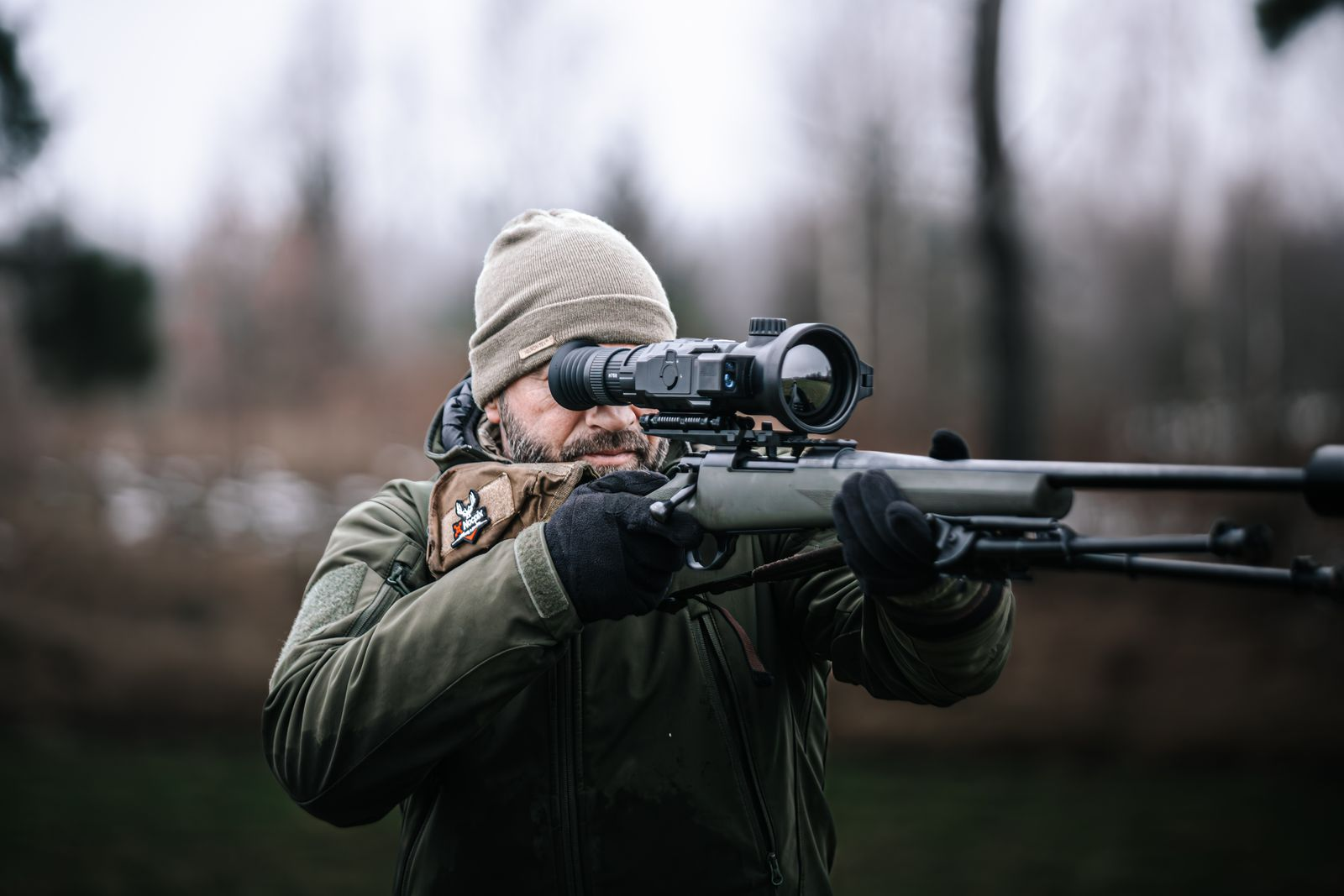
How a Low-NETD Scope Configuration Fits the Decision
During warm, humid, or thermally uniform hunts, shortlist scopes that pair a clearly labeled low NETD with the resolution, lens, and base magnification your terrain requires.
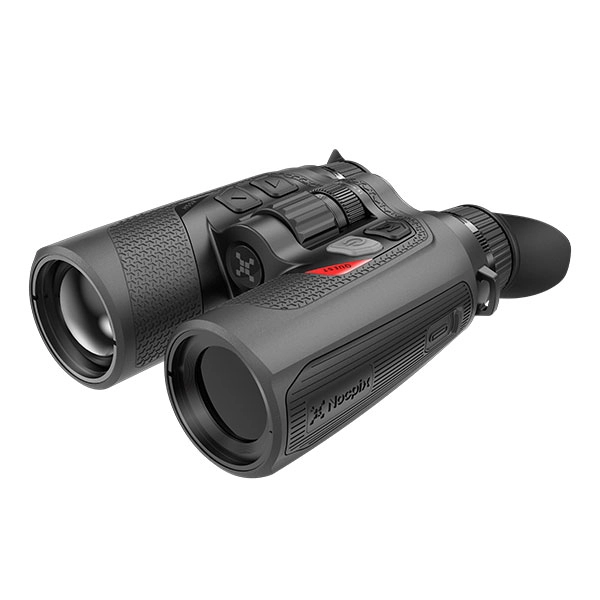
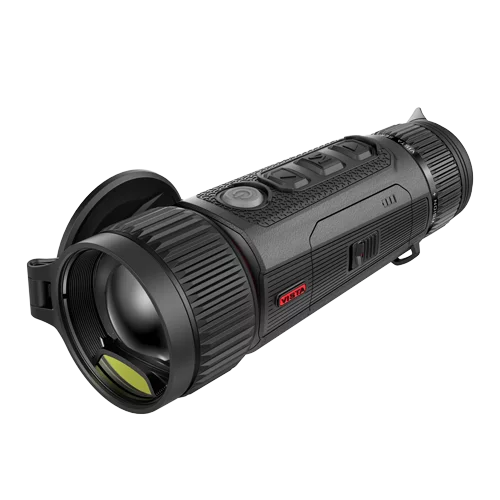
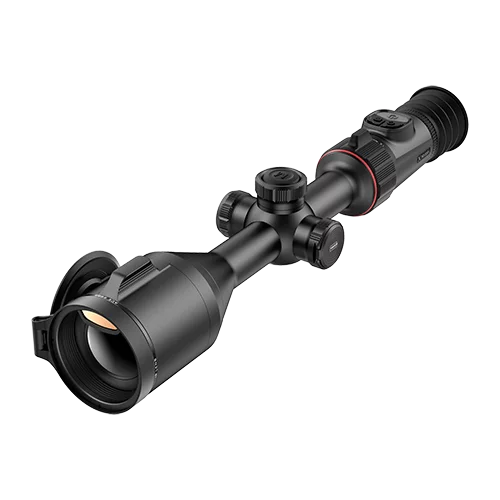
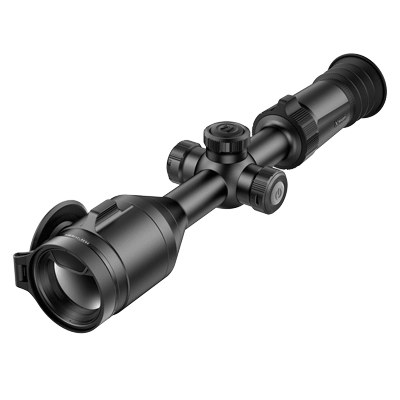
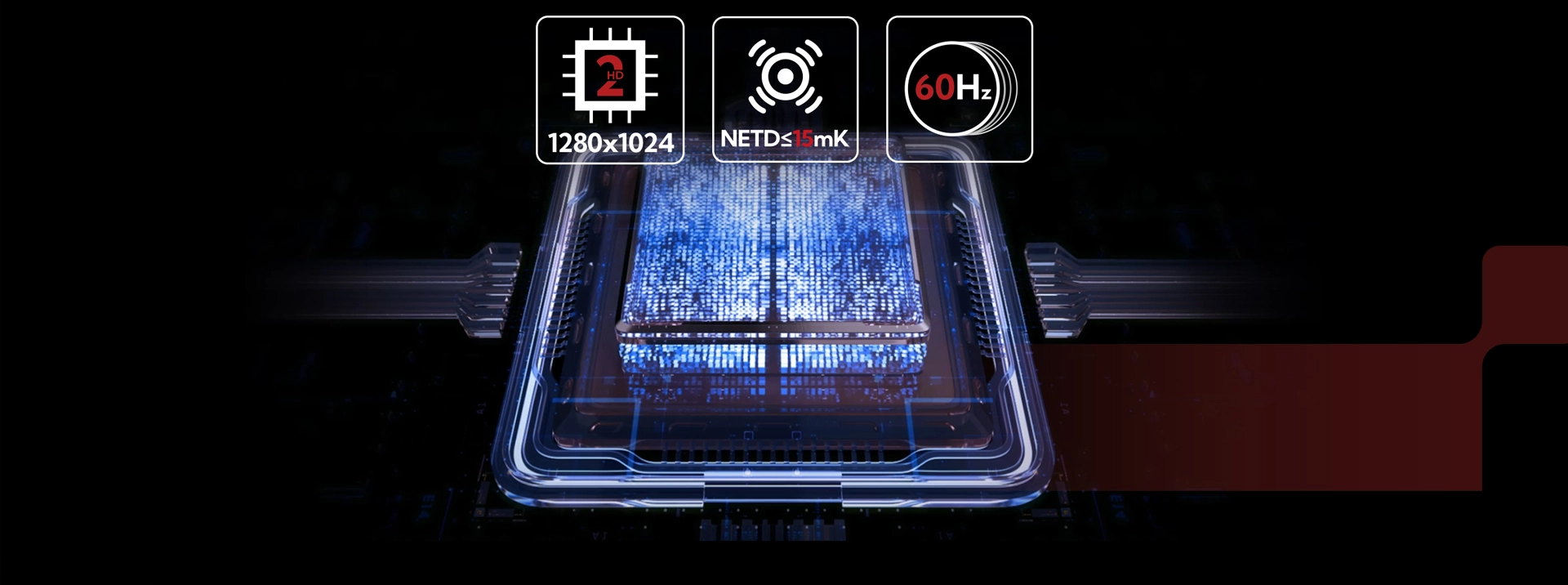
Nocpix lists the ACE H50R with a 640×512, 12 μm sensor and NETD at or below 15 mK. It also lists a 50 mm F0.9 objective and a 60 Hz frame rate. For vegetation-heavy field edges, that complete configuration is more informative than the 15 mK figure alone.
These are brand-owned specifications, not an independent field ranking. Add the model to a shortlist only after reviewing focus, field of view, processing, recoil fit, and moving footage in similar conditions.
Frequently Asked Questions About Thermal Scope NETD
Is 15 mK always better than 25 mK?
Fifteen mK indicates greater sensitivity when both values describe the same layer under comparable conditions. Different processing, F-numbers, or test temperatures prevent a clean ranking.
Is NETD the same as thermal resolution?
No. NETD measures sensitivity to small temperature differences. Resolution measures the pixels sampling the scene. Low NETD cannot fix too few pixels on a distant target; high resolution can still show noise in low contrast.
Does lower NETD help in fog and rain?
It can help the scope retain weak contrast that reaches the detector, but it cannot reverse atmospheric absorption or scattering. Dense fog and heavy rain can still reduce range and detail. Avoid claims that any consumer thermal scope sees through weather without loss.
Can image processing improve NETD?
Processing can reduce visible noise under a defined method. It cannot recover information the lens and detector never captured. Check moving footage for softened texture, trails, or lag.
Final Recommendation
Use NETD as a low-contrast sensitivity measure, not a winner-takes-all score. A lower value deserves more weight for warm, humid, misty, or thermally uniform hunting scenes. It deserves less authority when the test basis is hidden or the real limit is pixels on target, focus, field of view, or magnification.
Start with the conditions you hunt most often. Build a shortlist using comparable NETD reporting, then compare resolution, lens aperture, focal length, base magnification, field of view, and moving footage. If a Nocpix configuration fits those requirements, compare the complete thermal imaging riflescopes range before choosing a model.
Thermal and night-hunting rules vary by location and species. Confirm the current local law, season, equipment rules, and licensing requirements before using a thermal riflescope in the field.