






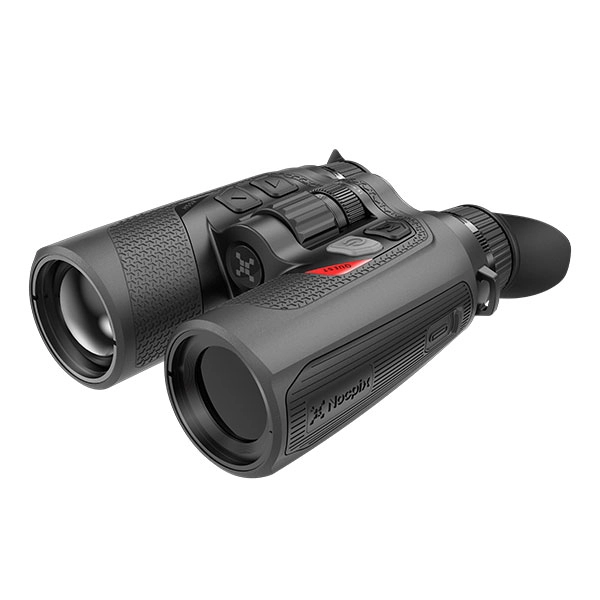
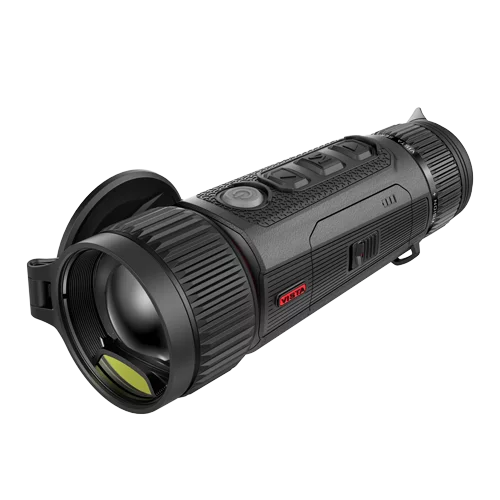
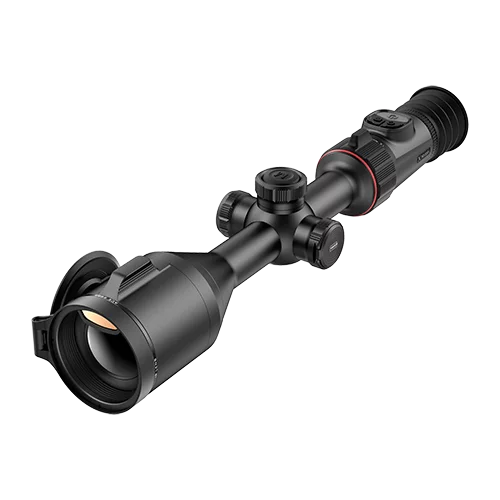
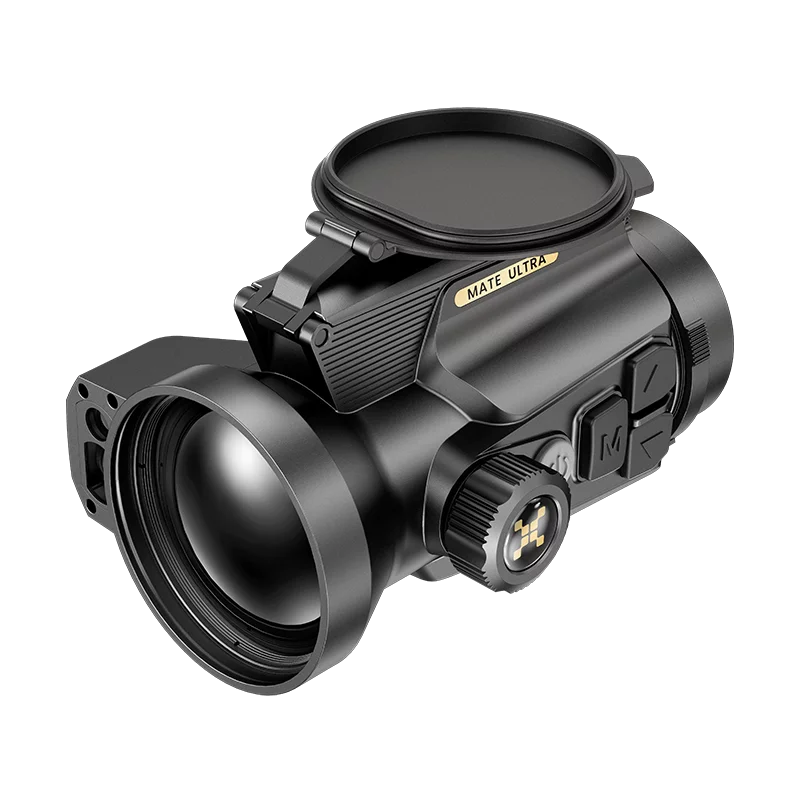
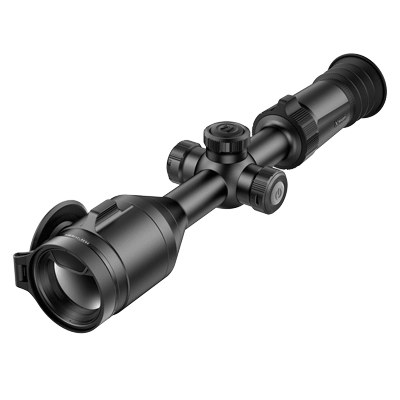
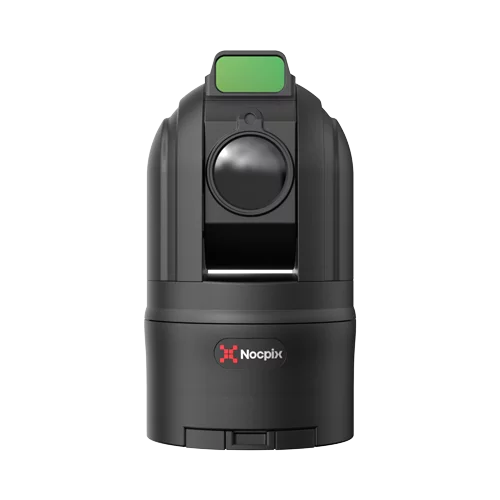


Yes — a thermal scope for Blaser R8 hunting works, and the rifle is better suited to it than most. The R8 has no Picatinny rail. Instead, its saddle mount clamps the optic directly to the barrel. Take the scope off, put it back on, and the zero stays. One rifle becomes a true day-and-night system.
The right setup comes down to three decisions. First, how the optic mounts: 30 mm saddle rings, a dedicated quick-detach thermal mount, or a clip-on in front of your day scope. Second, which format fits your hunting — high-seat wild boar, driven hunts, or fox control. Third, what the law allows where you hunt. In Germany, that third question currently decides much of the second one.
This guide walks through each decision in order, with mount hardware, realistic scenarios, and a setup process that keeps the R8’s zero-retention advantage intact.
Quick Answer: Which Thermal Setup Fits a Blaser R8?
Every thermal setup on an R8 uses the saddle mount interface on the barrel. The differences lie in cost, flexibility, and legality.
| Setup path | Hardware | Optic examples | Best for | Watch out for |
| 30 mm saddle rings | Blaser-pattern rings or one-piece mounts | ACE H50R, BOLT L35R | A fixed night-hunting setup at the lowest cost | Ring height must suit your comb |
| Dedicated QD thermal mount | INNOMOUNT QD or ZERO, thermal version | ACE, BOLT, SLIM | Swapping between day scope and thermal without re-zeroing | Adds roughly €330–360; tension is set per barrel |
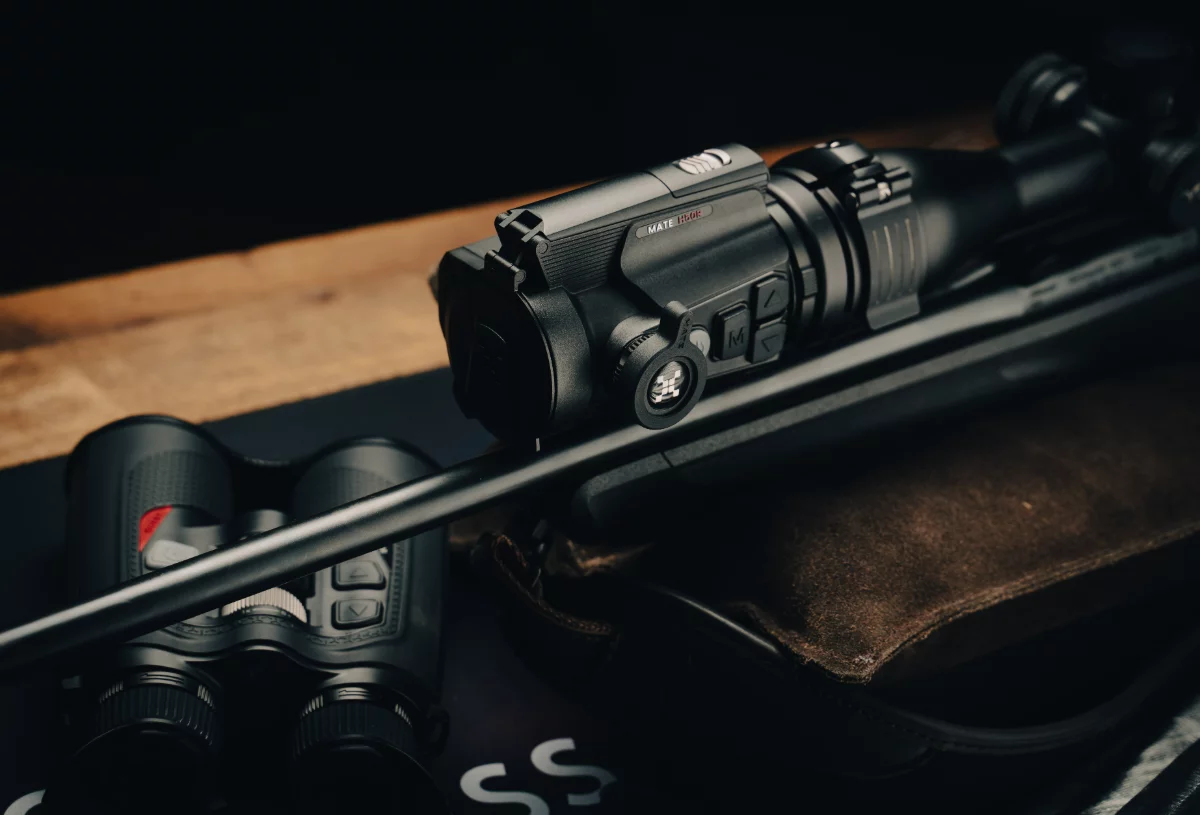
| Thermal clip-on | Attachment ahead of the day scope | MATE series | Regions where dedicated thermal riflescopes are restricted | Added front weight; host scope limits |
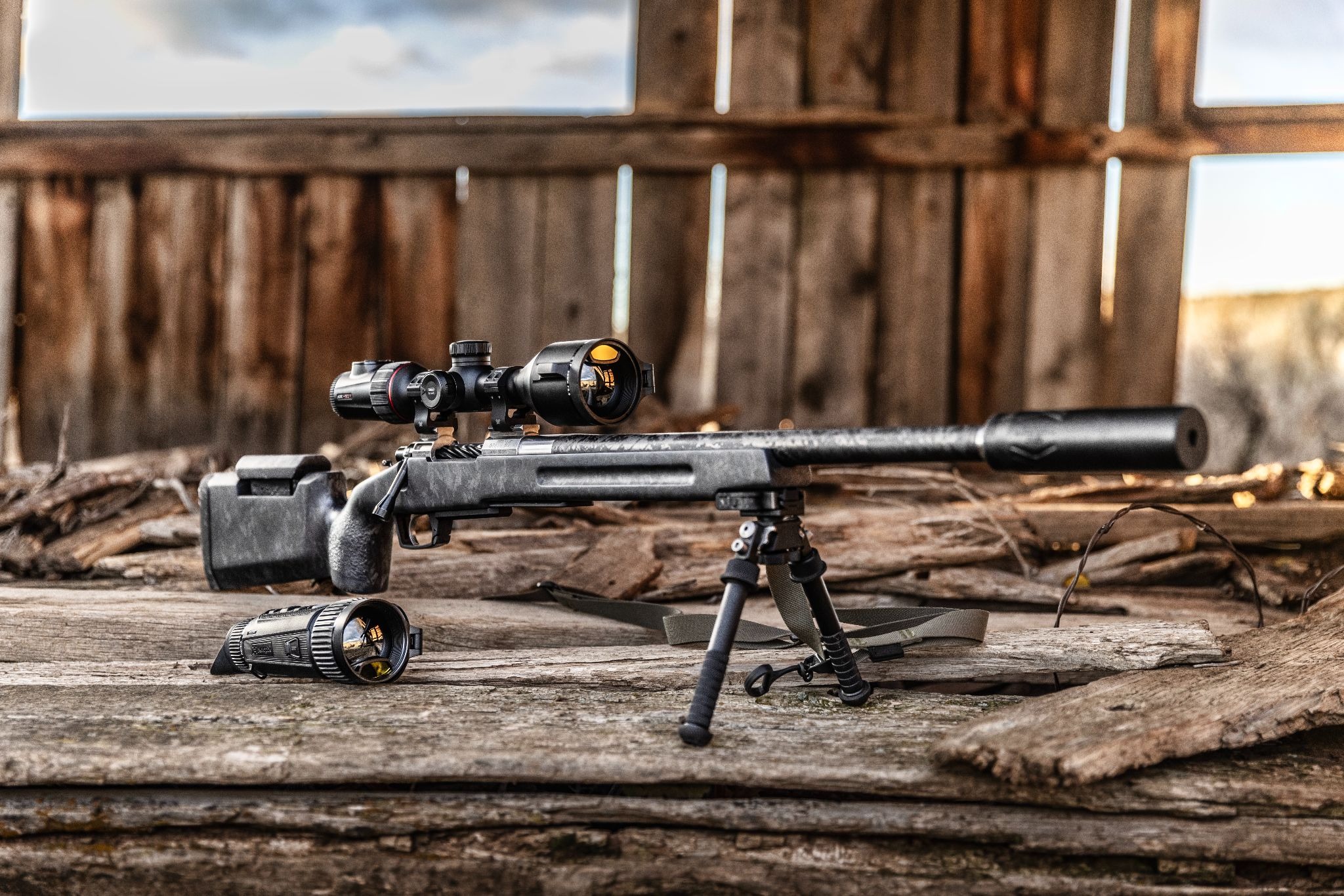
| Long-lens specialist | Saddle rings with clearance check | ACE S60R, RICO 2 | Open country and longer identification distances | Heavy on a carried rifle |
For most R8 owners who hunt boar from a high seat, a 640-class 30 mm scope on quality rings is the practical starting point. If you want one rifle for both day and night work, budget for a dedicated QD thermal mount. If you hunt where the law restricts dedicated thermal riflescopes, start with the clip-on row.
How Does the R8 Saddle Mount Work With a Thermal Scope?
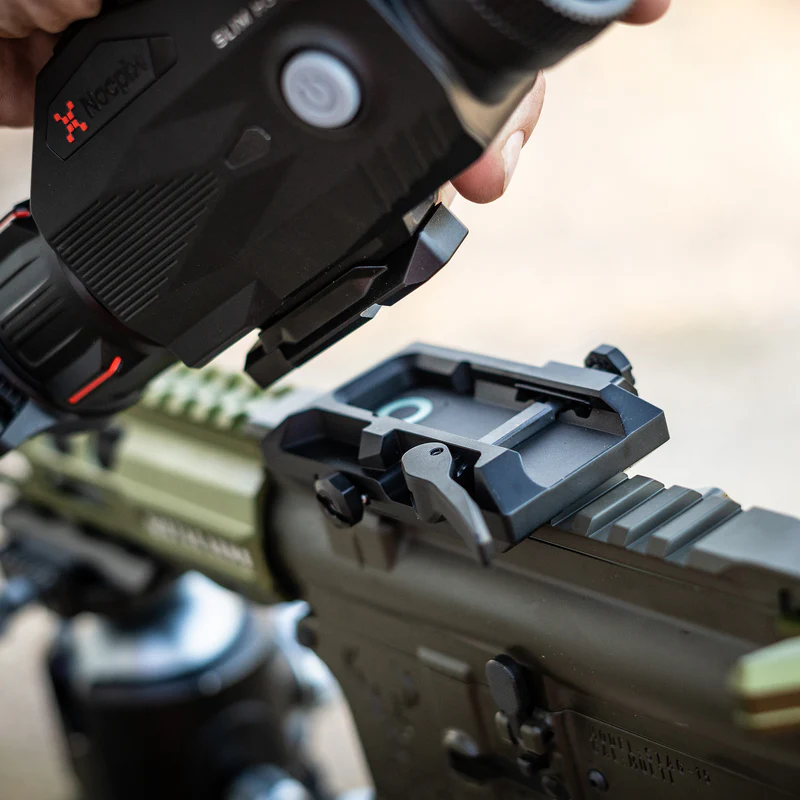
Saddle mount (Sattelmontage): Blaser’s mounting system, where the optic clamps into four notches machined directly into the barrel above the chamber. Two locking levers secure the mount without tools.
Does the Blaser R8 saddle mount hold zero with a thermal scope? Yes. Because the mount attaches to the barrel rather than the receiver, the scope and barrel stay together as one unit. Remove the optic, remount it, and point of impact returns. R8 owners have relied on this for decades of barrel swapping, and it applies to thermal optics the same way it applies to day scopes.
For night hunting, this design beats a rail in one specific way: speed of transition. Finish a driven hunt with your day scope, flip two levers, clamp on the thermal, and the rifle is ready for the evening high seat. No tools, no re-zeroing session, no wasted daylight.
Three caveats keep expectations honest:
- Tension is set per barrel. A saddle mount is adjusted to one specific barrel during fitting. Plan on one mount per barrel rather than sharing a mount across barrels.
- There is no factory Picatinny rail. Optics built around a rail interface need a Picatinny saddle adapter first. Mount makers offer extended rail saddles for exactly this purpose.
- Height affects cheek weld. Thermal scopes often sit taller than slim hunting scopes. The height-adjustable comb on newer R8 stocks, such as the Professional 2.0, helps restore a natural head position.
Check that the mount seats cleanly in the notches and that both levers lock with firm, even resistance. A correctly fitted saddle mount should need no force beyond hand pressure.
Three Ways to Mount a Thermal Scope on a Blaser R8
30 mm Saddle Rings: The Simple Fixed Setup
Most traditional thermal riflescopes are built around a 30 mm tube, so any Blaser-pattern 30 mm rings or one-piece saddle mount accepts them. That covers the ACE and BOLT lines, including the ACE H50R and BOLT L35R.
This path suits a rifle that keeps its thermal scope on for the season. It costs the least, adds the fewest parts, and leaves zero undisturbed once set. Two checks before buying: ring height must clear the objective lens — a 50 mm lens needs taller rings than a slim day scope — and the eye position must still work from your actual shooting posture, high seat included.
Dedicated QD Thermal Mounts: The Day-and-Night Swap
German mount maker INNOMOUNT publishes a Blaser-compatible mount line that lists specific thermal scopes by name. Its quick-detach and ZERO mounts for Blaser include a thermal-tube 30 mm version listed for the ACE H50R, ACE H50, ACE L35, BOLT L35R, and BOLT P25R, a digital-tube version for the ACE S60R, and an adapter version for the SLIM H35 and L35. Prices sit around €329–359 depending on the locking system.
This is the path that unlocks the R8’s signature trick: day scope for the morning, thermal for the night, both returning to zero. The ZERO variants add a lock against accidental lever opening, which matters when crawling through rough ground on a driven hunt.
Remember to budget for the mount itself. The listings already cover the R8 and the rest of the Blaser saddle-mount family, so choosing a version just means matching it to your optic. A quick word with your dealer will confirm the fit for your barrel — saddle mounts are tensioned per barrel, and that check takes minutes.
A Clip-On in Front of the Day Scope: The Regulation-Safe Path
A thermal clip-on such as the MATE mounts ahead of your existing day scope. The day scope keeps its reticle and its zero; the clip-on simply feeds it a thermal image.
Two reasons to choose this path. First, legality: in much of Germany, clip-on attachments without their own reticle are currently the permitted option for wild boar at night, while dedicated thermal riflescopes remain restricted. Second, simplicity: no second zero, no second mounting standard, and the rifle handles like it always has.
The trade-offs live at the front of the rifle. A clip-on adds weight ahead of the balance point, needs correct alignment with the day scope, and works best within a limited host magnification range. On a high seat with a rail or rest, the extra front weight disappears. On a long stalk, you will feel it.
Which Thermal Scope Fits Your R8 Hunting?
Mount hardware decides how the scope attaches. Terrain and game decide which scope deserves the attachment. When you choose a thermal scope for an R8, start from the distance you actually hunt, not the detection figure on the box.
High-Seat Wild Boar at Night
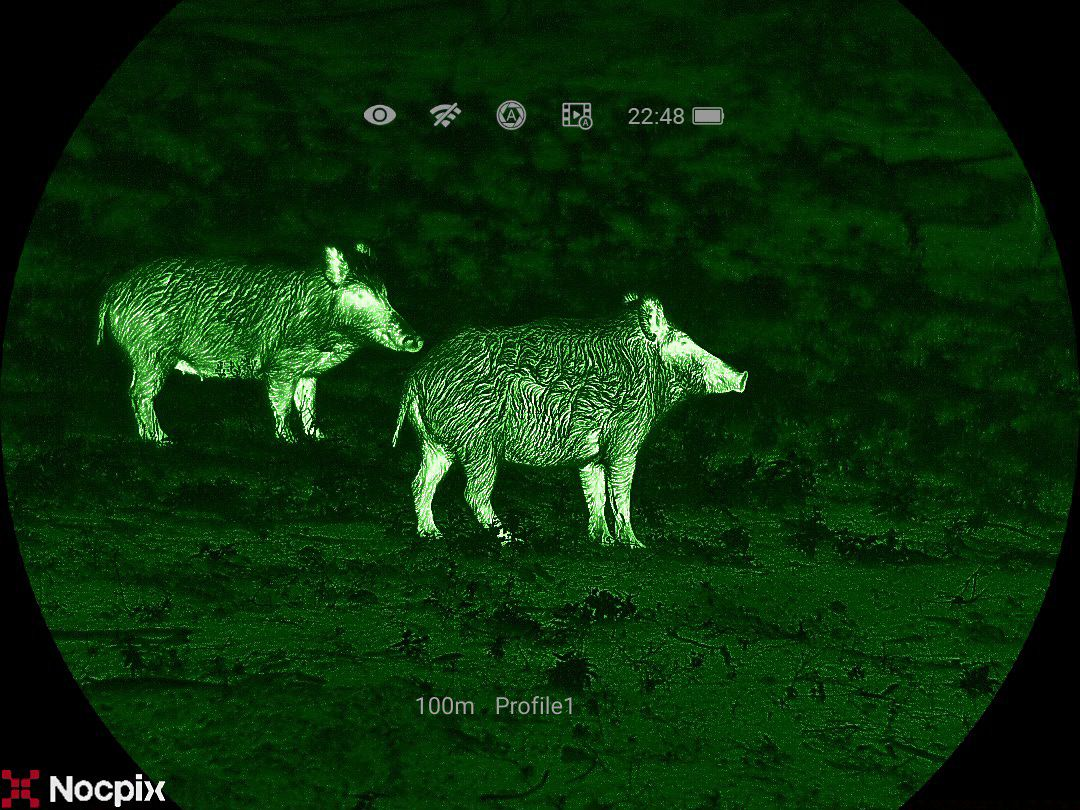
Most European high-seat shots on boar happen inside 100 meters, often inside 50. At those distances, field of view beats magnification. A wide view lets you track a sounder as it spreads across a feeding area and still pick your animal. Base magnification around 2×–3.5× keeps close encounters manageable; 60 Hz refresh keeps moving targets smooth.
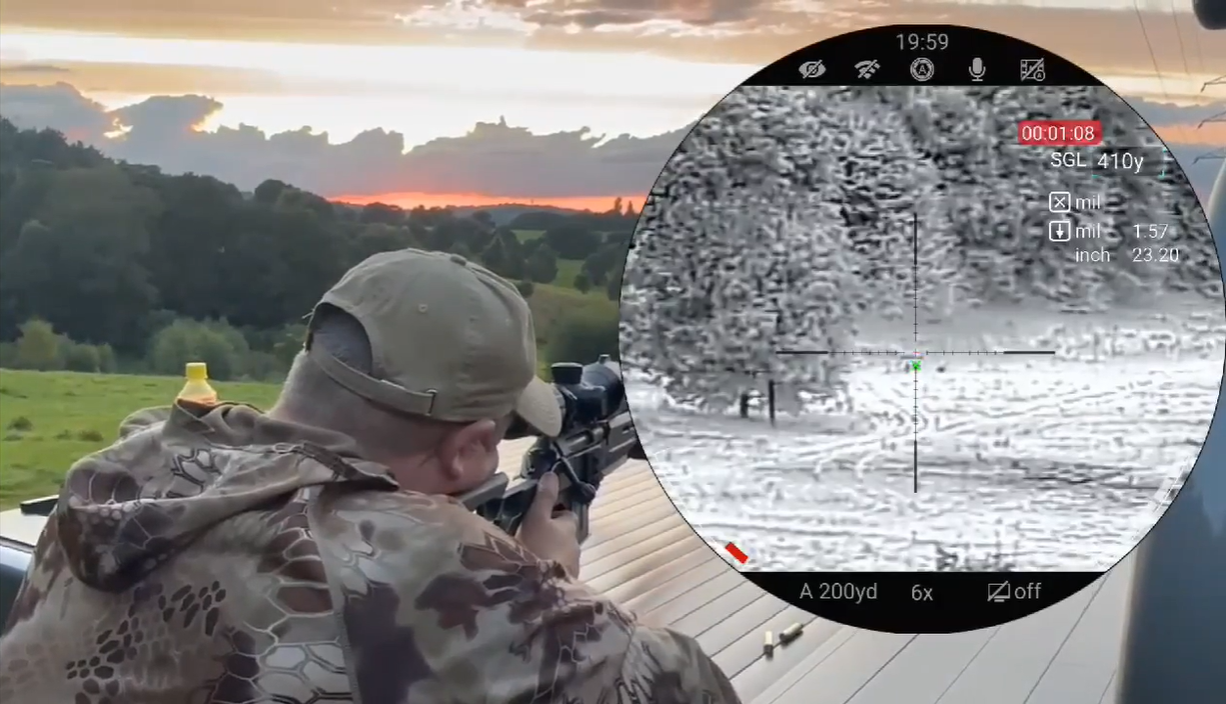
An integrated laser rangefinder earns its place here. Fields at night offer few distance cues, and a quick range reading settles holdover before the shot. The BOLT series fits this role as the accessible entry, combining a 384-class sensor with LRF and ballistic functions. Step up to a 640×512 scope such as the ACE H50R when you want more identification detail at the far side of large fields. Spanish hunting magazine Trofeocaza rated the entry-level BOLT P25R highly for value in exactly this kind of use, while noting its added bulk.
Driven Hunts With Night Follow-Up
Driven days are the R8’s home turf: straight-pull speed on moving game, a day scope up top. Where the law allows, the follow-up is an evening on the high seat with the thermal clamped on. This is the scenario the QD mount path was built for. Keep the thermal compact and light — after a full day on your feet, every gram on the rifle shows. The SLIM line adds a second role here, doubling as a handheld spotter when it is off the rifle.
Fox Control and Open Ground
British foxing and Nordic culling stretch distances out. A 640×512 sensor behind a 50 mm lens holds identification detail further across stubble and pasture. The ACE H50R matches this work: 640-class detail, 3× base magnification, 60 Hz, and an integrated rangefinder for fence-line distances. The Firearm Blog‘s review praised its image quality and eyepiece zoom while flagging its 1.12 kg weight — a fair trade on a supported rifle, less so on a long walk.
When a Long-Lens Scope Makes Sense
Open-country hunting at genuine distance justifies bigger glass: the ACE S60R with its 1280×1024 sensor, or a RICO 2 with a 75 mm lens. In a 2026 Norwegian outdoor media group test, the RICO 2 S75R resolved fur detail on boar at 150 meters and topped the riflescope rankings — but the same tester called it heavy, and it was the most expensive scope in the test. Buy this class for open country and fixed positions, not for a rifle you carry all day.
Is a Thermal Scope Legal Where You Hunt?
Legality decides more thermal purchases in Europe than any spec sheet. The same R8 setup can be routine in one country and prohibited an hour across the border. The table below is a starting orientation as of mid-2026, not legal advice — always confirm with your local hunting authority before buying or hunting.
| Region | Dedicated thermal riflescope | Thermal clip-on | Verify before hunting |
| Germany | Restricted; a liberalization bill passed the Bundesrat in June 2025 but was not yet in force at research time | Permitted for wild boar in most federal states (13 of 16), conditions vary | Your Land’s current hunting law and any species limits |
| United Kingdom | Generally permitted for fox and pest control | Permitted | Deer at night are off-limits; check species and license conditions |
| Sweden / Nordics | Permitted for defined culling and boar contexts | Permitted | National rules on species, seasons, and night hours |
| France and others | Varies; often tied to pest-control authorizations | Varies | Prefecture or national hunting office guidance |
The German situation deserves one more sentence. The Bundesrat’s June 2025 decision would open the door to dedicated night-aiming devices, but it still required further legislative steps at research time. Until your Land confirms the change in force, the clip-on path remains the safe default there.
Wherever you hunt, the same checklist applies: species, season, night hours, land permission, and the device category itself. Five minutes with the current rulebook beats any forum answer.
How to Set Up and Zero a Thermal Scope on the R8
Follow the instructions from the rifle, mount, and scope makers. If anything binds or sits unevenly, stop and hand the job to a qualified gunsmith.
- Clear and inspect. Unload the rifle and check the chamber. Clean the barrel’s saddle notches; they must be free of oil and debris.
- Fit the mount to the correct barrel. Remember that mount tension belongs to one barrel. Set or confirm tension per the mount maker’s instructions.
- Seat the scope and set eye position. In your hunting clothing, from your real shooting positions, confirm the full display is visible without stretching your neck. Adjust ring spacing or mount offset before final tightening.
- Torque to spec. Tighten fasteners in the stated order to the stated values. More force is not better.
- Configure and zero. Set reticle, palette, and units. Zero with your exact hunting load at a realistic distance — 50 to 100 meters covers most high-seat work. Fire groups, not single shots. ACE owners can follow the model-specific guide to zero an ACE series scope.
- Run the swap test. Remove the scope, remount it, and fire a confirmation group. This single test proves the saddle mount’s return to zero on your rifle. Repeat it after travel and after any mount adjustment.
Record the final mount position and torque values. A note in your phone saves a range trip later.
Frequently Asked Questions About Thermal Scopes on the Blaser R8
Can any thermal scope be mounted on a Blaser R8?
Almost any thermal scope with a 30 mm tube fits through Blaser-pattern saddle rings or a one-piece saddle mount. Rail-format and proprietary-mount optics need a matching adapter, such as a Picatinny saddle rail. Check recoil rating against your largest barrel, and confirm mount clearance for large objective lenses.
Will the zero really survive removing and remounting the scope?
The saddle mount is designed for exactly that: the optic clamps to the barrel and returns to the same position. In practice, verify it once on your own rifle — remove the scope, remount it, and fire a confirmation group. Trust the measurement, not the marketing.
Is a dedicated thermal scope or a clip-on better for hunting in Germany?
As of mid-2026, the clip-on is the legally safer choice in most German states, because dedicated thermal riflescopes remain restricted while clip-on attachments are permitted for wild boar in most Länder. A federal bill passed the Bundesrat in June 2025, so recheck the current law — the answer may change.
Should an R8 carry both a day scope and a thermal scope?
That is the platform’s great strength. One rifle, one saddle interface, two optics: day scope for driven hunts and daylight stalking, thermal for legal night work. Budget for a mount for each optic and remember that mounts are tensioned to individual barrels.
Is a thermal scope or thermal attachment better for the Blaser R8?
Whether a thermal scope or a clip-on thermal attachment is better for a Blaser R8 depends on your hunting style. A thermal clip-on is better if you want dual day-and-night flexibility using your trusted glass. A dedicated thermal scope is better for pure night performance, better rifle balance, and a simpler setup.
Final Recommendation
The Blaser R8 was almost designed for thermal hunting before thermal hunting existed. Choose the path that matches your law and your season:
- Fixed night setup: a 640-class scope on quality 30 mm saddle rings, such as the ACE H50R or, on a tighter budget, the BOLT L35R.
- Day-and-night swap: a dedicated QD thermal mount per barrel.
- Restricted regions: a MATE clip-on ahead of your day scope.
Whichever path you take, confirm the mount for your specific barrel, run the swap test, and check the current rules where you hunt. Compare the full range of thermal riflescopes to match sensor, lens, and budget to your ground.