








Picking the right thermal scanner for coyote hunting comes down to three things: the terrain you hunt, the distance you need to scan, and whether you hunt alone or with a partner. Get those right, and the rest of the specs fall into place.
Coyotes are fast, cautious, and mostly active after dark. A thermal scanner, typically a handheld thermal imaging monocular or binocular, helps you find them before they spot you. But not every scanner fits every situation. A compact unit built for tight brush hunts is a poor choice for scanning 500-yard pastures, and a long-range glassing tool may be overkill on a small farm.
This guide walks you through each scenario. We will cover what specs to focus on, which device type fits your style, and how Nocpix models line up with the most common coyote hunting setups. We will also cover the buying mistakes that cost hunters time and money.
Table of Contents
Thermal Scanner vs. Thermal Scope: Which Should You Buy First?
Choose a handheld thermal scanner first when the main bottleneck is finding and observing animals across a wide area. Choose a thermal riflescope first when the budget supports only one thermal device, the observation area is already known, and the missing role is a dedicated mounted optic for a lawful hunting setup.
If both wide-area observation and a dedicated thermal aiming optic are recurring needs, using both creates a clearer division of roles: use the handheld to search and observe, and move to the riflescope only after confirming the target, background, safe direction, and local legal requirements.
The first purchase should solve the first bottleneck in the user’s process—not follow one universal device order.
| Situation | Practical starting point | Main reason | Main limitation |
| Wide-area or repeated observation is the main need | Handheld thermal scanner | Keeps observation separate from the mounted optic | A separate lawful aiming solution is still required |
| Known observation area, one-device budget, and no dedicated mounted thermal optic | Thermal riflescope may be practical first | Fills the mounted-optic role directly | Less suitable for prolonged repeated scanning |
| Both observation and mounted aiming are frequent needs | Both | Separates the two roles | Higher cost and more equipment to manage |
This guide provides general equipment-selection information. It does not replace firearm-safety training, product instructions, or current local hunting regulations.
Do You Really Need a Thermal Scanner for Coyote Hunting?
It depends on how you hunt and what tools you already have.
When a Thermal Scope Alone Is Enough
A thermal imaging riflescope may be the practical first thermal purchase when the user observes a known lane or fixed area, can buy only one thermal device, and needs a dedicated mounted optic. In that limited setup, the scope can support observation and the final aiming stage without requiring a second thermal device immediately.
This is a compromise, not a universal rule. A mounted scope is generally less suitable for prolonged, repeated observation across wide areas. The decision must also account for safe firearm handling, field of view, firearm weight, mounting, zeroing, local law, and the user’s existing observation tools.
When a Handheld Scanner Is Worth It
A dedicated handheld scanner becomes valuable when the main task is repeated observation across fields, tree lines, trails, or multiple approach directions. A handheld thermal monocular allows the user to search and observe without using a rifle-mounted optic as the primary viewing tool.
The advantage is not one guaranteed distance. It is the ability to choose field of view, base magnification, weight, controls, and carrying method specifically for observation. A scanner-first purchase still requires a separate lawful and appropriate aiming solution for hunting.
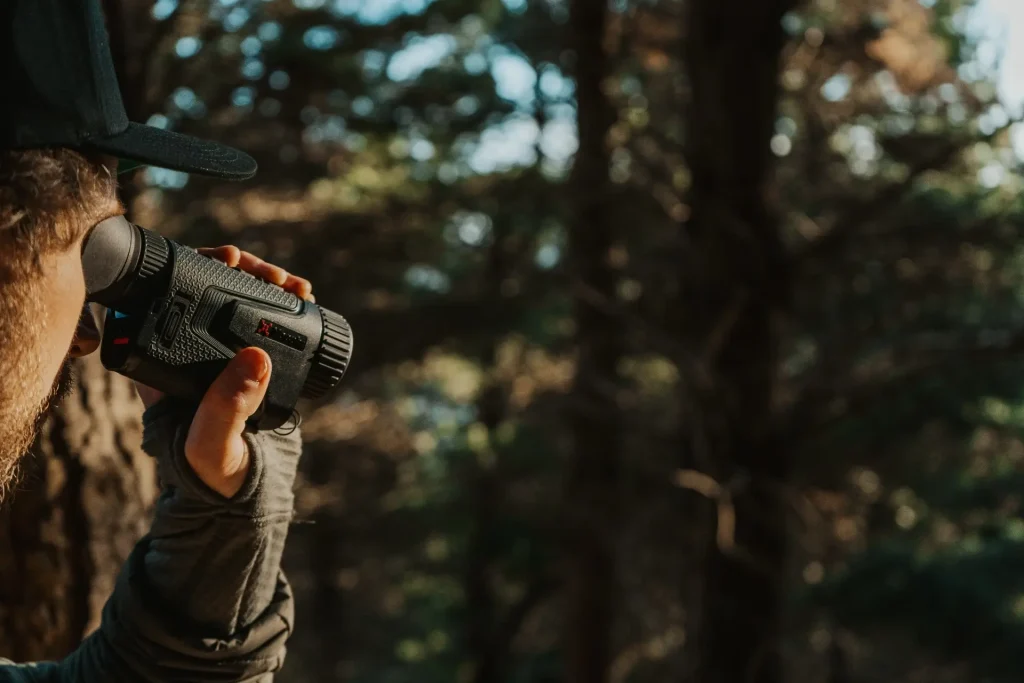
Handheld scanners also give you a wider field of view at base magnification than most thermal riflescopes. That wider view helps you catch movement earlier, especially when multiple coyotes come to a call.
Solo Hunters vs. Partner Hunts
Solo users must manage observation, equipment transitions, and the mounted optic themselves. A one-device setup may be simpler, while a separate scanner can make repeated observation more comfortable and independent. The practical choice depends on the equipment already owned, how wide an area must be watched, and how often the user changes position.
In a two-person team, one person may observe while the other manages the firearm. That division can make a dedicated scanner more useful, but it requires clear roles, communication, and safe handling. Neither solo nor partner use creates one universal purchase order.
Quick Buying Guide: Match the Scanner to Your Hunt
The best thermal scanner is the one that fits how and where you actually hunt. Here is a practical breakdown by terrain.
Close Calling and Brush Lines
Dense cover and close approach lanes generally favor a wider field of view and lower base magnification so the user can find movement quickly. Compare the exact device by field of view, apparent target size, terrain, control speed, and carrying comfort rather than assigning one fixed distance or magnification to every brush setup.
Mixed Farms and Pasture Edges
Mixed terrain requires a balance between field of view and image detail. Tree lines, fences, open pasture, humidity, background temperature, and target movement can all change what the user sees. Compare sensor, lens, base magnification, thermal sensitivity, display, processing, and weight as a system; do not assume that one sensor-and-lens combination guarantees a fixed identification range.
Open Fields and Long-Range Spotting
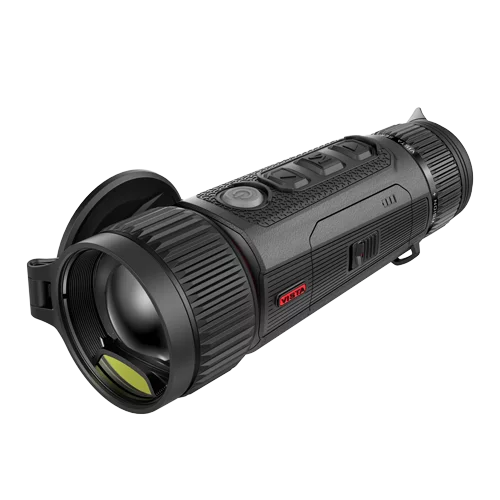
Open terrain may place more value on image detail, thermal sensitivity, lens choice, and stable observation, but published detection range should not be treated as a guaranteed identification or shooting distance. Buyers who prioritize higher-detail handheld observation can compare the Nocpix VISTA series by exact model, field of view, base magnification, sensor, lens, weight, and regional availability.
Long Observation or Two-Person Sets
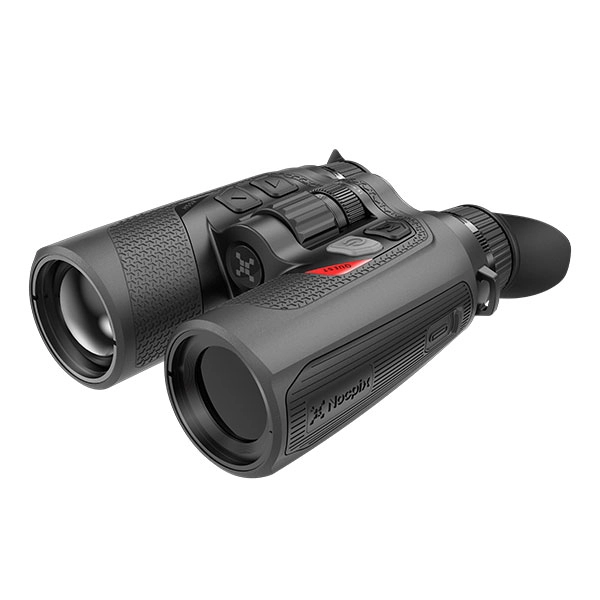
Extended sits and partner hunts favor thermal binoculars. Viewing through two eyes reduces fatigue over hours of scanning. The QUEST binoculars allow users to use both hands and both eyes while scanning, providing a smooth and comfortable feel, just like traditional daylight binoculars. A two-eye view also helps with depth perception, which makes tracking moving coyotes easier across uneven terrain.
What Specs Matter Most for Coyote Scanning?
Not all specs carry equal weight. Here are the ones that affect coyote identification the most, and why.
Field of View and Base Magnification:
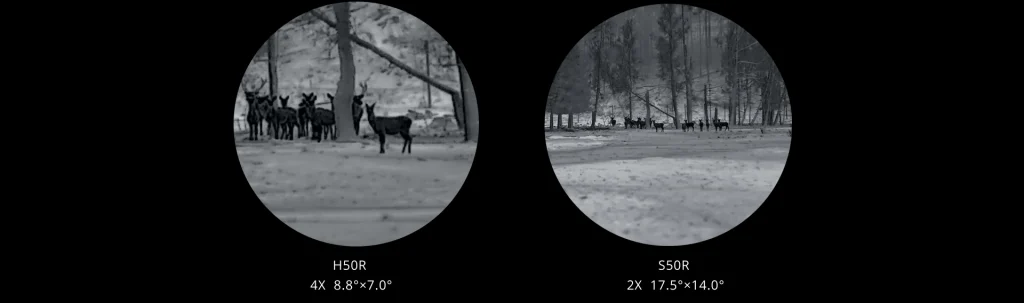
Lower base magnification generally provides a wider field of view, which may help when searching larger areas or following fast movement. Higher base magnification may provide a more concentrated view of a smaller area. Neither is automatically better: terrain, target behavior, apparent target size, and observation method determine the useful balance.
Digital zoom enlarges the displayed image but does not create new detail that the sensor did not capture.
Sensor Resolution, 384 vs. 640 vs. 1280:
Higher sensor resolution can capture more thermal information and may retain more detail when the image is enlarged. It does not create one guaranteed recognition or identification distance. A 384-class, 640-class, or 1280-class device can each be appropriate when the lens, base magnification, field of view, thermal sensitivity, display, processing, weight, and cost match the intended role.
For a more detailed comparison, use Nocpix’s thermal scope resolution guide, but verify the exact model and conditions before applying a resolution class to a real hunting decision.
Detection Range vs. Identification Range:
Detection, recognition, and identification are different thresholds. Detection means noticing that a thermal object is present. Recognition means making a broader judgment about the type of object. Identification or confirmation means reaching the level of certainty required for the actual and lawful decision.
Published detection figures should not be converted directly into identification or shooting distances. Target size, posture, movement, weather, humidity, background temperature, lens, magnification, display, processing, and the user’s required level of certainty all affect the result. See Nocpix’s guide to detection, recognition, and identification distance for the terminology.
Battery Life, Weight, and Controls:
A scanner may be lifted repeatedly during an observation session, so weight, grip, button placement, carrying method, and battery access can affect usability. Published runtime can vary with temperature, display brightness, recording, wireless functions, battery condition, and user behavior. Compare the exact product specification rather than applying one runtime number to an entire product family.
When LRF Is Worth Paying For:
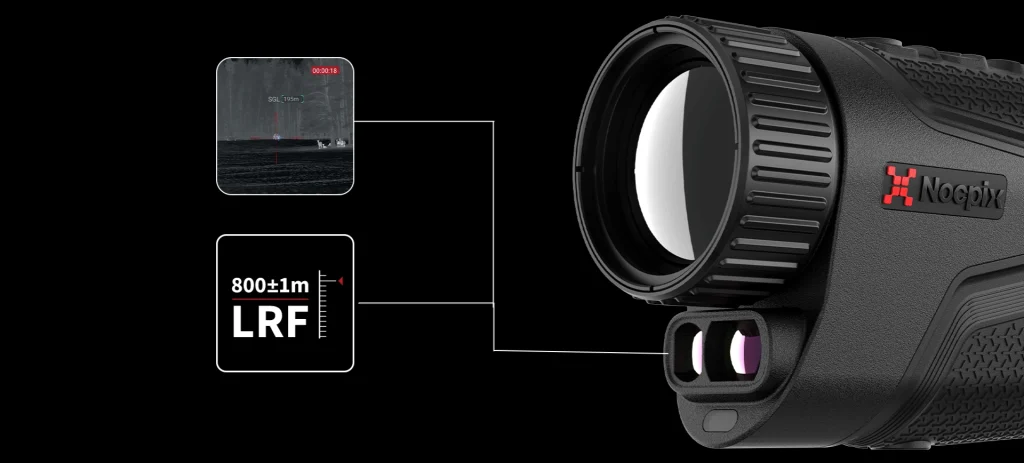
An integrated laser rangefinder can be useful when the user needs distance information without carrying a separate device. Its value depends on terrain, workflow, target conditions, local rules, and whether reliable distance information is already available. The Nocpix LUMI LRF series is the compact handheld family to compare when an integrated LRF is part of the requirement.
An LRF does not replace target confirmation, safe judgment, or correct product setup.
Monocular, Binocular, or Scope: Which Setup Makes Sense?
Each device type fits a different role. Here is how they compare for coyote hunting.
Thermal Monocular for Mobile Scanning
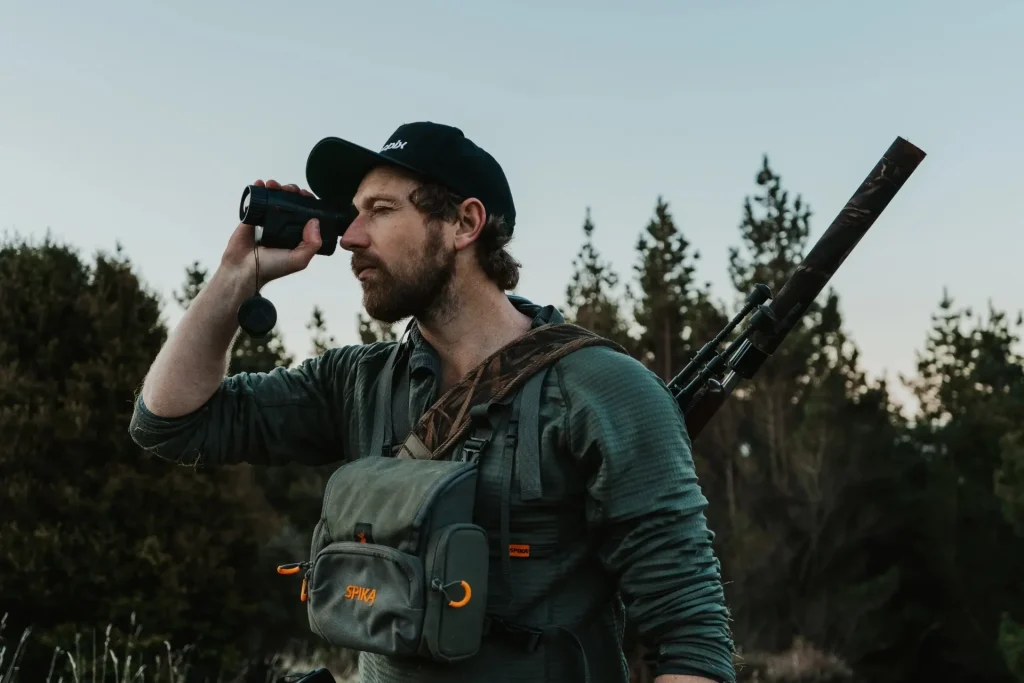
A thermal monocular is the most versatile scanning tool for coyote hunters. It is light, one-handed, and fast to deploy. You can scan from a stand, walk a fence line, or check a field before setting up your call, all without touching your rifle. A compact handheld like the Nocpix LUMI series gives you a pocket-sized scanner for quick field checks before you raise your rifle.
Thermal Binoculars for Long Glassing
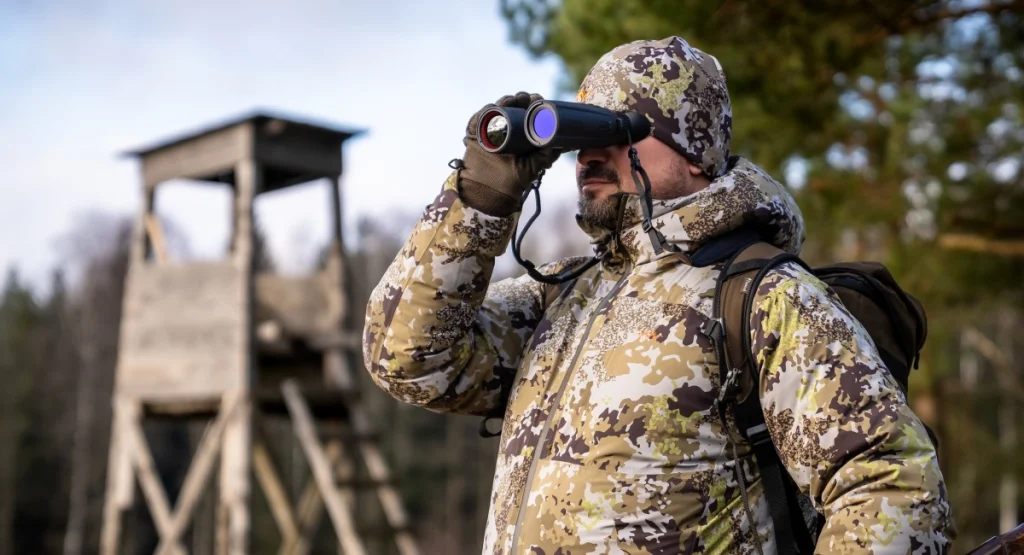
A thermal binocular provides a two-eye handheld viewing format. Some users prefer it for longer observation sessions, while others prioritize the smaller size and one-handed operation of a monocular. Choose by viewing preference, weight, controls, field of view, and actual observation time—not by assuming that two eyepieces automatically provide more sensor detail.
Thermal Scope for the Shot
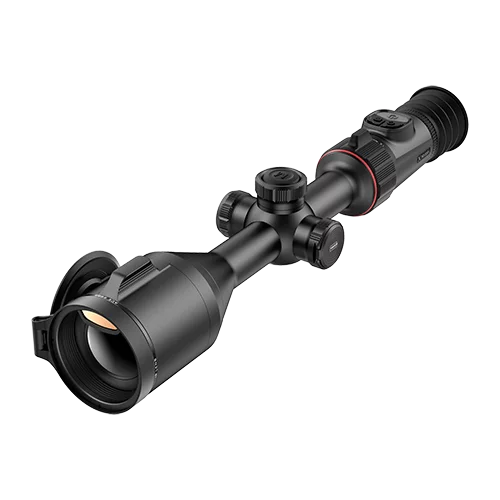
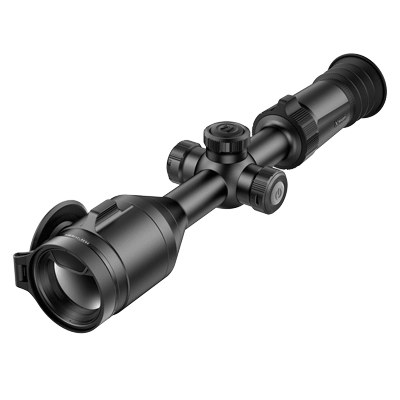
A thermal riflescope is a mounted aiming optic. It should be evaluated for the firearm, mounting system, zeroing requirements, base magnification, field of view, control access, battery design, and intended lawful use. It can display heat signatures during observation, but it should not be treated as a universal replacement for a handheld observation device.
Best Two-Device Setup for Most Hunters
A scanner-plus-scope setup makes sense when wide-area observation and a dedicated thermal aiming optic are both recurring needs. Use the scanner to search and observe. Move to the riflescope only after confirming the target, background, safe direction, and legal conditions.
This division can make each device easier to select for its role, but it also increases cost, weight, charging, carrying, and equipment-management requirements. It is a conditional setup, not a requirement for every hunter.
Nocpix Options by Coyote Hunting Scenario
Nocpix builds three thermal scanner families that fit different coyote hunting styles. Here is how each one lines up.
LUMI for Compact Mobile Scanning
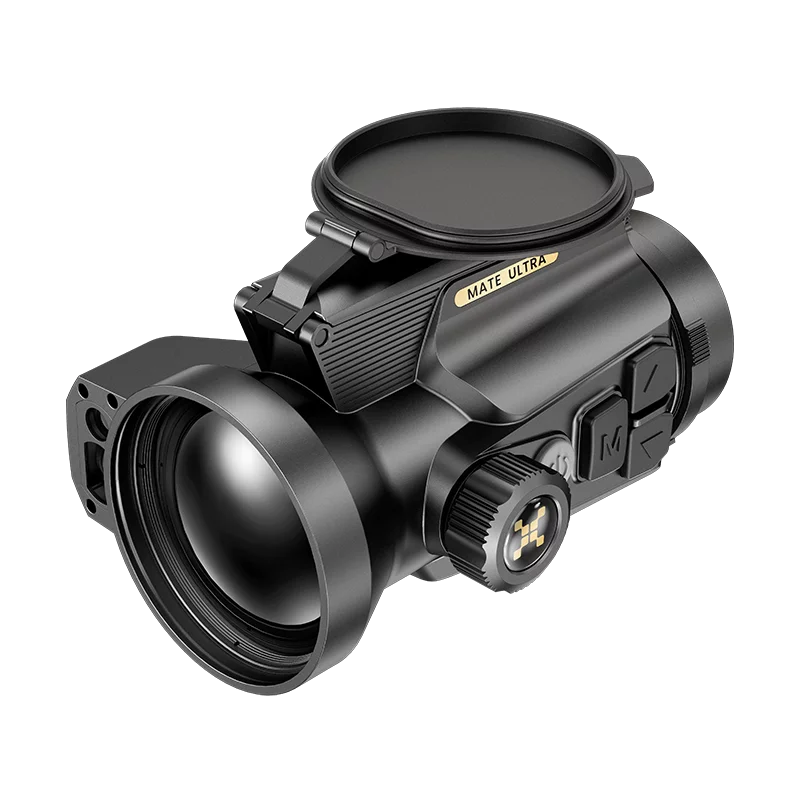
The Nocpix LUMI series is the family to compare when compact size, one-handed use, and portable handheld observation are priorities. Compare the exact regional model by sensor, lens, base magnification, field of view, weight, display, battery design, and controls. Model configurations may vary by market.
For buyers who include integrated ranging in the requirement, compare the LUMI LRF series separately rather than assuming that every user needs an LRF.
VISTA for Higher-Detail Monocular Scanning
The Nocpix VISTA series is the monocular family to compare when the user prioritizes higher-detail handheld observation and different sensor, lens, display, or LRF configurations. It should be selected by the exact model and conditions; no VISTA model should be assigned one universal coyote identification distance.
QUEST for Long Observation and Partner Hunts
The Nocpix QUEST series is the two-eye handheld family to compare for users who prefer a binocular-style viewing format, including longer observation or team-based roles. Compare the exact regional model by sensor, lens, field of view, base magnification, weight, LRF configuration, battery design, and viewing preference.
Nocpix also offers mounted thermal riflescope families for the aiming role. Buyers can compare BOLT, ACE, and RICO 2 by exact model, mounting requirements, base magnification, field of view, controls, sensor and lens configuration, battery design, and regional availability. These families are comparison options, not a universal ranking.
Common Buying Mistakes to Avoid
These are the errors that come up most often when hunters shop for a coyote thermal scanner:
- Treating Detection as Identification: A published detection number does not guarantee that the user can recognize a species, confirm a target, or make a safe decision at that distance.
- Using One Magnification Rule for Every Terrain: More magnification narrows field of view; less magnification widens it. The useful balance depends on terrain, apparent target size, movement, and observation method.
- Choosing Resolution Without the Rest of the Imaging System: Sensor resolution must be evaluated with the lens, base magnification, field of view, thermal sensitivity, display, processing, and environmental conditions.
- Buying Two Devices Without Defining Their Roles: A scanner and scope are complementary only when each has a clear job in the user’s process.
- Ignoring Weight, Battery Access, and Controls: Repeated handheld observation can make ergonomics and battery management as important as headline specifications.
- Skipping Regional Checks: Product configurations, availability, warranty terms, and hunting regulations vary by location. Check the relevant regional website or authorized distributor and the current local wildlife authority before purchase or use.
FAQs
Should I buy a thermal scanner or thermal scope first?
Start with the role your current setup is missing. Choose a handheld thermal scanner first if your main challenge is finding and observing coyotes across fields, tree lines, or multiple approach routes. Choose a thermal riflescope first if you already watch a known lane, can afford only one thermal device, and still need a dedicated mounted optic. If both wide-area observation and mounted aiming are frequent needs, using a scanner and a scope gives each device a clearer role.
Is 384 enough for coyote hunting?
A 384-class thermal device can be enough for some close or clearly defined hunting setups, especially when the user values lower cost, lighter weight, or a wider field of view. However, resolution alone does not determine how confidently a coyote can be identified. Lens choice, base magnification, thermal sensitivity, weather, background temperature, image processing, and the size of the target in the display also matter. Compare the complete device and the intended terrain instead of treating 384 as a fixed distance category.
How far can a thermal scanner identify a coyote?
There is no single identification distance that applies to every thermal scanner or every hunt. A device may detect a heat source much farther away than the user can confirm that it is a coyote. Identification depends on the sensor, lens, base magnification, thermal sensitivity, weather, background temperature, target posture, movement, and the user’s required level of certainty. Use the manufacturer’s detection range as a comparison specification, not as a guaranteed coyote identification or shooting distance.
What magnification is best for scanning coyotes?
Lower base magnification is usually easier for scanning wide areas because it provides a wider field of view. Higher base magnification can make a distant heat signature appear larger, but it also narrows the area visible at one time. For brush lines, close calling, or fast-moving targets, favor a wider field of view. For open terrain and more concentrated observation, additional base magnification may be useful. The best choice depends on terrain and scanning style rather than one universal magnification range.
Is thermal better than night vision for coyote hunting?
Thermal imaging is generally better at quickly detecting heat signatures in darkness, while digital night vision can provide a more familiar view of the scene and visible details when suitable ambient light or an IR illuminator is available. For finding coyotes across dark fields, brush edges, or uneven backgrounds, thermal often has the detection advantage. Night vision may still be useful when the user wants more recognizable visual detail or already has a suitable illumination setup. The better option depends on whether detection or conventional scene detail is the priority.
Final Thought
Choosing a first thermal device for coyote hunting starts with the role that is missing from the user’s process. Choose a handheld scanner when the main limitation is finding and observing animals across an area. Choose a thermal riflescope first when the observation setup is already known, the budget supports only one thermal device, and a dedicated mounted optic is the unmet need. Choose both when frequent use justifies separating observation from aiming.
For handheld observation, compare the Nocpix LUMI, VISTA, or QUEST families by exact model and role. For a mounted thermal riflescope, compare BOLT, ACE, or RICO 2. Product configurations and availability vary by market, so confirm the exact regional product page and authorized purchase channel before buying.
Explore the Nocpix thermal imaging monoculars to compare models side by side, and always check your local regulations before heading out.