








During a driven hunt, a form of driven hunting for deer and wild boar, hunters wait at assigned stands while beaters, often with dogs, move animals out of cover. From a woodland stand, you may see an animal only as it crosses a forest track or a gap between trees. Several animals can enter that opening together, leaving little time to examine each one.
For these short crossings, choose a thermal optic whose lowest magnification shows the opening and the ground beside it. A tightly enlarged image can leave another animal outside the frame or make it easy to lose the one you are watching. At a stand overlooking more distant, open ground, you may have time to use greater magnification.
Before the hunt: keep your day scope or fit a thermal?
First check which thermal devices are permitted for the quarry and hunt, then confirm the organizer’s restrictions.
For mainly daylight drives, a day scope and handheld thermal may be all you need. You can check cover with thermal while keeping the daylight view you already know.
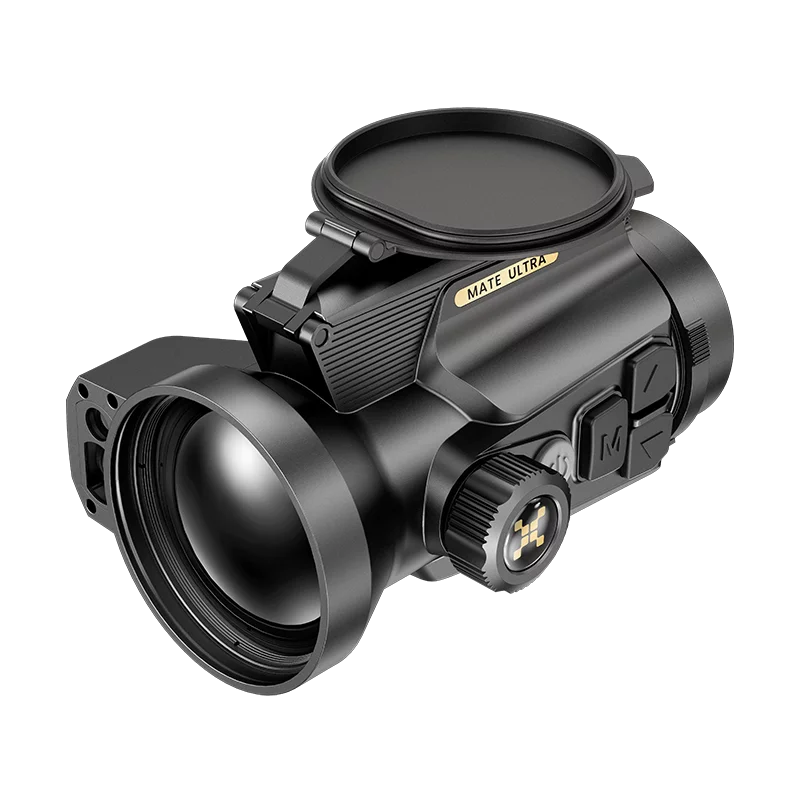
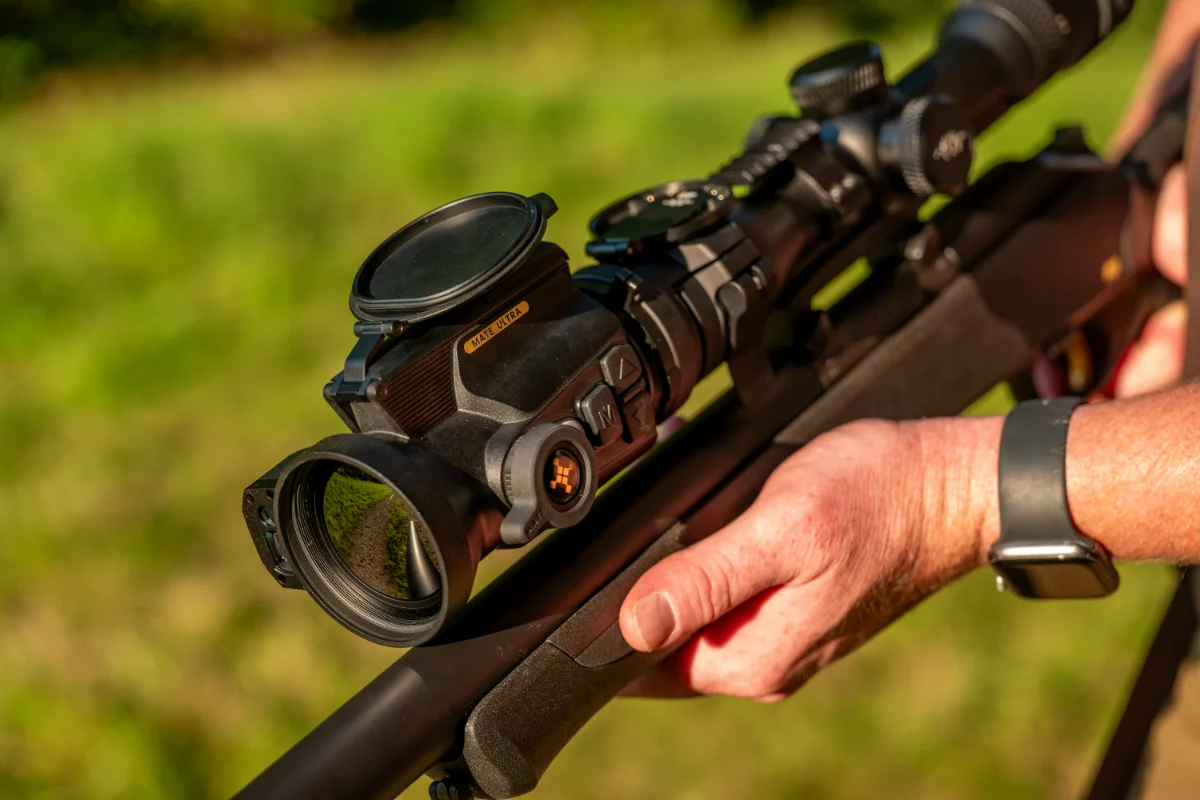
If you want thermal through your existing scope, a Nocpix MATE thermal clip-on lets you keep its reticle and eyepiece. This suits a rifle used with daytime glass for some hunts and thermal for others. Confirm that a compatible adapter is available for your scope, and allow for the added length and weight at the front.
A dedicated thermal replaces the day scope and removes the need to fit an attachment before each thermal outing. Choose it for a rifle you intend to leave set up for thermal use. The clip-on vs thermal scope guide covers the mounting differences.
At your stand: does the lowest magnification show the crossing?
Once your stand, neighbors, and permitted shooting directions are clear, look at the ground in front of you. A narrow forest track offers a different view from a clearing with visible woodland on both sides.
Compare minimum magnification and horizontal field of view together. Maximum zoom tells you little about whether a close animal and the rest of its group will fit in the image.
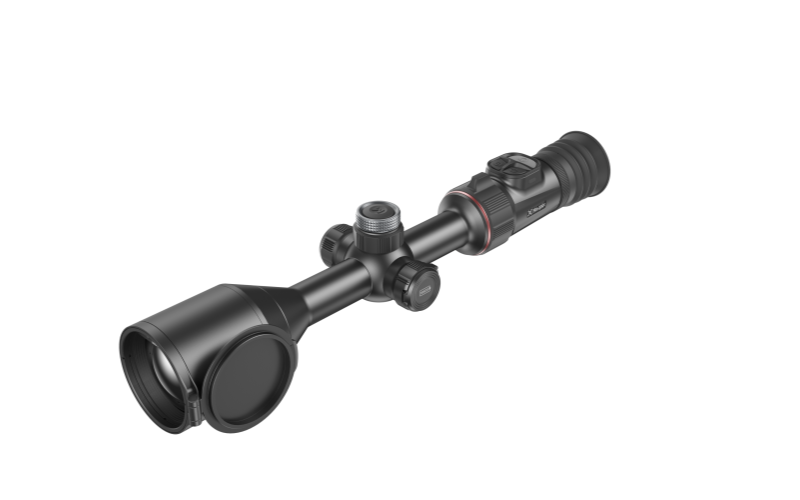
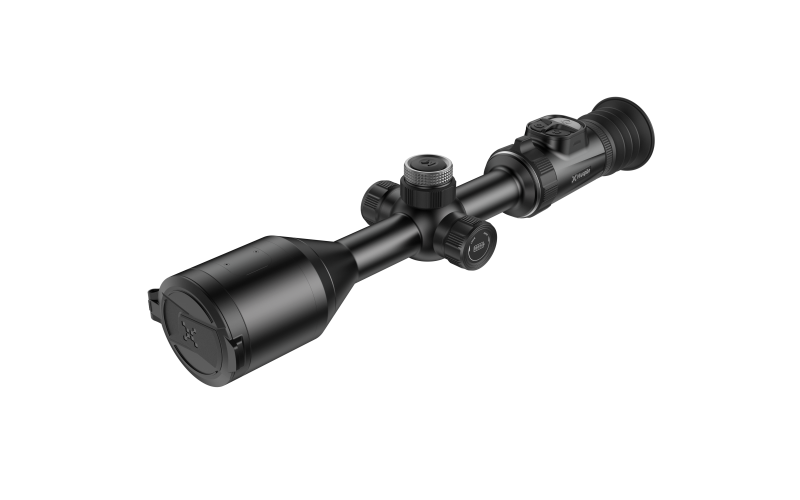
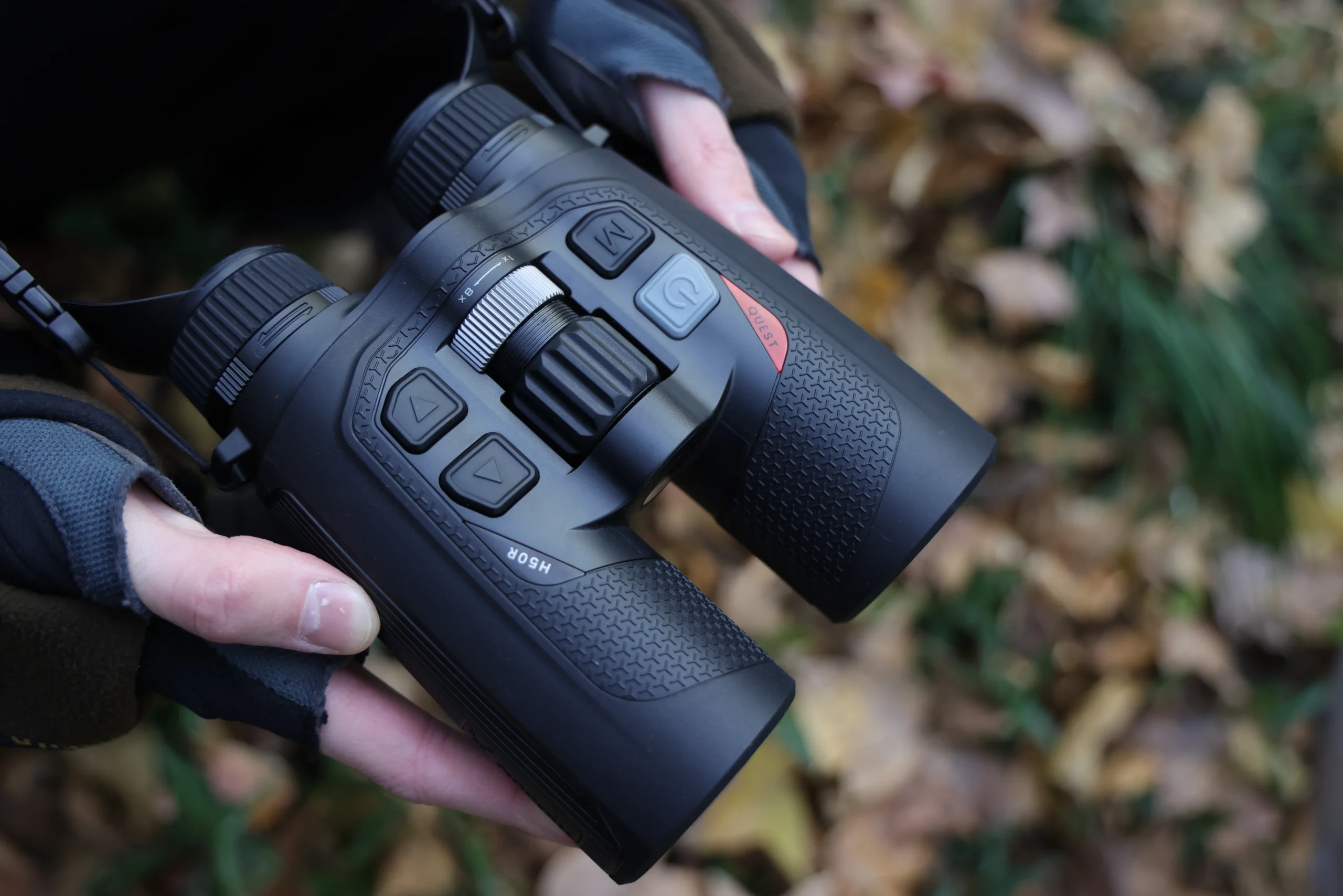
For shorter woodland views, compare the H35R in the new Nocpix ACE 2 thermal riflescope range with the H50R. The H35R starts at 2× and shows 21.9 metres horizontally at 100 metres; the H50R starts at 3× and shows 15.4 metres. Choose the H35R when retaining more of the crossing matters. Consider the H50R when your usual stands overlook more distant ground and you prefer a larger starting image.
Try the lowest setting on comparable ground. If the edges of the opening are already outside the image, that setup is too tight for the view you want. With a clip-on, make this comparison through your day scope, not from the attachment’s specification alone.
While waiting: take short looks or watch for longer?
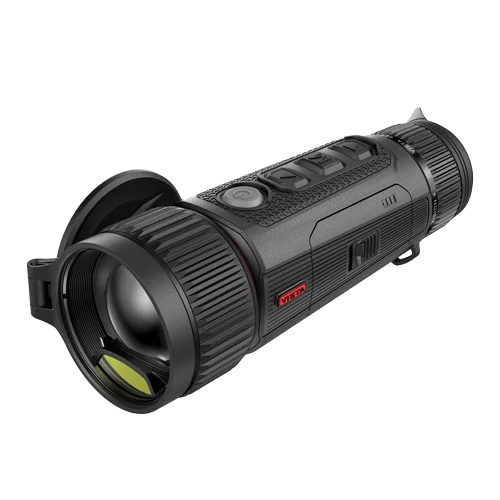
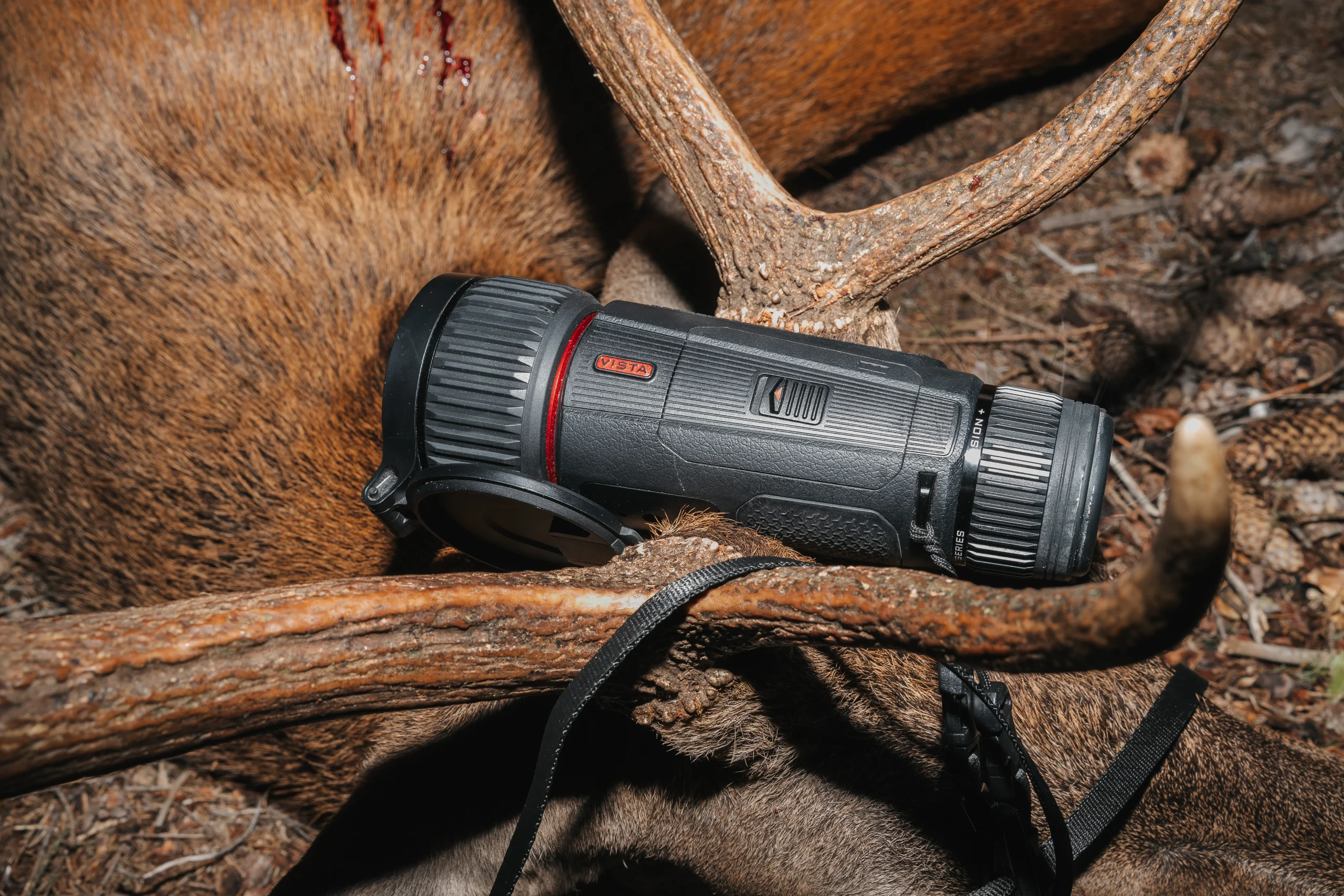
For quick checks near cover, handheld thermal imaging monoculars are easy to keep within reach and stow between sightings. This suits a day with frequent moves between stands and little time for prolonged observation.
A stand overlooking a broad woodland edge may give you longer to watch. For sustained viewing, binoculars let you use both eyes; a monocular is easier to carry for brief, one-handed checks.
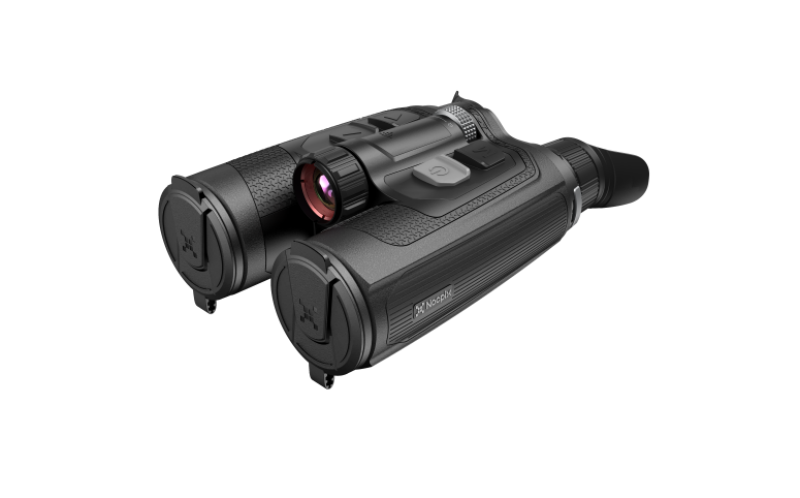
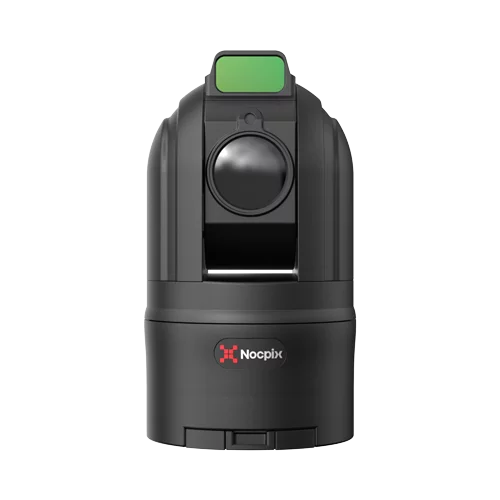
Nocpix OMNI multispectral binoculars combine thermal and digital channels with one-press switching. Consider them if you would otherwise carry both a thermal observer and daylight binoculars. When an animal pauses beside a gap, you can switch from its heat outline to a digital view of exposed body details or nearby ground.
The second channel is useful when there is time to examine the animal. At a brief crossing, stay with the view you have.
After scanning the woodland edge, lower the handheld to look around and listen for radio updates about approaching beaters or dogs.
When animals appear: see the group before enlarging one animal
When several animals appear together, keep the view wide enough to see the group. If you zoom in until one animal fills the screen, you may lose sight of another following close behind.
A higher refresh rate can make movement look smoother. When comparing devices, pan across the same scene and watch whether moving outlines stay easy to follow.
On ACE 2, Motion Mode is designed for smoother viewing while the animal or scope is moving. If the animal stops and you can hold a steady view, consider Still Mode to examine finer details.
Make sure the animal is one you are allowed to take. Before shooting, confirm a safe backstop and check for people, dogs, or other animals behind or beside it. If you are unsure, let it pass.
After the drive: report where you last saw the animals
If an animal ran out of sight after the shot, tell the hunt leader where it stood, which direction it went, and where you last saw it. Wait for the search to be organized and leave your stand as instructed at the briefing.
Frequently asked questions
Is every driven hunt a Drückjagd?
No. Driven hunting includes several methods and types of quarry. A Drückjagd uses gentle pressure to move hoofed game toward waiting hunters. The German Hunting Museum distinguishes it from a more forceful Treibjagd.
Does a hunting stand have to be a high seat?
No. A stand is the position assigned to you. It may be a raised seat or a place at ground level.
Can thermal optics work during a daytime drive?
Yes. Thermal imaging detects infrared energy and works in daylight. An exposed animal can stand out against cooler surroundings, although sun-warmed ground and vegetation may reduce the contrast.
Which thermal setup should you take?
Choose for the stands you hunt most often. For short woodland crossings, a wide starting view is worth more than high maximum zoom. Keep the equipment you already like unless the new setup solves a specific problem, such as losing animals outside the frame or carrying separate thermal and daylight observers.