






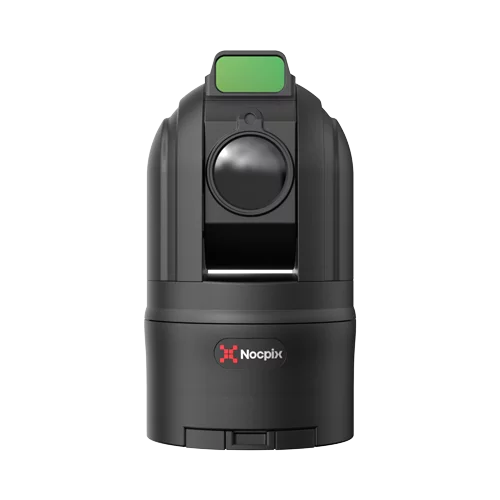


Finding a deer after the shot can mean searching a wooded boundary, checking the edge of a field, or looking across an open hillside. A thermal monocular can help you spot the animal’s heat signature when its coat blends into the surroundings or daylight begins to fade. Vegetation still matters: you need a view of at least part of the animal.
For deer recovery, we recommend the LUMI H35 for searches across mixed terrain, the LUMI L19 for nearby woodland scanning, and the VISTA H50R for inspecting more distant areas across open ground. The following comparison explains how each model’s viewing setup fits those needs.
Recommended Models at a Glance
| Model | Our recommended deer-recovery use | Thermal sensor | Starting magnification | Horizontal view at 100 m |
| LUMI H35 | Searches around woodland openings and field edges | 640 × 512 | 2.5× | 22 m |
| LUMI L19 | Close-range searches around the deer’s last known location | 384 × 288 | 2× | 24 m |
| VISTA H50R | Checking distant field margins and open slopes | 640 × 512 | 4× | 15 m |
Our Top Picks for Deer Recovery
Nocpix LUMI H35 — For Deer Recovery in Mixed Terrain
The LUMI H35 thermal monocular is our recommendation for hunters whose deer-recovery searches move between field edges, woodland paths, and small clearings.
It combines a 640 × 512 thermal sensor, a 35 mm F0.9 lens, and 2.5× starting magnification. Its horizontal view covers approximately 22 m at 100 m. For this type of search, we value that combination of image resolution and viewing width. It gives you room to examine the area around a possible deer, as well as the heat source itself.
Consider a deer last seen entering a wood from a field. Your search may involve checking several visible openings around that point. We would choose the H35 for moving between those broader scans and closer inspection of an animal’s visible outline.
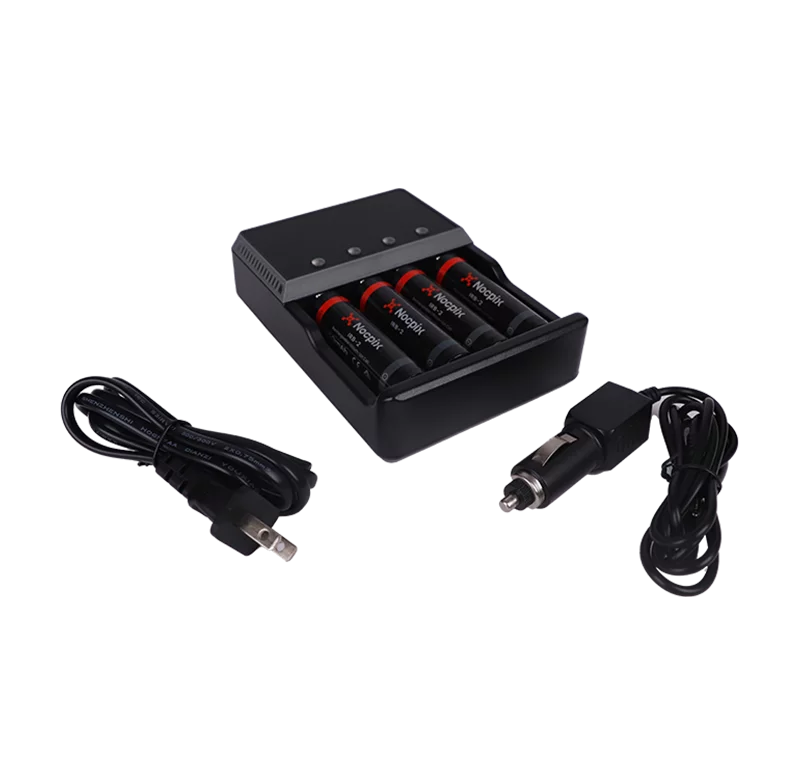
Carry comfort also matters when you alternate between inspecting ground sign and raising the monocular. The H35 weighs 345 g with its battery and uses a replaceable 18650 cell. A charged spare can stay with your recovery equipment, ready for a search that follows an evening of observation.
Choose the LUMI H35 for a compact deer-recovery kit that needs to cover a mixture of woodland and field-edge views.
Nocpix LUMI L19 — For Close-Range Woodland Searches
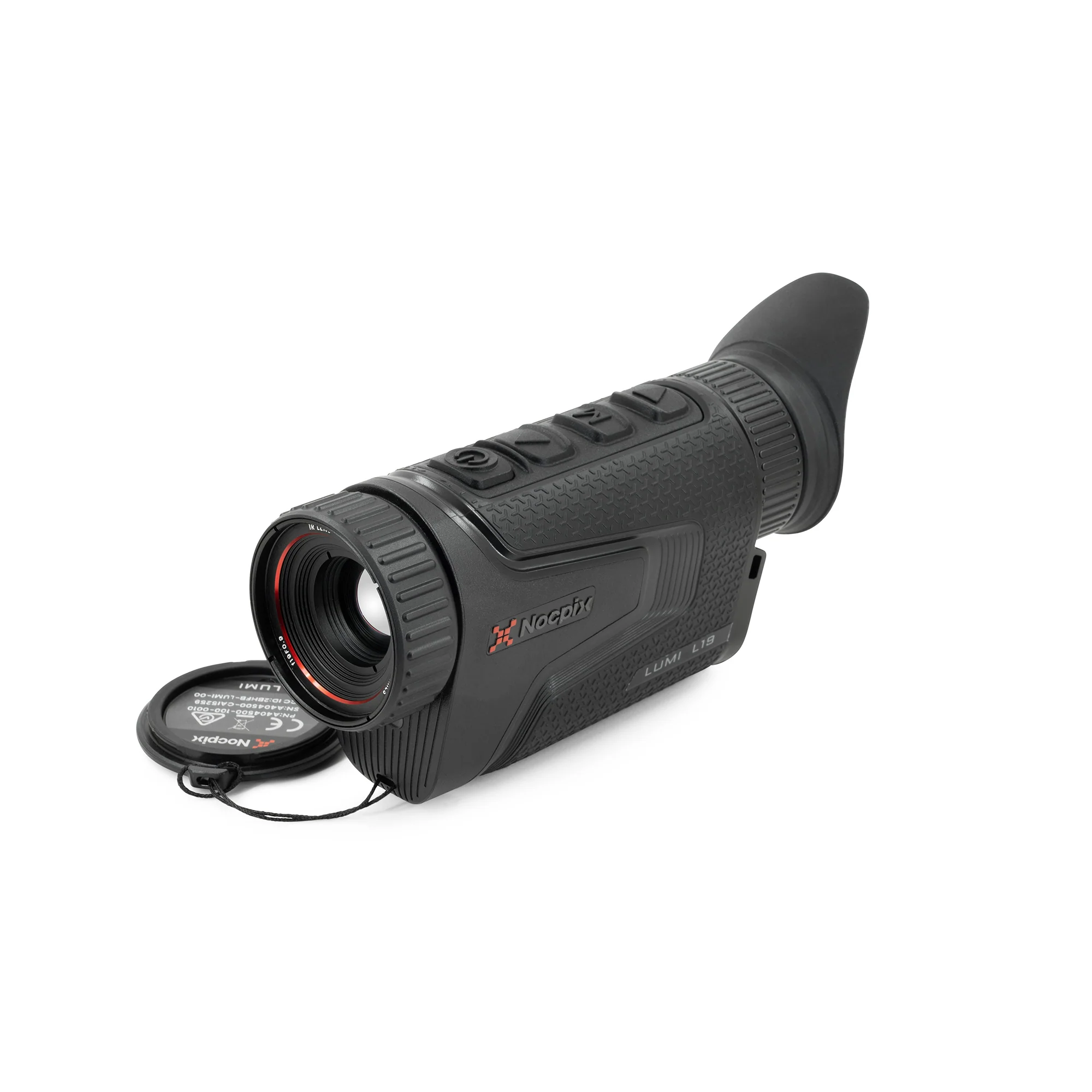
The LUMI L19 is our pick when your main task is scanning nearby ground around the place where a deer disappeared.
Its 2× starting magnification and 13.8° horizontal field of view provide a broad starting image. At 100 m, that view spans approximately 24 m. The optical setup pairs a 19 mm F0.9 lens with a 384 × 288 thermal sensor.
We recommend this configuration for searches where you want several nearby gaps or patches of visible ground in the image at once. Think of checking the edge of a small clearing or looking along a woodland boundary while following the deer’s last known direction.
During a demonstration, try the L19 at the short distances typical of your hunting ground. Raise it toward a nearby tree line and check how easily you can locate the same opening again after lowering the device. This is a useful way to assess whether its starting view feels comfortable for your recovery searches.
The L19 weighs 335 g with its battery, uses a replaceable 18650 cell, and has a 1024 × 768 AMOLED display. Its compact format makes it a practical candidate for carrying alongside a torch and other deer-recovery equipment.
Choose the LUMI L19 when low-magnification scanning and a compact handheld are your priorities for nearby searches.
Nocpix VISTA H50R — For Deer Recovery Across Open Ground
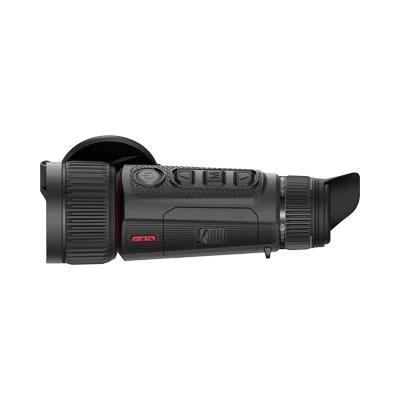
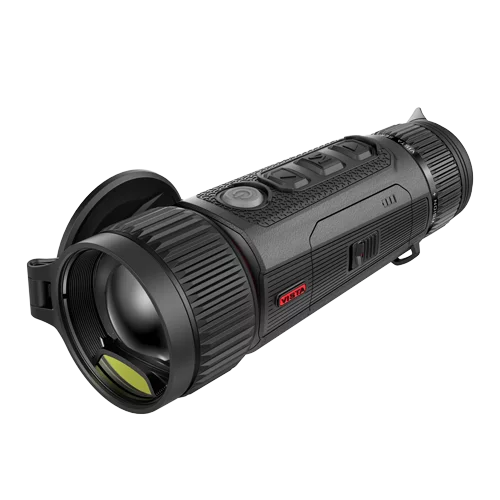
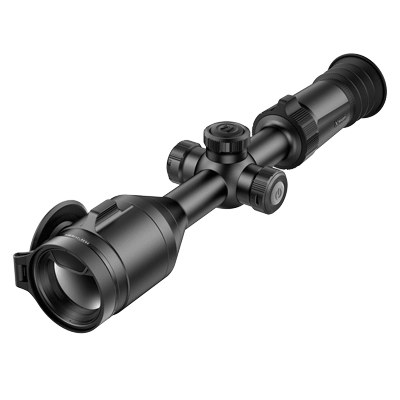
The VISTA H50R thermal monocular is our recommendation for hunters who need to inspect distant field margins, open slopes, or the opposite side of a clearing during a deer-recovery search.
It combines a 640 × 512 thermal sensor, a 50 mm F0.9 lens, and 4× starting magnification. The image appears on a 2560 × 2560 AMOLED display. We recommend this setup when examining a possible deer across open ground is a regular part of your search.
For example, a deer may have crossed a field before disappearing near its far boundary. From a suitable observation point, use the H50R to inspect visible ground around that last location. Focus on the animal’s outline and its position relative to recognisable features.
The integrated laser rangefinder reaches up to 1,200 m. Once you have located a possible deer or a nearby landmark, a distance reading can help you describe the position to someone assisting with the recovery.
Outdoor Life’s field test provides a deer-specific example of the H50R’s image detail. A tester reported sharp detail on deer at 150 yards, and the team praised its display and ranging. Some testers experienced eye strain after several hours of continuous nighttime viewing, so include an extended look through the eyepiece during a demonstration.
The H50R uses a replaceable IBP-7 battery pack, allowing you to carry spare power for continued observation during a recovery.
Choose the VISTA H50R when your deer-recovery searches regularly involve distant observation and you want integrated ranging.
Which Thermal Monocular Fits Your Deer-Recovery Kit?

Where Will You Be Looking for the Deer?
When choosing a monocular for deer recovery, consider field of view vs. magnification in the terrain where you hunt.
For a wooded boundary, consider how much nearby ground you want to see at once. For an open hillside, consider the detail you want when inspecting a possible deer farther away. During a demonstration, recreate both views rather than looking only at a close, fully exposed target.
For hunters seeking a high-resolution, wide-area view, the VISTA S50R is another option. It combines a 1280 × 1024 sensor, 2× starting magnification, and a horizontal view of approximately 31 m at 100 m. We recommend considering this configuration when you want to examine a broad search area around the deer’s last known position.
Would Ranging Help You Describe the Deer’s Position?
A distance reading can be useful when another person is helping with the recovery. It gives you an additional reference alongside a gate, tree, field corner, or other visible landmark.
For a compact monocular with this feature, consider the LUMI H35R thermal monocular. It combines a 640 × 512 sensor, 2.5× starting magnification, and an integrated rangefinder rated to 800 m. It is an option for hunters who want observation and distance measurement in the same handheld device.
Can You Use It Comfortably While Following Ground Sign?
Try the monocular with the gloves, glasses, and carrying equipment you normally use.
Practise taking it out, focusing on nearby ground, and putting it away again. During a deer search, you may need to switch repeatedly between thermal observation and examining tracks or blood. Arrange the pouch or strap so the device remains accessible while leaving your hands free for those checks.
Also spend several minutes looking through the eyepiece. Adjust the focus, dioptre, and display brightness before deciding how comfortable the view feels. These handling checks belong alongside the image comparison.
FAQs
Can a Thermal Monocular Find a Dead Deer?
Yes. A dead deer can remain thermally visible while its body is distinguishable from the surrounding ground. As it cools, that contrast can become less apparent. Cover and background warmth also affect what the camera can reveal.
Use the monocular to help locate the body, alongside the deer’s last known position and physical sign. A thermal image alone does not establish whether the animal is dead.
Can You Follow a Deer’s Blood Trail With Thermal Imaging?
Fresh blood may appear in a thermal image when it remains thermally distinct from the surface beneath it. However, a visible thermal trace is not dependable enough to replace checking blood and tracks on the ground.
For buying purposes, treat the monocular primarily as a tool for finding the deer’s body. Do not shorten an appropriate waiting period just to preserve a warm blood trail.
Can Thermal Imaging Find a Deer in Thick Brush?
Vegetation affects what thermal imaging can see through. The camera may reveal visible portions of a deer through gaps, but it cannot see through tree trunks or solid cover. A deer lying behind dense grass may be partly or completely hidden.
This is why woodland recovery depends on the available viewing angle as well as the device. Look for openings through which the animal could be visible; a higher-resolution image cannot remove a physical obstruction.
How Far Away Can a Thermal Monocular Find a Downed Deer?
The distance depends on the image detail, the amount of the deer that is visible, and the contrast with its surroundings. A deer lying partly behind grass presents a different view from one standing fully exposed. Rain and fog can also reduce useful thermal range.
Ask to see deer footage at known distances relevant to your land. Pay attention to the whole scene, the animal’s posture, and any vegetation around it. Those details help you judge how the view relates to the recovery searches you expect.
Choose a Monocular for Your Hunting Ground
For our main recommendations, the LUMI H35 suits mixed-terrain deer recovery, the LUMI L19 suits nearby woodland scanning, and the VISTA H50R suits observation across open ground.
When arranging a demonstration, describe where you usually hunt and the views available around a deer’s likely last-seen location. Ask to compare the models at those distances, then try each one with your recovery equipment. The right choice should give you a useful view of your search area and fit naturally into the kit you carry.