







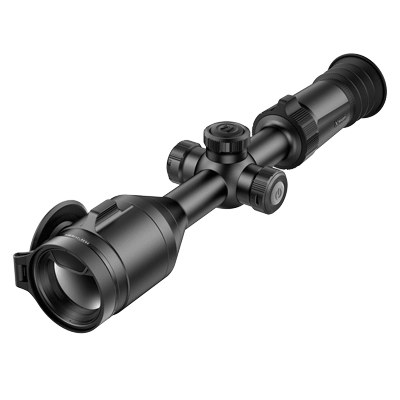
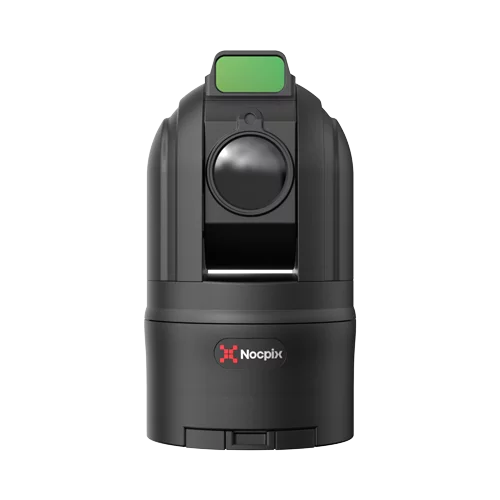


From a high seat, you may want a distance reading while the rifle rests on a support. When walking between fields, you may spend more time observing and measuring with a handheld.
In this guide, Nocpix compares both arrangements for European hunters. We look at visibility after dark, handling on different ground, ranging performance and the cost of adding a rangefinder to your existing equipment.
Which setup should you choose?
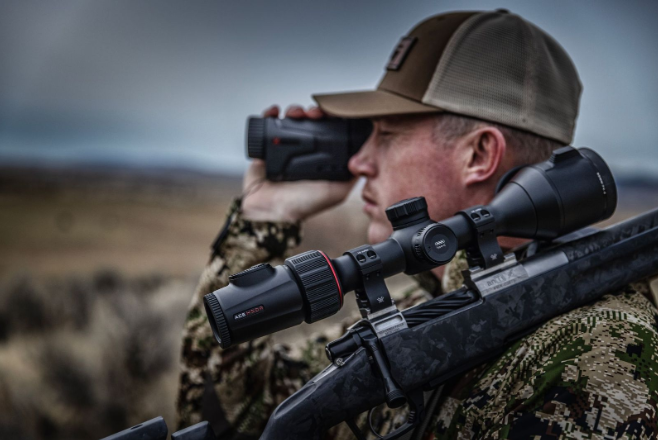
Choose a thermal scope with an integrated rangefinder for distance checks through the scope from a supported rifle position.
Choose a separate rangefinder for measurements with the rifle lowered, shared observation with a partner or an upgrade that keeps your existing scope.
| Practical consideration | Thermal scope with integrated LRF | Separate handheld rangefinder |
| Viewing and measuring | Thermal image and distance reading in the same display | Measurement through a separate eyepiece |
| Measuring position | From the rifle’s position | From an independently chosen handheld position |
| Visibility after dark | Through the thermal image | Through a thermal image on thermal models; dependent on ambient light on conventional optical models |
| Hunting with a partner | Ranging handled by the person using the scope | A partner can observe and measure |
| Equipment purchase | Scope and rangefinder chosen as one unit | Rangefinding added alongside an existing scope |
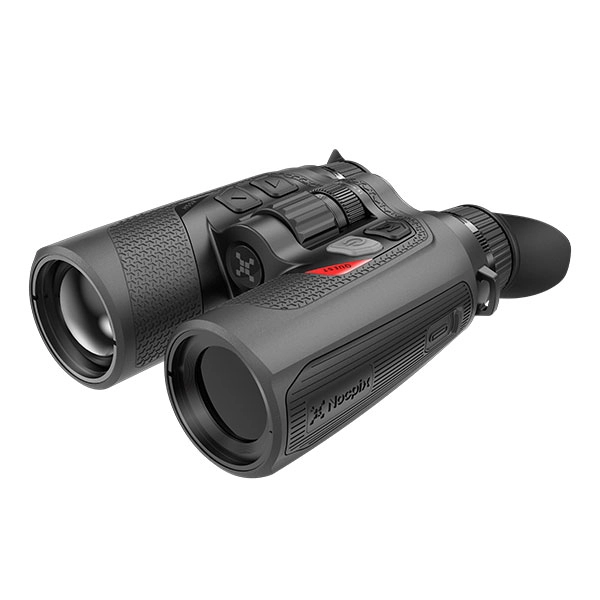
The separate option in this comparison is a handheld device. It may use conventional optics or combine thermal imaging with laser rangefinding.
Which devices are you actually comparing?
A thermal scope with an integrated laser rangefinder
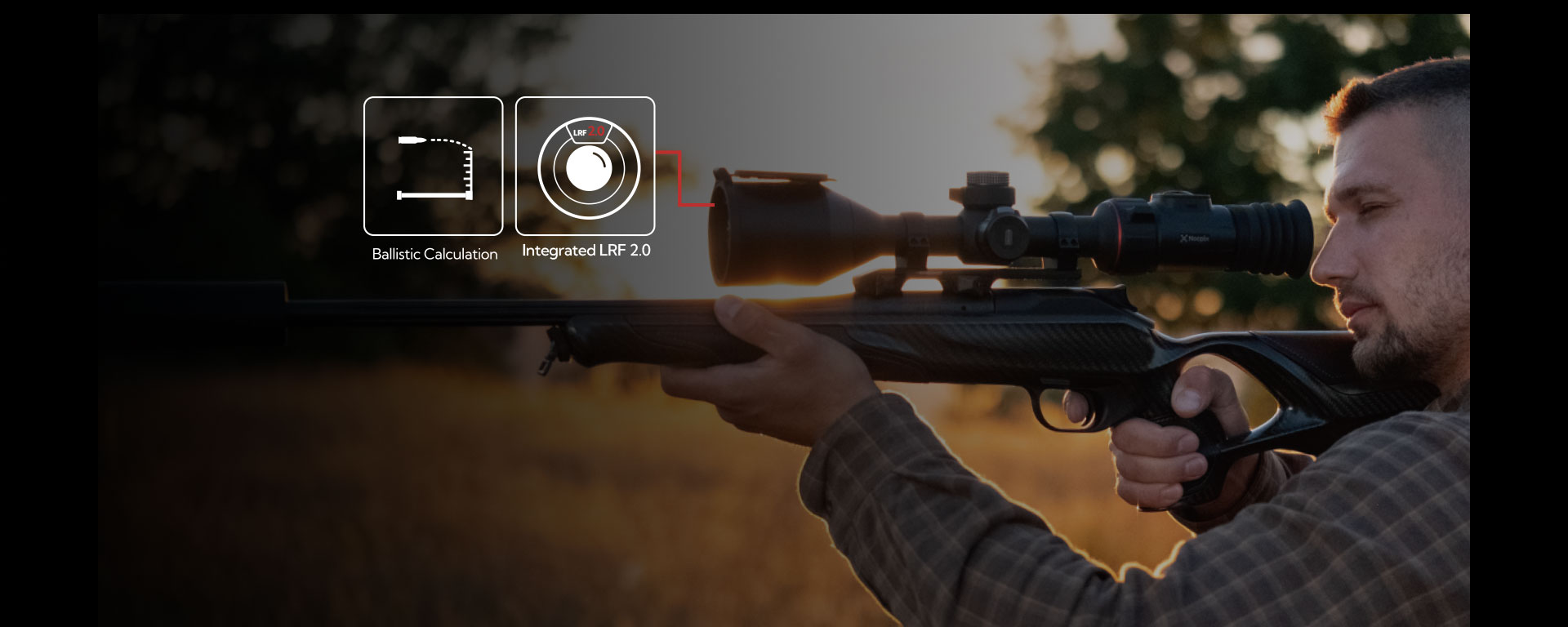
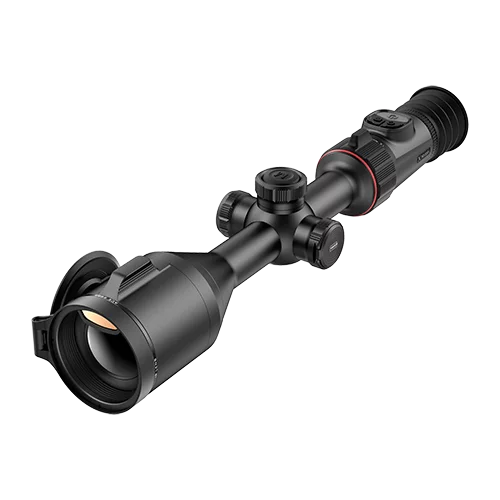
Among termiska kikarsikten, models with an integrated LRF display distance alongside the thermal image. You locate the animal, place the ranging mark and take a measurement through the same eyepiece.
De Nocpix ACE 2 H50R thermal riflescope combines an integrated LRF with a centrally positioned focus wheel. From a high-seat rest, the central wheel keeps focus adjustment within easier reach as you switch between a nearby field margin and more distant ground.
This arrangement suits a hunter who regularly checks distance while settled behind a supported rifle.
A conventional optical handheld rangefinder
A conventional handheld rangefinder uses an optical view to locate the object being measured. On models with an illuminated distance display, the number can remain readable in low light while the view of the animal depends on ambient light.
This makes it useful for daytime measurements and checking landmarks before dark. For night use, the important question is whether you can distinguish the intended object through its eyepiece at your usual distances.
A separate thermal handheld with an LRF
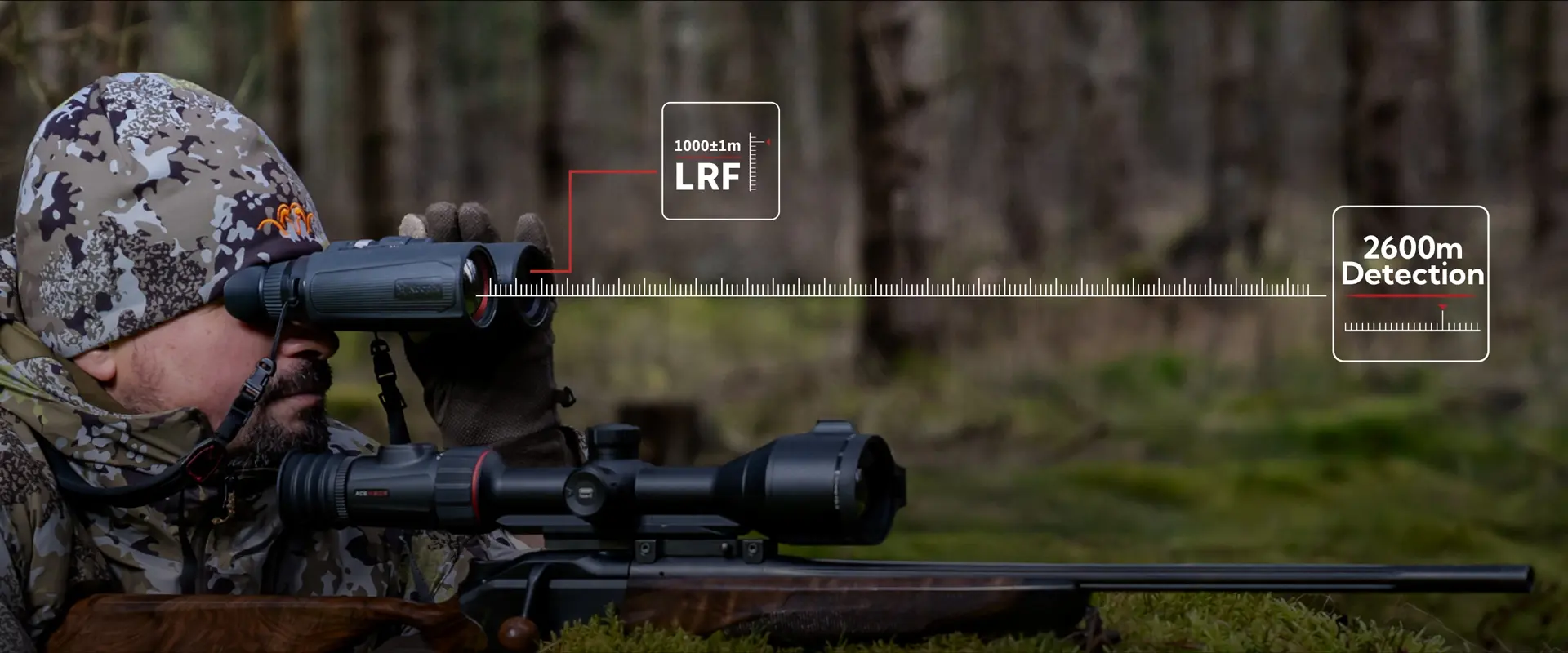
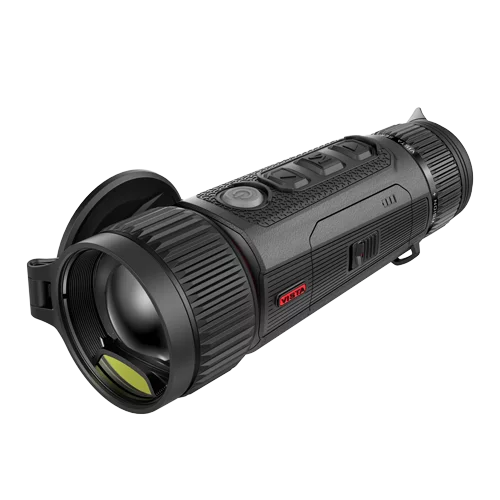
Some termiska monokularer combine observation and laser rangefinding in one handheld device. They suit hunters who want to scan and measure through a thermal image while keeping the rifle lowered.
De Nocpix LUMI H35R thermal monocular combines thermal viewing, an integrated LRF and a replaceable 18650 battery. When walking between fields, it lets you check an animal’s position and distance through one handheld. During a long wait, a compatible spare battery allows you to continue observing after the first battery runs down.
How does the terrain change the choice?
High seats and open fields
From a high seat overlooking a harvested field, use a handheld rangefinder to measure fixed landmarks before dark. Take the readings from your seat and note which tree, field corner or other feature each distance refers to.
When an animal steps into the gap between those landmarks, an integrated LRF lets you measure its current position directly through the scope. This is convenient for a solo hunter whose rifle is already supported.
Woodland edges and hedgerows
From a hide beside a hedge, the clearest view may be above a rail or just to one side of a post. A handheld gives you more freedom to measure through that gap.
A scope-mounted LRF measures from the rifle’s position. The height of the rest and the position of the hide opening therefore affect the view available for ranging. Try both arrangements from the seat or hide you normally use.
Walking between observation points
For frequent stops along field tracks, a thermal handheld with an LRF combines scanning and measuring in one device. You can check a field corner, observe an animal and take a distance reading before moving on.
With a thermal scanner and a conventional optical rangefinder, you change eyepieces for the measurement. After dark, finding the same animal through the optical view may take longer. The handheld’s visibility and its position in your pouch become important parts of this choice.
Hunting with a partner
A separate rangefinder allows one person to observe and measure while the other maintains a supported rifle position.
Agree on metres or yards before heading out, and identify the object when sharing a reading. “The animal beside the lone tree, 120 metres” gives your partner both the distance and the reference.
When the observer and shooter are well apart, take the final measurement from the shooter’s position.
What affects ranging accuracy?
Ranging performance depends on the device and conditions including target shape, surface characteristics and weather. Compare the stated accuracy and the conditions attached to each model’s maximum range.
The placement of the ranging module also differs between designs. Nocpix’s lens-integrated LRF design places the module within the objective-lens assembly, bringing the laser beam closer to the thermal lens’s viewing axis.
Foreground branches, fences and the ranging mark
A branch, fence wire or patch of ground can produce a distance reading instead of the animal behind it. Check the foreground, especially when the displayed distance changes sharply while the animal stays still.
On some digitally zeroed scopes, the LRF mark and aiming reticle sit in different positions. Use the ranging mark to select the object during measurement.
A clearer view of the intended object is more useful than repeatedly measuring through the same obstruction.
Maximum range and thermal image detail
The LRF’s maximum range describes laser measurement under stated conditions. Thermal detection, recognition and identification ranges describe the image detail available at a distance.
Compare both at the distances you expect to use. A useful demonstration includes objects at known distances across open ground and beside a hedgerow. Check how readily the device returns a measurement and how much detail you can see through the thermal image.
Rain or fog can make a reliable laser return harder to obtain even while the thermal image remains usable.
What changes in weight, batteries and cost?
Rifle weight and total carried weight
Compare both the weight on the rifle and the total weight of your equipment. Include the scope, mounts, observation handheld, separate rangefinder, batteries and cases.
An integrated LRF places the ranging hardware on the rifle. That affects the balance you feel when carrying or holding it. A separate handheld places that weight in a pouch or pocket, where access becomes part of the handling comparison.
Judge the complete arrangement in your usual hunting position, particularly when you spend long periods walking or holding the rifle away from a rest.
Battery management
An integrated LRF uses the scope’s power supply. A separate rangefinder has independent power, while a thermal handheld with an LRF shares its battery between observation and ranging.
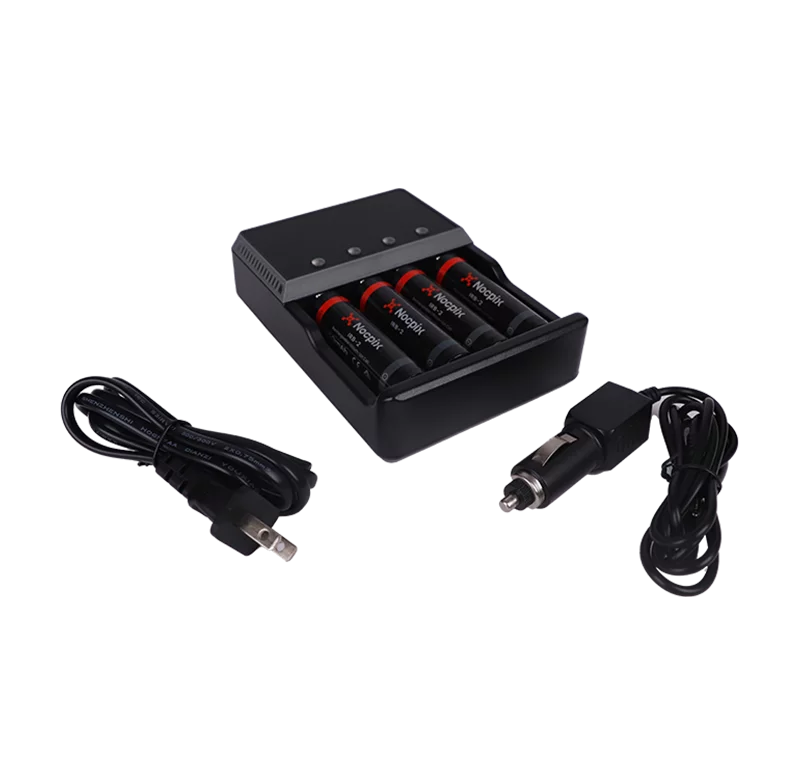
Compare the stated runtime and battery requirements of each device in the kit. For long evenings, check how the batteries are replaced and which spares the manufacturer approves. Devices using 18650 batteries can require different dimensions or specifications.
Purchase price and replacement
With an existing thermal scope, compare the cost of adding a handheld rangefinder with replacing the scope with an LRF model.
For a new setup, compare sensor detail, lens choice and ranging capability together. Include the observation device in your budget. A thermal imaging monocular with an LRF may cover the roles you would otherwise buy a scanner and an optical rangefinder to perform.
Separate devices can be replaced or serviced individually. For an integrated scope, ask whether an LRF repair would require returning the complete optic. Include the dealer’s service terms alongside the purchase price.
What should European hunters check before using either setup?
Check the country and regional rules for the species, permitted hunting hours and use of weapon-mounted thermal equipment. Handheld observation and hunting with a thermal sight can fall under different requirements.
For example, Section 14a of Sweden’s Hunting Ordinance permits specified electronic viewing equipment for wild-boar hunting in Sweden. It limits thermal sights to hunting in open terrain or at bait sites.
Use a handheld observation optic to search the ground. Before bringing the rifle into use, identify the animal and confirm a safe background and backstop from the shooter’s position.
How should you compare the setups before buying?
Start with the equipment you already own. If your current thermal scope meets your imaging needs, compare the cost of adding a handheld rangefinder with replacing the complete scope. If you are building a new setup and regularly measure from a supported rifle position, an integrated LRF may provide a simpler workflow. If you scan while walking or normally keep the rifle lowered until needed, a handheld thermal device with an LRF may be more practical.
Next, try both arrangements in your normal hunting clothing. With an unloaded demonstration rifle, check its balance and whether you can reach the ranging and focus controls from a supported position. For a handheld, practise retrieving it from your pouch, finding an object, taking a measurement and putting it away while wearing gloves and your usual coat and sling.
If you are considering a conventional optical rangefinder, arrange a low-light demonstration. Confirm that you can distinguish the intended object through the eyepiece as well as read the illuminated distance display.
Finally, compare the complete cost of each arrangement, including mounts, observation equipment, batteries and cases. Confirm the ranging functions, mounting compatibility and battery requirements of the exact model offered by the dealer. Also ask whether an LRF fault can be serviced separately or requires returning the complete scope.
Choose where you need the distance reading
For evenings spent mainly waiting over open fields, prioritise convenient ranging from your supported rifle position. For frequent walking and observation, prioritise the handheld view and access to the device.
Build the rest of the comparison around that use, including the equipment you already own, the weight you will carry, and the total purchase cost.
Vanliga frågor
Do you still need a handheld thermal scanner if your scope has an integrated LRF?
A scope-mounted LRF does not necessarily replace a handheld scanner. The scope measures from the rifle’s position, while a handheld lets you search and observe with the rifle lowered. It can also be passed to a hunting partner and used independently of the rifle’s support position.
Why is the LRF marker separate from the aiming reticle on some thermal scopes?
On a digitally zeroed thermal scope, the aiming reticle can move to a different position on the display during zeroing. The laser emitter follows its own fixed physical axis, so the scope may use a separate marker to show where the ranging measurement is taken. Use the designated LRF marker when selecting the object to measure and follow the instructions for the exact model.
What should you check if a rangefinder starts returning weak or inconsistent readings?
Start with a fresh manufacturer-approved battery and make sure the laser transmitter and receiver windows are clean. Test the device against a clear, suitably sized object at a known distance and repeat the test under different conditions. If the problem continues across targets and conditions, stop relying on the readings and contact the dealer or manufacturer about inspection or service.