







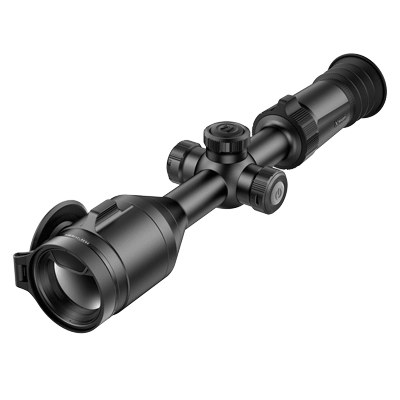


Still hunting means searching on foot, moving slowly and stopping often to look and listen. Spot-and-stalk hunting means locating an animal first, then planning an approach. The choice depends on how far you can see, how quietly you can walk, and whether you can approach without being seen or smelled.
Nocpix works closely with experienced hunters throughout the design and development of its thermal optics. In this guide, we compare still hunting and spot and stalk in common European deer-hunting settings, from woodland to open hillsides. We explain when each method is suitable and how thermal observation equipment can support it. If you hunt in the UK, check the UK deer stalking seasons before planning your outing.
What Is the Difference Between Still Hunting and Spot and Stalk?
Still hunting is a search. Spot and stalk is an approach to an animal you have already located.
Despite its name, still hunting does not mean sitting in a high seat or waiting in a hide. You move through an area where you expect animals, stopping frequently to examine the ground around you.
With spot and stalk, you first search from a position overlooking likely habitat. Once you find an animal, you decide whether and how to approach it.
| Faktor | Still hunting | Spot and stalk |
| Starting information | Recent tracks or sightings suggest animals are nearby | You locate an animal before approaching |
| Ground that favours it | Woodland openings connected by routes where you can walk quietly | A viewpoint over likely habitat, with trees, banks or slopes to hide the approach |
| Main advantage | You can check areas hidden from your starting position | You can assess the animal and route before moving closer |
| Main difficulty | Noise or scent may alert animals before you see them | The animal may move while you approach |
| When to reconsider | Walking is noisy or the vegetation blocks nearly every view | The route exposes you, the wind carries your scent towards the animal, or you cannot find it again |
Woodland does not always mean still hunting. A deer visible across a woodland clearing may suit spot and stalk. Equally, seeing a deer in a bare field does not mean you have a concealed route towards it.
When Should You Choose Still Hunting?
Choose still hunting when recent sign suggests animals are nearby, trees or vegetation prevent distant observation, and you can walk quietly between openings.
Search woodland you cannot see from the edge
For example, fresh roe-deer tracks may cross several paths inside a wood. From the field edge, trees block your view of those paths and the clearings beside them. Still hunting lets you check them in turn.
Plan a short route through areas with recent tracks or sightings. Old tracks alone are not a good reason to search a large wood.
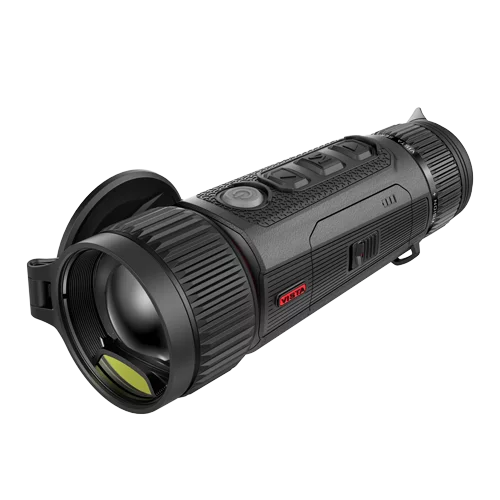
Keep daylight binoculars within reach. Handheld termiska monokularer can also help you check gaps between trees during these repeated stops.
Stop before entering a clearing
Stop before crossing a path, entering a clearing or stepping over a rise. Examine the nearby vegetation, then look through the gaps beyond it.
Look for parts of an animal as well as complete outlines. An ear, a leg or a section of a deer’s back may be all you can see between trees.
Move again when a few steps will let you inspect a path or clearing that is currently hidden. If thick undergrowth blocks the view wherever you stop, try another route rather than pushing farther into it.
For short woodland checks, compare a thermal device’s field of view as well as its magnification. Field of view tells you how wide an area appears in the image at a given distance.
De LUMI H35 termisk monokulär has 2.5× base magnification and a view approximately 22 metres wide at 100 metres. At a woodland clearing, start without digital zoom so you can check more of the area at once. Zoom in when you find something that needs closer examination.
Thermal imaging may reveal part of an animal through a gap. It cannot show the parts hidden behind a tree trunk, dense vegetation or a bank.
Wait when the route is too noisy
Dry leaves, brittle branches and dense undergrowth can make a route unsuitable for still hunting. Quiet clothing and secured straps reduce equipment noise, but they cannot silence the ground beneath your feet.
Check for sleeves rubbing against your jacket and loose fittings knocking together when you raise your binoculars.
If recent sightings suggest deer regularly use one visible clearing, watching it may be more productive than walking through noisy woodland. Continue still hunting when you can move quietly and check several places where animals may be feeding or resting.
When Should You Choose Spot and Stalk?
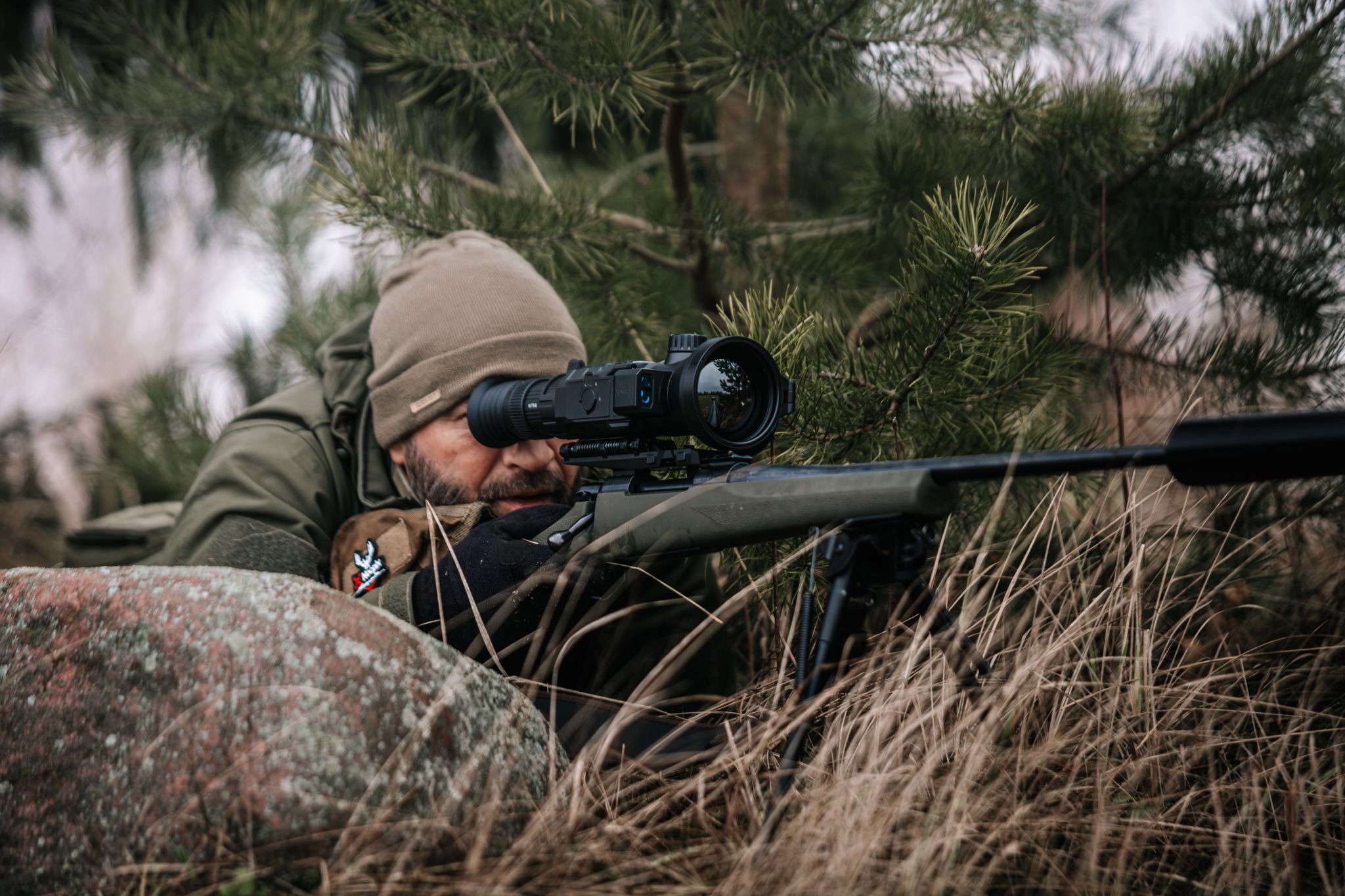
Choose spot and stalk when you can locate an animal from a distance and plan an approach without it seeing or smelling you.
Check the route before leaving your viewpoint
For example, you may spot red deer feeding on a Scottish hillside. A low ridge between you and the deer could hide your approach. If the wind does not carry your scent towards them, that route may suit a stalk.
Check where the other deer are before choosing your route. A bank may hide you from the deer you are approaching but leave you visible to another.
Identify open stretches, steep banks, fences and stream crossings before starting. A longer route behind a bank may keep you hidden when a direct route would take you across a bare slope.
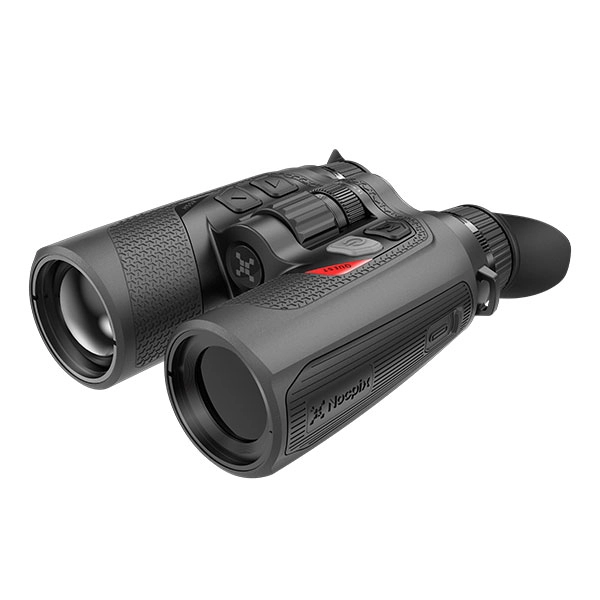
For longer watches, termisk kikare may suit you if viewing with both eyes feels more comfortable. Carry a warm layer for time spent sitting on an exposed slope.
If every route would expose you to the deer, remain at your viewpoint and wait for it to move.
Decide where you will look for the animal again
Before leaving your viewpoint, mark the animal’s position against a rock, a distinctive tree or a woodland edge. Choose another place along your route where you can stop and look for it.
A bank or hollow may block your view during the approach. Recheck the animal’s location when you can see beyond it. Do not continue towards the original position without checking whether the animal has moved.
Measure the distance before starting a long approach. The QUEST H50R termisk kikare combine 4× base magnification with an integrated laser rangefinder. While watching deer across a valley, you can check their distance without changing to a separate ranging device.
Compare the reading with the route you will walk. Going around a stream or steep bank may add considerable distance.
Also look for somewhere near the end of the approach where you could stop and use your shooting support. Tall vegetation may prevent a low position, while uneven ground may make it difficult to set up your support.
Wait if the deer keeps moving
A deer feeding within one small area gives you more time to approach than one walking steadily across a hillside.
If it moves beyond your planned route, do not hurry towards the last place you saw it. Keep watching until you can plan an approach to its new position. You may need to wait for it to slow down or stop.
How Do Wind, Weather, and Time Change the Choice?
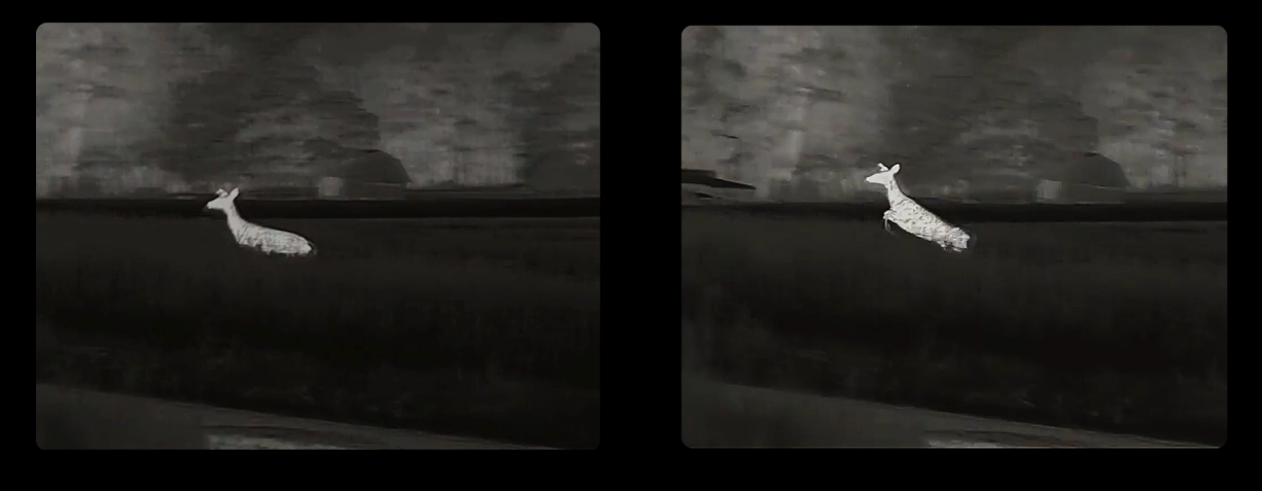
Recheck the wind as you move
Before still hunting through a wood, check whether the wind will carry your scent into it. If so, enter from another side.
For spot and stalk, check the wind before leaving your viewpoint and again along the approach. If it starts blowing from you towards the deer, stop. Change your route or wait for the direction to settle.
A crosswind may allow an approach that a direct route does not. However, hollows, hedges and woodland edges can change the wind direction. Recheck after entering a hollow, rounding a bank or moving higher up a slope.
Switching hunting methods does not fix a route that carries your scent towards the animals.
Check ground noise and visibility separately
Damp leaves may let you walk quietly through woodland that was too noisy on a dry day. Clear visibility across a hillside may favour finding deer from a viewpoint before approaching.
Fog can hide distant animals without making a woodland search practical. Still hunting is an alternative only where you can walk quietly and see into nearby cover.
Thermal images can also lose detail in humid conditions, especially at longer distances. Fog and rain may reduce the detail further.
Move to a closer observation point only when you can reach it safely and without disturbing the animal. Otherwise, wait until you can see the animal and surrounding ground clearly enough to plan the approach.
Allow time for the whole outing
Neither method is automatically quicker. A short woodland route may fit a limited morning outing. A deer already located near a concealed approach may offer a shorter stalk than searching that wood.
For spot and stalk, estimate the time needed to walk the actual route, including detours. For still hunting, allow for frequent stops rather than using your normal walking pace.
Include time for any follow-up after a shot, carcass handling, extraction and the return journey. Decide how you would retrieve the animal before beginning a long or steep approach.
On remote ground, carry navigation, emergency communication and an accessible first-aid kit. For an evening outing, take a headtorch and enough spare power for your lighting, phone and thermal device.
If the approach would leave too little time for recovery, choose nearer ground or continue watching. Do not rely on rushing the final part of the hunt.
When Should You Switch Methods During a Hunt?
Switch from still hunting to spot and stalk when you find an animal and can plan a concealed approach.
For example, you may locate a roe deer beside a field while searching a woodland path. Stop following your original route. Watch the deer, check the wind and choose a route towards it that keeps you out of sight.
Switching the other way requires more care. If a deer disappears into woodland, first watch the openings around the place where it entered. Begin a slow search only when you can move quietly and see between the trees. Do not walk straight into dense vegetation simply because that is where the deer disappeared.
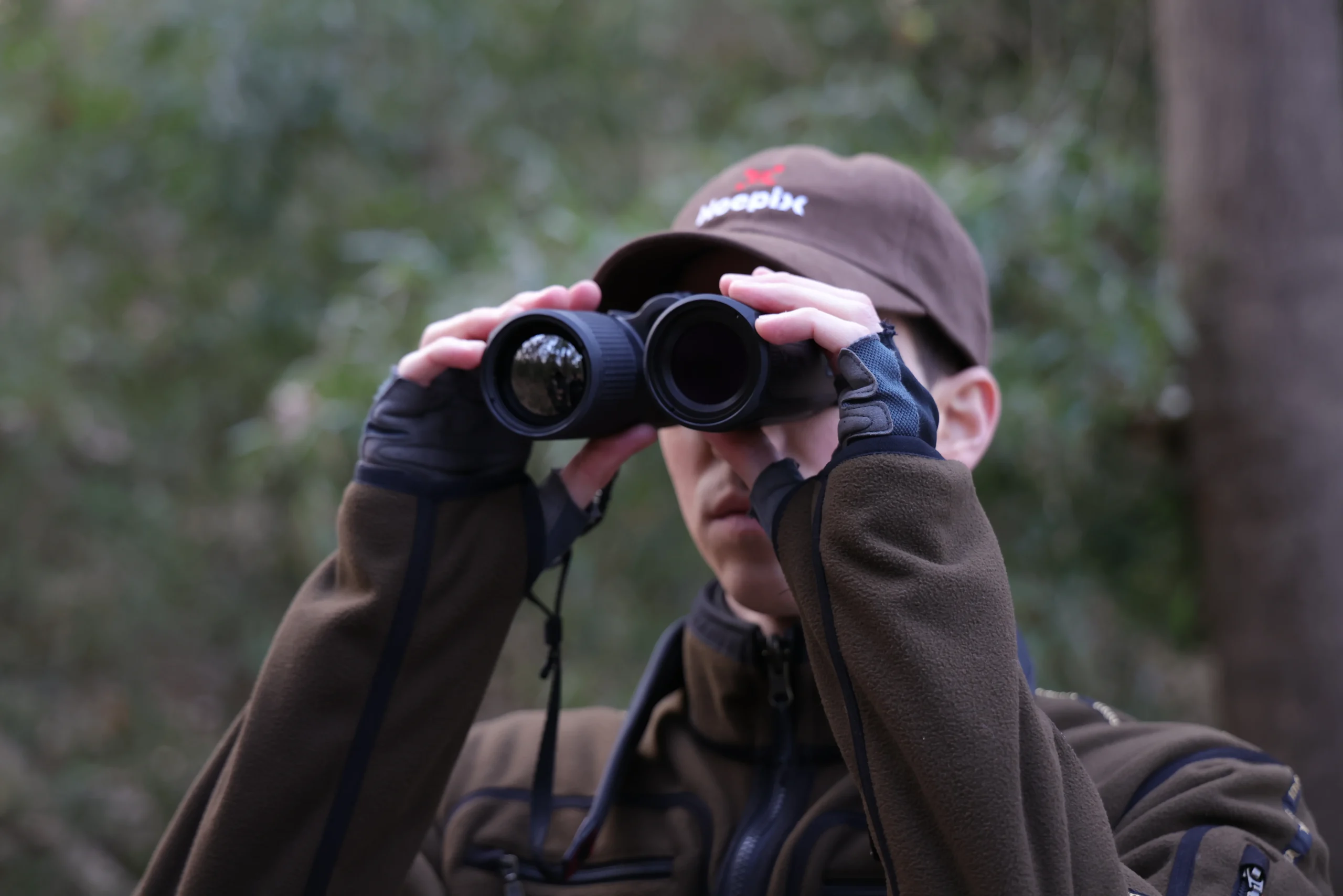
You do not need different observation equipment for each method. When comparing monoculars and binoculars, consider how easily you can carry them and how comfortable they feel during a long watch. Either format can serve both methods.
What Legal and Safety Checks Apply to Both Methods?
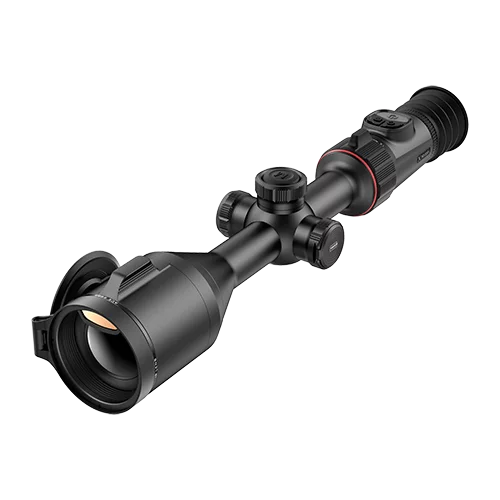
Confirm land permission, relevant seasons and the species, sex and age classes you may take. Check the rules for handheld thermal observation separately from those for weapon-mounted devices.
For example, Scotland permits thermal sights for deer, but night shooting still requires a NatureScot authorisation. The night period runs from one hour after sunset to one hour before sunrise. These are Scottish rules, not Europe-wide permissions.
Before shooting, positively identify the selected animal. Confirm a clear line of fire and a suitable solid backstop. Check for people, livestock, and other animals around and beyond it. Never shoot at an animal silhouetted against the sky.
BASC’s deer-stalking code also advises against using a rifle-mounted aiming device to identify uncertain objects. Finding a heat source is not enough to justify a shot.
Which Method Should You Choose?
Choose still hunting when recent tracks or sightings suggest deer are nearby and you can walk quietly between places you cannot inspect from one viewpoint.
Choose spot and stalk when you have located an animal and can approach behind trees, banks or slopes without the wind carrying your scent towards it.
If neither approach is possible, watch a clearing or hillside from a position where you can remain out of sight. Moving is useful only when it helps you find an animal or reach a suitable hunting position.
FAQ
Can spot and stalk work for deer, or will they simply run away?
It can work when you locate the deer before moving and have terrain that hides your approach. Trees, banks, slopes and changes in elevation may let you move without remaining visible. If the ground offers no concealed route, continuing to watch is usually more suitable than forcing an approach.
Can you spot and stalk roe deer inside woodland rather than waiting near fields?
It is possible where woodland rides, clearings or changes in elevation let you locate the deer and plan a concealed route. In dense woodland where you cannot see the animal before moving, the method is closer to still hunting because you are searching first rather than approaching an already located deer.
If I find deer tracks but rarely see deer, am I moving too fast or being detected?
Either is possible, and tracks alone cannot show which happened. Recheck the wind, reduce visible movement and spend more time observing between steps. If the wind is swirling or the ground makes quiet movement impossible, watching another location may be more productive than continuing along the tracks.
How slowly should you move when still hunting through woodland?
There is no fixed walking speed. Move only far enough to reveal ground that was previously hidden, then stop to look and listen. Noisy ground, limited visibility and frequently changing wind require longer pauses and may make the route unsuitable altogether.
Does thermal imaging improve fieldcraft or create over-reliance?
That depends on how it is used. A thermal device can reveal deer that are difficult to notice in woodland or low light, but repeatedly scanning through a narrow field of view can reduce awareness of the wider surroundings. Use thermal imaging to support normal observation—not as a reason to move faster or assume an area is clear.