






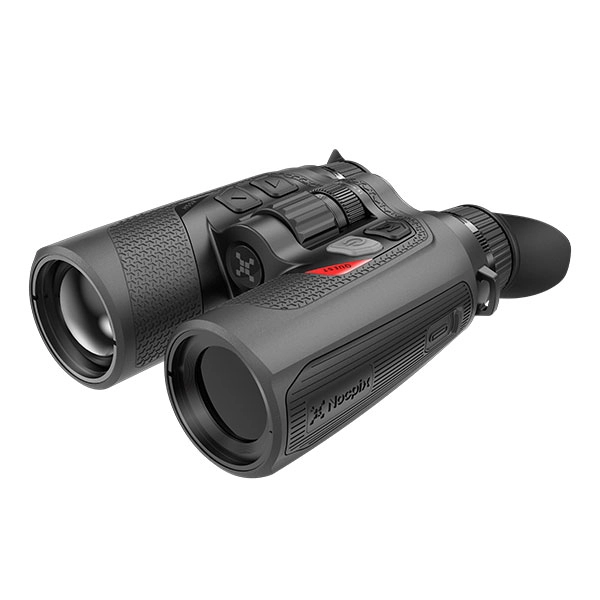
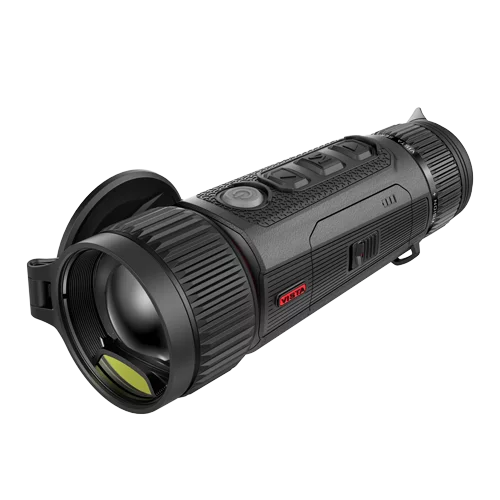
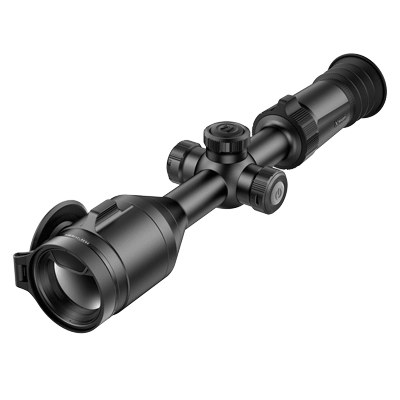
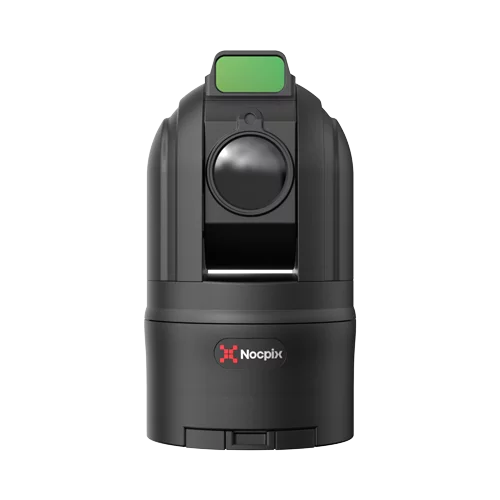


The Nocpix Vista S50R is the better choice for wide-area scanning, following several animals, and preserving more image detail as digital magnification increases. The Vista H50R is the better-value choice for hunters who prefer a tighter 4× starting view and can carry the monocular for long sessions.
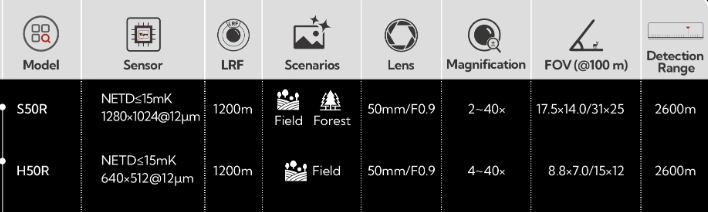
Both are premium 50 mm rangefinding thermal monoculars. Both have the same listed detection range of 2,600 meters, so range will not help you choose between them. Compare field of view, base magnification, sensor resolution, runtime, and price instead.
Here is the short version.
| Hunting need | Better fit | Why |
|---|---|---|
| Wide fields and fast scanning | Vista S50R | 2× base magnification and 31 m horizontal view at 100 m |
| Tracking several moving animals | Vista S50R | Wider frame and 1280×1024 sensor |
| More detail retained during digital zoom | Vista S50R | Four times the detector pixel count of 640×512 |
| Known lanes and focused observation | Vista H50R | 4× base magnification starts with a tighter view |
| Lower weight and longer listed runtime | Vista H50R | 650 g and 5.5 hours versus 690 g and 4.5 hours |
| Lower price tier | Vista H50R | Keeps the shared Vista platform without the 1280 sensor premium |
The H50R is enough for many hunters. The S50R becomes worth its higher tier when scanning width and zoom headroom solve a real field problem.
Table of Contents
Where Does the S50R Earn Its Premium?
The S50R does not cost more because it has a better lens, thermal sensitivity rating, frame rate, display, or rangefinder. Both models share a 50 mm F0.9 objective, ≤15 mK NETD, a 60 Hz frame rate, a 2560×2560 AMOLED display, and a Class 1 laser rangefinder rated to 1,200 meters.
The price difference comes from two changes: the S50R uses a 1280×1024 sensor instead of 640×512, and it starts at 2× instead of 4×. This gives the S50R a wider view for finding animals and more source pixels for digital magnification. It does not improve every part of the Vista platform.
The official Vista model page lists the current specifications for both models. The sections below explain how the two differences affect actual field use.
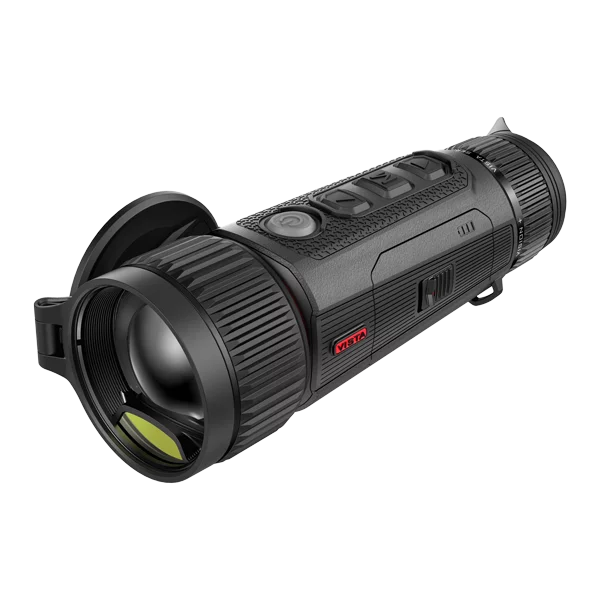
A Wider Scanning View
At 100 meters, the S50R covers 31 meters horizontally and 25 meters vertically. The H50R covers 15 by 12 meters. The S50R therefore shows about twice the width and height at base magnification.
That is useful when animals can enter from several directions. A hunter scanning a broad pasture can cover more ground with fewer sweeps. When a sound or movement appears near the edge of the scene, the wider frame also gives more context before zooming.
The 2× base magnification makes nearby animals look smaller than they do through the H50R at 4×. This is intentional. The S50R favors awareness first, then magnification when the user wants a closer view.
More Digital-Crop Headroom
The S50R’s 1280×1024 detector contains 1,310,720 pixels. The H50R’s 640×512 detector contains 327,680. That is four times the detector pixel count.
Digital magnification enlarges and crops the captured image; it does not add optical detail. Starting with more pixels gives the S50R more data to retain as the field narrows. At equivalent displayed framing, it can preserve more target structure before the image becomes blocky.
This does not mean every zoom level remains equally useful. Focus, weather, target size, processing, and display presentation still affect recognition. The benefit is greater room to crop, not unlimited identification distance.
Better Context Around Moving Animals
Both models run at 60 Hz, so the difference is not frame rate. The S50R simply keeps more surrounding terrain visible at the start. That can help when following a group, watching an animal cross brush lines, or switching between a close subject and a second heat source.
The wide view also reduces the chance of losing a moving animal during a rapid scan. Once the subject is centered, magnification can be increased for closer inspection.
S50R Tradeoffs
The S50R weighs 690 grams with its battery, 40 grams more than the H50R. Its listed maximum runtime at 22°C is 4.5 hours, one hour shorter. Actual runtime changes with temperature, Wi-Fi, recording, display settings, and battery condition.
It also sits in a higher price tier. Buyers pay for the 1280 detector and wide-view flexibility, while the rangefinder, lens, display, and weather rating remain largely shared.
Where Is the H50R the Better Fit?
The Vista H50R uses a 640×512 detector and starts at 4× magnification. It trades scanning width and crop headroom for a tighter initial view, lower weight, longer listed runtime, and a lower purchase tier.
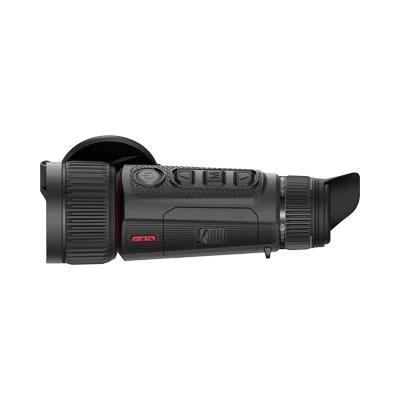
A Tighter Starting View
At 100 meters, the H50R shows 15 meters horizontally and 12 meters vertically. A target therefore occupies more of the display at base magnification than it does in the S50R’s 2× view.
This can feel natural when the observation lane is already known. A hunter watching a feeder, hedgerow gap, or distant field entrance may not need to sweep a broad area. The 4× view puts more attention on a smaller section of terrain without requiring an immediate zoom command.
The tradeoff appears when searching. A 15-meter window covers less ground per sweep, so the user must scan more carefully to avoid skipping heat sources outside the frame.
Lower Weight and Longer Listed Runtime
The H50R weighs 650 grams and measures 194 mm long. The S50R weighs 690 grams and measures 201 mm long. Treat the 40-gram difference as a secondary factor: base magnification and sensor resolution should decide the comparison first, while weight becomes relevant during repeated one-handed scanning.
Nocpix lists the H50R at up to 5.5 hours at 22°C, compared with 4.5 hours for the S50R. A spare battery remains advisable for a full night because cold weather, video, Wi-Fi, and display use can reduce runtime.
Strong Shared Hardware Without the 1280 Tier
The H50R retains the same listed NETD, F0.9 lens, 60 Hz frame rate, 2560×2560 display, and 1,200-meter rangefinder. For buyers who do not need the S50R’s wider field of view or additional crop flexibility, these shared features make the H50R a strong value within the Vista family.
Independent field testing supports this positioning. Outdoor Life named the Vista H50R its Editor’s Choice and Best Overall after testing thermal viewers during predator and hog hunts, target shooting, and general observation. The evaluation covered image quality, magnification performance, ranging, app connectivity, controls, image capture, and handling.
The H50R performed strongly in areas such as through-the-lens rangefinding, display clarity, menu usability, and overall balance. Testers also noted its focused viewing experience and image processing characteristics. These design choices make the H50R well suited for hunters who prefer a more concentrated observation style and want a premium feature set in a compact monocular.
When H50R Makes More Sense
The 640 detector offers a balanced combination of detail, size, and price. Compared with the S50R’s wider 1280 sensor platform, it provides a more focused viewing experience rather than the same level of wide-area coverage and cropping flexibility.
Choose the S50R when your priority is quickly searching large open areas, mixed terrain, or changing scenes. Choose the H50R when you spend more time observing known locations, tracking specific zones, or prefer a tighter starting view with premium features.
Which Model Fits Each Hunting Style?
The choice becomes easier when the models are placed into real terrain and observation patterns. Real-world hunting footage shows both devices being used in different hunting scenarios. The Vista S50R has been used in night hog hunting setups, while the Vista H50R has been used for observing roe deer activity in the field. These examples highlight how each model fits different hunting situations rather than serving as a direct performance comparison.
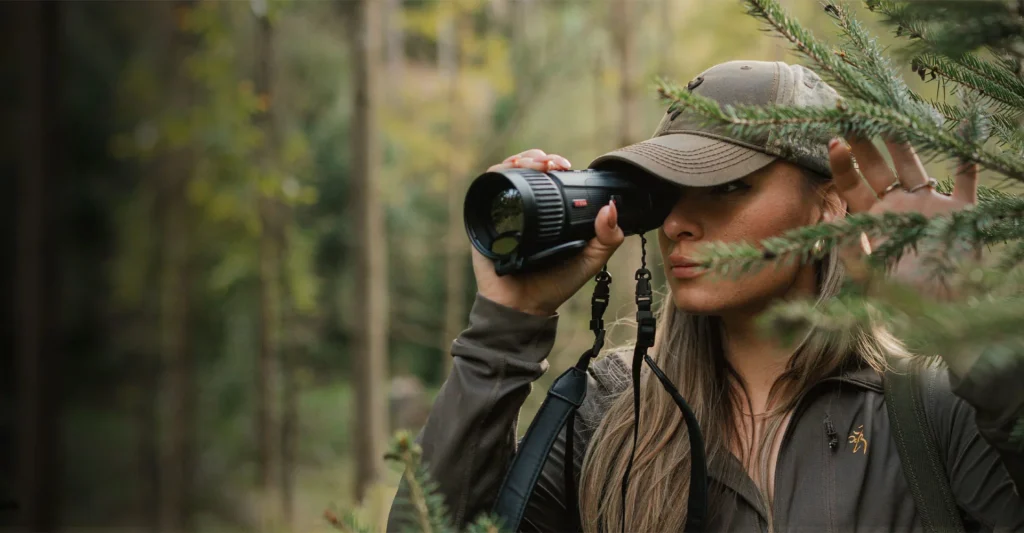
Open Fields and Multiple Moving Animals
Choose the S50R when the first job is finding heat across a broad field. Its 31-meter horizontal view at 100 meters shows about twice the width of the H50R. The 1280 detector then gives more room to magnify after the animal is found.
This is also the better direction when several animals may move through the scene and the user wants to keep their spacing visible.
Mixed Farmland and Known Lanes
Either model can work. Choose the S50R if scanning hedges, pasture, and field edges requires frequent changes in direction. Choose the H50R if the hunt centers on known crossings, gateways, or feeding zones and a tighter starting view feels more useful.
Base magnification should follow the first task. If the first task is search, 2× helps. If the first task is focused observation, 4× may save a step.
Woodland Edges and Closer Encounters
The S50R’s wider view is usually easier near cover, especially when animals can appear close or cross the field quickly. The H50R’s 4× base magnification can feel restrictive at short range because a nearby animal fills more of the frame and surrounding context disappears.
The H50R still fits woodland observation from a fixed position with a known lane. Distance and expected entry points determine whether the narrow view is a benefit or a burden.
Long Handheld Sessions
Choose the H50R when weight, runtime, and budget have more influence than maximum sensor detail. Its 40-gram weight saving is small, yet repeated one-handed use can expose small handling differences. The extra hour of listed runtime also reduces battery pressure, though a spare remains the safer plan.
Users who choose the S50R for its image and view should consider a hand strap, stable grip, and spare IBP-7 battery as part of the setup.
How Should You Make the Final Choice?
Use this five-step test before ordering:
- Measure the usual viewing distance. Close and mixed terrain favors the S50R’s wider 2× view; known distant lanes can favor the H50R’s 4× view.
- Identify the first task. Pick the S50R for search-first use and the H50R for observation-first use.
- Review footage at the zoom levels you use. Compare retained texture and motion, not only a static base image.
- Plan the full session. Include battery changes, one-handed scanning time, and recording or Wi-Fi use.
- Verify local price and package contents. Regional prices, promotions, warranties, and included batteries can change the value calculation.
Before the first field session, review the Vista Series Quick Start guide. A short setup session in familiar terrain will reveal whether the chosen base view fits the user’s scanning rhythm.
Final Recommendation
Choose the Vista S50R when wide awareness and 1280-sensor crop room improve how the hunt is conducted. Choose the Vista H50R when a focused 4× view, lower weight, longer listed runtime, and lower price tier align better with the field routine.
Neither model wins every terrain. Compare the first task, the normal distance, and the length of the session, then confirm the latest regional package and warranty with an authorized Nocpix dealer.
Frequently Asked Questions About the Vista S50R and H50R
Do the S50R and H50R have the same detection range?
Nocpix lists both at 2,600 meters using a 1.7×0.5-meter target and a stated 99% detection probability criterion. That does not mean both provide the same identification detail at every distance. Detection only means noticing a target-sized heat source under the test conditions.
What is the field of view of the Vista H50R?
The Vista H50R has an 8.8°×7.0° field of view, equal to 15×12 meters at 100 meters. The S50R covers 17.5°×14.0°, or 31×25 meters at 100 meters, so it shows about twice as much width and height at base magnification.
Which Vista model is better for scanning?
The S50R is better for broad scanning because its 2× base magnification covers 31 meters horizontally at 100 meters. The H50R covers 15 meters at the same distance and starts at 4×.
How does a 1280×1024 thermal sensor compare with 640×512?
A 1280×1024 sensor contains four times as many detector pixels as 640×512, giving it more source detail for digital cropping and target inspection. In this comparison, choose the S50R when that extra detail and its wider 2× view justify the higher price; choose the H50R when a 640 sensor and tighter 4× view already fit the normal terrain.