






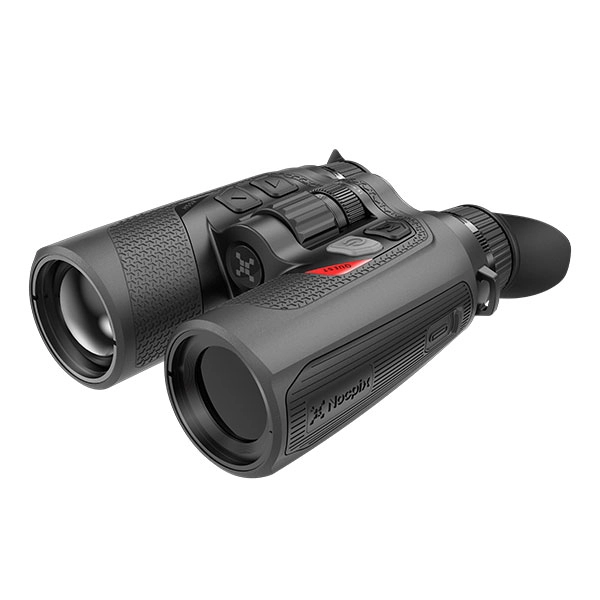
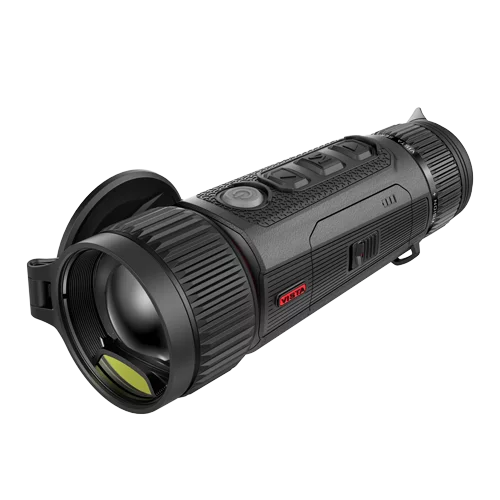
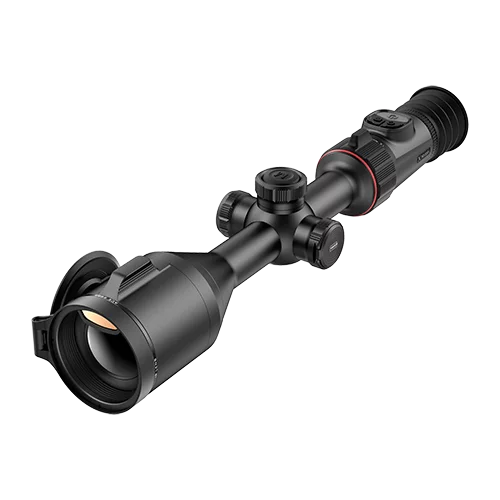
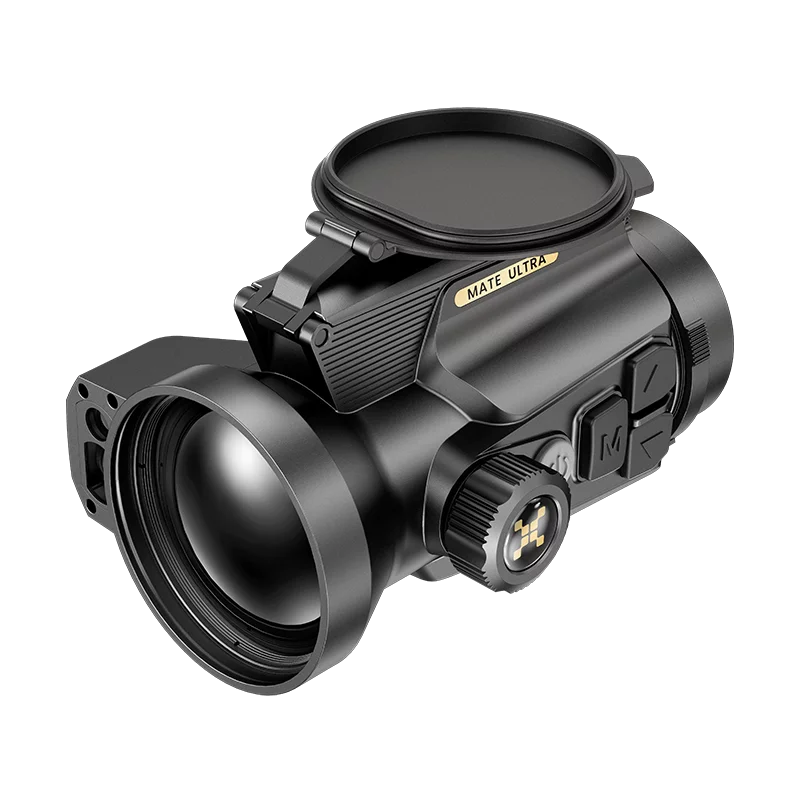
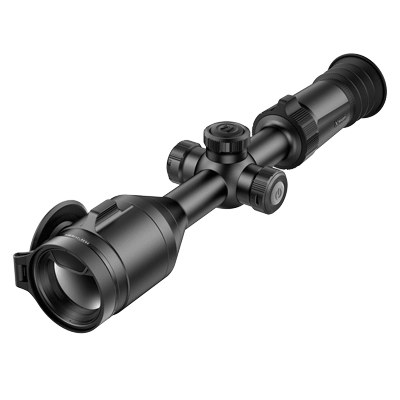


An LRF thermal scope combines thermal imaging with a laser rangefinder. Press the range button, and the scope measures the line-of-sight distance to an object. If the scope also has a ballistic calculator, it can use that range and your saved rifle data to show an aiming correction.
That sounds like a feature every hunter should want. It is not. An integrated LRF earns its place when distances change, terrain makes range hard to judge, or you hunt unfamiliar ground. If most shots are taken from one position across known distances, image detail, field of view, and battery life may deserve more of your budget.
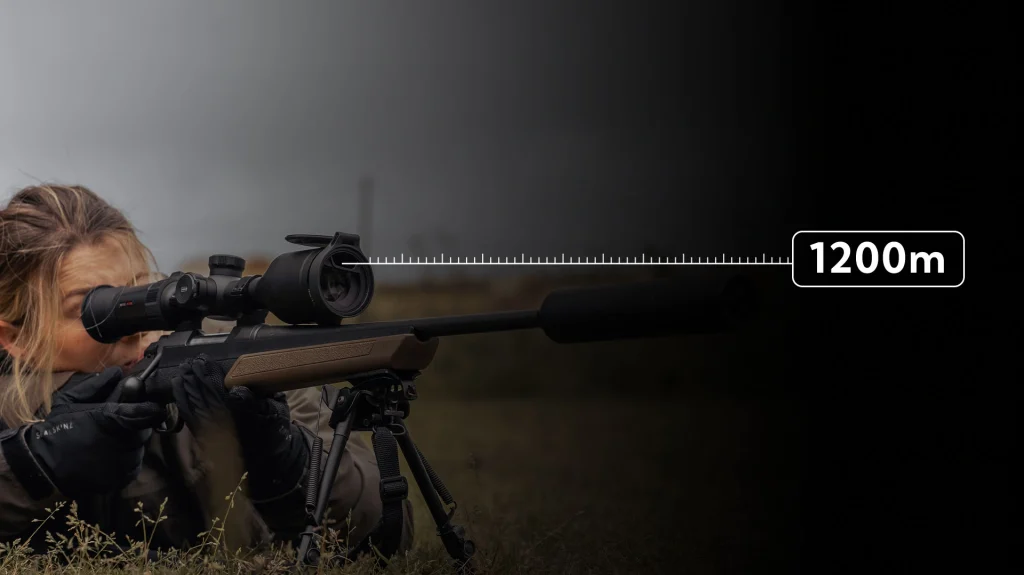
Before paying for the feature, separate the distance measurement from the ballistic recommendation. They solve different problems and can fail for different reasons.
What Is an LRF Thermal Scope?
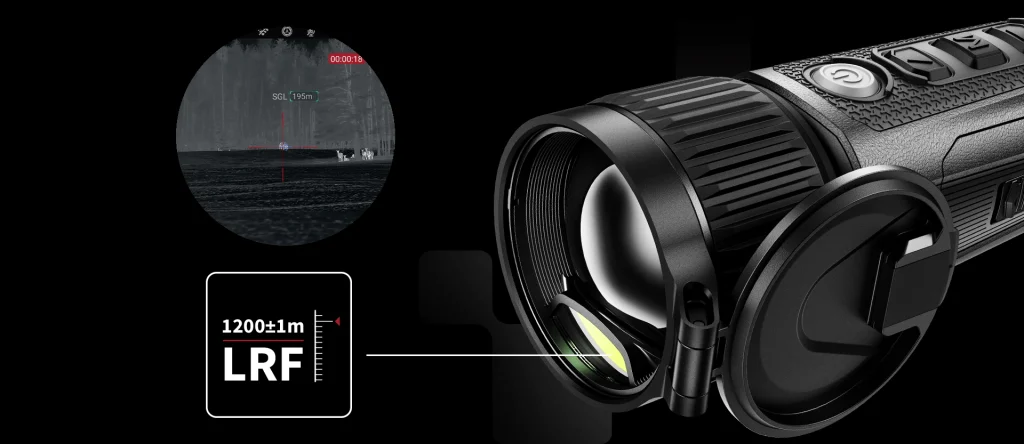
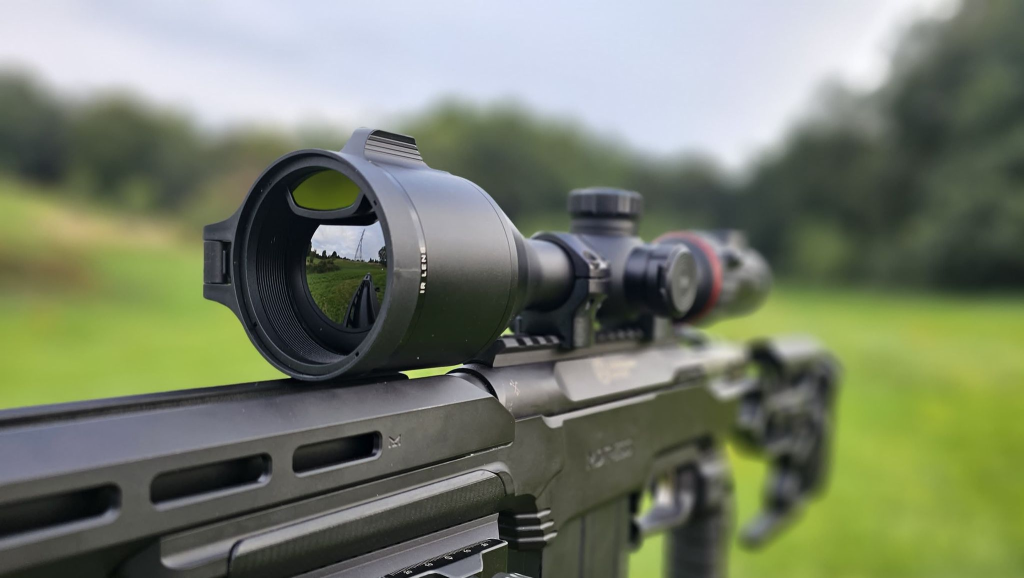
An LRF thermal scope is a rifle-mounted thermal optic with a built-in laser rangefinder. The thermal sensor and lens show differences in infrared energy; the rangefinder sends a laser pulse towards the object under its ranging mark and calculates distance from the return. Some scopes also use that measurement with a saved rifle and ammunition profile to display a suggested hold point.
Keeping the measurement in the thermal display means the user does not have to find the same object again with a handheld rangefinder. This is most useful at night, when a thermal scene may offer few familiar landmarks for judging distance.
The three functions still answer different questions. Thermal imaging helps with detection and identification. The LRF measures line-of-sight distance. A ballistic calculator estimates trajectory from the information it receives. None of them confirms that the animal is legal to take, that the background is safe, or that the shot is within the hunter’s ability.
Integrated vs. External LRF
An external handheld rangefinder can measure distance, but it adds a handoff. The user must find the same object in two devices, keep the position consistent, then return to the scope. That can be workable from a blind or before animals enter the field.
An integrated LRF keeps ranging inside the thermal sight picture and avoids that handover when an animal or the shooter changes position. Depending on the model, the trade-offs may include a higher price, extra controls or display elements, and more setup before the ballistic functions are useful.
Hunters still comparing core image specifications can use this broader guide to choose a thermal riflescope before deciding whether LRF belongs on the feature list.
How Does an LRF Thermal Scope Work?
The scope first builds the thermal image, then measures range. If a ballistic calculator is enabled, it uses that measurement with the saved profile and displays a correction. An error at any point can make the final answer less useful.
Step 1: The Thermal Core Builds the Image
The thermal sensor detects infrared energy and turns temperature differences into a visible image. Lens focus, sensor resolution, sensitivity and the temperature contrast between the animal and its surroundings all affect how much detail is available. Rain, fog and changing ground temperature can reduce that contrast further.
This image helps the hunter place the LRF mark on an object. It does not make the laser more powerful, and it does not let the beam pass through solid brush. A warm shape behind gaps in vegetation may be detectable while the laser returns from a nearer branch.
Step 2: The Laser Measures Distance
When the range button is pressed, the LRF emits a laser pulse. The receiving system looks for reflected energy and calculates distance from the pulse’s travel time.
Large objects with a clear, direct surface generally give the rangefinder an easier return than small, angled, wet or partly blocked objects. A stated maximum range is usually measured with a suitable target under defined conditions. It should not be read as a promise that every animal can be ranged at that distance.
Hold the ranging mark on a solid part of the animal or a nearby object at the same distance. If the reading jumps between values, do not choose the number you prefer. Range again from a steadier position and check for branches, grass, fence posts, or terrain that may be catching the beam.
Step 3: The Ballistic Calculator Uses Your Data
The ballistic calculator combines measured range with a saved profile. The exact inputs vary by scope, but they may include zero distance, muzzle velocity, ballistic coefficient, bullet weight, sight height and shot angle. Some systems also allow environmental values.
The calculator is not measuring most of those values. It trusts what was entered. Factory ammunition velocity is a starting point, not proof of velocity from a specific barrel. A wrong zero distance or sight height can also move the displayed solution away from the real point of impact.
Step 4: The Display Shows a Correction
The scope may display a corrected aiming mark, a holdover value, or another reticle cue. This is an estimate based on the measured range and saved profile. It does not move the rifle, read an unseen crosswind, or verify the backstop.
Before field use, confirm the profile on paper at several known distances. Start with the established zero, then test the distances most likely to occur during the hunt. If the scope offers multiple profiles, label them carefully and confirm the active one before loading the rifle.
Model-specific owners can follow the separate tutorial to set up the LRF and ballistic calculator instead of treating this category guide as a button map.
What Can Make an LRF or Ballistic Answer Wrong?
An LRF distance can be accurate while the final ballistic answer is wrong. The reverse is also possible: the profile can be sound, but the laser measures a branch in front of the animal. Check the range reading and ballistic profile separately before relying on the displayed correction.
| Failure point | What happens in the field | What to do |
|---|---|---|
| Partial obstruction | The laser returns from grass, brush, or a fence instead of the animal | Change position, steady the rifle, and range again |
| Weak return | The display gives no reading or values that jump | Use a larger surface at the same distance or close the range |
| Unstable aim | The ranging mark moves across near and far objects | Use a tripod, rest, or supported position |
| Wrong rifle profile | The scope calculates for another rifle, load, or zero | Confirm the active profile before the hunt |
| Unverified velocity | The model uses a velocity that differs from the real rifle | Confirm impacts at known distances and refine the profile |
| Wind | A correction is only as useful as the wind information the system receives | Read changing conditions and stay within a verified distance |
| Weather and atmosphere | Rain or fog may reduce image contrast and make a reliable laser return harder to obtain | Shorten expectations and confirm every reading |
On some digitally zeroed systems, the LRF mark does not sit directly on the aiming reticle. The aiming reticle can move during zeroing while the ranging mark reflects the fixed alignment of the laser module. A small offset may therefore be normal for that design. If the mark is in an extreme position, check the mount, zeroing procedure and model manual rather than assuming the behaviour is universal.
Use a simple pre-hunt verification routine:
- Confirm the rifle is unloaded before changing settings or mounts.
- Select the correct profile and verify units.
- Confirm zero at the intended zero distance.
- Range several objects at known distances.
- Shoot paper at the distances likely to occur in the field.
- Record any consistent difference between the suggested and actual impact.
- Recheck after firmware changes, ammunition changes, hard impacts, or mount removal.
A ballistic calculator becomes useful only after this work. Without it, the display can present a precise-looking answer built from weak inputs.
Do You Need an LRF Thermal Scope?
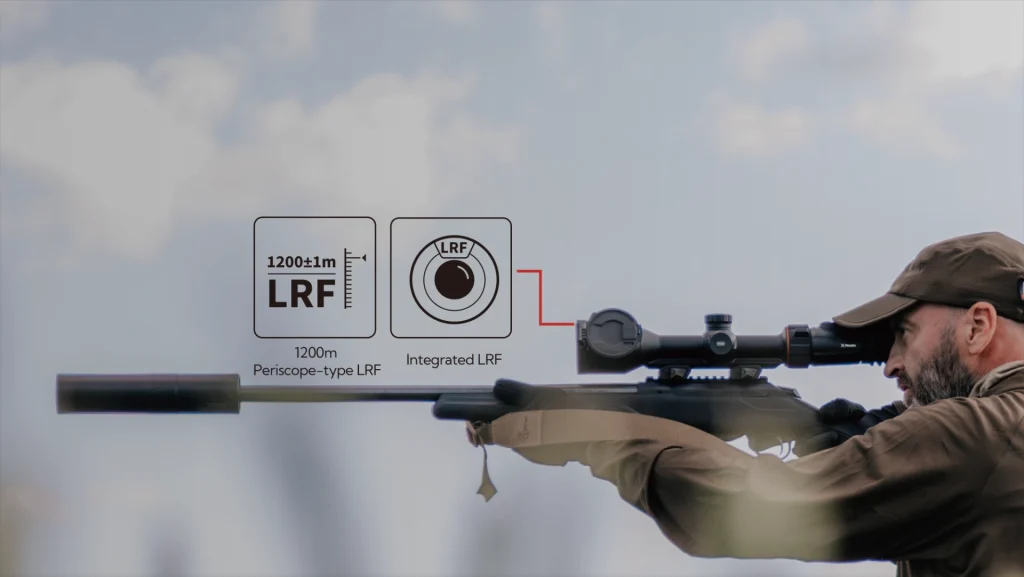
Choose integrated LRF when it removes a real source of uncertainty. Skip it when it does not change the field decision.
| Hunting situation | LRF value | Buying direction |
|---|---|---|
| One position with known distances | Low to moderate | Put budget towards image quality, field of view and reliability first |
| Several fields with changing shot distances | High | Integrated LRF can reduce range-estimation error |
| Unfamiliar property | High | Ranging landmarks before animals arrive helps build a safer distance map |
| Long-range open terrain | High, with training | Pair LRF with a verified ballistic profile and stable support |
| Dense vegetation and short distances | Moderate | LRF helps only when the beam has a clear path; a wide field of view may be more useful |
| Tight budget | Depends | Compare the image quality lost by choosing a cheaper sensor to gain LRF |
The budget trade-off deserves attention. A lower-resolution LRF scope is not automatically a better hunting tool than a higher-resolution scope without LRF. If the hunter cannot identify the animal with enough confidence, an exact distance does not solve the larger problem.
The same applies to fixed-distance hunting. Range useful landmarks and field boundaries before dark. Those known references may cover every likely shot. In that setup, a separate rangefinder used during preparation can provide most of the benefit.
Integrated LRF becomes more persuasive when an animal may appear at 75 metres (about 80 yards) in one location and 210 metres (about 230 yards) in another. Darkness removes depth cues, and thermal scenes can make open ground look flatter. A range shown inside the sight picture saves movement and reduces reliance on guessing.
If the hunt also requires more recognition detail at distance, compare sensor resolution, lens size, native magnification, and field of view in the long-range thermal scope guide.
Start with the distances and terrain you actually hunt. Choose an image platform that supports confident identification there, then add LRF if variable distance still creates a problem that preparation or a handheld rangefinder cannot solve.