






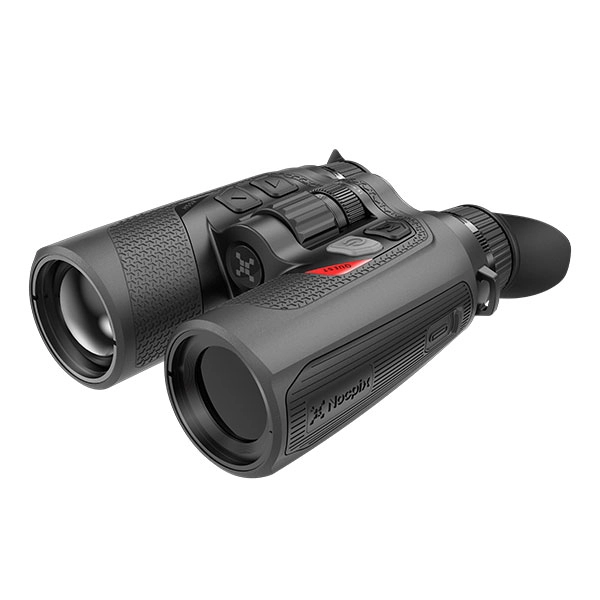
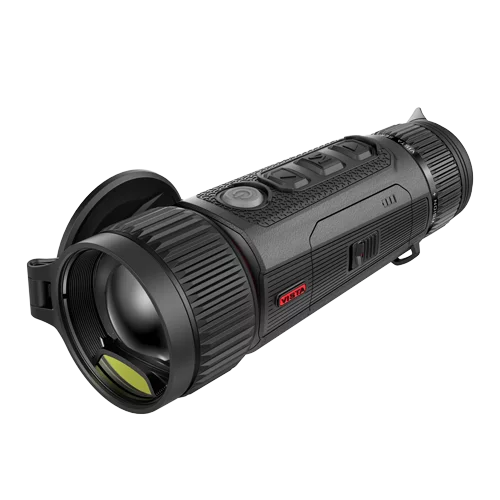
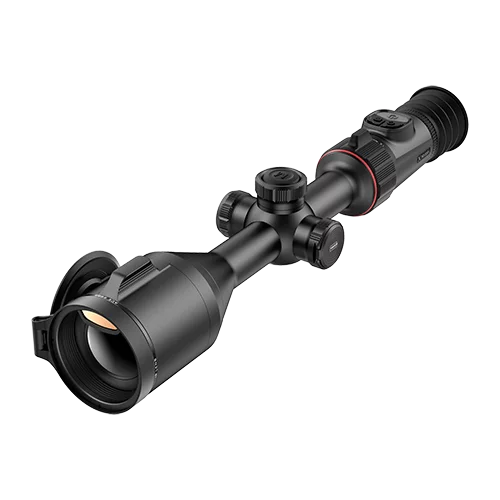
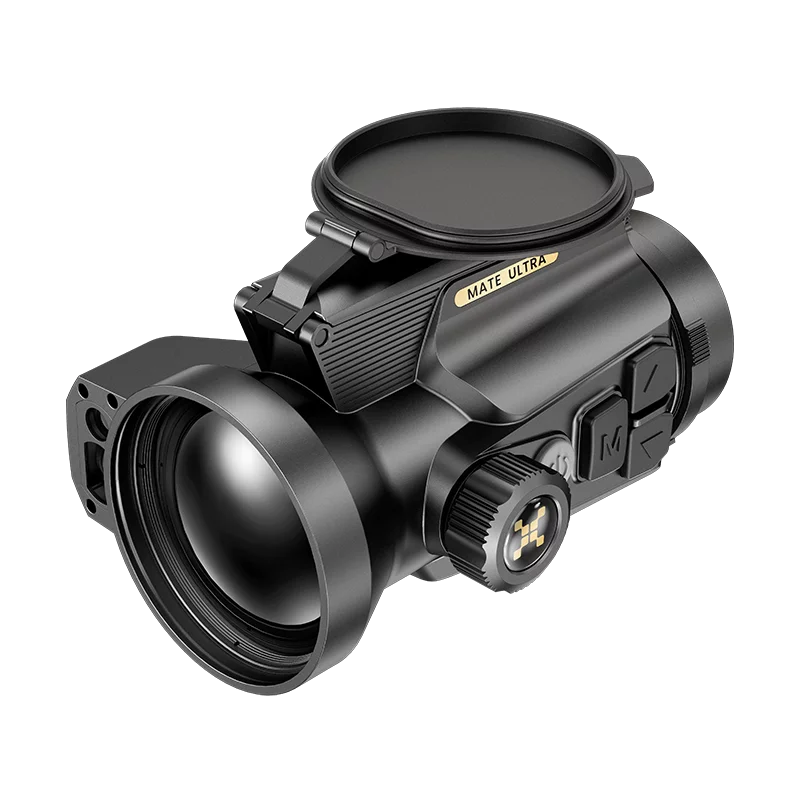
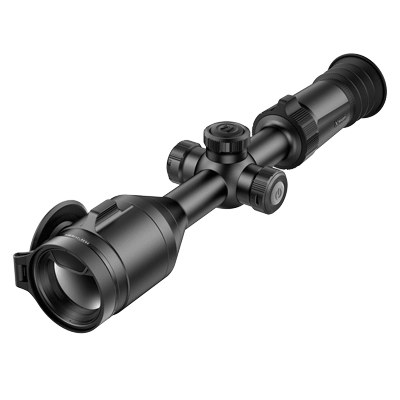
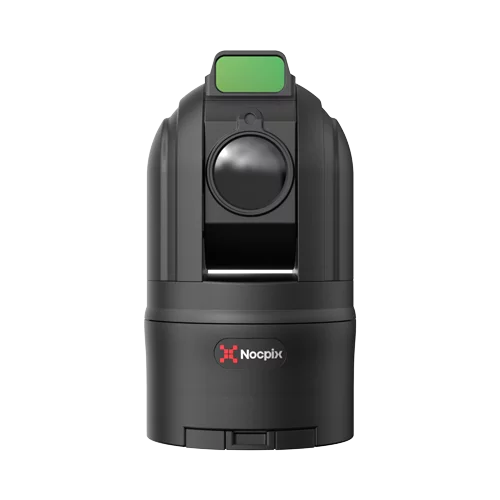


The best long-range thermal scope is the one that gives you enough detail to recognize a target at the distance you actually hunt. The largest detection number on a product page does not answer that question.
Start with your terrain and realistic shot distance. Then consider recognition detail, base magnification, field of view, ranging, rifle balance, and weather. This guide applies that decision process to four Nocpix riflescope families: RICO 2, ACE, ACE RM, and BOLT.
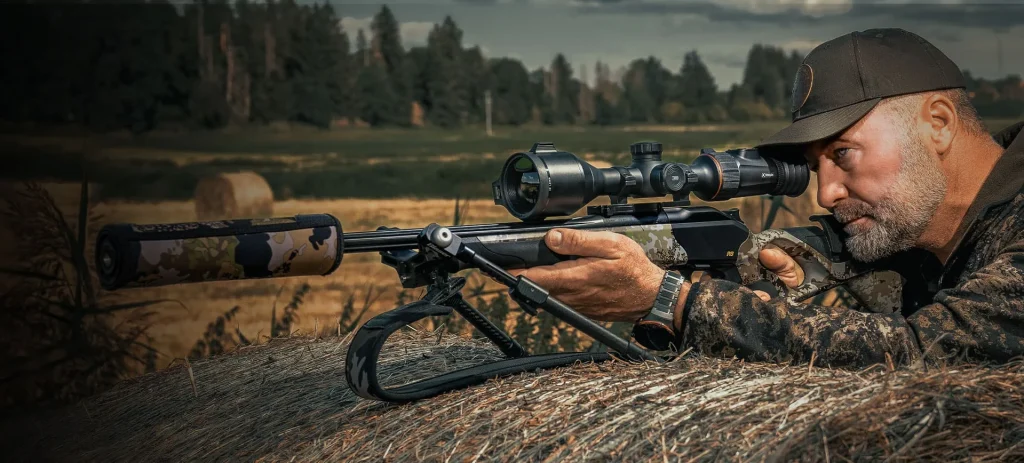
Quick Answer: Match the Scope to the Hunt
For regular hunting across wide, open ground, RICO 2 S75R or H75R offers the strongest long-distance setup in the Nocpix range. ACE S60R or H50R is a better fit when the same rifle must cover open fields and mixed terrain. ACE RM serves hunters who want ACE imaging in a rail-mount body. BOLT H50R is the more restrained choice when most shots stay at moderate distance.
| Hunting need | Nocpix direction | Why it fits | Main tradeoff |
|---|---|---|---|
| Open country and the longest regular shooting lanes | RICO 2 S75R or H75R | 75mm lens options, useful base magnification, integrated LRF | More size, weight, cost, and narrower field of view |
| Long-range ability across mixed terrain | ACE S60R or H50R | More balanced combinations of sensor, lens, and field of view | Less specialized than a 75mm long-distance setup |
| Rail-mount fit and repeatable rifle setup | ACE RM S60R or H50R | Integrated rail body with forward and rearward adjustment | Choose it for mounting needs, not extra image range |
| First thermal scope or mostly moderate-range hunting | BOLT H50R | 640×512 sensor, 50mm lens, LRF, and ballistic calculation | Not the first choice for the longest identification demands |
These are not universal distance promises. Target size, humidity, background temperature, focus, stability, and partial cover can change recognition distance from one night to the next.
Table of Contents
Which Nocpix Long-Range Setup Fits Your Hunting?
The useful difference between these scopes is not the length of their feature lists. It is the type of hunt each one makes easier.
RICO 2 S75R or H75R: For Open Ground and Distant Detail
Choose a 75mm RICO 2 when long shooting lanes are normal rather than occasional. The S75R pairs a 1280×1024 sensor with a 75mm F1.0 lens and 3× base magnification. The H75R uses a 640×512 sensor and a 75mm F1.0 lens with higher base magnification. Both include an integrated LRF and ballistic calculation.
That setup favors distant target detail across ranches, farmland, and broad calling areas. It also asks more from the rifle setup. A large lens adds weight, and the view is less forgiving when an animal appears close or moves quickly across the frame.
Pick RICO 2 when long-distance use is the main job. Skip the 75mm route when most shots happen inside tighter cover or when a lighter, wider-view scope would stay on target more easily.
ACE S60R or H50R: For Long Range Across Mixed Terrain
The ACE line makes more sense when one scope must work across open pastures, field edges, and shorter approaches. The S60R uses a 1280×1024 sensor and 60mm F1.0 lens. The H50R uses a 640×512 sensor and 50mm F0.9 lens. Both R models include a laser rangefinder.
The S60R starts at 2×, which helps retain more field of view while its high-resolution sensor preserves detail. The H50R starts at 3× and offers a more focused view for hunters who do not need the 1280-class system.
Choose ACE when versatility carries as much weight as maximum reach. A hunter who spends every stand looking across very long, open ground may still prefer the more specialized 75mm RICO 2.
ACE RM: For Hunters Who Prefer an Integrated Rail Mount
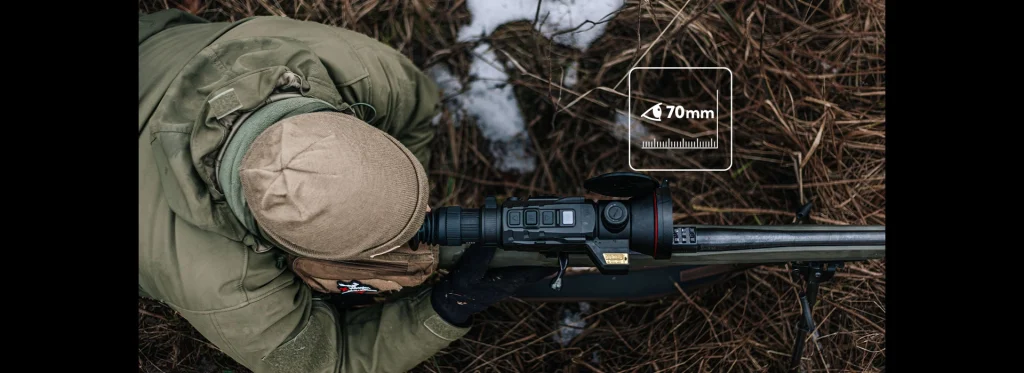
ACE RM uses the S60R and H50R imaging configurations in a rail-mount design. Its value is rifle fit: the mounting system supports horizontal alignment and gives more room to adjust eye relief.
That can help on a rifle where ring position, tube pressure, or available rail space makes a conventional scope body awkward. It does not create extra recognition distance by itself. Choose ACE RM because the rail body fits the rifle and shooting position better, not because the mount changes the sensor or lens performance.
BOLT H50R: For Moderate Distance Without a Flagship Setup
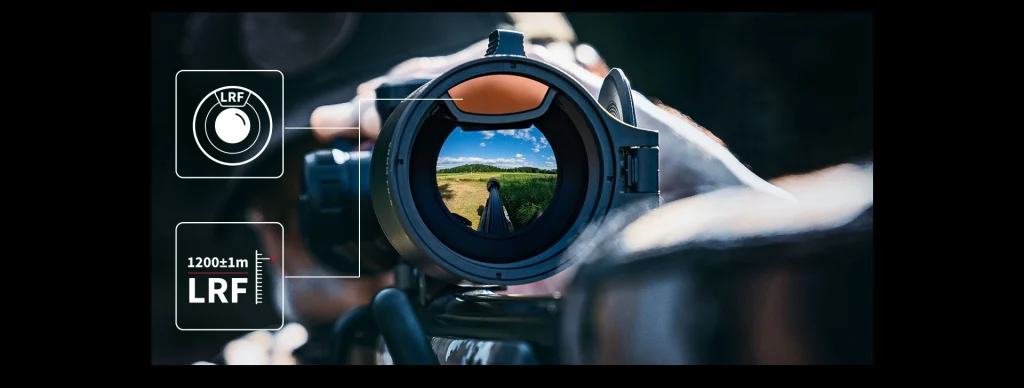
The BOLT H50R combines a 640×512 sensor, 50mm F1.0 lens, 3–24× magnification, integrated 1,200m LRF, and ballistic calculation. That is a useful combination for a new thermal hunter or for fields where most decisions happen at moderate range.
BOLT H50R can provide long-distance detection, but it should not be presented as a substitute for a specialized 75mm or 1280-class setup. Choose it when size, cost, and a complete ranging workflow carry more weight than maximum distant detail.
What Makes a Thermal Scope Work at Long Range?
Long-range performance comes from the whole viewing system. A strong sensor cannot recover detail lost through poor focus, and a large lens cannot make heavy digital zoom behave like native magnification.
Recognition Distance Comes Before Detection Range
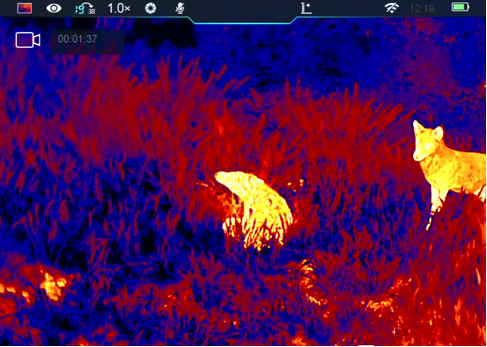
Detection means a warm object appears in the image. Recognition means its general type or shape becomes clear. Identification means there is enough information for the decision you need to make.
Manufacturers usually publish detection range because it is the largest of the three numbers. Nocpix lists RICO 2 detection at up to 3,896m under suitable conditions. That figure describes heat detection, not guaranteed animal identification or shooting distance.
When comparing models, ask how much shape and movement detail remains at your normal distance. The guide to how far thermal scopes can see explains the three range levels in more detail.
Sensor, Lens, and Base Magnification Must Work Together
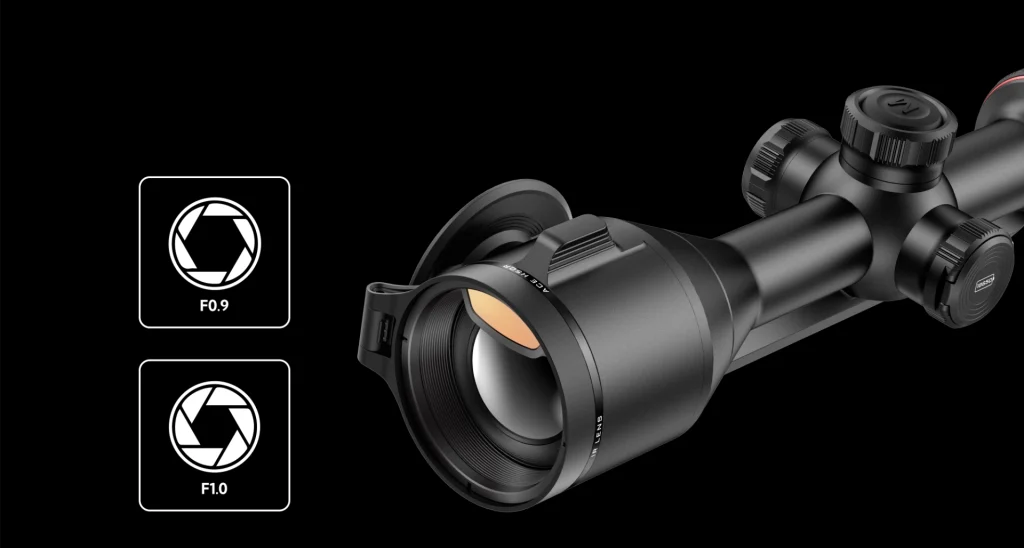
A 1280×1024 sensor records more image information than a 640×512 sensor, but resolution alone does not decide the result. Lens focal length, aperture, base magnification, focus quality, processing, and display also shape the image.
For the buyer, the tradeoffs are more useful than the hierarchy:
- 1280 vs. 640: A 1280-class system can retain more detail during magnification, but it costs more. A well-matched 640-class scope remains a practical choice for many hunting distances.
- 50mm vs. 75mm: A 75mm lens favors distant detail and a tighter view. A 50mm lens is easier to use across mixed distances.
- Base magnification: More base magnification enlarges distant targets without the first step of digital zoom, but reduces field of view.
- Digital zoom: It enlarges captured pixels. It cannot restore detail that the sensor and lens did not record.
Buy the combination that supports the hunt, not the highest number in every column.
LRF Helps When Thermal Removes Distance Cues
Thermal images can flatten familiar depth cues, especially across open fields at night. An integrated laser rangefinder keeps the distance reading inside the sight picture instead of forcing the hunter to switch between devices.
Ballistic calculation can then use the measured distance and the entered load data to provide aiming guidance. It still depends on an accurate zero, correct ammunition data, and a suitable shooting position. It does not account for every field variable or replace positive target identification.
Field of View, Weight, and Eye Relief Affect Usability
A narrow field of view can make moving animals harder to find and follow. Added weight can change rifle balance during unsupported shots. Mount length and eye relief determine whether the shooter can maintain a comfortable position.
These factors explain why a smaller setup may outperform a more powerful one in woods or mixed cover. Image reach has value only when the hunter can acquire, range, and follow the target from a stable position.
What Shortens Usable Thermal Range?
Recognition distance changes with the scene. It is not a fixed fraction of the advertised detection range.
Weather and Background Temperature
Humidity, fog, rain, and warm ground reduce thermal contrast. When the animal and background sit close in temperature, edges look softer and fine detail disappears sooner. Cooler, drier conditions often provide stronger separation, but focus and lens cleanliness still affect the view.
Target Size and Partial Cover
A deer-sized animal occupies more pixels than a coyote at the same distance. Grass, brush, crops, and terrain can hide part of the heat signature. Movement may help reveal that something is alive while making precise detail harder to read.
Observation Distance Is Not Shot Distance
You may detect heat well beyond the distance where you can confirm the animal, measure range, assess the backstop, and place a shot responsibly. Choose a scope around the farthest distance where all of those decisions must come together—not the first distance where a warm spot appears.
How to Choose Without Overbuying
Use three questions to narrow the Nocpix lineup.
1. What Is Your Longest Regular Shot?
Do not build the purchase around a shot that might happen once. If most opportunities occur inside 250 or 300 yards, a balanced 640-class scope may serve the hunt better. If 400-yard and longer lanes are routine across open ground, a higher-resolution or 75mm setup becomes easier to justify.
These distances are buying scenarios, not performance guarantees. The animal, weather, focus, rifle support, and shooter still set the usable limit.
2. How Much Field of View Can You Give Up?
Open fields tolerate more base magnification and a narrower view. Timber, brush, and animals moving at varying distances reward a wider picture. If the scope will also be used for scanning, field of view deserves extra weight in the decision.
3. Which Limitation Would Bother You Most?
Choose the tradeoff you can live with:
- RICO 2 75mm models prioritize distant detail but add size and narrow the view.
- ACE balances long-distance ability with mixed-terrain handling.
- ACE RM changes mounting and rifle fit rather than optical reach.
- BOLT H50R lowers the step into a complete LRF setup but gives up flagship-level distance performance.
For a wider look at sensor, lens, field of view, battery, and mounting choices, see how to choose a thermal scope.
Final Recommendation
Choose RICO 2 S75R or H75R when long, open shooting lanes define the hunt and you accept the added size and tighter view. Choose ACE S60R or H50R when the same rifle must cover long fields and mixed terrain. Choose ACE RM when rail mounting and rifle fit drive the decision. Choose BOLT H50R when most shots stay at moderate distance and you want a 640-class scope with integrated ranging and ballistic support.
Start with recognition distance, not maximum detection. The right Nocpix scope is the one whose field of view, image detail, ranging workflow, and physical setup match the conditions you encounter most often.
Always follow local hunting laws and positively identify the target and backstop before taking a shot.
FAQs About Long-Range Thermal Scopes
How far can a thermal scope identify a coyote?
There is no reliable distance that applies to every scope and night. A coyote occupies fewer pixels than a larger animal, and humidity, background temperature, focus, magnification, and partial cover all affect identification. Treat manufacturer distance figures as detection values unless the source clearly describes recognition or identification testing.
Is a 384 thermal scope enough for 300 yards?
A 384-class scope may detect and sometimes recognize an animal at 300 yards under favorable conditions, but it is not the safer default for repeated identification at that distance. If 300-yard decisions are common, a well-matched 640-class scope provides more image information and more room to magnify.
Is 640×512 worth the extra cost for long-range hunting?
It usually becomes easier to justify when animals appear small in the image, shots regularly extend beyond close range, or digital magnification is used often. Hunters working mostly at shorter distances may gain more from a better lens, wider field of view, or integrated LRF than from resolution alone.
What base magnification is best for 300–500 yards?
There is no single ideal value, but 3× or 4× base magnification is common in distance-oriented thermal scopes. Higher base magnification makes a distant target appear larger while narrowing the view. Match it to target size and terrain rather than choosing by distance alone.
Do I need a separate thermal scanner?
A handheld scanner is useful when a hunter needs to search large areas without using a rifle-mounted optic for general observation. It can reduce fatigue and supports safer scanning because the rifle stays lowered until a potential target has been found and assessed.
Is a thermal clip-on better than a dedicated scope for long range?
A clip-on lets the shooter keep a familiar daytime optic, while a dedicated thermal scope integrates the display, reticle, LRF, and ballistic workflow in one unit. Clip-ons require compatible magnification and careful alignment. Dedicated scopes are simpler when the rifle is set up mainly for thermal hunting.