






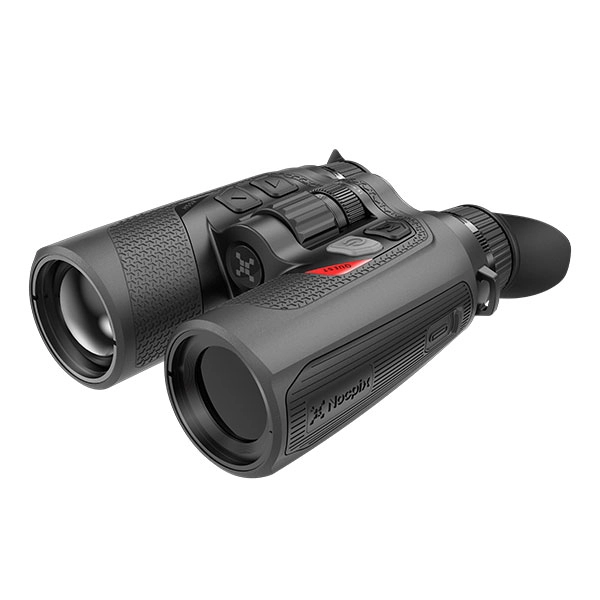
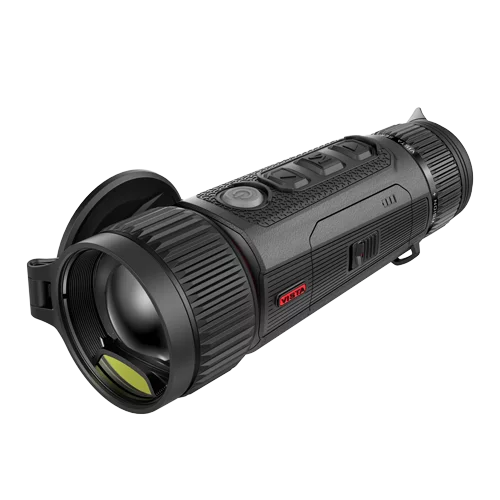
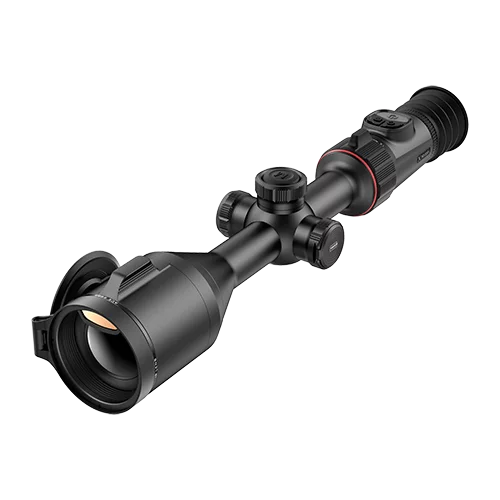
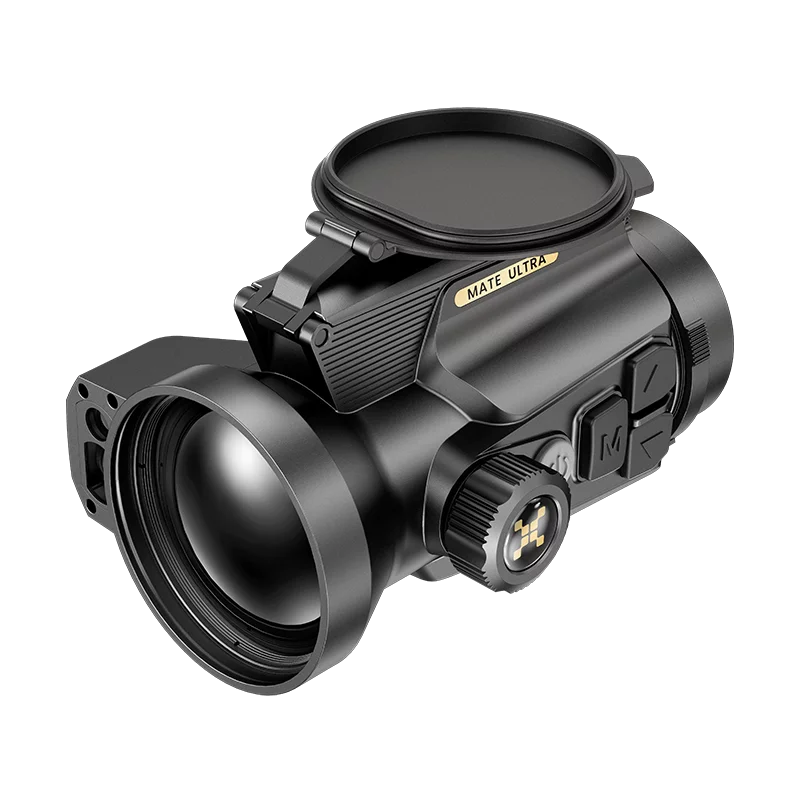


For most coyote hunting situations, thermal is the better primary tool. It detects body heat at longer distances, works in total darkness without an IR illuminator, and picks up coyotes faster against cold fields, brush, and broken terrain. Night vision still has value, especially for close-range identification, but thermal vision handles the biggest challenge of coyote hunting: finding the animal before it finds you.
If you’re deciding between thermal vs night vision for predator hunting, the answer depends on where you hunt, how far you shoot, and how you identify your target before pulling the trigger.
This guide breaks down the real differences, the best conditions for each technology, and how to build a setup that fits your terrain and tactics.
Table of Contents
Why Coyote Hunting Creates a Different Optics Challenge
Coyotes don’t behave like hogs at a feeder or deer on a food plot. They cover ground fast, use darkness to their advantage, and rarely give you a long, relaxed look. That changes what your optics need to do.
Coyotes Move Most When Visibility Is Low
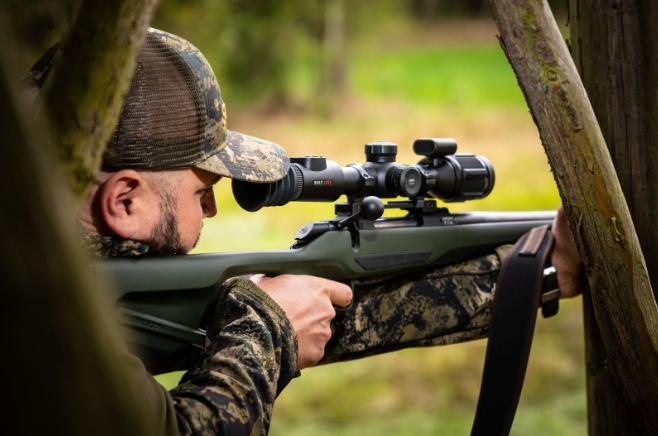
Coyotes are most active during the hours you can see the least. Nocturnal animals like hogs and coyotes are on the move when it’s pitch black, late evening, overnight, and early morning. Unlike traditional night vision scopes that rely on ambient light, thermal rifle scopes work independently of lighting conditions, making them effective for nighttime hunting when visibility is limited or inconsistent. That independence from moonlight or starlight matters for predator hunters who set up on overcast nights or during new moon phases.
Coyotes Use Cover, Wind, and Field Edges
A responding coyote doesn’t run straight to a call. It circles downwind, hugs brush lines, and pauses behind cover. These movements happen at the edges of fields, near draws, along fence rows, and inside tree lines, places where spotting a gray or tan animal with the naked eye or even a spotlight is extremely difficult at night.
Finding the Coyote Comes Before Taking the Shot
This is the part many newer predator hunters overlook. You can have a great rifle, a solid call sequence, and perfect wind, but if you can’t find the coyote before it hits your scent stream, the stand is already over. Thermal imaging technology is designed for “searching.” It is very effective for quickly locating targets or scanning large areas within a given range, because heat signals are usually easier to detect in low-light environments. Detection comes first. Everything else follows.
Thermal vs Night Vision for Coyotes: the Practical Difference
Both technologies help you see in the dark, but they work in fundamentally different ways. Understanding that difference helps you pick the right tool for predator calling.
Thermal Helps You Detect Coyotes Faster
Thermal imaging works by detecting infrared radiation emitted by objects and converting temperature differences into a visible image. A warm coyote body pops against cooler ground, grass, and brush. You don’t need to search a green-tinted screen for movement;, the heat signature stands out immediately, even at a distance. Thermal imaging does not amplify light;, it detects heat. Instead of relying on reflected light, thermal systems read infrared radiation emitted by objects. This allows detection in complete darkness, through light brush, and in environments where traditional night vision struggles.
Night Vision Can Help With Closer Visual Identification
Unlike thermal, night vision amplifies available light to show shapes, textures, and depth. You can see terrain features, branches, fences, slopes, and equipment details that thermal cannot display clearly. When a coyote is inside 100 yards, night vision can give you a more recognizable image of the animal, fur pattern, ear shape, body posture, which helps confirm you’re looking at a coyote and not a neighbor’s dog.
Detection Range and Identification Range Are Not the Same
A thermal scope might detect a heat signature at 800 or 1,000 yards. But identifying that signature as a coyote, not a raccoon, stray cat, or random heat spot, often happens much closer. The detection range of a thermal scope depends on the sensor resolution, lens size, and environmental conditions. Many modern thermal scopes can detect large heat sources several hundred yards away, while identification distance is usually shorter. Weather, terrain, and target size can also affect how clearly the heat signature appears. Keep this gap in mind when you plan your shots.
When Thermal Has the Clear Advantage for Coyote Hunting
Thermal wins in most predator hunting scenarios. Here’s where it stands out.
Scanning Open Fields and Pastures
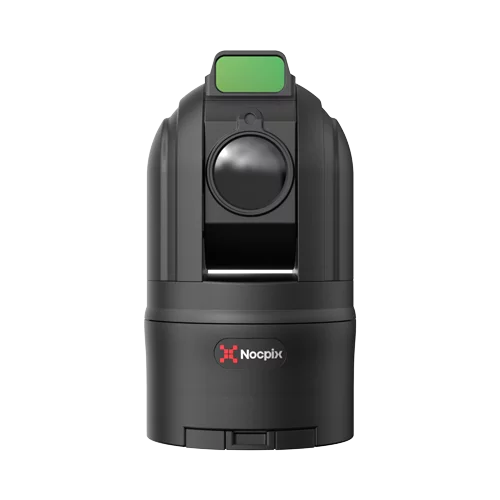
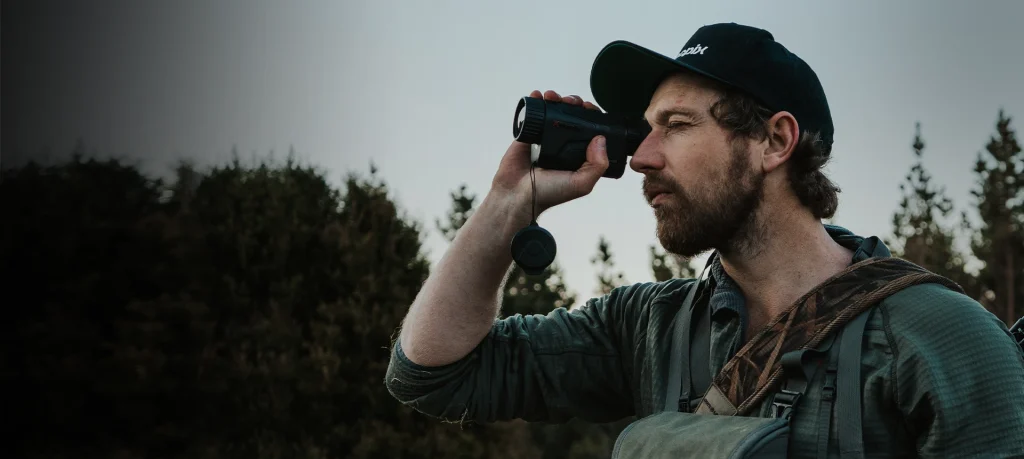
Calling across a 300-yard hay field or winter pasture is a common coyote setup. Thermal lets you scan the entire area in seconds. A thermal monocular is best if your priority is fast detection across wide areas. These handheld devices are lightweight, quick to deploy, and easy to carry for hours. A compact unit like the Nocpix LUMI series keeps scanning separate from your rifle so you can glass without fatigue.
Catching Coyotes Near Brush, Fence Lines, and Draws
Thermal scopes ignore camouflage and light cover. A coyote pausing behind a thin fence row or low brush still radiates body heat. The thermal image cuts through that clutter and shows you a shape where your eyes or night vision would see nothing but shadow.
Winter, Crop Stubble, and Cold Ground Conditions
Cold nights make thermal detection even easier. When the ground, grass, and stubble cool down after sunset, the temperature contrast between a warm coyote body and the cold background grows. This sharper contrast lets thermal sensors pick up animals at longer distances and with a cleaner outline. Winter predator hunting is when thermal really earns its place.
Fast Calling Setups and Moving Targets
On a multi-stand night, you may only sit for 15 to 20 minutes per location. You need fast target pickup, not slow scanning. Thermal systems have evolved from 9 Hz to 60 Hz or more, offering smooth tracking. All Nocpix optics operate in the 50–60 Hz range, delivering smooth imagery without sacrificing battery life. That high refresh rate keeps the picture fluid when a coyote charges across an open flat toward your call.
When Night Vision Still Makes Sense for Coyote Hunters
Thermal usually leads, but night vision hasn’t lost all its relevance.
Close-Range Identification Before the Shot
For hunters walking to a stand, navigating uneven ground, or confirming exactly what an animal is before taking a shot, night vision plays a role. A digital night vision scope can show you enough visual detail at close range to confirm body shape, ear position, and size, which is helpful when you need to be certain about what you’re aiming at.
Smaller Properties and Shorter Shooting Lanes
If your calling stands are on 40-acre tracts with shots under 80 yards, the long detection advantage of thermal matters less. Night vision paired with an IR illuminator can handle that range, and the realistic image may feel more natural if you’re used to optical scopes.
New Hunters With a Limited Budget
Digital night vision tends to be cheaper than thermal imagers. If you’re just starting with predator hunting and want to test nighttime setups before investing heavily, a digital night vision option gets you in the field at a lower cost. As your skills grow and your hunting ground expands, you can add thermal later.
Coyote Hunting Tactics That Influence Your Optics Choice
Your gear doesn’t work alone. The way you hunt determines whether thermal or night vision fits better.
Use Thermal for Scanning Before Raising the Rifle
Many experienced users pair a scope with a handheld monocular. Scan the area with a thermal monocular during calling sequences, then transition to your weapon-mounted optic when you spot a coyote moving in. This keeps you ready without fatiguing your shooting position.
Watch the Downwind Side During Calling
Coyotes almost always try to circle downwind before committing. A thermal device lets you catch that flanking movement across open ground or through thin cover that would be invisible under night vision.
Match Your Device to Open Fields or Brushy Terrain
Open country rewards detection range and higher magnification. Brush-heavy areas reward wider field of view and lower base magnification. Lower magnification allows you to scan larger areas more quickly and detect movement sooner. In dense terrain such as woods or brush, this wider view makes it easier to notice animals moving between obstacles.
Confirm the Target, Not Just the Heat Signature
Never shoot at a heat blob. Thermal shows you where something warm is, but you still need to confirm it’s a coyote. Zoom in, wait for body movement, check for ear shape and gait, and make a responsible decision. Always check your local night hunting and optics regulations before heading out.
How to Choose a Thermal Scope for Your Coyote Hunting Setup
If thermal is the right call for your predator hunting, these features matter most when comparing options.
Open Fields Need Detection and Identification Range
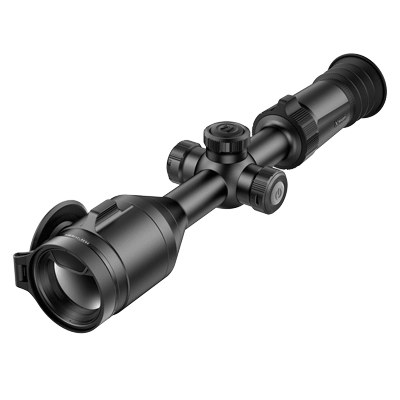
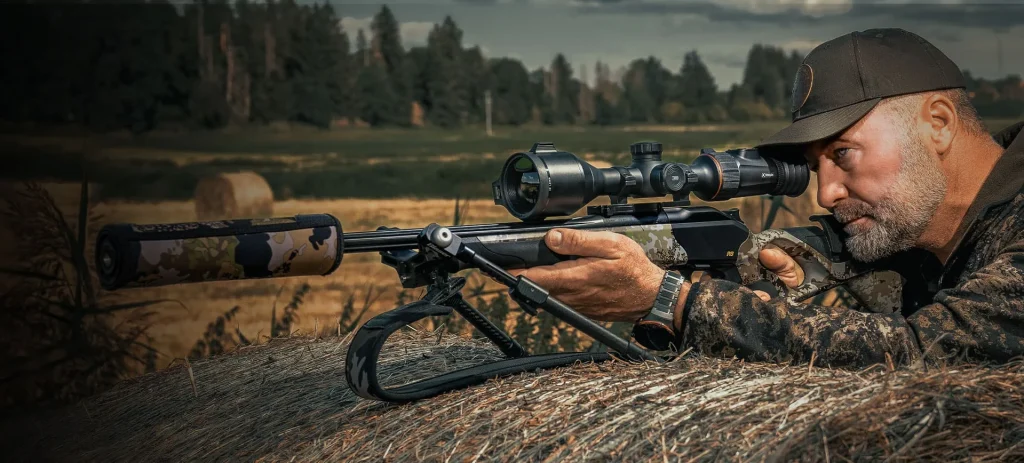
Larger objective lenses and higher sensor resolutions extend your useful range. The ACE series boasts an impressive detection range of up to 3,100 meters. For hunters covering wide pastures or agricultural fields, that kind of reach helps you spot coyotes before they close the distance. Explore the Nocpix ACE series if long-range detection and identification are priorities.
Brushy Terrain Needs Wider Field of View
A scope with lower base magnification and a generous field of view lets you track animals moving through timber edges and draws without losing them when they shift direction.
Calling Setups Need Low Base Magnification and Fast Target Pickup
A coyote responding to a call can appear at 50 yards or 400 yards. A scope that starts at a low magnification lets you find the animal quickly, then zoom in for identification and shot placement. The Nocpix BOLT series offers a compact, lightweight option built for this kind of setup, with an R+ AI image algorithm, 1,200 m periscope-type LRF, ballistic calculation, and up to 12 hours of battery life.
Moving Coyotes Need Smooth Refresh Rate
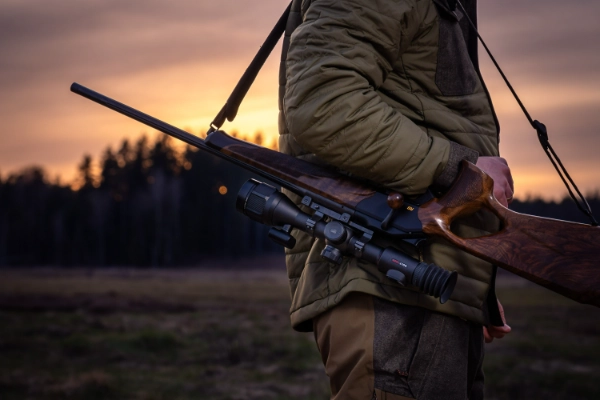
A high frame rate, 50 Hz or 60 Hz, keeps the image smooth when panning or tracking a moving target. Anything below 30 Hz tends to smear and stutter, which makes a running coyote harder to follow. The ACE provides a frame rate of up to 60 Hz with an NETD of ≤15mK, enabling it to detect even the slightest temperature variations and deliver smooth thermal imagery when tracking fast-moving prey.
Long Night Hunts Need Reliable Battery Life and Simple Controls
Four or five stands per night means 3 to 5 hours of total field time, including driving between locations. Battery design determines how long the scope can operate and how easily power can be replaced. Scopes with replaceable batteries or extended battery packs are often more practical for long nights in the field. Look for models that support both built-in and replaceable 18650 batteries so you can swap power without leaving your stand.
Final Verdict: Is Thermal or Night Vision Better for Coyotes?
Thermal Is Usually the Better Primary Tool
For detection speed, scanning efficiency, all-darkness performance, and weather resistance, thermal wins in most predator hunting situations. If you want to locate and engage warm-blooded game in the dark, thermal is unmatched.
Night Vision Still Has a Role in Specific Setups
Close-range identification, budget-friendly entry, and smaller properties are all valid reasons to run night vision. If your goal is detection, thermal offers advantages. If your goal is extended observation and detail clarity, digital systems may feel more natural.
The Best Choice Depends on Terrain, Distance, and Identification Needs
Ask yourself three questions: How far are your typical shots? How open is your terrain? How much target confirmation do you need before the shot? If you answered “far,” “open,” and “as much as I can get,” a quality thermal setup is the clear winner. If you hunt tight cover under 100 yards on a budget, night vision can still earn its spot.
For hunters ready to compare thermal optic options, explore Nocpix thermal riflescopes or pair a Nocpix VISTA monocular with your existing rifle setup for a scan-and-shoot workflow.
Final Thought
Is thermal or night vision better for coyote hunting? For most hunters, most terrain, and most calling setups, thermal gives you the faster detection, longer range, and all-conditions performance that coyote hunting demands. Night vision has its place, especially for close identification and lower budgets, but thermal is the tool that keeps you one step ahead when a coyote is circling your call in total darkness.
If you’re building or upgrading your predator hunting kit, start by comparing Nocpix thermal imaging riflescopes and pairing them with a handheld scanner for maximum field coverage. Always check your state and local regulations on night hunting equipment before heading out.
Frequently Asked Questions About Thermal vs Night Vision for Coyote Hunting
Does thermal work in rain or snow while coyote hunting?
Yes. Thermal devices are less affected by rain and fog because they detect heat differences rather than visible light reflection. Light rain and snow rarely block body heat enough to prevent detection. Heavy downpours may reduce clarity, but thermal still outperforms night vision in those conditions.
How much battery life do you need for a night of coyote calling?
Plan for at least 4 to 5 hours. Most dedicated predator hunters run 3 to 6 stands per night, with travel time in between. Battery life depends on sensor type, refresh rate, display brightness, and environmental temperature. Most handheld thermal devices run several hours per charge under normal conditions. Cold weather can significantly reduce runtime. Bring spare batteries.
Can coyotes see thermal scopes or night vision devices?
Coyotes cannot see infrared radiation from thermal devices. Thermal imaging does not project anything at all. It passively reads heat differences in the environment. Night vision devices with active IR illuminators project near-infrared light, which is invisible to coyotes as well, though some animals may detect faint IR glow at very close range.
Should I add a thermal monocular if I already own night vision?
Yes, if your budget allows it. Using a thermal monocular for scanning and a night vision scope for shooting gives you the best of both technologies. The thermal unit finds coyotes faster. The night vision scope gives a more detailed aiming image at short to moderate range.
Can you use thermal and night vision together for coyote hunting?
Absolutely. Many experienced predator hunters carry a handheld thermal monocular for detection and mount a night vision scope on the rifle for identification and engagement. This scan-and-shoot approach covers both detection speed and visual confirmation.