






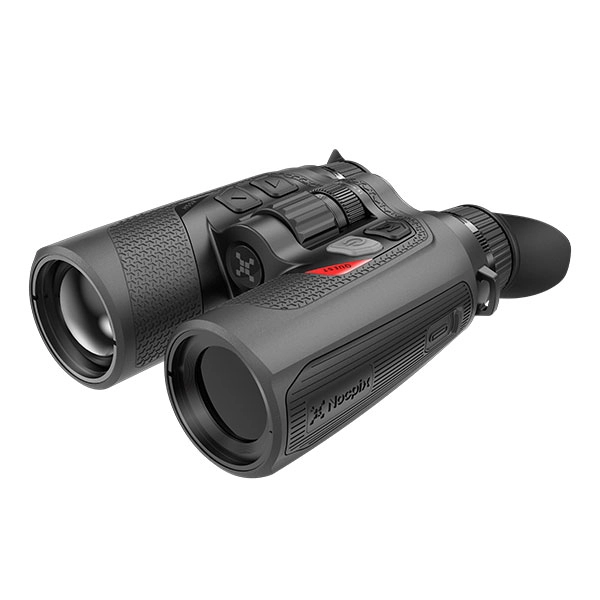
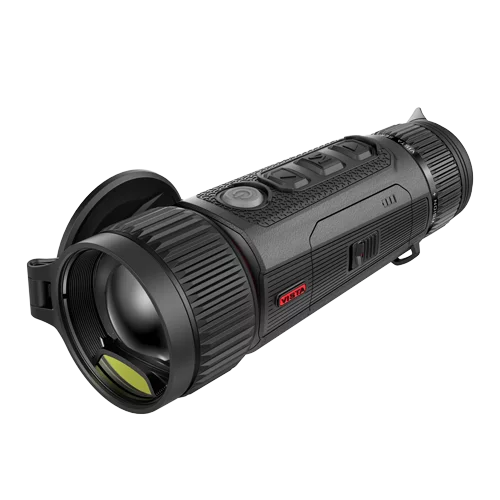
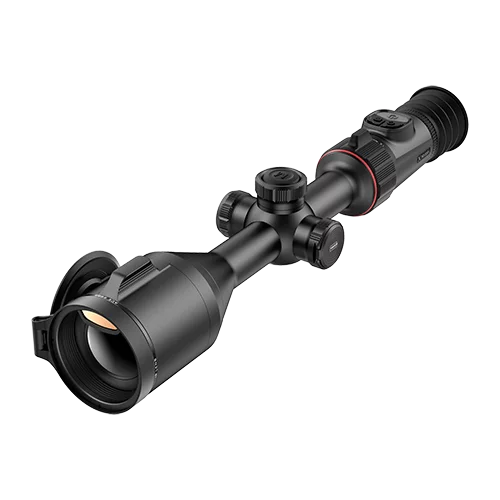
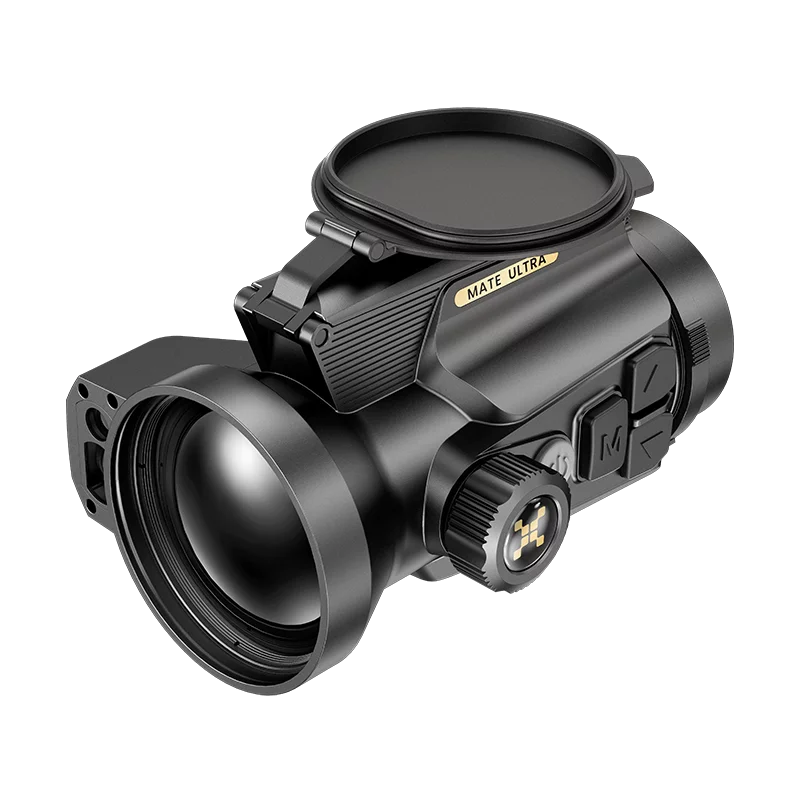
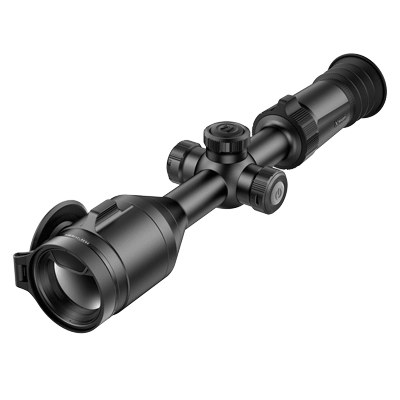
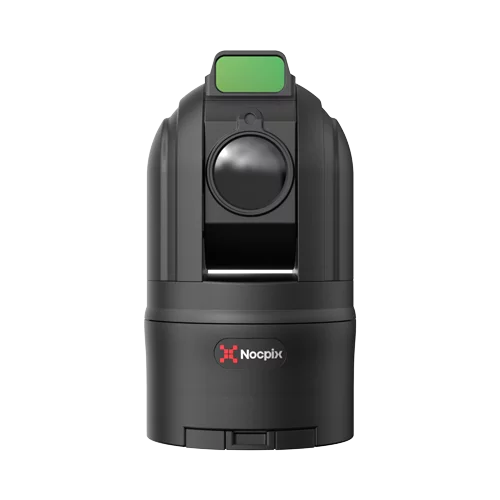


Para la mayoría de las situaciones de caza de coyotes, la visión térmica es la mejor herramienta principal. Detecta el calor corporal a mayor distancia, funciona en total oscuridad sin necesidad de un iluminador infrarrojo y localiza a los coyotes más rápidamente en campos fríos, matorrales y terrenos accidentados. La visión nocturna sigue siendo útil, especialmente para la identificación a corta distancia, pero la visión térmica resuelve el mayor desafío de la caza de coyotes: encontrar al animal antes de que él te encuentre a ti.
Si estás decidiendo entre visión térmica frente a visión nocturna En la caza de depredadores, la respuesta depende del lugar donde se cace, de la distancia a la que se dispare y de cómo se identifique la presa antes de apretar el gatillo.
Esta guía desglosa las diferencias reales, las mejores condiciones para cada tecnología y cómo crear una configuración que se adapte a tu terreno y tácticas.
Tabla de contenido
Por qué la caza de coyotes plantea un desafío óptico diferente.
Los coyotes no se comportan como cerdos en un comedero o ciervos en un campo de cultivo. Recorren el terreno rápidamente, aprovechan la oscuridad y rara vez te miran fijamente con calma. Eso cambia el tipo de óptica que necesitas.
Los coyotes se mueven más cuando la visibilidad es baja.
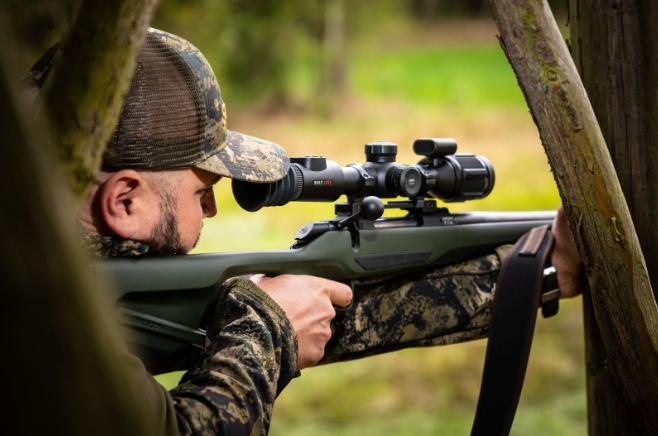
Los coyotes son más activos durante las horas de menor visibilidad. Los animales nocturnos, como los jabalíes y los coyotes, se mueven en la oscuridad total, al anochecer, durante la noche y al amanecer. A diferencia de las miras de visión nocturna tradicionales, que dependen de la luz ambiental, las miras térmicas para rifle funcionan independientemente de las condiciones de iluminación, lo que las hace efectivas para la caza nocturna cuando la visibilidad es limitada o irregular. Esta independencia de la luz de la luna o las estrellas es importante para los cazadores de depredadores que se instalan en noches nubladas o durante la luna nueva.
Los coyotes utilizan la cobertura, el viento y los bordes de los campos.
Un coyote que responde a una llamada no corre directamente hacia ella. Da vueltas a favor del viento, se mantiene cerca de la maleza y se detiene tras algún escondite. Estos movimientos ocurren en los bordes de los campos, cerca de barrancos, a lo largo de las cercas y entre los árboles, lugares donde avistar un animal gris o marrón a simple vista, o incluso con un foco, es extremadamente difícil por la noche.
Localizar al coyote es lo primero que hay que hacer.
Este es el aspecto que muchos cazadores novatos de depredadores pasan por alto. Puedes tener un rifle excelente, una secuencia de llamadas impecable y un viento perfecto, pero si no encuentras al coyote antes de que alcance tu rastro de olor, la jornada de caza ya ha terminado. La tecnología de imágenes térmicas está diseñada para la búsqueda. Es muy eficaz para localizar objetivos rápidamente o explorar grandes áreas dentro de un rango determinado, ya que las señales térmicas suelen ser más fáciles de detectar en entornos con poca luz. La detección es lo primero. Todo lo demás viene después.
Visión térmica frente a visión nocturna para coyotes: la diferencia práctica
Ambas tecnologías te ayudan a ver en la oscuridad, pero funcionan de maneras fundamentalmente diferentes. Comprender esa diferencia te ayudará a elegir la herramienta adecuada para llamar a los depredadores.
La tecnología térmica te ayuda a detectar coyotes más rápido.
La termografía funciona detectando la radiación infrarroja emitida por los objetos y convirtiendo las diferencias de temperatura en una imagen visible. El cuerpo caliente de un coyote resalta sobre el suelo, la hierba y la maleza más frías. No es necesario buscar movimiento en una pantalla teñida de verde; la señal térmica destaca de inmediato, incluso a distancia. La termografía no amplifica la luz, sino que detecta el calor. En lugar de depender de la luz reflejada, los sistemas térmicos leen la radiación infrarroja emitida por los objetos. Esto permite la detección en completa oscuridad, a través de la vegetación ligera y en entornos donde la visión nocturna tradicional tiene dificultades.
La visión nocturna puede ayudar a una identificación visual más precisa.
A diferencia de la visión térmica, la visión nocturna amplifica la luz disponible para mostrar formas, texturas y profundidad. Permite ver características del terreno, ramas, cercas, pendientes y detalles de equipos que la visión térmica no puede mostrar con claridad. Cuando un coyote se encuentra a menos de 90 metros, la visión nocturna proporciona una imagen más nítida del animal, su pelaje, la forma de sus orejas y su postura corporal, lo que ayuda a confirmar que se trata de un coyote y no del perro de un vecino.
El rango de detección y el rango de identificación no son lo mismo.
Una mira térmica puede detectar una señal de calor a 800 o 1000 yardas. Sin embargo, identificar esa señal como la de un coyote, y no la de un mapache, un gato callejero o una mancha de calor cualquiera, suele ocurrir a distancias mucho menores. El alcance de detección de una mira térmica depende de la resolución del sensor, el tamaño de la lente y las condiciones ambientales. Muchas miras térmicas modernas pueden detectar grandes fuentes de calor a varios cientos de yardas de distancia, mientras que la distancia de identificación suele ser menor. El clima, el terreno y el tamaño del objetivo también pueden afectar la nitidez de la señal de calor. Tenga en cuenta esta diferencia al planificar sus disparos.
Cuando la tecnología térmica tiene una clara ventaja para la caza de coyotes
La visión térmica resulta ganadora en la mayoría de los escenarios de caza de depredadores. Aquí es donde destaca.
Exploración de campos abiertos y pastizales
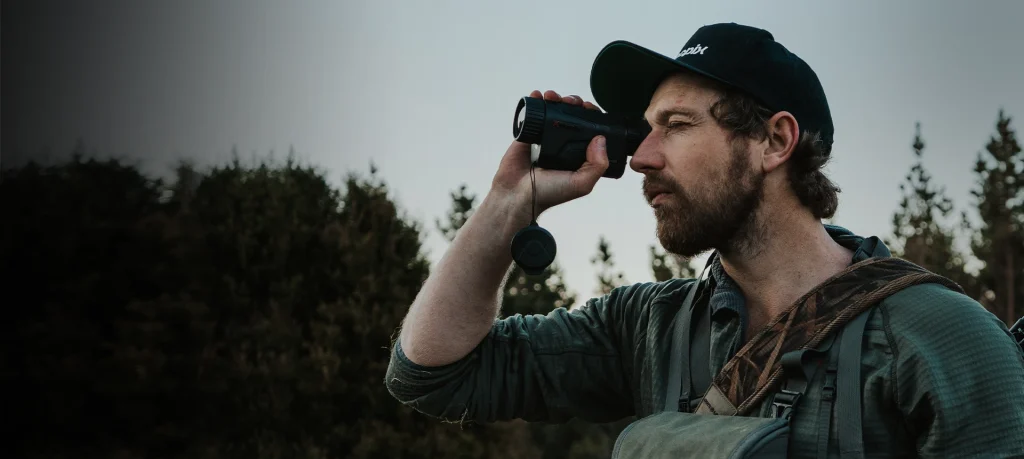
Llamar a través de un campo de heno o pastizal de invierno de 300 yardas es una estrategia común para cazar coyotes. La tecnología térmica permite escanear toda el área en segundos. Un monocular térmico es la mejor opción si su prioridad es la detección rápida en áreas extensas. Estos dispositivos portátiles son ligeros, de rápido despliegue y fáciles de transportar durante horas. Una unidad compacta como la Serie Nocpix LUMI Mantiene el escaneo separado de tu rifle para que puedas observar sin fatigarte.
Cómo capturar coyotes cerca de matorrales, cercas y barrancos.
Las miras térmicas no detectan el camuflaje ni la luz. Un coyote que se detiene tras una valla fina o maleza baja sigue irradiando calor corporal. La imagen térmica atraviesa esos obstáculos y muestra una silueta donde los ojos o la visión nocturna solo verían sombras.
Invierno, rastrojo de cultivos y condiciones de suelo frío
Las noches frías facilitan aún más la detección térmica. Cuando el suelo, la hierba y los rastrojos se enfrían tras la puesta del sol, el contraste de temperatura entre el cuerpo cálido de un coyote y el fondo frío aumenta. Este contraste más nítido permite que los sensores térmicos detecten animales a mayor distancia y con un contorno más definido. La caza de depredadores en invierno es cuando la tecnología térmica demuestra su valía.
Configuración rápida de llamadas y objetivos en constante cambio
En una noche de caza en varios puestos, es posible que solo puedas permanecer de 15 a 20 minutos por ubicación. Necesitas una detección rápida del objetivo, no un escaneo lento. Los sistemas térmicos han evolucionado de 9 Hz a 60 Hz o más, ofreciendo un seguimiento fluido. Todas las ópticas Nocpix funcionan en el rango de 50 a 60 Hz, proporcionando imágenes nítidas sin sacrificar la duración de la batería. Esta alta frecuencia de actualización mantiene la imagen fluida cuando un coyote corre a través de una llanura abierta hacia tu llamada.
Cuando la visión nocturna sigue siendo útil para los cazadores de coyotes
La tecnología térmica suele ser la más eficaz, pero la visión nocturna no ha perdido del todo su relevancia.
Identificación a corta distancia antes del disparo.
Para los cazadores que caminan hacia un puesto de caza, se desplazan por terrenos irregulares o confirman exactamente qué animal es antes de disparar, la visión nocturna juega un papel importante. visor de visión nocturna digital Puede mostrarte suficientes detalles visuales a corta distancia para confirmar la forma del cuerpo, la posición de las orejas y el tamaño, lo cual es útil cuando necesitas estar seguro de a qué estás apuntando.
Propiedades más pequeñas y zonas de tiro más cortas
Si sus puestos de caza se encuentran en terrenos de 40 acres con disparos a menos de 80 yardas, la ventaja de detección a larga distancia de la visión térmica es menos relevante. La visión nocturna combinada con un iluminador infrarrojo puede cubrir ese alcance, y la imagen realista puede resultar más natural si está acostumbrado a las miras ópticas.
Cazadores principiantes con presupuesto limitado
La visión nocturna digital suele ser más económica que las cámaras térmicas. Si te estás iniciando en la caza de depredadores y quieres probar equipos nocturnos antes de invertir mucho, la visión nocturna digital te permite empezar a cazar a un menor coste. A medida que mejores tus habilidades y amplíes tu zona de caza, podrás incorporar la visión térmica más adelante.
Tácticas de caza de coyotes que influyen en la elección de la óptica.
Tu equipo no funciona solo. Tu forma de cazar determina si te conviene más la visión térmica o la nocturna.
Utilice la función térmica para escanear antes de levantar el rifle.
Muchos usuarios experimentados combinan una mira telescópica con un monocular de mano. Escanee el área con un monocular térmico durante las secuencias de llamada y luego cambie a la mira montada en su arma cuando vea que se acerca un coyote. Esto le permite mantenerse preparado sin cansar su posición de tiro.
Vigile el lado a favor del viento durante la llamada.
Los coyotes casi siempre intentan rodear a su presa a favor del viento antes de atacar. Un dispositivo térmico permite detectar ese movimiento de flanqueo en terreno abierto o a través de vegetación escasa que sería invisible con visión nocturna.
Adapta tu dispositivo a campos abiertos o terrenos con maleza.
En terrenos abiertos, el alcance de detección y un mayor aumento son preferibles. En zonas con mucha vegetación, un campo de visión más amplio y un menor aumento base son preferibles. Un menor aumento permite explorar áreas más extensas con mayor rapidez y detectar el movimiento antes. En terrenos densos, como bosques o matorrales, este campo de visión más amplio facilita la observación de animales que se mueven entre obstáculos.
Confirma el objetivo, no solo la firma térmica.
Nunca dispares a una mancha de calor. La cámara térmica te muestra dónde hay algo caliente, pero aún así debes confirmar que se trata de un coyote. Haz zoom, espera a que se mueva, observa la forma de las orejas y su andar, y toma una decisión responsable. Siempre consulta las regulaciones locales sobre caza nocturna y uso de óptica antes de salir.
Cómo elegir una mira térmica para tu equipo de caza de coyotes
Si la visión térmica es la opción adecuada para la caza de depredadores, estas características son las más importantes a la hora de comparar opciones.
Los campos abiertos necesitan un rango de detección e identificación.
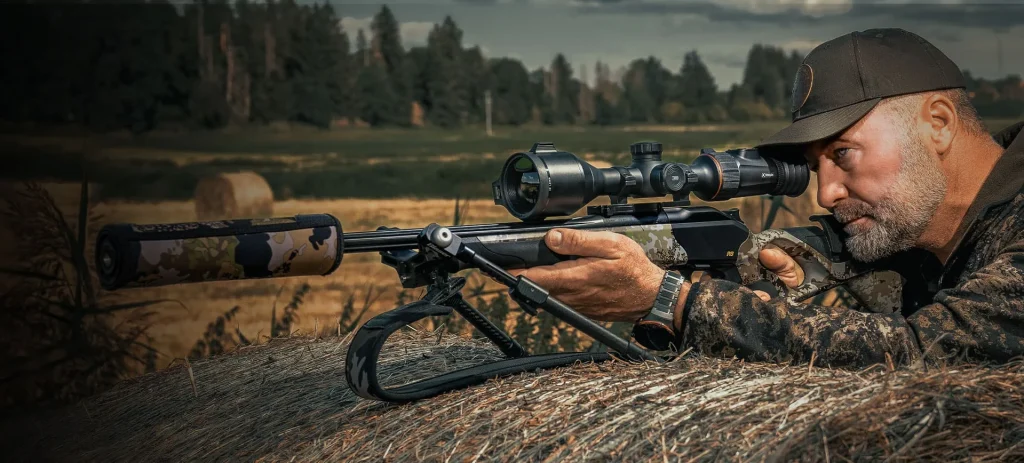
Lentes de objetivo más grandes y resoluciones de sensor más altas amplían su alcance útil. La serie ACE cuenta con un impresionante rango de detección de hasta 3100 metros. Para los cazadores que cubren grandes pastizales o campos agrícolas, ese tipo de alcance les ayuda a detectar coyotes antes de que se acerquen. Explore la Serie Nocpix ACE si la detección e identificación a larga distancia son prioritarias.
Los terrenos con maleza necesitan un campo de visión más amplio.
Un visor con un aumento base menor y un amplio campo de visión permite seguir a los animales que se mueven a través de los bordes de los bosques y los barrancos sin perderlos de vista cuando cambian de dirección.
Los sistemas de llamada requieren una baja magnificación de base y una rápida captación del objetivo.
Un coyote que responde a una llamada puede aparecer a 50 yardas o a 400 yardas. Una mira telescópica que comienza con un aumento bajo le permite encontrar al animal rápidamente, luego hacer zoom para identificarlo y colocar el disparo. Serie Nocpix BOLT Ofrece una opción compacta y ligera diseñada para este tipo de configuración, con un algoritmo de imagen R+ AI, un telémetro láser tipo periscopio de 1200 m, cálculo balístico y hasta 12 horas de duración de la batería.
Los coyotes en movimiento necesitan una frecuencia de actualización fluida.
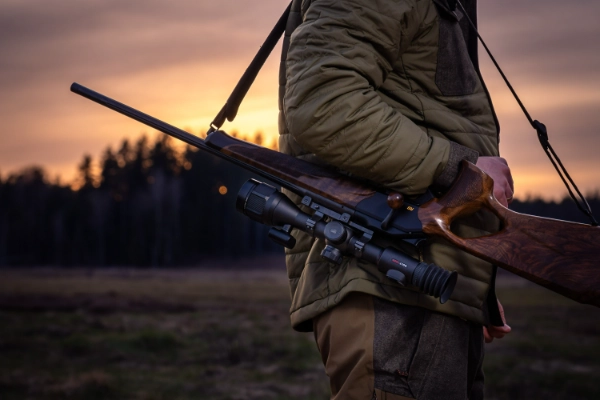
Una alta frecuencia de imagen, de 50 Hz o 60 Hz, mantiene la imagen fluida al realizar panorámicas o seguir un objetivo en movimiento. Por debajo de 30 Hz, la imagen tiende a distorsionarse y entrecortarse, lo que dificulta el seguimiento de un coyote en carrera. El ACE ofrece una frecuencia de imagen de hasta 60 Hz con un NETD de ≤15 mK, lo que le permite detectar incluso las más mínimas variaciones de temperatura y proporcionar imágenes térmicas fluidas al seguir presas en rápido movimiento.
Las largas jornadas de caza nocturna requieren una batería de larga duración y controles sencillos.
Cuatro o cinco puestos por noche significan de 3 a 5 horas de trabajo de campo, incluyendo el desplazamiento entre ubicaciones. El diseño de la batería determina la duración de la batería y la facilidad para reemplazarla. Los visores con baterías reemplazables o de mayor capacidad suelen ser más prácticos para largas noches de trabajo de campo. Busque modelos que admitan baterías 18650 integradas y reemplazables para poder cambiar la batería sin abandonar su puesto.
Veredicto final: ¿Es mejor la visión térmica o la visión nocturna para los coyotes?
La tecnología térmica suele ser la mejor herramienta primaria.
En cuanto a velocidad de detección, eficiencia de escaneo, rendimiento en completa oscuridad y resistencia a la intemperie, la visión térmica se impone en la mayoría de las situaciones de caza de depredadores. Si desea localizar y atacar presas de sangre caliente en la oscuridad, la visión térmica es insuperable.
La visión nocturna aún tiene un papel importante en configuraciones específicas.
La identificación a corta distancia, el acceso económico y las propiedades pequeñas son razones válidas para usar visión nocturna. Si su objetivo es la detección, la tecnología térmica ofrece ventajas. Si busca una observación prolongada y una mayor nitidez de detalles, los sistemas digitales pueden resultarle más naturales.
La mejor opción depende del terreno, la distancia y las necesidades de identificación.
Hazte tres preguntas: ¿A qué distancia suelen disparar? ¿Qué tan abierto es el terreno? ¿Cuánta confirmación del objetivo necesitas antes de disparar? Si respondiste "a larga distancia", "abierto" y "tanto como pueda", un buen sistema térmico es la mejor opción. Si cazas en terrenos con vegetación densa a menos de 100 metros con un presupuesto ajustado, la visión nocturna también puede ser una buena alternativa.
Para los cazadores que estén listos para comparar opciones de óptica térmica, exploren Miras térmicas Nocpix o emparejar un Monocular Nocpix VISTA con la configuración actual de su rifle para un flujo de trabajo de escaneo y disparo.
Reflexión final
¿Qué es mejor para la caza de coyotes: la visión térmica o la nocturna? Para la mayoría de los cazadores, en la mayoría de los terrenos y con la mayoría de los sistemas de reclamo, la visión térmica ofrece una detección más rápida, mayor alcance y un rendimiento óptimo en cualquier condición, características esenciales para la caza de coyotes. La visión nocturna tiene su utilidad, especialmente para la identificación a corta distancia y con presupuestos ajustados, pero la visión térmica es la herramienta que te permite ir un paso por delante cuando un coyote ronda tu reclamo en la oscuridad total.
Si estás construyendo o mejorando tu equipo de caza de depredadores, comienza por comparar Miras telescópicas térmicas Nocpix y combínalos con un escáner portátil para una cobertura máxima del terreno. Consulta siempre las normativas estatales y locales sobre equipos de caza nocturna antes de salir.
Preguntas frecuentes sobre la visión térmica frente a la visión nocturna para la caza de coyotes
¿Funciona la tecnología térmica bajo la lluvia o la nieve al cazar coyotes?
Sí. Los dispositivos térmicos se ven menos afectados por la lluvia y la niebla porque detectan diferencias de calor en lugar de la reflexión de la luz visible. La lluvia ligera y la nieve rara vez bloquean el calor corporal lo suficiente como para impedir su detección. Los aguaceros intensos pueden reducir la claridad, pero la visión térmica sigue siendo superior a la visión nocturna en esas condiciones.
¿Cuánta batería necesitas para una noche de llamadas de coyote?
Calcula al menos de 4 a 5 horas. La mayoría de los cazadores de depredadores experimentados utilizan de 3 a 6 puestos por noche, incluyendo el tiempo de desplazamiento. La duración de la batería depende del tipo de sensor, la frecuencia de actualización, el brillo de la pantalla y la temperatura ambiente. La mayoría de los dispositivos térmicos portátiles funcionan durante varias horas con una sola carga en condiciones normales. El frío puede reducir significativamente la duración. Lleva baterías de repuesto.
¿Pueden los coyotes ver las miras térmicas o los dispositivos de visión nocturna?
Los coyotes no pueden ver la radiación infrarroja de los dispositivos térmicos. Las imágenes térmicas no proyectan nada; simplemente miden las diferencias de temperatura en el entorno. Los dispositivos de visión nocturna con iluminadores infrarrojos activos proyectan luz infrarroja cercana, que también es invisible para los coyotes, aunque algunos animales pueden detectar un tenue resplandor infrarrojo a muy corta distancia.
¿Debería añadir un monocular térmico si ya tengo visión nocturna?
Sí, si tu presupuesto lo permite. Usar un monocular térmico para escanear y una mira de visión nocturna para disparar te ofrece lo mejor de ambas tecnologías. El dispositivo térmico localiza a los coyotes más rápido. La mira de visión nocturna proporciona una imagen de puntería más detallada a corta y media distancia.
¿Se pueden usar la visión térmica y la visión nocturna juntas para la caza de coyotes?
Por supuesto. Muchos cazadores de depredadores experimentados llevan un monocular térmico de mano para la detección y montan una mira de visión nocturna en el rifle para la identificación y el ataque. Este método de escaneo y disparo garantiza tanto la velocidad de detección como la confirmación visual.