








Successful bobcat hunting at night starts well before you turn on a caller. Fresh tracks and other sign help you choose the area. A clear view of the cover edge gives you a chance to spot movement. Calls may bring a cat into view, while a handheld thermal helps you scan without repeatedly raising your rifle.
The final step is identification. A heat signature tells you that an animal is present; it does not tell you the species. Keep the rifle out of the scanning process, watch for several visible bobcat features, and pass on the shot whenever you cannot identify the animal with confidence.
Plan the Stand Around Cover and Visibility
Bobcats stalk and ambush prey, often using brush, creek banks, timber edges, rock, and broken terrain as concealment. They may show only a head, shoulder, or short section of their body before slipping back into cover. Your stand should give you the longest practical view along those travel edges.
The Smithsonian bobcat profile describes bobcats as patient stalking predators that may be active during the day or night, with the most activity around dawn and dusk. Those habits favor careful stand placement and patient scanning, but they do not establish an exact route or arrival time.
Choose an Edge You Can Watch
Look for a position that covers likely entrances, gaps in vegetation, field corners, logging roads, washes, or narrow openings between two blocks of cover. Before settling in, check whether branches, grass, terrain, or buildings will hide an animal at the point where you expect to see it.
Place yourself where you can scan without large, repeated movements. Keep the caller visible if possible, but do not sacrifice a safe shooting direction or a clear background just to get a better view of it.
Give the Animal Time to Show More of Its Body
A bobcat may pause inside the edge or move in short bursts. When you catch a brief heat signature, continue watching the same lane and nearby openings. A second view may reveal the tail, body proportions, head shape, or gait needed for identification.
Silence does not tell you whether the stand is empty. Stay while the location, visibility, and conditions still justify the effort, then move when another stand offers a better chance of seeing and identifying an animal. There is no single waiting time that fits every property and setup.
Read Bobcat Sign Before You Set Up
Tracks, scat, scrapes, claw marks, and covered remains can help you find areas used by bobcats. One clean track may be useful, but several kinds of sign in the same area provide a stronger reason to set up there.
Check the Track Shape and Pad
Typical bobcat tracks are rounded, show four toes, and usually lack visible claw marks. The rear edge of the heel pad has multiple lobes, and the overall print is generally rounder than a coyote or dog track.
Ground conditions can change all of those details. Mud can spread the toes, snow can enlarge a print as it melts, and hard soil may record only part of the foot. The New Mexico State University wildlife track guide recommends using track drawings as guides rather than rigid identification keys.
Follow the trail far enough to find a clearer print or a consistent travel route. Do not choose a stand from one uncertain track; look for several fresh signs along the same cover edge, then set up where you can watch the likely approach. Photograph questionable tracks with a scale beside them and include the surrounding trail, not just a close-up of one impression.
Decide Whether the Sign Is Fresh Enough to Hunt
Use recent weather and traffic to judge whether a track is fresh. A print with crisp edges after rain, wind, or snowfall is probably recent; a softened, debris-filled, or tire-marked print is older. If you find only one unclear old track, keep scouting. Set up only when several fresh prints or other recent signs lead toward a cover edge you can watch.
Choose Calls That Fit the Local Prey
Bobcats commonly prey on rabbits or hares, rodents, and birds. Start with sounds that match prey you have actually seen or documented on the property. Rabbit distress is a practical starting point in rabbit habitat; rodent or bird distress may fit other locations.
Set the caller loud enough to carry into the cover, but low enough that you can still hear footsteps or brush movement near the stand. Start with one prey-distress sound and let it play long enough to work. Change sounds only when the first call produces no response.
Place the Caller Where an Approach Can Be Seen
Set the caller far enough from your position to draw attention away from you while keeping it inside a lane you can observe safely. Avoid placing it so deep in brush that an animal can reach it without crossing an opening.
A decoy may help focus attention near the sound when its use is legal, but visibility remains the main objective. The setup should encourage the animal to enter a viewable area, not depend on a predicted approach route.
Watch the Cover Instead of the Caller
Do not stare at the caller. Scan the openings and both sides of the nearby cover. A bobcat may stop at the edge instead of walking to the sound, so watch for a head above the grass, part of a body behind brush, or a quick crossing.
If the stand stays quiet, move to another location with fresher sign or a clearer view. Do not keep changing sounds or wait longer just because nothing appeared.
Scan With a Monocular Before You Raise the Rifle
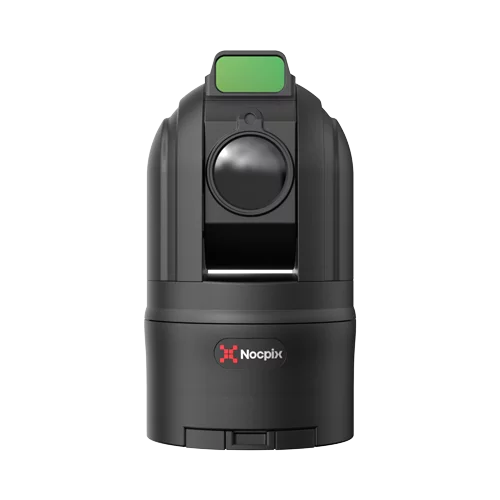
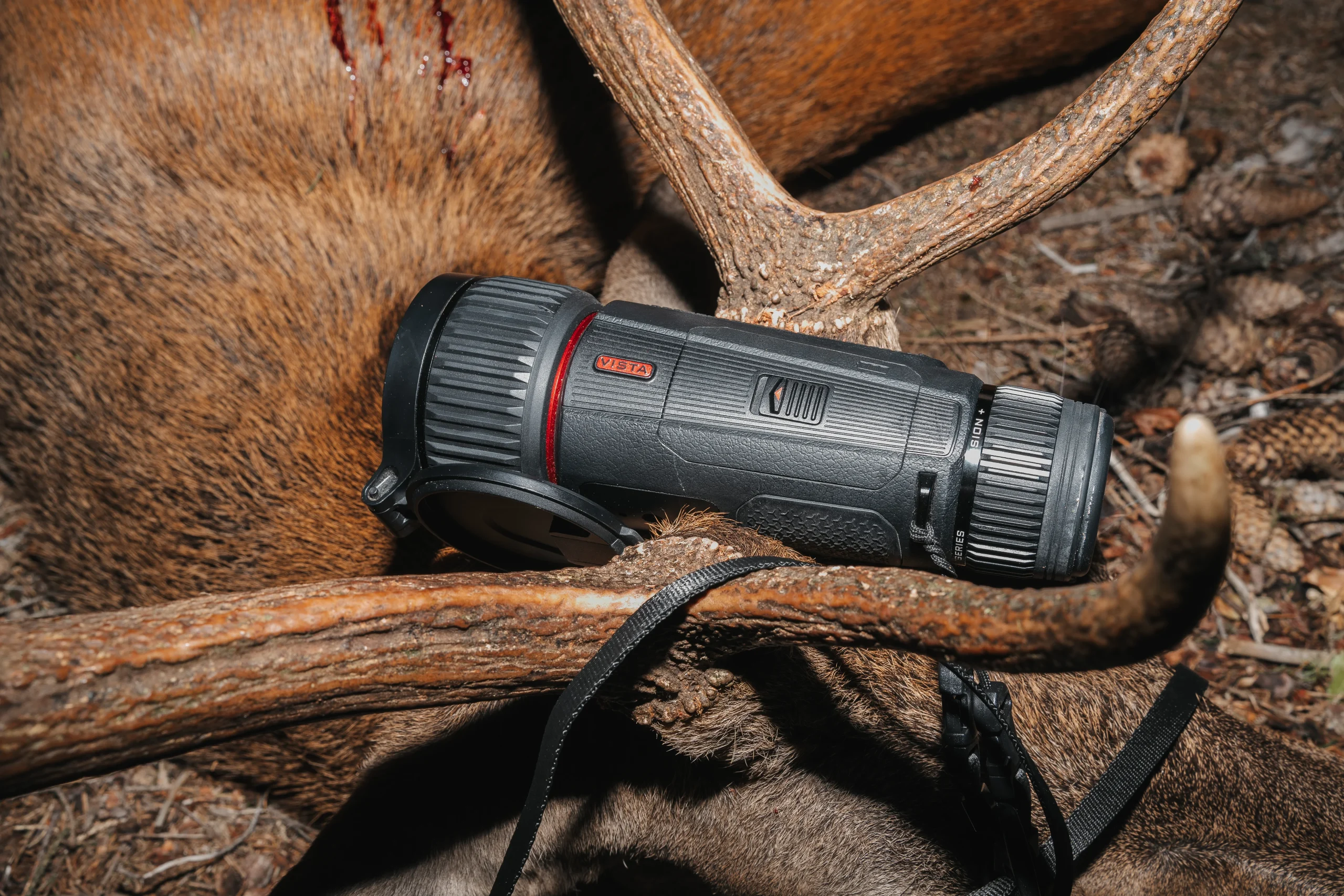
A handheld thermal monocular lets you scan fields, brush lines, and timber openings without pointing a firearm at every heat source. It is the better tool for continuous searching and for following movement while the animal is still unconfirmed.
For a deeper look at portability, field of view, and the difference between handheld and weapon-mounted optics, see the Nocpix guide to thermal monoculars for hunting.
Build a Repeatable Scan Pattern
Use your handheld thermal to scan in the same order each time. Begin with the cover closest to your position. Sweep across the open ground in overlapping passes, then check the far cover edge. Recheck gaps, trail entrances, and thick vegetation every few minutes.
If the thermal shows movement or an animal-shaped heat signature, stop scanning and watch it. Follow the animal until enough of its body is visible for identification. Keep the rifle down until you have confirmed the species and checked that the shot is safe and legal.
Separate Detection From Identification
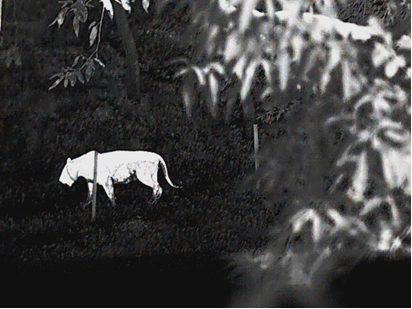
Thermal imaging displays differences in emitted infrared radiation. It can reveal an animal in darkness, but vegetation, distance, angle, and image quality may hide the features needed to identify it.
Identify the animal from several clear features, not from heat alone. Look for a short bobbed tail, a compact feline body, the shape of the head and ears, and cat-like movement. If brush, distance, or the viewing angle hides these features, keep watching. The Nocpix guide to thermal detection, recognition, and identification explains why spotting heat and confirming a target are different tasks.
Switch From the Scanner to the Riflescope
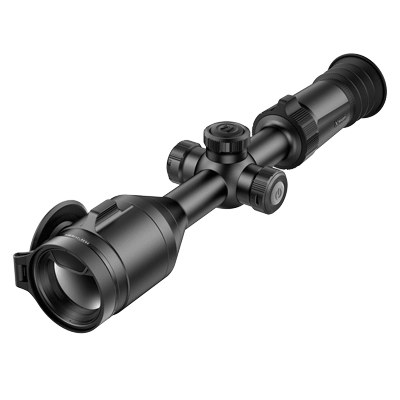
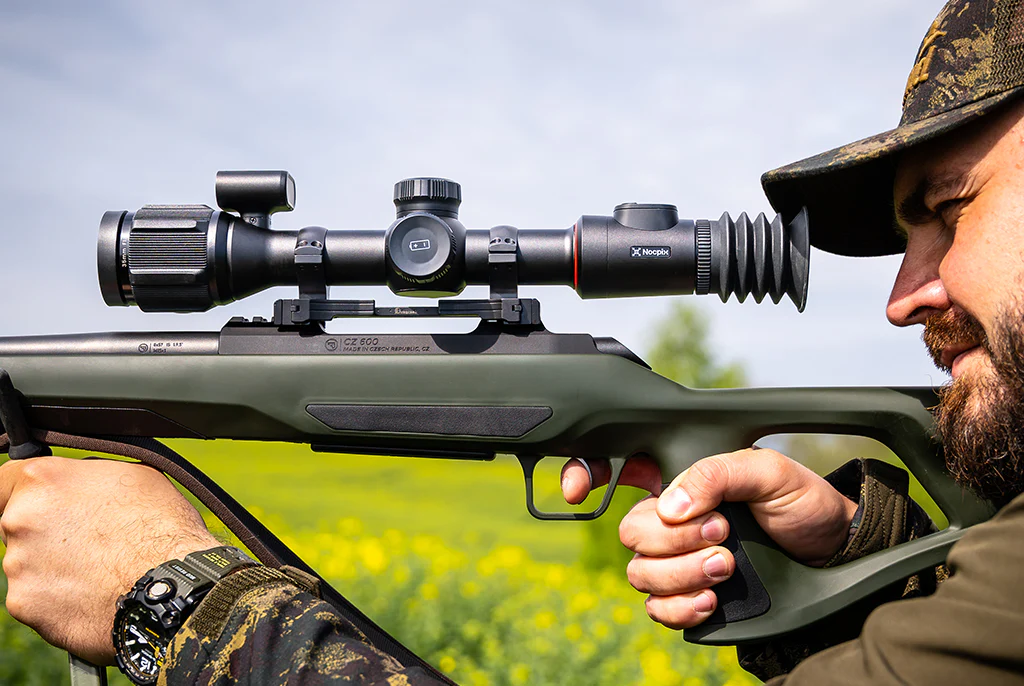
Before raising the thermal riflescope, note the animal’s position beside a fixed landmark such as a tree, fence post, or gap in the brush. This makes it easier to find the same animal again through the riflescope’s narrower field of view. Start at low magnification, center the animal, and zoom in only if you need a closer look.
Continue only when all four checks are complete:
- You can confirm the animal is a bobcat from its tail, body shape, head, and movement.
- The animal is within your known shooting range.
- No brush or terrain blocks the path to the target.
- The background provides a safe backstop, with no people, livestock, roads, or buildings in the firing direction.
If the animal enters cover or you lose the features used for identification, lower the rifle and find it again with the handheld scanner.
Three Common Bobcat Calling Mistakes Starting at Full Volume
A loud opening can alarm a bobcat that is already close. Start with a low, natural volume. Increase it in small steps only when you need to reach more distant cover. If a visible bobcat stops approaching, lower the volume instead of immediately changing sounds.
Leaving After a Short Coyote-Style Stand
Bobcats often approach more slowly than coyotes and may stop inside cover to watch. Some experienced predator hunters use around 30 minutes as a practical starting point. ( But sometimes stand duration should vary with sign, visibility, habitat, and local conditions. ) Do not begin packing after 15 or 20 quiet minutes simply because that timing works on a coyote stand.
Standing Up Without a Final Scan
Bobcats can arrive from an unexpected direction or stop outside the main approach lane. Before leaving, mute the caller, remain seated, and make one slow 360-degree thermal scan. Check behind you, both side edges, the caller, and the far cover before standing.
Rule Out Look-Alike Animals
Domestic cats, foxes, coyotes, lynx, and other animals can be mistaken for a bobcat when only a head, rear profile, or partial heat signature is visible. Which alternatives matter most depends on the region and the property.
Compare Several Body Features
A bobbed tail is useful when the whole tail is visible. Combine it with feline body proportions, leg length, head shape, ear outline, and movement. Size alone is unreliable when distance is uncertain, and one short-looking profile is not enough.
Use Tracks to Support the Field Identification
When tracks are available, compare their shape, pad, toes, claw marks, and gait with the animal you observed. A rounded print with four toes and no obvious claws supports a feline identification, but poor ground may hide the details. Tracks can strengthen the conclusion; they cannot replace a clear view of the live animal before a shot.
Check the Rules for the Exact Hunt
Night-hunting rules vary by location and can change by species, season, land type, equipment, and shooting hours. Check the current wildlife authority for the exact place and date before relying on any field plan.
Confirm all of the following:
- The bobcat season and any bag or reporting requirements
- Legal shooting hours
- Whether artificial light, electronic calls, decoys, and thermal optics are allowed
- Firearm, ammunition, and suppressor restrictions
- Public-land or private-land permission requirements
- Local discharge rules and any special closures
Save the authority, source page, effective date, and date checked with your hunt notes. Product and blog pages can explain equipment, but only the responsible authority can establish what is legal in your jurisdiction.
Frequently Asked Questions
What Is the Best Time of Night to Hunt Bobcats?
Bobcat activity often increases around dusk and before dawn. Use those periods as starting windows, then adjust to recent tracks, trail-camera activity, prey movement, and local conditions rather than relying on a fixed hour.
What Is the Best Call for Bobcats?
Choose a prey-distress sound that matches food available in the area. Rabbit distress fits rabbit habitat, while bird or rodent distress may be a better match elsewhere. Start at low volume and give one sound time to work before changing it.
How Long Should You Stay on a Bobcat Stand?
Use about 30 minutes as a practical starting point. Stay longer when fresh sign and thick cover suggest that a bobcat may approach slowly. Before standing, mute the caller and complete one final 360-degree thermal scan.
Can Thermal See a Bobcat Through Brush?
Thermal cannot see through solid brush. It may detect parts of an animal through gaps in leaves or branches, but a partial heat signature is not enough for identification. Wait until the animal enters an open lane and its body features are clearly visible.
Choose a Thermal Setup for Your Bobcat Hunt
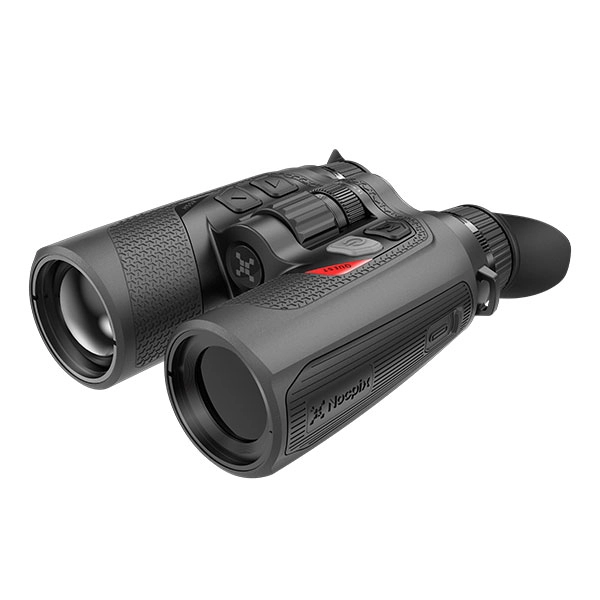
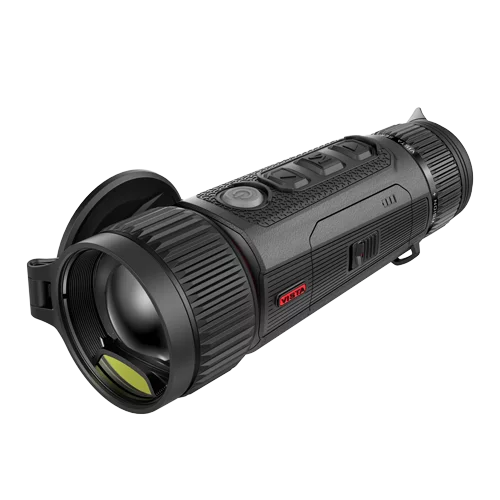
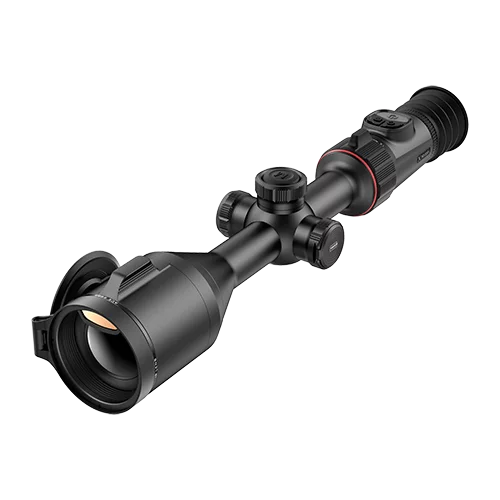
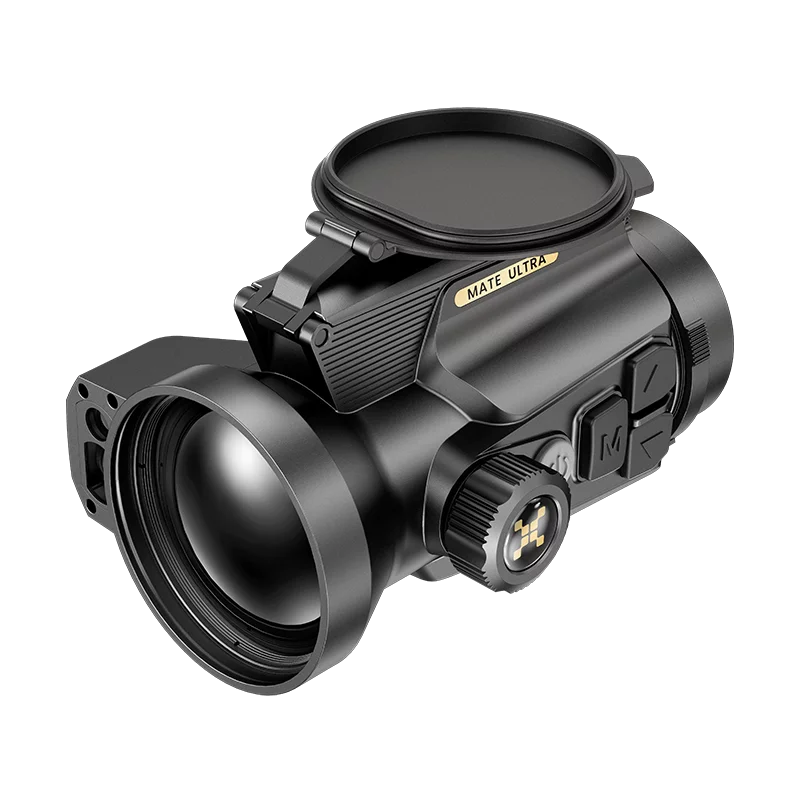
Build your setup around fresh sign, visible approach lanes, sensible caller placement, and steady scanning. For compact handheld scanning, explore the Nocpix LUMI series; for a premium monocular viewing platform, compare the Nocpix VISTA series. If you need a weapon-mounted optic for a confirmed and lawful shot, review the Nocpix BOLT series and Nocpix ACE series. Match the device to your terrain, observation distance, and carrying needs, and use the handheld optic to search before moving to the riflescope.