






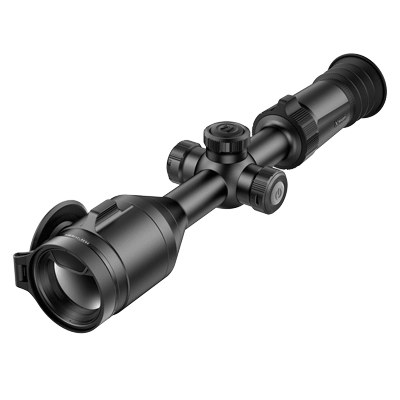


Predator hunting at night is not one uniform activity across Europe. The animals present, the evidence available for identification, and the rules that apply vary by location. A thermal view can reveal an animal’s heat pattern in darkness, but that observation is only the beginning of a defensible decision.
The practical task is to separate three questions: what the image establishes, what additional clues support a species identification, and what the current local authority permits. Thermography registers emitted infrared radiation and supports non-invasive wildlife observation. A review of infrared thermography in wildlife studies provides the technical basis for that observation role.
Build the local species shortlist first, then separate detection from identification, account for weather and cover, and verify the rules governing the intended action. If the available evidence does not support a confident identification, record the animal as unconfirmed.
How Should You Build a Local Predator Shortlist?
Start with current wildlife information for the exact location rather than a general list of European predators. Note which species are documented locally, which habitats and signs are present, and which similar-looking animals must be ruled out. Keep the initial label broad until the live observation provides enough visible traits for a narrower conclusion.
Start with the species documented locally
Local records, habitat, tracks, and sounds can help narrow the possibilities before an animal appears. They do not identify the live animal. Treat them as supporting clues and confirm the species from observable traits before making any decision that depends on identification.
A bounded golden-jackal example
GPS-GSM telemetry from golden jackals in Hungary and Serbia found greater movement at night and a greater likelihood of movement outside cover into agricultural areas. The finding describes the studied populations and geography; it is not a Europe-wide rule for golden jackals or other predators. The telemetry study is useful because its limits are clear.
Presence and permission are separate questions
Evidence that an animal may be present does not establish permission for a particular action. In Germany, section 22 of the Bundesjagdgesetz assigns hunting and closed seasons to regulation and allows Länder to shorten or remove hunting periods. The federal text therefore acts as a federal reference, while the current Land rule still needs to be checked for the situation at hand.
How Can You Tell What You Are Looking At Through a Thermal?
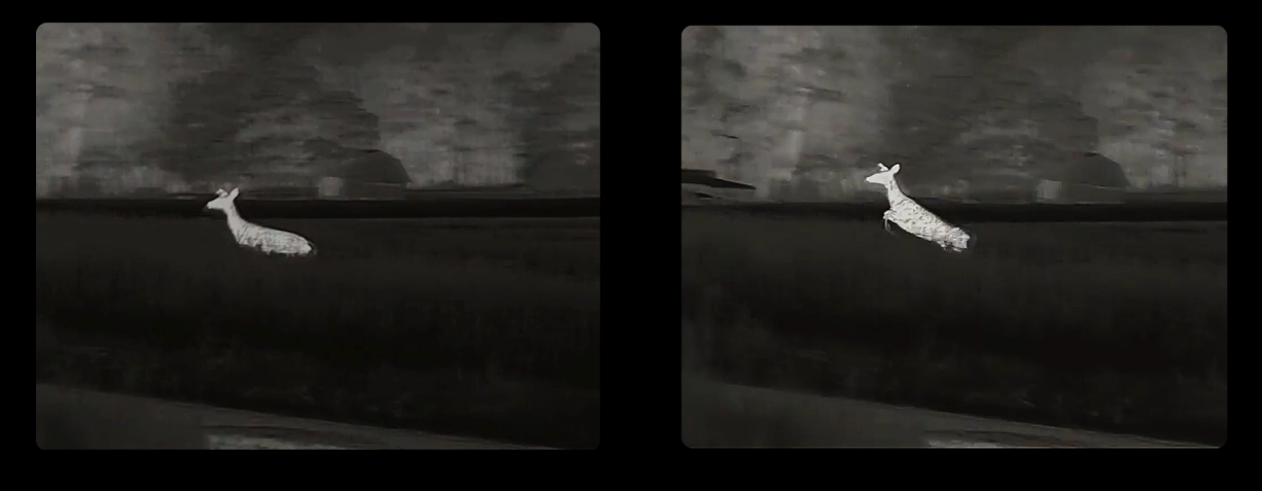
A thermal view records emitted infrared radiation. It can support wildlife observation, but species identification requires interpretation beyond the heat pattern itself. The thermography review cited above supports this observation role.
What a thermal device can reveal before the species is clear
The first reliable conclusion may simply be that an animal was detected and that its movement can be followed. Continue watching for a view and context that support identification rather than converting the first heat cue into a species label.
The useful question is whether the current observation contains enough information for the decision being considered. That judgment is scene-dependent, so a headline distance or a bright image cannot replace confirmation.
Combining body shape, gait, behavior, habitat, tracks, and sound
Use body form, movement, habitat, tracks, and sound as prompts for further checking, not as infallible species markers. A clue can increase or reduce confidence, but conflicting clues should keep the identification open.
For field notes, use a recommended three-stage workflow:
- Animal detected: the thermal view shows an animal is present.
- Species suspected: contextual clues support a working hypothesis.
- Species confirmed: the available evidence is consistent enough for the intended decision and credible alternatives have been ruled out.
Positive confirmation before action
Consider credible alternatives before narrowing the identification. If the image and context do not support positive confirmation, continue observing or leave the record unconfirmed. The same boundary applies before any later action.
Should You Scan With a Monocular or a Thermal Scope?
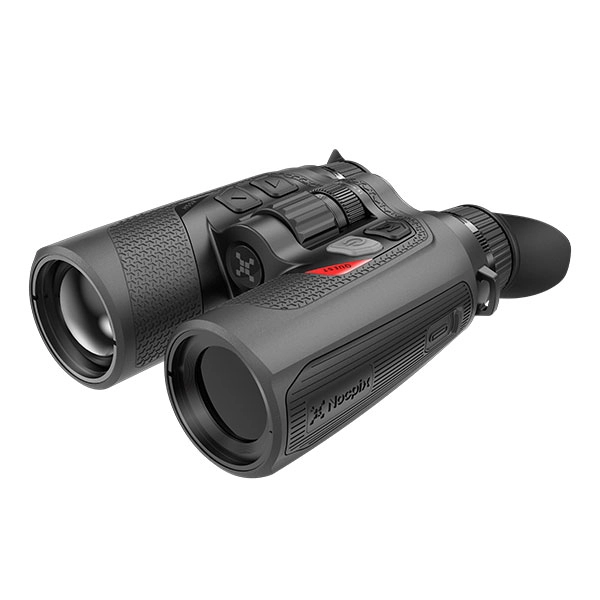
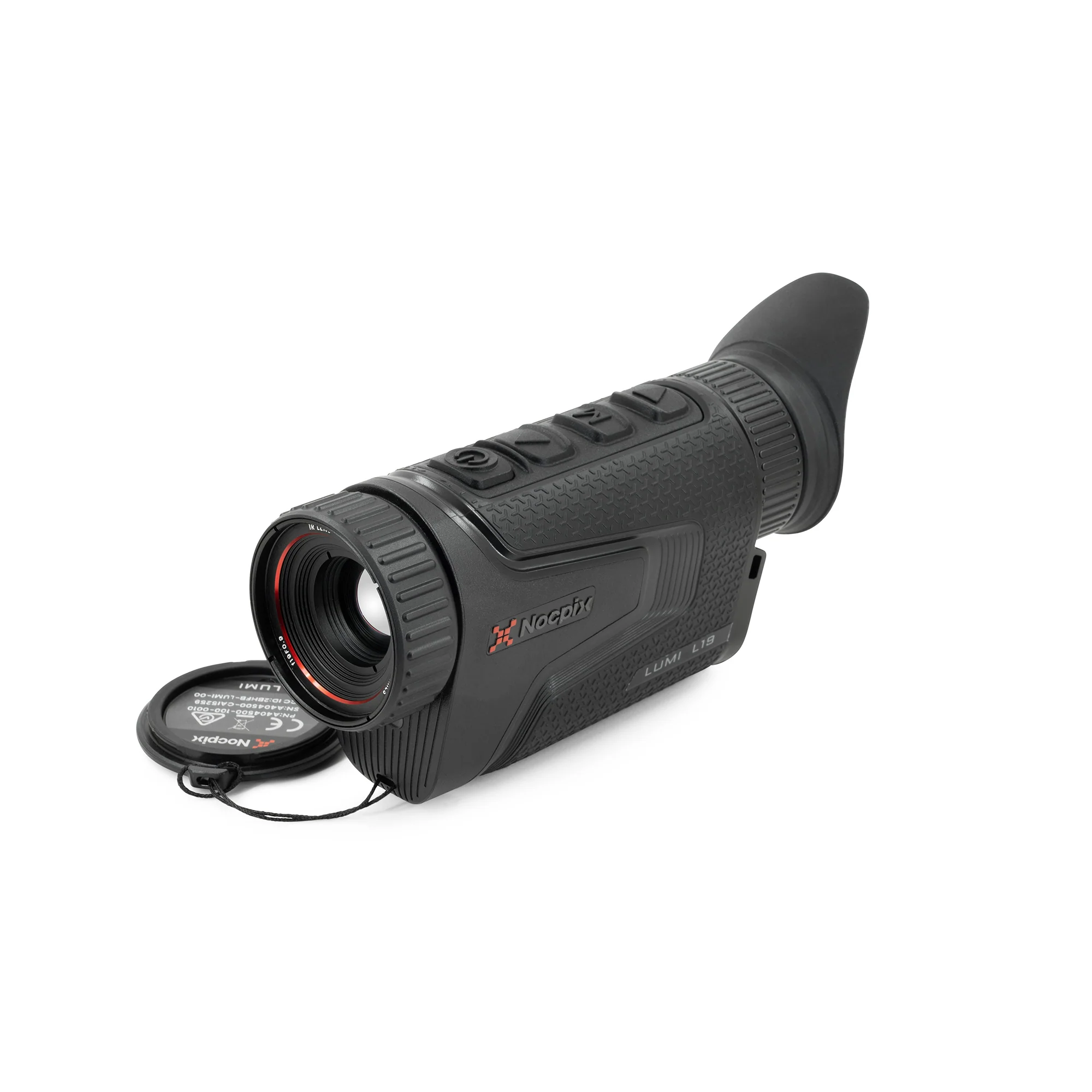
Nocpix field guidance for predator hunting separates handheld observation from the riflescope shot stage and presents thermal binoculars as a two-eye format for long observation. This role framing does not replace species confirmation, device instructions, or local rules.
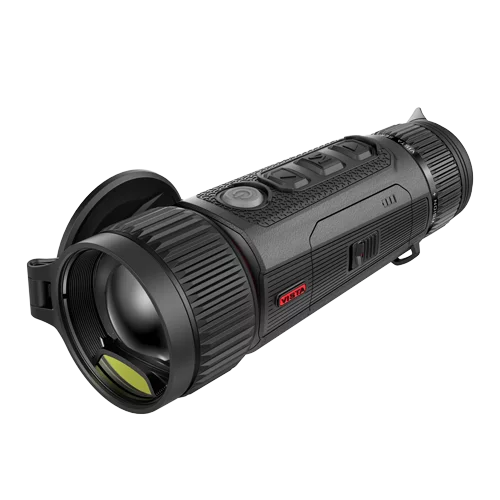
Use a handheld monocular to scan field edges and approach routes
A handheld monocular can fill the observation step when it is used according to its documentation. Inspect tracks separately as visible sign on the ground; do not assume a thermal image will reveal them. Keep heat detection separate from species confirmation and from any later use of a firearm.
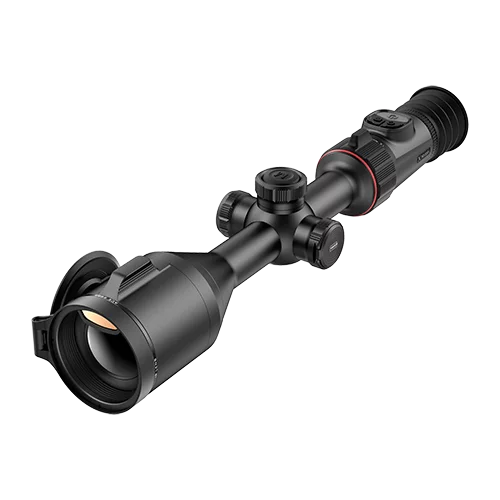
Move to the riflescope only after identification and safety checks
Move to the aiming stage only after the live animal has been positively identified, the method is lawful for the exact location and date, and the distance is acceptable for the intended shot. Confirm a safe sector of fire and backstop, and make sure no person, livestock, property, road, or other non-target is at risk.
Thermal binoculars for long observation
Nocpix field guidance presents thermal binoculars as a two-eye option for long-duration observation. Follow the device documentation and local rules for the intended use; this role description does not make a model or performance claim.
What Makes Thermal Scanning Hard in Fog, Rain, and Cover?
Fog and rain can attenuate or scatter a thermal signal, while target size, background contrast, and conditions affect practical range and interpretation. This weather statement relies on a commercial technical note on fog and rain, so treat it as condition-dependent rather than universal performance guidance.
Fog and rain change the interpretation conditions
Record whether fog or rain was present and whether the image remained stable enough for the intended decision. A visible heat cue can remain useful for observation even when confidence in identification has fallen.
When the scene does not provide enough identifying information
An observation may lack enough context to distinguish among credible alternatives. Treat that as a scene-dependent limit and wait for clearer information instead of assuming the device has revealed detail that is not visible in the image.
Detection is not identification
Detection asks whether a heat cue is present. Identification asks whether the observation supports a species conclusion. The second decision requires more information than the first, so no universal distance can substitute for field confirmation.
What Should You Check Before Hunting Predators at Night?
Build the verification record around the exact location and intended action: jurisdiction, species, method, permission, date checked, and current authority. Keep this legal check separate from species identification and equipment marketing.
Germany: species, Land-level rules, and night-equipment checks
Germany’s federal section 22 sets a framework for hunting and closed seasons and allows Länder variation. It does not establish a current Land rule or permission for night equipment. Use the relevant Land authority for the species and action being considered.
Check the current authority for every other jurisdiction
Use a current official source for the exact jurisdiction before relying on a season, method, equipment, or permission statement. Do not carry the German federal example into another country or assume that it establishes the current rule in any German Land.
What Can You Learn From a Night Observation?
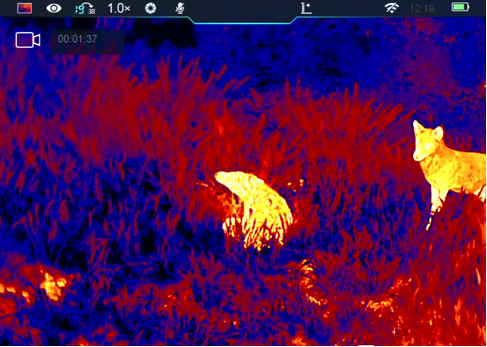
A night observation remains useful even when it does not produce a species name. Record what the device revealed, the conditions in which it was observed, and what remained uncertain. A useful record does not need to force every detection into a species identification.
Location, habitat, weather, time, device role, and uncertainty
Record location at an appropriate level, habitat, time, weather, the equipment used, what was visible, and what remained uncertain. These details make the observation easier to compare with later evidence without overstating the first sighting.
When comparing a later observation with the golden-jackal example above, retain the Hungary and Serbia study boundary. Do not assume that the same movement pattern applies elsewhere.
Evidence that supports species presence without overstating certainty
Apply the recommended detected, suspected, and confirmed stages to the record. Note which clues support the working identification and which alternatives remain. If the evidence does not rule out credible alternatives, keep the observation at detected or suspected.
When a failed identification is the correct result
End the identification attempt when the image, weather, movement, or scene context does not support a defensible conclusion. In fog or rain, use the weather limits described above when interpreting confidence. An unconfirmed record is more useful than an unsupported species label.
Choose Your Setup for the Ground You Hunt
A sound night-observation decision is simple: identify what the image establishes, add independent context, and check the current local authority before any action. When one of those steps remains incomplete, keep the observation open.