






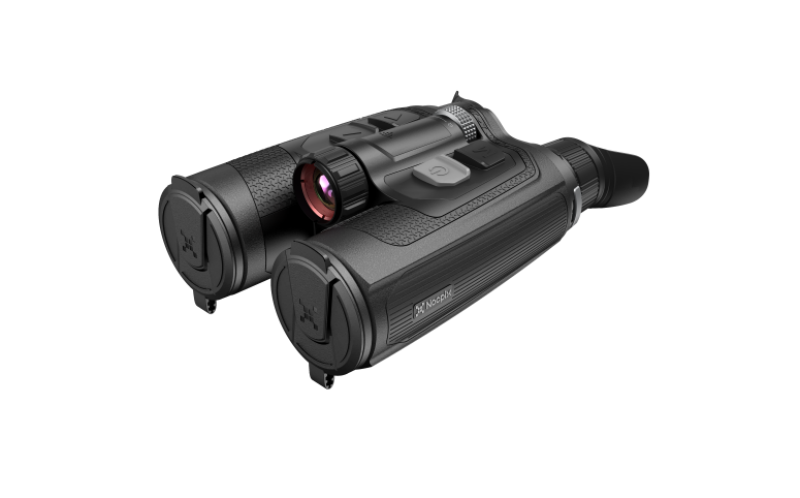
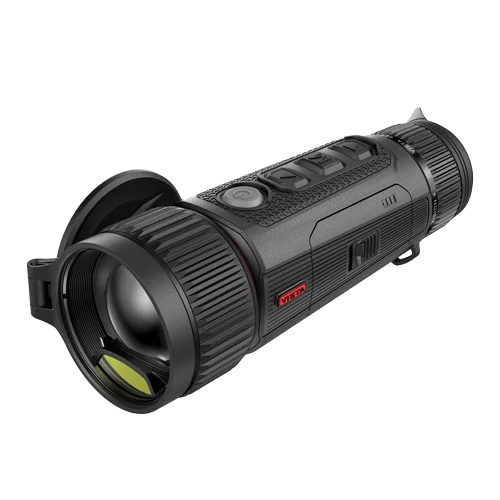
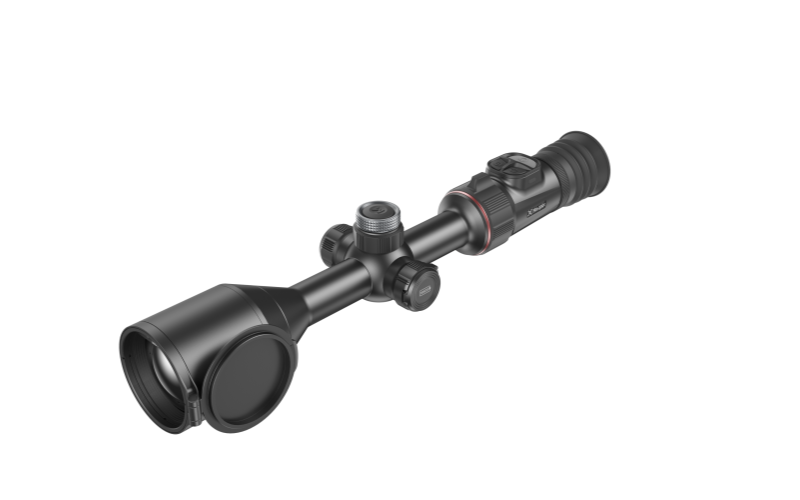
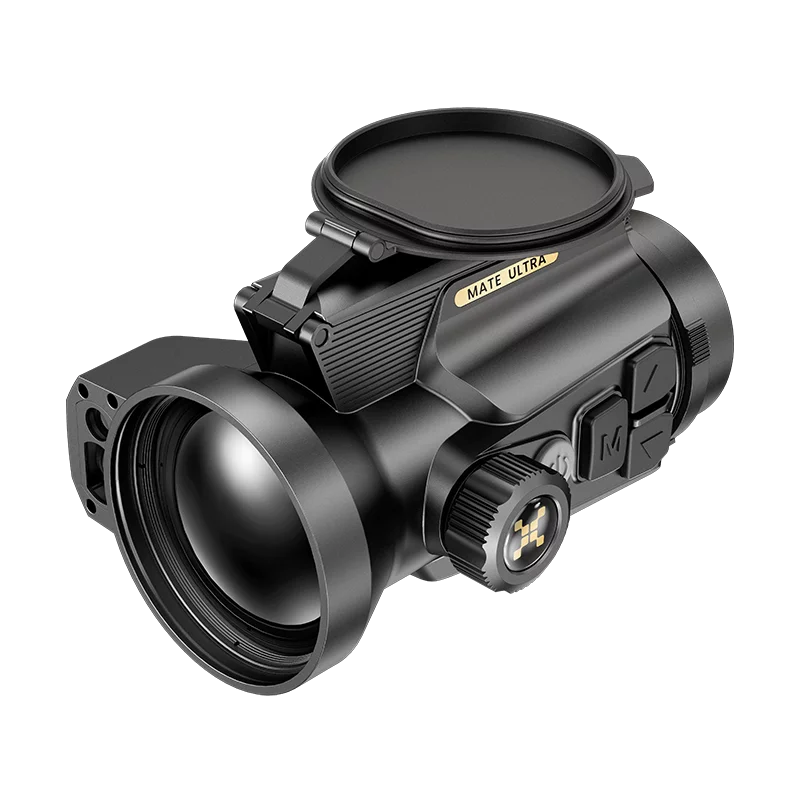
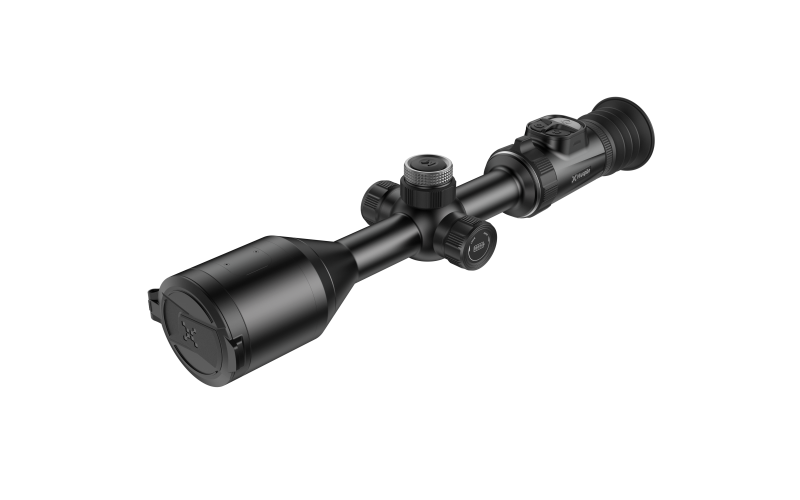
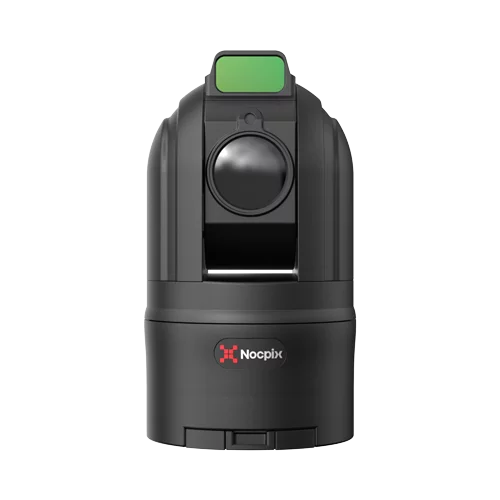


In hunting optics, a multispectral device typically combines thermal imaging with a separate digital day-and-night channel, giving hunters two complementary ways to observe their surroundings in one device.
This makes the multispectral vs. thermal comparison easier to frame. Thermal-only optics concentrate on a heat-based image. Multispectral optics keep that image and add a camera-like digital view. The real difference lies in what the second channel contributes and how often it earns a place in the observation.
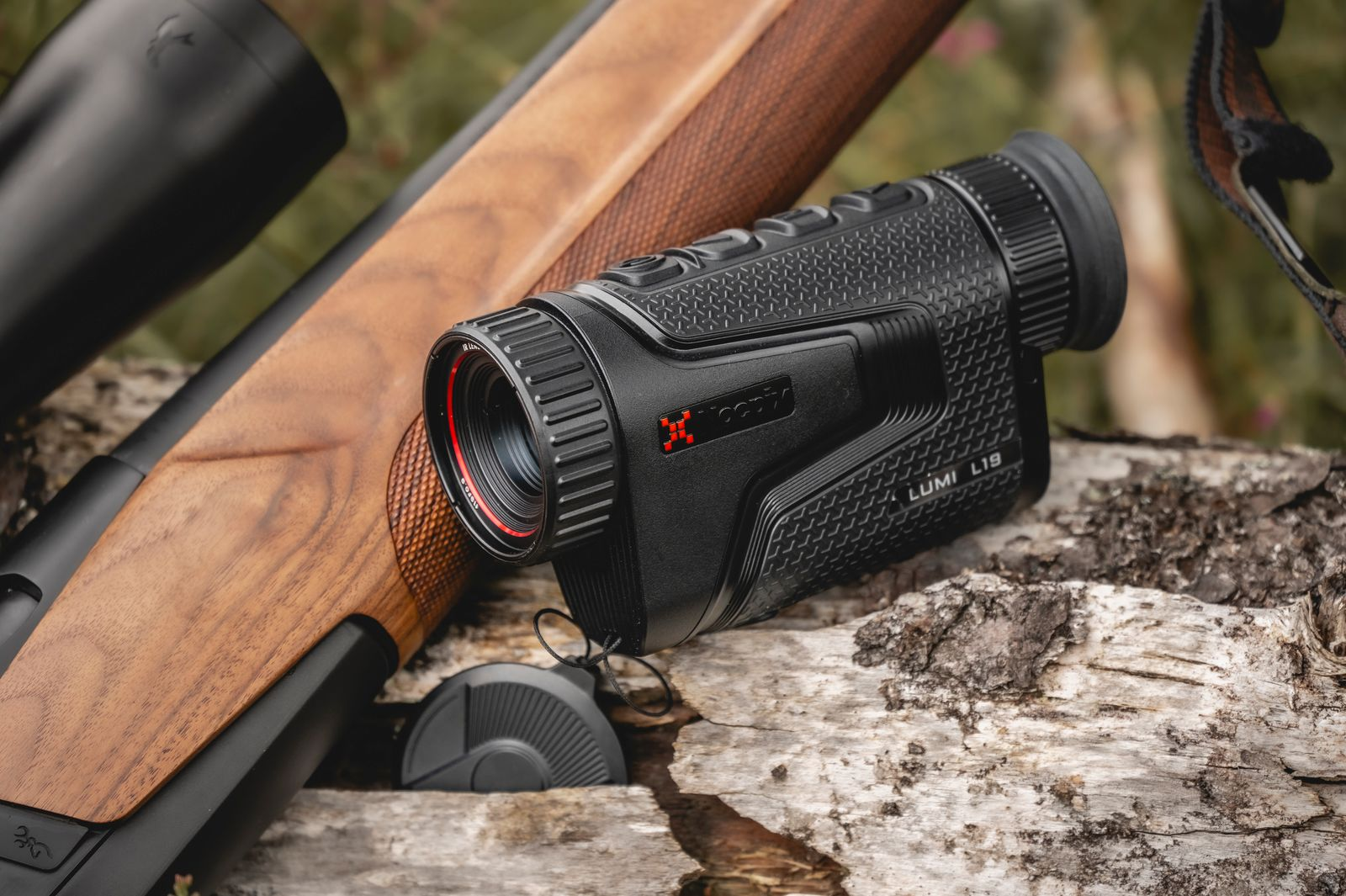
What Are We Comparing?
A thermal optic detects infrared radiation emitted by objects and renders differences in apparent temperature as thermal contrast. That heat-based view works during the day and in complete darkness. Readers interested in the sensor process can find a fuller explanation in how thermal imaging works.
A multispectral hunting optic contains a thermal channel and a separate digital channel. The digital side records visible or near-infrared light reflected from the scene. During the day, it can provide natural color and familiar detail. At night, it may use an IR illuminator.
Those two channels remain distinct. Products may let the user switch between them, place one inside a picture-in-picture window, or combine selected information through a fusion mode. The available display modes depend on the device.
The basic relationship is simple: thermal-only offers one imaging path, while multispectral offers thermal plus digital imaging in the same housing.
What Does the Second Channel Change?
Thermal helps locate heat signatures against the background. Imagine an animal standing near a dark tree line. Through thermal, its warm body can separate from the cooler background before its color or outline becomes visible to the eye.
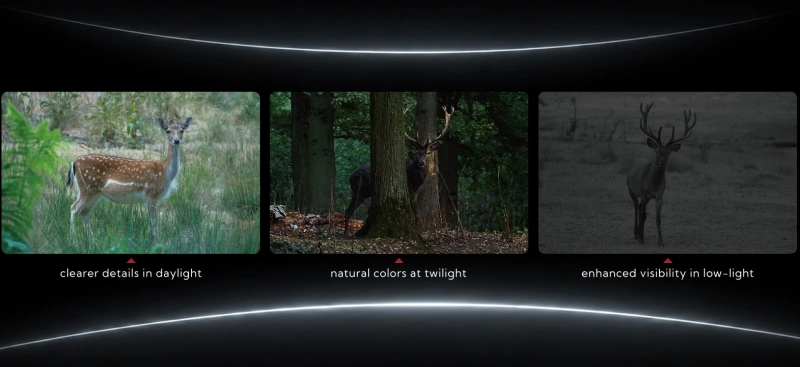
The digital channel changes the next part of the observation. A switch of the view brings back the shape of the branches, the fence behind the animal, the ground in front of it, and other visible details. The digital channel presents the scene in a familiar, natural-looking view, making it easier to recognize the animal and its surroundings.
That second view also gives the device a broader role as light changes. Digital imaging is useful for daylight detail and can continue into twilight as long as the sensor receives enough light. Thermal remains available when visible light disappears. Supported IR illumination can extend the digital view into darkness.
This is the central reason multispectral exists as a category. For hunters who regularly use both views, combining them in one device reduces the need to switch between separate optics. Nocpix explores this day-to-night use more closely in its guide to multispectral binoculars for day and night.
The second channel adds information, though every scene still sets its own limits. Distance, cover, weather, angle, and image quality affect what the observer can resolve. Finding a heat source establishes detection; recognition requires more detail. Our night vision buying guide explains the difference between those range terms.
Multispectral vs Thermal: Side-by-Side Comparison
| Feature | Thermal-only optic | Multispectral optic |
|---|---|---|
| Imaging channels | Thermal | Thermal and digital day & night imaging |
| Information shown | Temperature contrast | Temperature contrast and reflected-light scene detail |
| Daylight view | Thermal image | Thermal image plus a digital view that may provide natural color |
| Complete darkness | Passive thermal imaging | Passive thermal imaging; digital may use supported IR illumination |
| Display choices | Thermal palettes and product-specific modes | Channel switching and, on some products, picture-in-picture or fusion |
| Device structure | One imaging system | Two imaging systems in one housing |
| Observation flow | Stays within the thermal view | Moves between heat detection and digital scene detail |
A multispectral device carries the thermal capability shown in the left column. Its advantage comes from access to the additional view, while its design must accommodate a second sensor, another optical path, and the controls that connect them.
How to Read the Multispectral Label
The word “multispectral” identifies the channel arrangement. It says that more than one part of the spectrum is being used, which in this hunting-optics context usually means thermal and digital day/night imaging.
Channel quality comes from the hardware behind each image. Digital sensor specifications describe the digital view. Thermal detector resolution and sensitivity describe the thermal view.
Display behavior also needs to be checked separately. Switching, picture-in-picture, and fusion describe different ways of presenting the channels. A product may support one, several, or none beyond basic switching.
For a useful comparison, look at each side of the device:
- thermal detector, sensitivity, lens, magnification, and field of view;
- digital sensor, lens aperture, daylight color, and low-light performance;
- IR illumination for the digital channel;
- switching controls and supported display modes;
- battery system, runtime, weight, and viewing comfort.
The number of channels identifies the imaging systems included; the sensor, lens, FOV, and sensitivity determine their performance.
Where Each Category Fits
Thermal-only optics suit observation centered on heat. The user remains in one image system and can choose the device around thermal resolution, lens, field of view, and sensitivity. This focused design makes sense when digital scene detail rarely forms part of the viewing routine.
Multispectral becomes more relevant when the observer regularly moves between two questions: “Where is the heat source?” and “What does the visible scene around it look like?” The value grows during sessions that cross daylight, twilight, and darkness, or whenever the second view is used often enough to justify carrying both channels together.
Each category suits a different observation routine. A strong thermal-only device may serve a heat-focused task better than a multispectral product with a weaker thermal channel. A well-matched multispectral device may be more useful when both views have a regular job. Actual channel performance matters more than the category label.
Multispectral Binoculars vs Separate Optics
Separate optics give you more freedom to build the setup you want. You can choose each device for its own magnification and field of view. The downside is having to switch devices whenever you want a different view.
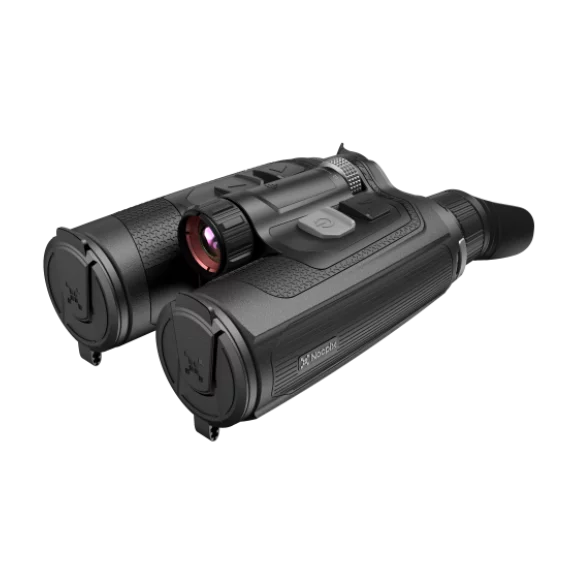
An integrated multispectral binocular brings that handoff into one set of controls. Weight, runtime, comfort, and image quality still come down to the model, but the observer stays behind the same eyepieces when moving from thermal to digital.
The Nocpix OMNI multispectral binoculars show how Nocpix applies this format. OMNI combines an 8K digital channel with a 640×512 or 384×288 thermal detector, depending on the model. The thermal side runs at 50 Hz with NETD ≤15 mK, while the digital side uses a 50 mm F1.8 lens to gather more light for daylight, twilight, and low-light observation.
A short press switches between the digital and thermal channels. For digital viewing after dark, OMNI supports interchangeable 850 nm and 940 nm IR illuminators. Image stabilization, fine 0.5× zoom steps, integrated ranging, and a built-in tripod mount bring more of the observation setup into the same binocular.
These features turn the multispectral idea into a practical workflow: digital detail when the light supports it, thermal contrast when heat is the better way to find the subject, and direct switching between the two. Nocpix lists its current thermal and multispectral binoculars together for category-level comparison.
The Bottom Line
Thermal-only optics provide a dedicated heat-based view. Multispectral optics add a digital channel to that thermal foundation. The better fit depends on the role of the second view: occasional extra information may favor separate or thermal-focused equipment, while frequent movement between heat contrast and visible scene detail gives multispectral its purpose.