






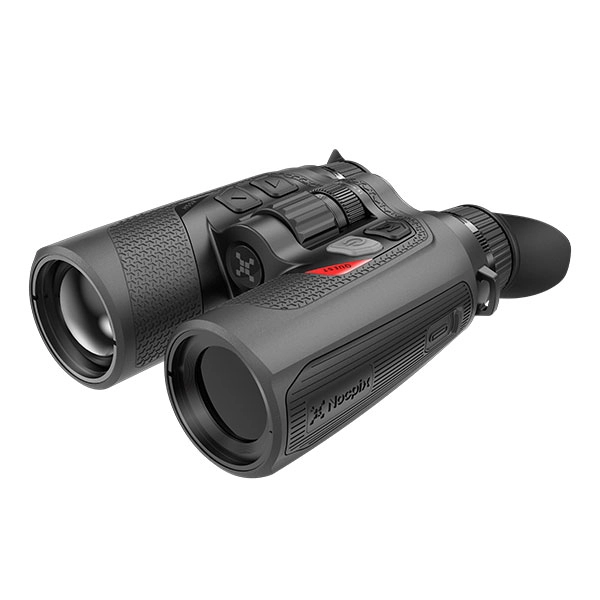
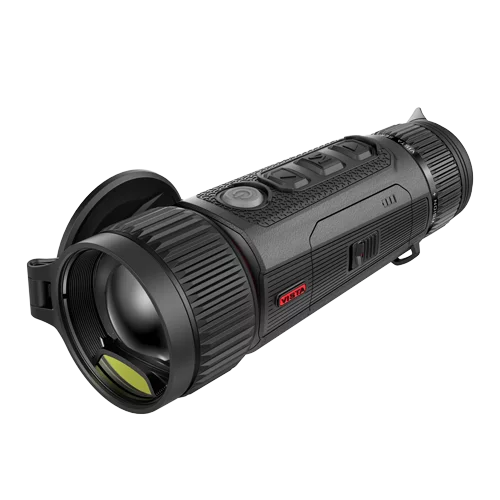
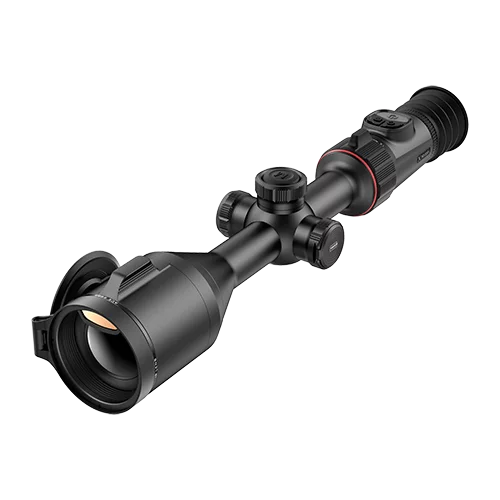
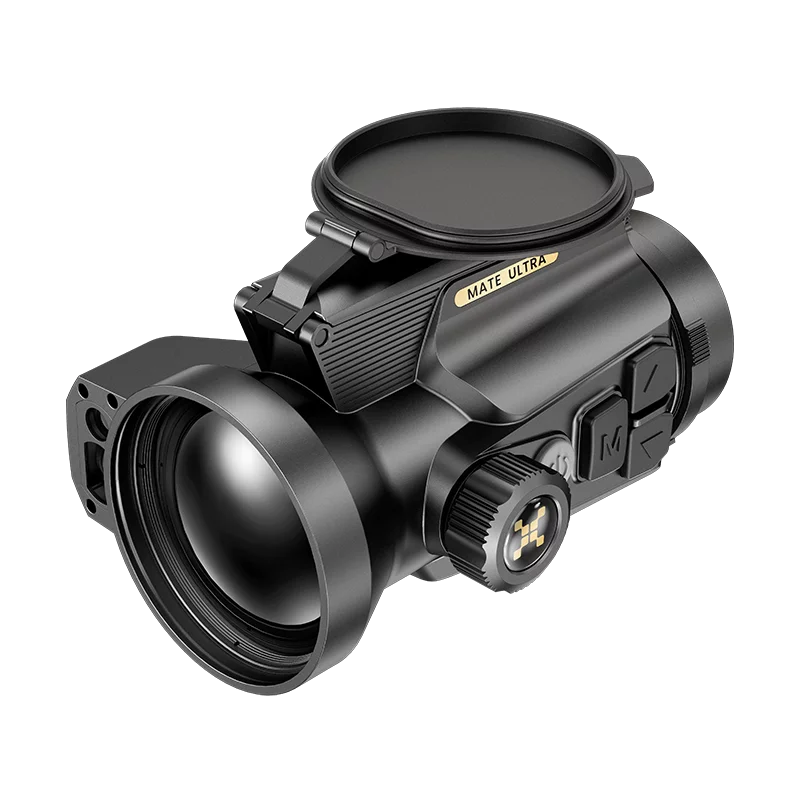


Elegir unos prismáticos térmicos para la caza se reduce a adaptar la óptica a la forma en que realmente cazas: la distancia, el terreno, el tiempo que dedicas a observar y tu presupuesto.
La mayoría de los cazadores que buscan sus primeras gafas se estancan comparando especificaciones técnicas llenas de números que no significan mucho sin contexto. Un alcance de detección de 2600 metros suena impresionante, pero si cazas en hondonadas boscosas a 200 metros, ese número no influirá en tu experiencia. Lo mismo ocurre con la resolución del sensor, la frecuencia de actualización y el aumento. Cada especificación importa, pero solo cuando se aplica a una situación real.
Esta guía te explica cómo elegir binoculares térmicos para la caza en seis pasos. Cubriremos qué debes tener en cuenta antes de abrir la página de un producto, qué especificaciones afectan realmente a la imagen, cómo se comparan los binoculares con los monoculares y las miras telescópicas, qué comprobar para garantizar la durabilidad, cómo abordar cuestiones legales y los errores más costosos para quienes compran por primera vez. Si quieres empezar a explorar modelos, puedes consultar Nocpix. binoculares termográficos o saltar al Página de la serie QUEST Para ver las especificaciones completas.
Comencemos con el paso que la mayoría de la gente se salta.
Tabla de contenido
Paso 1: Define primero tu escenario de caza.
Los prismáticos térmicos adecuados dependen de cómo caces, no del modelo con las especificaciones más altas. Antes de comparar productos, responde a cuatro preguntas sobre su uso real.
Distancia típica de observación
¿Hasta qué distancia sueles observar? Si observas campos abiertos, linderos de cultivos o llanuras, necesitas unos binoculares que ofrezcan detalles nítidos a una distancia de entre 400 y 800 metros. Esto implica una lente objetivo más grande, una mayor resolución del sensor y un aumento base sólido.
Si cazas en bosques densos, lechos de arroyos o cercas arboladas, tu alcance efectivo puede ser de entre 50 y 250 yardas. En ese caso, un campo de visión más amplio y una detección rápida del objetivo son más importantes que un mayor alcance.
Tipo de terreno
Los terrenos abiertos favorecen el aumento y el alcance de detección. Los terrenos accidentados (matorrales, barrancos, hileras de árboles mixtas) favorecen un campo de visión amplio y un escaneo rápido. Piensa en dónde te sientas o te paras y qué necesitas ver.
Duración del proceso de vitrificado
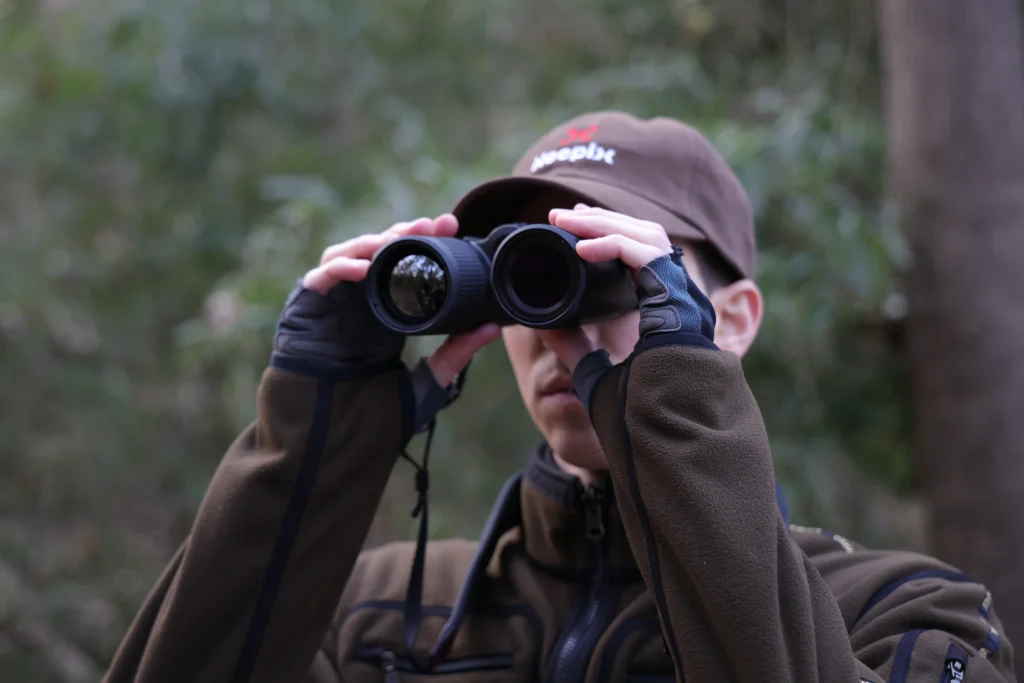
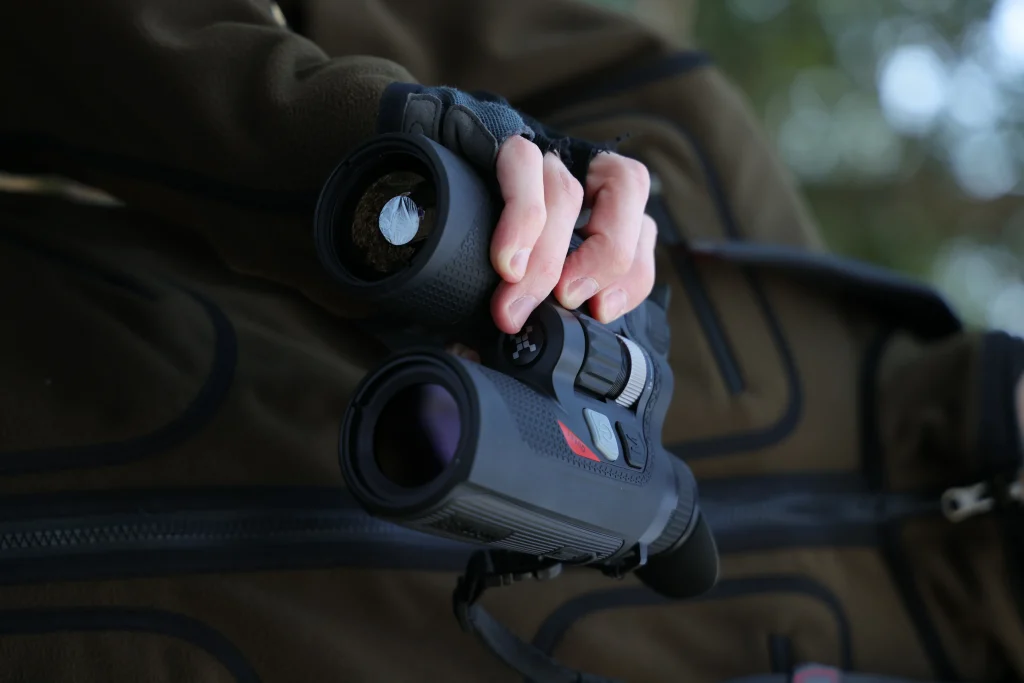
Aquí es donde los binoculares se diferencian de los monoculares. La principal diferencia radica en el tiempo que se planea usar el dispositivo. Si se permanece en una cresta durante 30 a 60 minutos seguidos, un diseño de dos ojos reduce la fatiga. El verdadero valor de unos binoculares térmicos en la caza real no reside únicamente en sus especificaciones, sino en su capacidad para mantener una observación clara, estable y enfocada durante largos periodos. La comodidad no se limita a la experiencia, sino que influye directamente en el juicio y el tiempo de reacción del cazador.
Si realizas escaneos rápidos durante 15 segundos antes de moverte, un monocular podría ser la mejor opción. Adapta el dispositivo a tu rutina.
Rango de presupuesto realista
Los binoculares térmicos tienen precios que oscilan entre los $2000 y los $8000 o más. Si eres nuevo en el mundo de la visión térmica, necesitas sencillez y un precio justo. Los modelos básicos de 384p funcionan bien para distancias cortas. Los binoculares de gama media de 640p cubren la mayoría de las necesidades de caza. Los modelos insignia de 1280p ofrecen la imagen más nítida a cualquier distancia y mantienen su calidad al usar el zoom digital.
Establece tu presupuesto antes de comparar. Así, tomarás una decisión realista.
Paso 2: Comprenda las especificaciones importantes al elegir binoculares térmicos para la caza.
Las especificaciones solo son útiles cuando se sabe cómo afectan en la práctica. Aquí están las seis que debes comprender.
Resolución del sensor: 1280 frente a 640 frente a 384
La resolución del sensor controla la cantidad de detalles térmicos que captura el dispositivo. Un sensor de 1280 × 1024 captura más de 1,3 millones de píxeles térmicos. Uno de 640 × 512 captura aproximadamente 327 000. Uno de 384 × 288 captura aproximadamente 110 000.
Una mayor resolución resulta especialmente útil al hacer zoom, observar a larga distancia o distinguir dos animales a lo lejos. También ayuda cuando los animales están parcialmente ocultos o cuando se necesita separar dos fuentes de calor cercanas. Si caza en campo abierto y observa a larga distancia, la resolución marca una gran diferencia.
Para obtener un análisis más detallado del rendimiento de cada nivel de sensor, lea ¿Cuál es la mejor resolución para el visor térmico?.
Sensibilidad térmica neta (NETD) y rendimiento de bajo contraste
NETD mide la mínima diferencia de temperatura que el sensor puede detectar. Los valores más bajos, generalmente inferiores a 20 mK, proporcionan imágenes más nítidas en entornos húmedos, lluviosos o de bajo contraste.
Piensa en el NETD como la capacidad del sensor para captar calor tenue sobre un fondo cálido. En una noche templada, cuando la temperatura del suelo es similar a la corporal, un sensor con un NETD de ≤15 mK captura más detalles que uno con una clasificación de 25 mK o 35 mK. Esto es más importante de lo que la mayoría de los compradores creen.
Rango de detección frente a rango de identificación.
El rango de detección indica la distancia máxima a la que el sensor puede registrar una señal térmica. El rango de identificación es la distancia a la que se puede determinar la fuente de calor: un ciervo, un coyote, una persona o un tocón.
Para la caza de ciervos y jabalíes, un rango de detección superior a 1500 metros ofrece un amplio margen de seguridad. La mayoría de los cazadores identifican objetivos a unos pocos cientos de metros, y eso es lo que importa para tomar decisiones sobre el disparo. Siempre concéntrese más en el rango de identificación que en el rango de detección. Para una visión práctica de cómo funciona la distancia en la óptica térmica, consulte ¿Hasta qué distancia pueden ver las miras térmicas?.
Aumento base frente a zoom digital
El aumento base es la potencia óptica nativa del objetivo. El zoom digital recorta y amplía la imagen electrónicamente. Un mayor aumento base permite acercar los objetos sin perder detalle. El zoom digital es práctico, pero la calidad de la imagen disminuye a medida que se aumenta.
Un aumento base de 2× proporciona un amplio campo de visión. Un aumento base de 4× ofrece mayor alcance a costa de un campo de visión más reducido. Elija según su alcance habitual y el terreno.
Campo de visión: escaneo amplio frente a enfoque estrecho.
El campo de visión es la amplitud de la escena que se observa a una distancia determinada. Un campo de visión más amplio permite explorar áreas extensas con mayor rapidez: praderas abiertas, linderos de campos, cimas de colinas. Un campo de visión más estrecho es una desventaja que conlleva una mayor magnificación.
El amplio campo de visión de 17,5°×14° del QUEST S50R te permite explorar grandes áreas rápidamente. A 100 metros, el campo cubre aproximadamente 30×24 metros, suficiente para observar todo el borde de un campo en una sola pasada. Si dedicas la mayor parte del tiempo a explorar antes de hacer zoom, prioriza un campo de visión amplio.
Frecuencia de actualización: 30 Hz frente a 60 Hz
La frecuencia de actualización determina la fluidez de la imagen durante el movimiento. Una pantalla de 30 Hz se actualiza 30 veces por segundo. Una pantalla de 60 Hz se actualiza 60 veces por segundo. A 60 Hz, se obtiene una fluidez superior que permite capturar con precisión animales en movimiento y escenas de alta velocidad; una mejora significativa con respecto a frecuencias de actualización más bajas, lo que garantiza imágenes más fluidas y precisas en el campo.
Para la caza, 60 Hz es la mejor opción. Mantiene la imagen fluida al recorrer un campo con la cámara o al seguir a un animal en movimiento entre la maleza.
Paso 3: ¿Binoculares, monoculares o mira telescópica?
Cada formato resuelve un problema diferente. Aquí te mostramos una comparación.
Ventajas de los prismáticos térmicos
Los binoculares térmicos permiten escanear con ambos ojos y ambas manos. Usar ambos ojos reduce la fatiga visual durante largas sesiones de observación. Si planea monitorear un área durante 30 minutos o más, los binoculares resultan notablemente más cómodos que los dispositivos de un solo ojo.
Son especialmente útiles para los cazadores que se sientan en posiciones elevadas o en los bordes del campo y observan en todas direcciones antes de moverse. Si la observación prolongada forma parte de tu rutina, los binoculares son imprescindibles. Lee más sobre Por qué la comodidad en los binoculares térmicos es importante durante largas jornadas de caza.
Ventajas de un monocular térmico
Los monoculares térmicos son ideales para cazadores que valoran la portabilidad y un manejo rápido con una sola mano. En comparación con los binoculares, los monoculares son más ligeros y fáciles de transportar durante largas caminatas, la caza al acecho o los cambios frecuentes de posición.
Un monocular como el Nocpix Serie LUMI Cabe en el bolsillo de una chaqueta y pesa menos de 345 gramos. Los cazadores que se mueven sigilosamente entre bosques o se desplazan entre puestos apreciarán su ligereza.
Ventajas de una mira térmica para rifle
Las miras térmicas son ópticas montadas en armas diseñadas para el combate. A diferencia de los dispositivos portátiles, las miras integran la detección térmica con la función de puntería. Una mira térmica moderna para rifle permite detectar, seguir y apuntar sin cambiar de dispositivo.
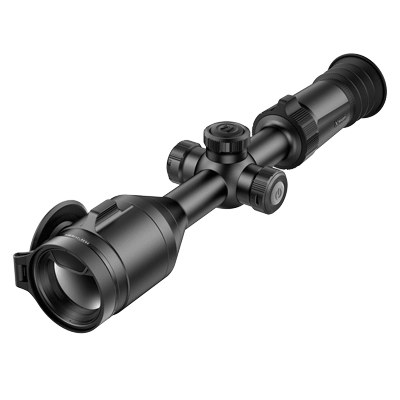
Estas ópticas se centran en la precisión y la estabilidad en lugar del escaneo de áreas amplias. La mayoría de los cazadores y profesionales del control de plagas combinan una mira telescópica con un escáner de mano para evitar el manejo constante del arma. Puede comparar Nocpix Opciones de miras térmicas para rifles para ver qué se ajusta mejor a la configuración de su rifle.
Guía de decisiones rápidas
Aquí tienes una forma sencilla de decidir:
- Observación prolongada (más de 30 minutos): Prismáticos térmicos: menos fatiga, imagen más estable, soporte para ambas manos.
- Movimiento activo y acoso: Monocular térmico: más ligero, de despliegue más rápido y más fácil de transportar con una sola mano.
- Ubicación del disparo y alcance del objetivo: Mira telescópica térmica: sistema de puntería integrado, diseñada para resistir el retroceso y sin necesidad de cambiar de dispositivo.
- Configuración combinada: Muchos cazadores experimentados llevan consigo un escáner portátil y una mira telescópica montada en el arma.
Para un análisis comparativo completo, lea la guía de Nocpix en Diferencias clave entre visión monocular y binocular.
Paso 4: Durabilidad y practicidad en el campo.
Las especificaciones llaman la atención. La durabilidad y la ergonomía hacen que uses la óptica temporada tras temporada.
Peso y capacidad de carga durante todo el día
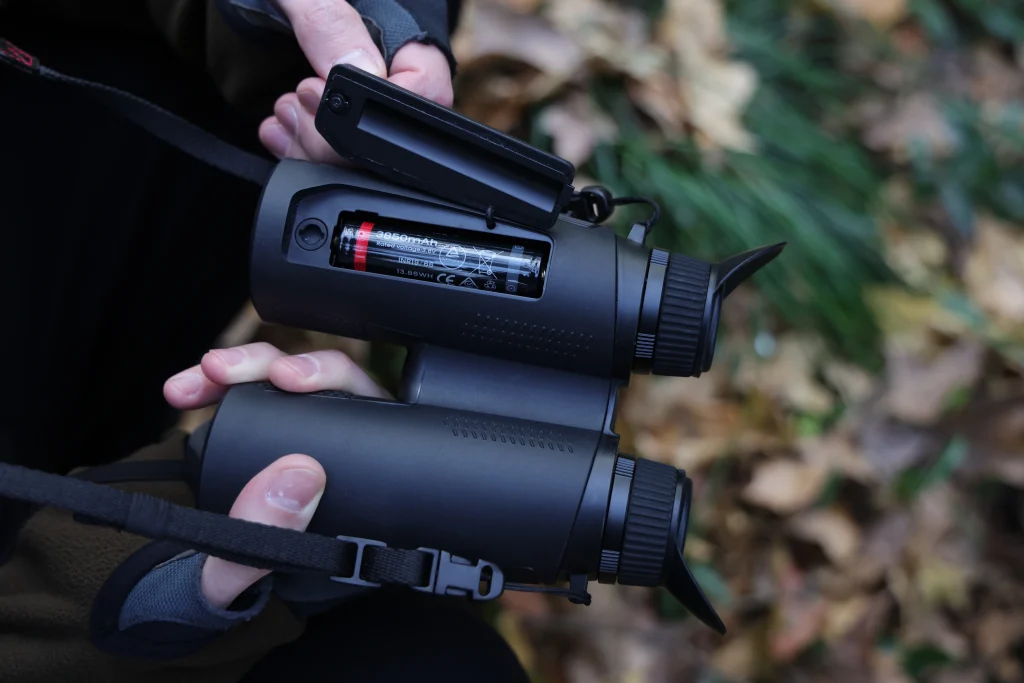
Unos prismáticos pesados se convierten en un problema después de unas horas. La serie QUEST pesa entre 700 y 750 gramos, según el modelo, un peso similar al de unos prismáticos de cristal tradicionales de 10×42. Unos buenos prismáticos térmicos deben sentirse equilibrados en las manos y ajustarse cómodamente a una correa para el cuello o un arnés de pecho.
Autonomía de la batería frente a facilidad de reemplazo
Unos prismáticos térmicos consumen la batería más rápido que unos prismáticos ópticos tradicionales. Busca un dispositivo con baterías intercambiables en caliente para poder cambiar la alimentación sin apagar el equipo. El sistema de doble batería QUEST combina una batería integrada con una batería 18650 intercambiable. Puedes cambiar la batería externa sin apagar el equipo. Esto significa que podrás observar sin interrupciones durante toda la noche.
Protección contra la intemperie y clasificación IP67.
Tus binoculares estarán expuestos a la lluvia, la niebla, el polvo y los cambios bruscos de temperatura. Los QUEST cuentan con un revestimiento de goma integral y una clasificación IP67 para mayor durabilidad y comodidad en condiciones adversas. La clasificación IP67 significa que la unidad está completamente sellada contra el polvo y puede soportar inmersiones temporales en agua. Si cazas en climas húmedos —como en la costa del Golfo, el noroeste del Pacífico o cualquier lugar con un clima impredecible—, la clasificación IP67 debería ser tu estándar mínimo.
Ergonomía: botones, agarre y comodidad visual.
Utilizarás tus binoculares en la oscuridad, a menudo con guantes, a veces con frío o lluvia. Busca un diseño de botones sencillo que puedas manejar al tacto. Los QUEST cuentan con solo cuatro botones funcionales, que se accionan con los dedos índice y medio, lo que permite un uso intuitivo incluso en completa oscuridad. Un revestimiento antideslizante de silicona garantiza un agarre seguro, ya sea que uses una o dos manos.
Además, asegúrese de que ambos oculares tengan ajuste de dioptrías independiente para que se adapten a su visión. Ese pequeño detalle marca la diferencia a lo largo de las horas de uso.
Paso 5: Conozca las normas legales antes de comprar.
La posesión de dispositivos ópticos térmicos es legal en todos los estados de EE. UU. Sin embargo, su uso para la caza es otra cuestión. Las leyes varían según el estado, la especie y la temporada. Siempre verifique la normativa antes de comprar, y repítala antes de cada temporada.
Estados donde generalmente se permite la caza térmica
En Estados Unidos, el uso de óptica térmica es legal en muchos estados para la caza de depredadores como coyotes, jabalíes y alimañas. Más de 35 estados permiten la caza térmica de alguna forma. Estados como Texas, Oklahoma y Alabama suelen tener las políticas más permisivas, especialmente en lo que respecta al control de jabalíes y otros depredadores.
Algunos estados permiten el uso de cámaras térmicas para la caza durante las horas legales. Otros restringen el uso de cámaras térmicas a especies no cinegéticas específicas o a permisos de caza nocturna en terrenos privados.
Especies y escenarios con restricciones
El uso de dispositivos ópticos térmicos suele estar restringido para la caza mayor, como ciervos, alces y pavos, especialmente de noche. En casi todos los estados de EE. UU., es estrictamente ilegal cazar animales de caza tradicionales —como ciervos de cola blanca, alces, uapitíes, pavos y aves acuáticas— con un dispositivo térmico durante la noche.
Estados como California, Oregón, Colorado y Nevada tienen restricciones más estrictas que limitan o prohíben el uso de cámaras térmicas para la caza en ciertas categorías. En algunos casos, incluso se requiere un permiso especial para utilizar imágenes térmicas en la caza.
En resumen: Comuníquese directamente con la agencia estatal de vida silvestre antes de usar óptica térmica en el campo. Las regulaciones cambian cada temporada, y lo que se aplica a una especie puede no aplicarse a otra en la misma ubicación. Para obtener una descripción general más amplia, consulte la guía de Nocpix sobre Cómo elegir una mira térmica, que también abarca consideraciones legales.
Paso 6: Errores comunes que se deben evitar
Quienes compran por primera vez suelen dedicar demasiado tiempo a las especificaciones técnicas y muy poco a comprobar si el producto les queda bien en la práctica. Estos son los cinco errores más comunes.
Persiguiendo los números del rango de detección
El alcance de detección es una medición de laboratorio, generalmente basada en un objetivo grande como un vehículo estándar de la OTAN. Este valor no aporta prácticamente ninguna información sobre la identificación de un coyote a 400 yardas o un jabalí a 600 yardas. En su lugar, concéntrese en el alcance de identificación y la calidad del sensor.
Ignorar NETD en favor de la resolución
Un sensor de 640 ppp con un NETD de ≤15 mK puede ofrecer un mejor rendimiento que un sensor de 1280 ppp con un NETD de 40 mK en condiciones de humedad y bajo contraste. La resolución determina el nivel de detalle. El NETD determina si se puede apreciar el detalle cuando el aire está denso y las diferencias de temperatura son mínimas.
Descuidar el rendimiento de la batería en clima frío
Las baterías de iones de litio pierden capacidad a bajas temperaturas. Unos prismáticos con una autonomía de 6 horas a temperatura ambiente podrían durar solo entre 3,5 y 4 horas en condiciones de congelación. Lleva baterías de repuesto y elige un sistema que permita el intercambio en caliente.
Comprar por las especificaciones, no por la ergonomía.
Unos prismáticos con el mejor sensor del mundo se quedarán en tu camioneta si son demasiado pesados para transportarlos o demasiado complicados de usar en la oscuridad. Antes de comprarlos, comprueba el peso, la disposición de los botones, el revestimiento de la empuñadura y la distancia ocular. La ergonomía es más importante de lo que la mayoría de los compradores primerizos imaginan. Unos prismáticos cómodos resultan naturales tras horas en el campo.
Saltarse la verificación de las regulaciones locales de caza
Este es el error más costoso. Comprar unos binoculares térmicos puede costar miles de dólares. Si en tu estado no está permitido el uso de binoculares térmicos para la especie o la temporada en la que planeas cazar, ese dinero no te servirá de nada. Consulta el sitio web de la agencia estatal de vida silvestre o llámalos directamente antes de hacer el pedido.
Dónde encaja el Nocpix QUEST
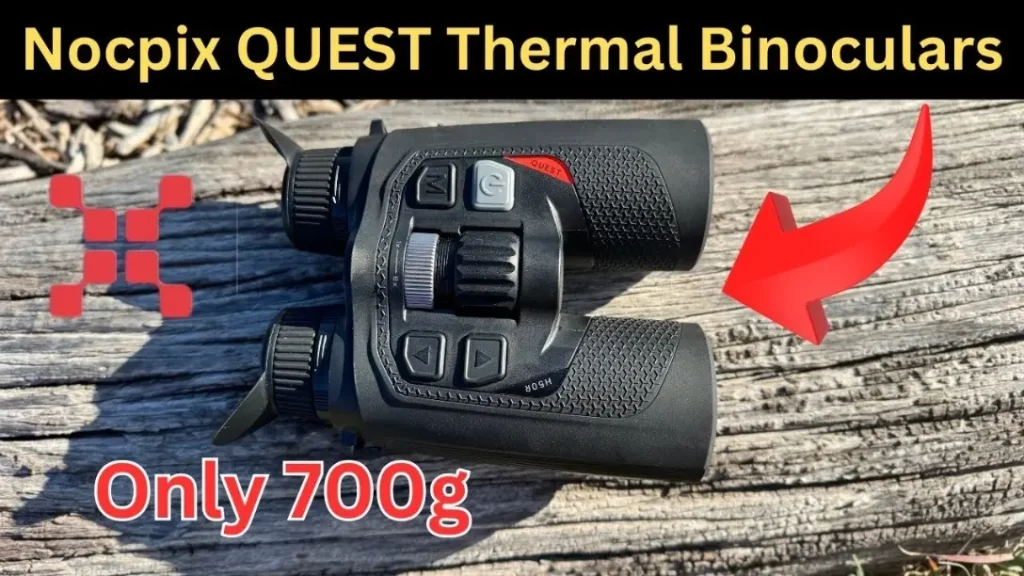
La serie Nocpix QUEST es una línea de binoculares térmicos diseñados específicamente para la práctica de la caza. Todos los modelos QUEST cuentan con pantallas AMOLED duales, telémetro láser integrado y una frecuencia de actualización de 60 Hz. La diferencia entre los modelos radica en la resolución del sensor y el tamaño de la lente.
Aquí tienes una breve introducción a los cuatro modelos actuales:
- QUEST S50R: Sensor de 1280×1024 con un NETD de ≤15 mK, lente objetivo de 50 mm F1.1 y un campo de visión de 17,5°×14°. Ideal para escaneo de largo alcance y observación nocturna.
- QUEST H50R: Sensor de 640×512, lente de 50 mm, aumento base de 4×. Ideal para acercar objetivos distantes en terreno abierto.
- QUEST H35R: Sensor de 640×512, lente de 35 mm, cuerpo más ligero. Equilibra la portabilidad y la calidad de imagen para terrenos mixtos.
- QUEST L35R: Sensor de 384×288. Un punto de partida práctico para cazadores que se inician en el uso de binoculares térmicos: diseño de cuatro botones, controles para usar con una sola mano, el mismo sistema de doble batería que toda la línea QUEST, telémetro láser, cálculo balístico, conectividad N-Link y durabilidad IP67 en un paquete más ligero y asequible.
Puedes comparar los cuatro en Nocpix. Página de la serie QUEST.
Reflexiones finales
Elegir los binoculares térmicos adecuados para la caza comienza por comprender cómo cazas, no por comparar las especificaciones técnicas más extensas. Tu distancia de observación, el terreno, el tiempo de observación y tu presupuesto reducen rápidamente las opciones. A partir de ahí, encontrar la resolución del sensor, el NETD, el campo de visión y el tamaño adecuados te proporciona una óptica que cumple con su cometido en el campo.
No pases por alto la comodidad, el diseño de la batería y la protección contra la intemperie. Estos detalles prácticos determinan cuánto tiempo pasas detrás del cristal y con qué claridad ves cuando las condiciones empeoran.
Antes de gastar un solo dólar, consulta la normativa de caza de tu estado sobre el uso de óptica térmica. Las reglas varían según la especie, la temporada e incluso, a veces, según el tipo de terreno.
Si estás listo para comparar opciones, explora Nocpix. binoculares termográficos categoría o sumérgete en el completo Alineación de QUEST para ver qué modelo se adapta mejor a tu estilo de caza.
Preguntas frecuentes sobre prismáticos térmicos para la caza
¿Es legal usar prismáticos térmicos para la caza en Estados Unidos?
Los binoculares térmicos son legales en todos los estados de EE. UU. Su uso para la caza es legal en la mayoría de los estados para ciertas especies —a menudo depredadores y jabalíes— donde la visión térmica resulta más beneficiosa. Más de 35 estados permiten la caza con visión térmica de alguna forma. Sin embargo, la mayoría de los estados prohíben el uso de binoculares térmicos para la caza mayor nocturna. Consulte la normativa de la agencia de vida silvestre de su estado antes de cada temporada.
¿Cuál es un buen NETD para binoculares térmicos de caza?
Un NETD de 20 mK o inferior es un buen indicador para la caza. Los valores de NETD más bajos proporcionan imágenes más nítidas en entornos húmedos, lluviosos o de bajo contraste, donde las diferencias de temperatura entre los animales y su entorno son mínimas. La serie Nocpix QUEST ofrece un NETD de ≤15 mK en todos sus modelos.
¿Hasta qué distancia pueden detectar un ciervo unos prismáticos térmicos?
La mayoría de los binoculares térmicos de calidad pueden identificar un animal del tamaño de un ciervo a una distancia de entre 300 y 800 yardas, dependiendo de la resolución del sensor, el tamaño de la lente y las condiciones atmosféricas. La detección puede extenderse mucho más, pero siempre confirme visualmente su objetivo antes de decidir si dispara.
¿Funcionan los prismáticos térmicos con lluvia y niebla?
Sí. La termografía detecta el calor en lugar de la luz visible, por lo que sigue siendo eficaz en presencia de niebla, lluvia ligera, humo y vegetación densa. La lluvia intensa y persistente puede reducir su alcance efectivo, pero la lluvia ligera o moderada y la niebla no bloquean la detección térmica como lo hacen con la luz visible.
¿Qué frecuencia de actualización necesito para cazar?
Para la caza, la frecuencia de actualización de 60 Hz es la opción preferida. Ofrece imágenes fluidas y nítidas al recorrer un campo con la cámara o al seguir un objetivo en movimiento. Una pantalla de 30 Hz funciona, pero puede presentar interrupciones durante movimientos rápidos o panorámicas amplias.