




Thermal imaging lets hunters detect animals by heat, not light—even in complete darkness. Instead of relying on moonlight or visibility, thermal devices show warm animals like deer, hogs, and coyotes as clear heat signatures against cooler surroundings.
For night hunting, this changes everything. You can spot movement in tall grass, scan field edges without alerting game, and locate animals long before they see or hear you.
In this guide, we’ll explain how thermal imaging works, why it’s so effective for hunting, and where its real limits are—so you know if it’s worth using in the field.
Table of Contents
What Is Thermal Imaging?
Thermal imaging is a technology that detects infrared heat emitted by animals and objects, then converts that heat into a visible image. For hunters, this means locating game by body heat rather than light—even in total darkness.
What thermal imaging actually “sees”
Thermal imaging sees heat energy, not reflected light.
Every object above absolute zero emits infrared radiation—a basic principle of thermal physics. Deer, hogs, coyotes, and people emit much more of it than rocks, trees, or soil—especially at night. Thermal sensors capture these differences and display them as contrast on a screen.
Most hunting thermals show warm objects as white or bright tones, while cooler backgrounds appear dark.
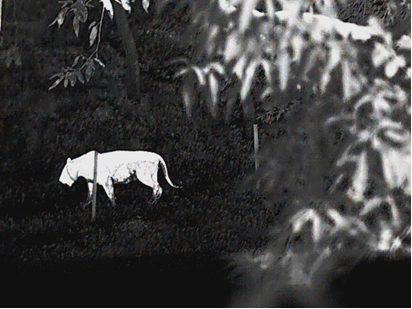
You’re not seeing the animal itself—you’re seeing the heat its body produces. That distinction matters in the field.
Why thermal imaging works without any light
Thermal imaging works without light because it detects heat that animals naturally emit, not light reflected off them. As long as there’s a temperature difference, thermal sensors can form a usable image—no moonlight, starlight, or illumination required.
In real hunting scenarios, this is why thermal monoculars are so effective for scanning fields and tree lines at night. They don’t rely on ambient light of any kind. Instead, they display temperature differences in real time, allowing warm animals to stand out immediately against cooler surroundings—even when nothing is visible to the naked eye.
This is fundamentally different from night vision, which still depends on some form of available light to work. Thermal imaging doesn’t. If an animal is warm and the background is cooler, it will show up—no matter how dark the night is.
How Thermal Imaging Works in the Real World
In real hunting conditions, thermal imaging works best when there is a clear temperature difference between animals and their surroundings. The greater the contrast, the easier it is to detect movement, body shape, and direction—often long before animals are visible by eye.
Why animals stand out from their surroundings
Animals stand out in thermal imaging because their body heat creates strong heat signatures against cooler surroundings. The greater the temperature difference between an animal and its environment, the easier it is to detect movement, shape, and direction.
Warm-blooded animals maintain body temperatures far above their environment. A white-tailed deer typically maintains a core body temperature around 38.5 °C (approximately 101 °F). On a cool morning when the ground sits at 45°F, that temperature gap creates strong contrast.
On a thermal display, the animal appears bright and well-defined. Trees, soil, and brush stay darker. Even smaller animals like rabbits or coyotes show up clearly when conditions are right. For hunters, this means detection is fast and unmistakable.
How environment affects thermal imaging
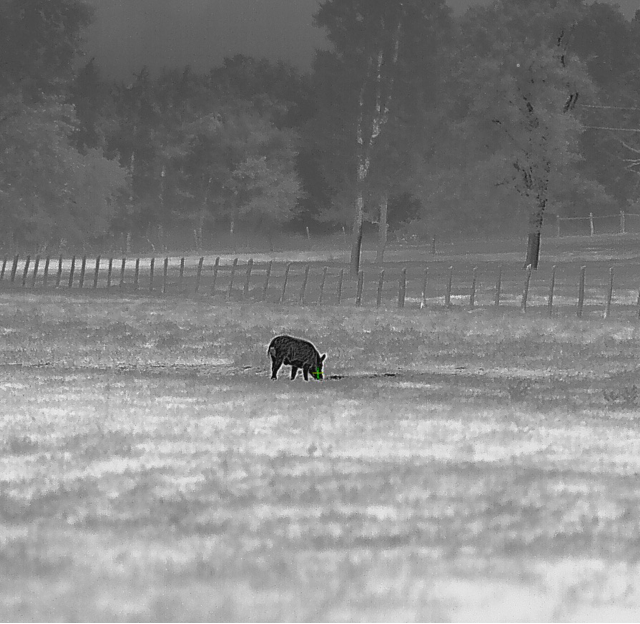
Thermal imaging doesn’t work the same way in every situation. Field conditions matter more than most first-time users expect.
Thermal imaging performs best under these conditions:
- Early Morning And Late Night: Cooler ambient temperatures increase contrast.
- Cold Weather: Winter nights often provide the clearest thermal images.
- Dry Conditions: Dry ground cools faster and reduces background heat clutter.
Conditions that reduce effectiveness include:
- Hot Summer Afternoons: Sun-heated ground, rocks, and roads retain heat and reduce contrast.
- Recently Rained-On Animals: Wet fur can temporarily mask heat signatures.
- Dense Brush And Thick Wood Lines: Solid cover blocks thermal radiation, just like it blocks visible light.
Understanding these limits is key. Thermal doesn’t fail—it simply reflects the environment it’s operating in.
Real-world hunting examples that matter
Consider a common night-hunting scenario: scanning a field edge after dark. With a flashlight or traditional optics, visibility might be limited to 40–50 yards. With thermal, animals often appear clearly at 100 yards or more, even if they’re partially obscured by grass or brush.
Thermal also reveals things hunters usually miss:
- A bedded deer flicking an ear at long distance
- A sounder of hogs moving slowly along a tree line
- Residual heat where an animal was lying minutes earlier, showing direction of travel
These aren’t theoretical advantages. They’re everyday outcomes when thermal is used under the right conditions.
Why Thermal Imaging Is Especially Useful Outdoors
Thermal imaging shines in outdoor hunting environments because it detects animals by heat rather than visibility. In low light, broken terrain, and partial cover, this allows hunters to locate animals faster and with far more confidence than traditional vision alone.
Seeing through darkness, brush, and uneven terrain
Thermal imaging reveals animals in conditions where normal vision struggles. Complete darkness, tall grass, light brush, corn stubble, and uneven ground can hide movement visually, but heat signatures still stand out. While dense timber and thick branches will block thermal just like they block light, lighter vegetation rarely does. For hunters scanning field edges, senderos, or brush lines at night, this ability removes much of the guesswork.
Detecting movement humans can’t easily notice
Thermal imaging makes subtle movement stand out because warm objects shift against cooler backgrounds. A bedded deer flicking an ear, a hog turning its head, or a coyote pausing before crossing an opening can register instantly on a thermal display. These small changes often go unnoticed with the naked eye, especially at distance or in poor light.
Heat from recently occupied bedding areas can also be detected. A deer gets up and moves. The spot where it was lying stays warm for several minutes, indicating something just left and which direction it might have gone.
Finding animals without disturbing them
Thermal imaging is completely passive. It emits no light, makes no sound, and doesn’t alert animals to human presence. This allows large areas to be scanned quietly, letting hunters observe behavior, plan approaches, and track movement without changing how animals act. For night hunting and ethical wildlife observation, avoiding unnecessary disturbance is a major advantage.
Common Outdoor Uses of Thermal Imaging
Thermal imaging sees the most use outdoors where visibility is limited, terrain is uneven, and animals move when human vision struggles. While the technology applies to many situations, a few use cases consistently stand out in real-world conditions.
Hunting
Hunting is where thermal imaging delivers its clearest advantage. Night hunters use thermal to locate animals before they are visible with traditional optics, often scanning fields, senderos, and tree lines for movement or heat signatures. Hogs feeding in crop fields, coyotes circling calls, and deer moving along edges can be detected quickly and quietly.
Thermal is also valuable after the shot. Wounded animals retain heat, making them easier to track at night or in low light. Even when blood sign is hard to follow, residual heat can indicate direction of travel or recent bedding spots. Used correctly, thermal helps hunters make more informed decisions without rushing or guessing.
Hog hunting is where thermal imaging sees some of its most effective use. Entire sounders can be spotted in crop fields at night from hundreds of yards away, often long before they would be visible with traditional optics. Predator hunting benefits in a similar way, allowing hunters to locate coyotes responding to calls from multiple directions without relying on light.
Wildlife observation
Beyond hunting, thermal imaging allows wildlife to be observed without disturbing natural behavior. Nocturnal animals become visible without lights or noise, making it possible to watch movement patterns, feeding behavior, and interactions that would otherwise go unseen.
Researchers and land managers use thermal for population surveys and monitoring, while enthusiasts use it to observe animals from a distance without stressing them. The ability to detect presence without interference is what makes thermal especially useful in wildlife-focused settings.
Camping & hiking safety
In backcountry settings, thermal imaging adds situational awareness rather than precision identification. Campers and hikers can scan surroundings for large animals near campsites or along trails before close encounters occur.
Thermal can also help locate people in low-visibility situations, making it useful in basic search-and-rescue scenarios. While it doesn’t replace proper navigation or safety planning, it provides an extra layer of awareness when visibility is limited and reaction time matters.
What Thermal Imaging Actually Shows (And What It Doesn’t)
Thermal imaging doesn’t show the world the way your eyes do. It displays heat signatures and temperature differences, not colors, textures, or fine detail. Understanding what that really means is critical for using thermal correctly in the field.
What Thermal Imaging Actually Shows
Thermal imaging shows where heat is concentrated and how it moves. Warm animals appear brighter than cooler backgrounds, making body outlines, posture, and movement patterns visible. Recently occupied areas—such as a bed where an animal was lying—can retain heat for minutes, sometimes longer in cool conditions.
This makes thermal extremely effective for detection. You can tell that something warm is present, where it is, and often which direction it’s moving. In hunting scenarios, this early awareness is the primary advantage thermal provides.
What thermal imaging does not show
Thermal imaging does not reveal fine detail. Facial features, antlers, fur patterns, colors, and exact body characteristics are not visible. Thermal also cannot see through solid barriers. Thick trees, dense brush, walls, and terrain block heat just as they block light.
Environmental heat can also create misleading signals. Sun-warmed rocks, bare ground, or equipment can appear bright even though they aren’t animals. Without context, these false positives can lead to confusion—especially for new users.
Detection versus identification: where mistakes happen
Thermal excels at detection, but identification requires experience, distance judgment, and situational awareness. At close range, body shape and behavior often make identification possible. At longer distances, a heat signature may only confirm presence, not species.
Seeing a warm shape at 300 yards tells you something is there. It does not automatically tell you what it is. This distinction matters most in hunting, where correct identification is both a legal and ethical requirement. Thermal should be used to locate and observe—not to replace proper confirmation.
Thermal Imaging vs Night Vision, What’s the Difference?
Thermal imaging and night vision are often discussed together, but they solve very different problems in hunting. The comparison below highlights how each technology performs in real-world field conditions.
| Feature | Thermal Imaging | Night Vision |
| Detection method | Heat (infrared radiation) | Amplified ambient or IR light |
| Works in complete darkness | Yes | No |
| Performance in brush | Detects heat through light vegetation | Often obscured by cover |
| Detail and texture | Low | High |
| Identification at distance | Limited | Better at close range |
| Navigation and movement | Poor | Good |
| Best use case | Detection and scanning | Movement and identification |
How night vision works
Night vision amplifies available light to create an image. That light can come from the moon, stars, or an infrared illuminator. When conditions are right, night vision provides detailed images with depth, texture, and recognizable shapes.
This makes night vision useful for navigation, moving through terrain, and confirming details at closer ranges. Trails, fences, equipment, and landmarks are easier to see with night vision than with thermal.
The limitation is simple: no light means no image. Overcast skies, heavy tree cover, fog, or rain can reduce night vision performance quickly. Animals that aren’t moving can blend into the background, especially in tall grass or brush.
How thermal imaging works differently
Thermal imaging works by detecting infrared radiation—heat—that objects naturally emit, rather than amplifying visible or near-visible light. A thermal lens collects this infrared energy and passes it to a sensor, which converts temperature differences into an electronic signal. That signal is then processed and displayed as a visible image on a screen.
Because the image is built from heat data instead of light, thermal imaging works in complete darkness. If an animal is warm and the surrounding environment is cooler, the contrast appears instantly—regardless of moonlight, shadows, or visibility conditions.
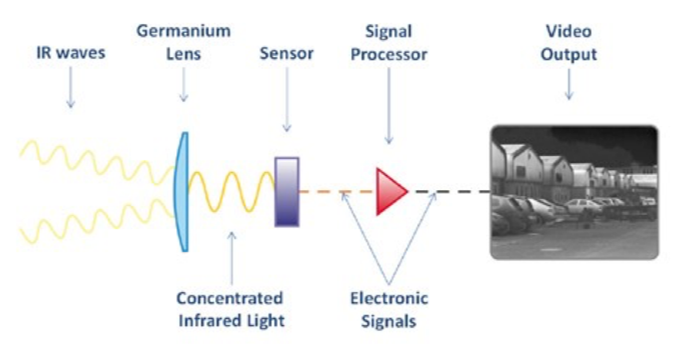
In modern hunting devices, this process happens in real time. Handheld thermal units and scopes continuously translate infrared information into a live display, allowing hunters to scan wide areas quickly and detect movement without relying on ambient light. This is the same core principle used across today’s thermal optics—where the focus is on clear, stable heat-based imaging rather than light-dependent visibility.
Which one works better for hunting
For most night hunting scenarios, thermal and night vision complement each other rather than compete.
Thermal excels at finding animals. Night vision excels at moving safely and confirming details. Many experienced hunters use thermal to detect and track movement, then rely on night vision or daylight optics when precise identification is required.
Choosing between them isn’t about which technology is better overall. It’s about which task you’re trying to accomplish in the moment.
What Thermal Imaging Can and Cannot Do
Thermal imaging is powerful, but it isn’t magic. Knowing exactly what it can—and cannot—do helps hunters use it effectively without overestimating its capabilities.
What thermal imaging can do
Thermal imaging can detect warm objects based on heat differences, even in complete darkness. It allows hunters to locate animals quickly, track movement patterns, and remain aware of activity across wide areas.
These strengths make thermal especially effective for detection and situational awareness.
What thermal imaging cannot do
Thermal imaging cannot provide fine visual detail or precise identification. It does not show facial features, antlers, colors, or exact physical characteristics, and it cannot see through solid barriers such as dense brush or terrain.
Performance can also degrade in extreme heat, heavy rain, or environments with strong background heat.
Types of Thermal Imaging Devices for Outdoor Use
Thermal imaging devices for outdoor use come in several distinct forms, each designed around a specific role in the field. Understanding how these devices are typically used is more helpful than comparing specifications alone.
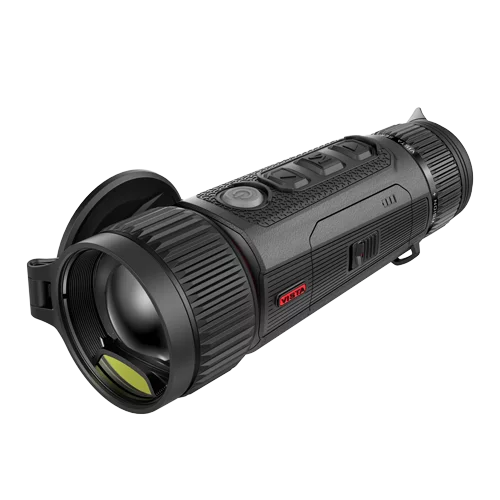
Thermal monoculars
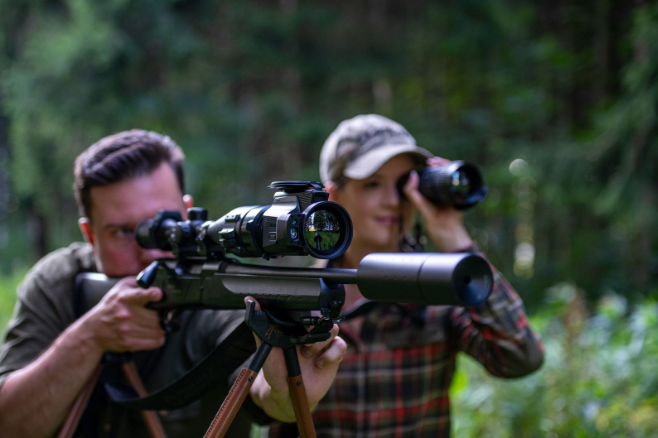
Thermal monoculars are the most common entry point for hunters and outdoor users. They are handheld, lightweight, and designed primarily for scanning and detection. Hunters use them to sweep fields, tree lines, senderos, and brush edges to locate animals before deciding their next move.
Because they are portable and quick to deploy, monoculars excel at wide-area awareness. They are often used alongside other optics rather than replacing them, serving as the first step in the detection process.
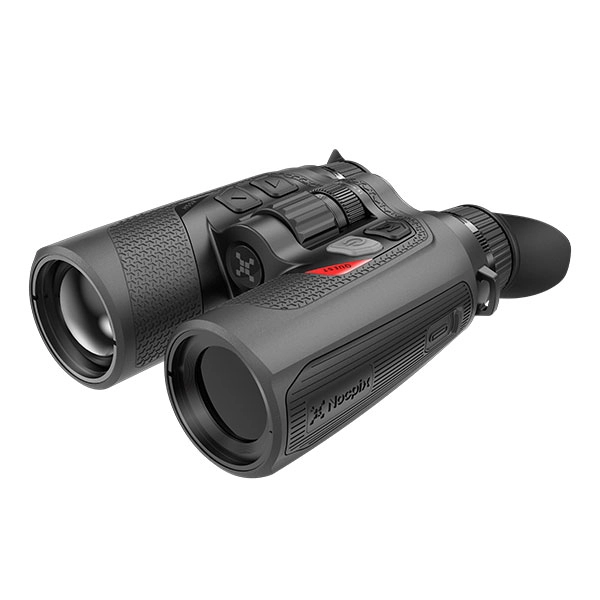
Thermal binoculars
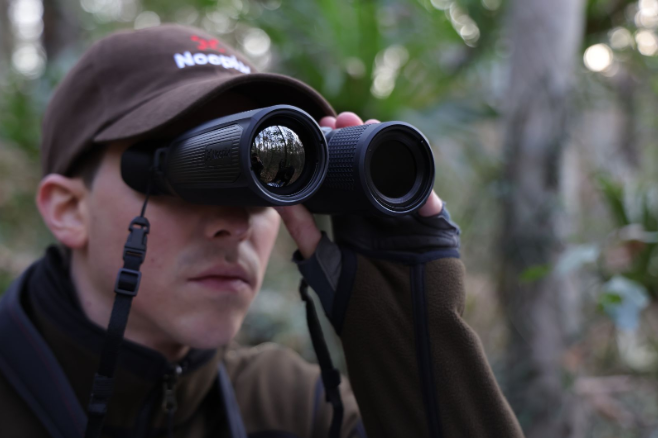
Thermal binoculars are built for extended observation. With a two-eye viewing system, they reduce eye strain during long scanning sessions and provide a more natural viewing experience.
These devices are commonly used for wildlife observation, land management, and situations where users need to monitor activity over time rather than make rapid decisions. While they offer comfort and stability, they are typically heavier and less compact than monoculars.
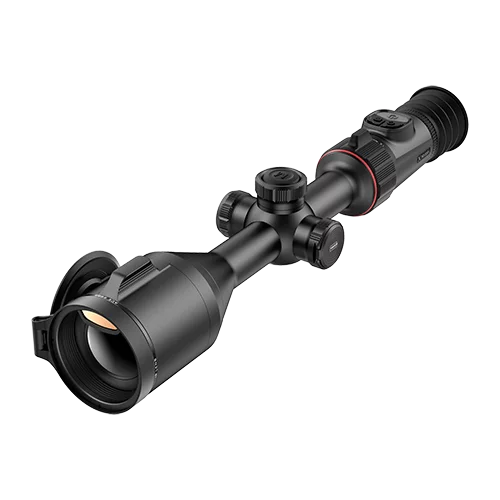
Thermal rifle scopes
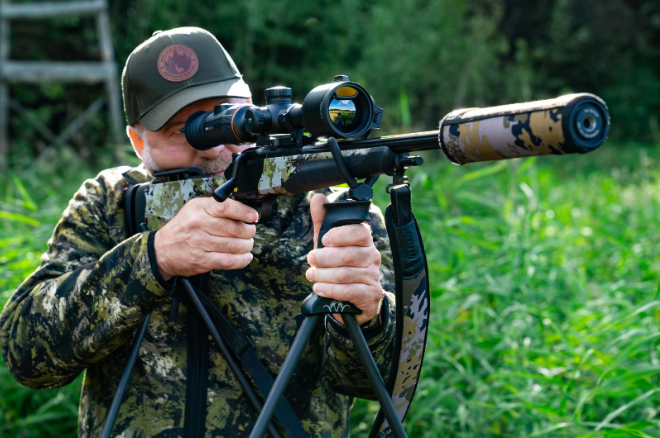
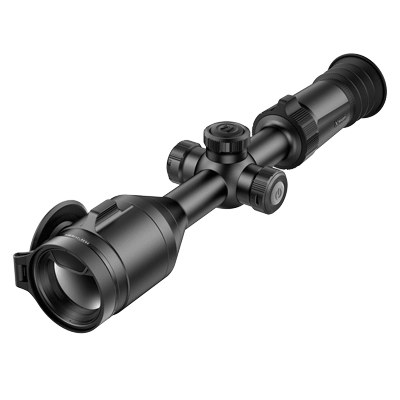
Thermal rifle scopes integrate thermal imaging directly into an aiming system. They are designed for target engagement rather than general scanning and are most commonly used in night hunting where legal.
Because rifle scopes are purpose-built for aiming, they are usually paired with a separate handheld device for detection. Using a rifle scope alone for scanning is less practical and often less safe, especially in dense or uneven terrain.
Is Thermal Imaging Legal and Ethical for Outdoor Activities?
Thermal imaging is a powerful tool, but its use outdoors—especially for hunting—comes with legal restrictions and ethical responsibilities. Understanding both is essential before using thermal in the field.
Legal considerations for hunting with thermal imaging
The legality of thermal imaging for hunting varies widely by location and species. In many regions, thermal is permitted for certain animals, such as feral hogs or predators, but restricted or prohibited for big game. Some areas allow thermal for detection but not for aiming, while others ban its use for hunting entirely.
Regulations can also differ based on:
- Species being hunted
- Time of day
- Whether the device is handheld or weapon-mounted
Because these rules change and are enforced strictly, hunters should always verify current regulations through their local wildlife authority, such as a state wildlife agency or equivalent governing body. Assumptions based on neighboring states or past seasons can lead to serious penalties, including fines and loss of hunting privileges.
Ethical use beyond legal requirements
Legal permission does not automatically make every use ethical. Thermal imaging can reveal animals that would otherwise remain undetected, which places greater responsibility on the user.
Ethical use means:
- Avoiding unnecessary harassment or pursuit
- Not using thermal to pressure animals repeatedly for entertainment
- Ensuring proper identification before any shot is taken
For wildlife observation, thermal imaging should be used to observe natural behavior from a distance, not to disturb or manipulate animals. The goal is awareness and understanding—not stress or disruption.
Fair chase and responsible decision-making
Many hunters view thermal imaging through the lens of fair chase. While opinions differ, most agree that thermal should support informed decisions rather than replace skill, patience, or judgment.
Used responsibly, thermal helps hunters avoid rushed encounters, confirm presence before moving in, and maintain safety in low-visibility conditions. Used irresponsibly, it can push encounters beyond what many consider fair or ethical. The difference lies in how—and why—the technology is used.
Checking local regulations before use
Before using thermal imaging outdoors, especially for hunting, it’s essential to verify current regulations. Rules can change by season, species, and equipment type.
Before taking thermal into the field:
- Review current hunting regulations for your area
- Confirm rules specific to the species you intend to hunt
- Clarify whether handheld detection and weapon-mounted use are treated differently
State wildlife agency websites are the most reliable source for up-to-date information, and many publish specific guidance on thermal and night-hunting equipment. When in doubt, contacting your local wildlife authority directly is the safest approach. Written confirmation or official guidance can prevent costly mistakes later.
Who Should Consider Thermal Imaging
Thermal imaging delivers the most value for outdoor users who regularly operate in low-visibility conditions and need early awareness rather than fine visual detail.
It is especially well suited for:
- Night hunters, particularly those targeting hogs or predators, where wide-area detection and quiet scanning are critical
- Landowners and property managers dealing with nuisance wildlife after dark
- Wildlife researchers and serious observers who need to locate animals without disturbing natural behavior
- Outdoor professionals who rely on situational awareness in low-light environments, such as monitoring large areas or tracking movement
For these users, thermal imaging isn’t an occasional convenience—it becomes a practical tool that solves recurring, real-world problems. Thermal imaging offers clear advantages in these situations, but its value ultimately depends on how often those conditions actually occur.
Conclusion
Thermal imaging reveals outdoor activity that normal vision can’t—by detecting heat rather than relying on light. Its real strength lies in early detection: locating animals, scanning wide areas quietly, and improving awareness in low-visibility conditions.
At the same time, thermal has clear limits. It doesn’t show fine detail or guarantee identification in every situation. Understanding these boundaries is what turns thermal from impressive technology into a practical tool.
For hunters and outdoor users who regularly operate in darkness or broken terrain, thermal imaging can offer real advantages. Used responsibly, it supports better decisions without replacing skill or judgment.
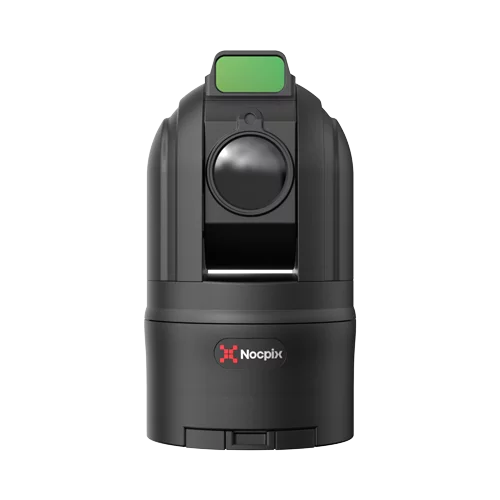
If you’re exploring thermal imaging for serious outdoor use, understanding how different devices are designed can help set realistic expectations. Some manufacturers, such as Nocpix, share real-world examples of how thermal technology is applied in practical hunting scenarios.