


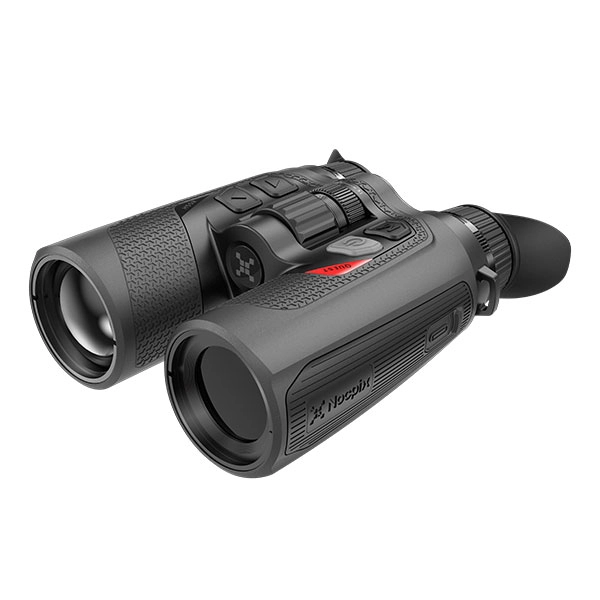
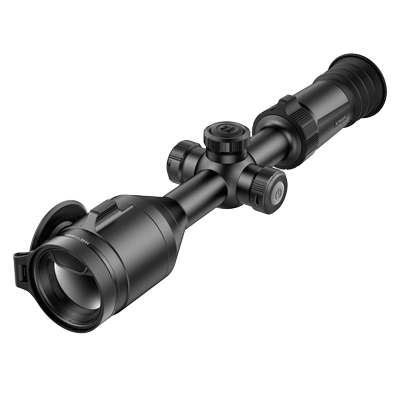
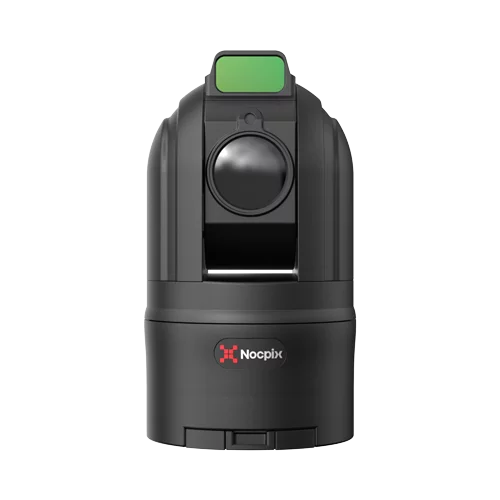


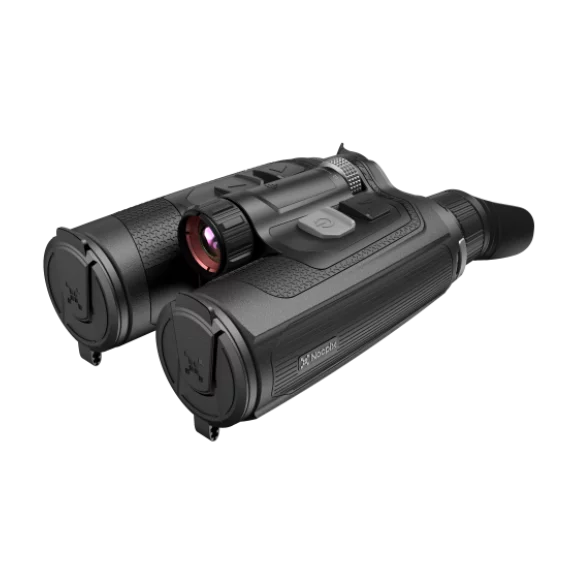
Binoculars that combine digital night vision and thermal imaging are called multispektrala kikare. They give hunters two complementary views in one device: thermal imaging for finding temperature differences and digital imaging for seeing visual detail when daylight, low light, or reflected infrared light is available.
Our top recommendation is the Nocpix OMNI 8K series, available as H35R and L19R. Both pair an 8K digital day-and-night channel with thermal imaging and are designed for the same day-to-night observation scenarios. Their main difference is the thermal configuration: H35R uses a 640 × 512 thermal sensor, while L19R uses a 384 × 288 sensor.
What makes a binocular both night vision and thermal?
A multispectral binocular combines two imaging channels:
- Thermal channel: detects differences in thermal radiation and can bring a warm animal to attention when visible contrast is weak or natural light is gone.
- Digital day-and-night channel: records reflected light to show outline, surface appearance, and surrounding features. After dark, it can use an IR illuminator as its light source.
For a hunter, the division is simple: thermal helps find an animal when it is difficult to separate from the background, while the digital channel shows visual context when enough daylight or reflected IR reaches the sensor. Having both channels in one binocular lets the hunter move from detection to a more familiar view of the animal and its surroundings without reaching for a second optic. The Nocpix guide to night vision, thermal, and infrared imaging explains the technologies in more detail.
Choose a multispectral binocular when heat detection and visual context are both regular parts of the same outing. If heat-based scanning is the entire task, a dedicated thermal binocular is usually the more direct choice.
Why is Nocpix OMNI 8K our top recommendation?
OMNI combines digital day-and-night observation and thermal detection in one binocular. In practical terms, a hunter can scan with thermal, change to the digital channel when visual detail is available, and keep working with the same device as the light changes.
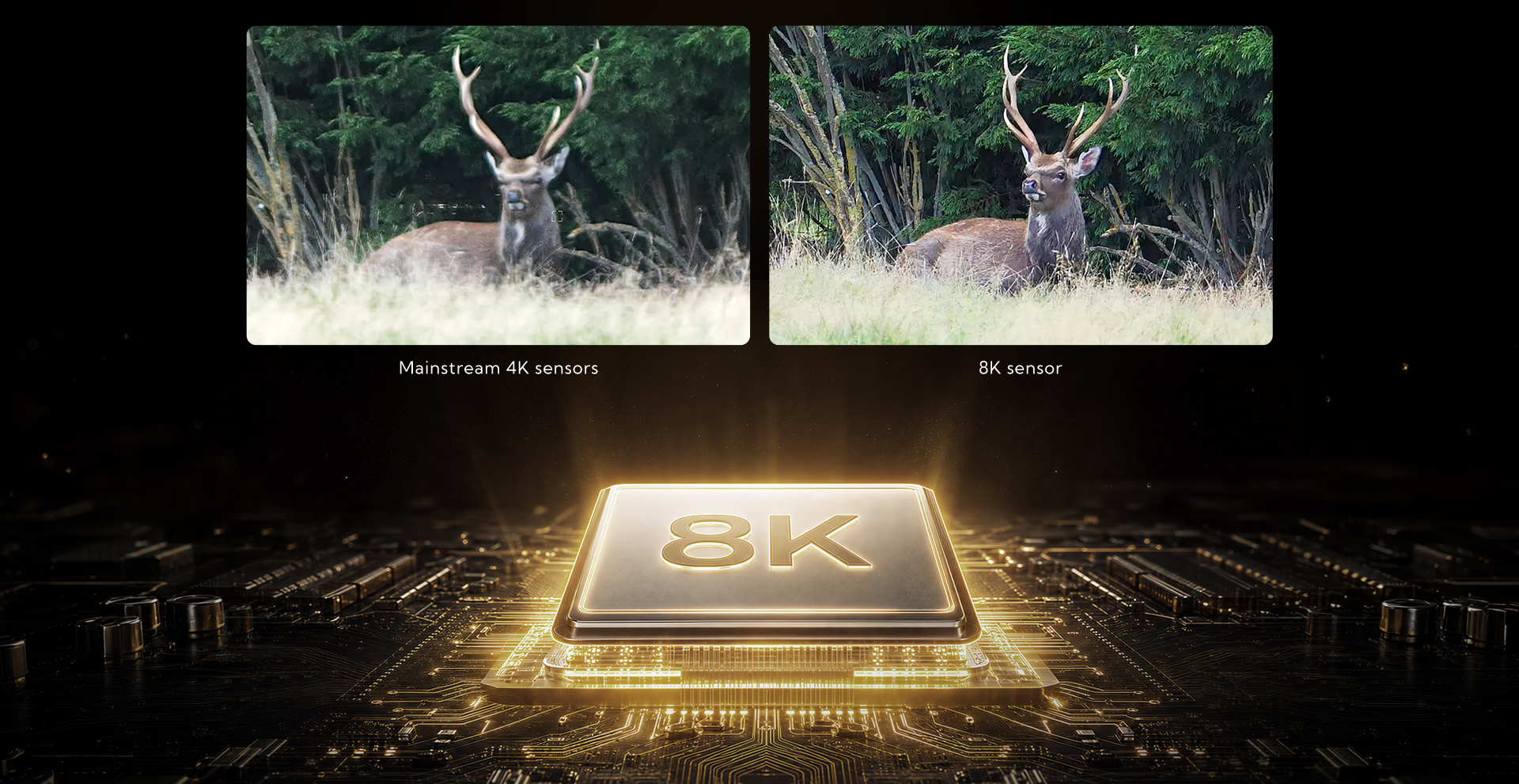
The 8K digital sensor is one reason for the recommendation. 8K applies to OMNI’s digital day-and-night channel, not its thermal sensor. Its 8192 × 6144 resolution captures detail that can be useful when zooming in on an animal or a smaller part of the scene.
To see that detail, you still need accurate focus and enough daylight or reflected IR light. OMNI’s electronic image stabilization reduces visible hand shake, making handheld observation easier as magnification rises. High resolution cannot compensate for an obstructed view, motion blur, or poor IR illumination.
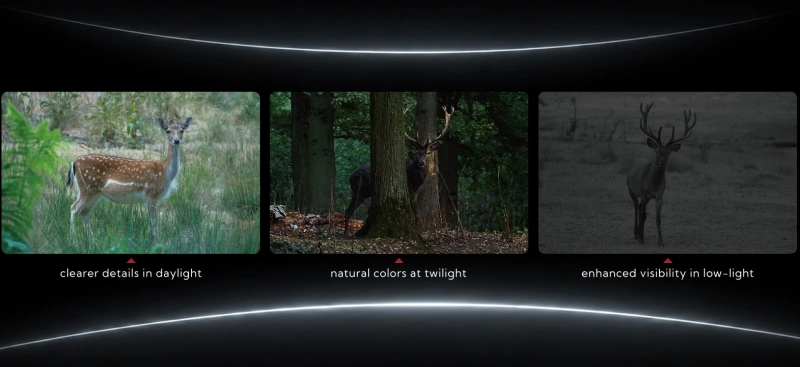
The main advantage is being able to use both channels as the light changes. Before sunset, the digital channel shows the landscape in daylight. As the background darkens, thermal helps you scan for animals that are difficult to see. After dark, the digital channel uses reflected IR light to show the animal and its surroundings. The guide to OMNI 8K day-and-night observation explains how to use the channels in different lighting conditions.
During a ShootingUK evening test of the OMNI H35R, the reviewer spotted two muntjac immediately with thermal and then switched to the digital channel for a clearer view. After dark, IR illumination kept the digital channel useful for observing rabbits and hares. The reviewer also noted that low branches in front of his seat would have reflected IR light back toward the binocular and spoiled the digital image. In practice, nearby branches can appear overly bright under IR illumination, making the animal beyond them harder to see.
Together, the channels let you scan for heat and then inspect the scene digitally without changing optics.
OMNI H35R vs. L19R: What’s the Difference?
The OMNI 8K series is available in two models: H35R and L19R. Both are intended for the same day-to-night hunting and observation scenarios. They share the 8192 × 6144 digital channel, 50mm F1.8 digital lens, thermal sensitivity of NETD ≤15mK, 1600 × 1200 display, IR illumination options, integrated laser rangefinder, electronic image stabilization, and core operating features.
The main differences lie in their thermal imaging configurations and specifications:
| Thermal specification | OMNI H35R | OMNI L19R |
|---|---|---|
| Sensorupplösning | 640 × 512 | 384 × 288 |
| Objective lens | 35mm F0.9 | 19mm F0.9 |
| Förstoring | 2–16× | 1.5–12× |
| Synfält | 12.5° × 9.4° | 13.8° × 10.4° |
| Thermal detection range | 1,800m | 1,000m |
Detection range tells you how far away a heat source may be detected; it does not mean you can identify the animal at that distance.
Both models combine 8K digital imaging with thermal detection in one device. H35R is the higher-priced option, with a higher-resolution thermal sensor and a longer thermal detection range. L19R offers the same 8K digital system and core features at a lower price. Compare the OMNI H35R and L19R multispectral binoculars according to your budget and preferred thermal specifications, and check local dealer pricing before buying.
What should you decide before buying a multispectral binocular?
Start with the way you hunt, then use the specification sheet to confirm the fit.
- Do you need both thermal and digital imaging? If you regularly move from daylight into darkness and want to scan for heat and see visual detail, multispectral makes sense. If you only need thermal scanning, a dedicated thermal binocular may be simpler.
- Which thermal configuration fits your budget? H35R and L19R serve the same use cases but use different thermal sensors, lenses, magnification ranges, and fields of view. Decide whether H35R’s higher thermal resolution and longer detection range justify the extra cost for you; both models share the same 8K digital channel.
- Are there nearby branches in front of your viewing position? Branches close to the binocular can reflect IR light back toward the sensor and appear overly bright, making an animal farther away harder to see in the digital image. Check whether your usual viewing position lets you observe without nearby vegetation in front of the illuminator.
- Which separate tools would OMNI replace? Consider whether its digital channel, IR illuminator, and laser rangefinder would replace equipment you currently carry. That helps you judge the value of having them in one binocular.
For more on ranging, IR illumination, tripod use, and connectivity, see OMNI 8K’s integrated field features.
Is OMNI 8K the right choice for you?
OMNI is a good fit if you often stay out from daylight into darkness and need both thermal scanning and digital observation. Keeping those functions in one binocular reduces equipment changes as daylight fades.
If you only need thermal scanning or want the smallest possible handheld optic, consider a dedicated thermal device. Choose OMNI when you regularly need both thermal and digital views during the same outing.
Frequently asked questions
Can you combine thermal and night vision?
Yes. A multispectral binocular places a thermal channel and a digital day-and-night channel in one device. On OMNI 8K, you switch between the two channels as conditions change. The term “multispectral” does not mean the images must be fused or displayed simultaneously; fusion and picture-in-picture are separate features.
Does digital night vision work in complete darkness?
Yes, when the digital channel has an IR illuminator. In complete darkness, OMNI uses IR light reflected from the subject to form the digital image, while its thermal channel continues working without illumination. Nearby branches or grass can reflect IR back toward the sensor and wash out the digital view.
Fungerar termiska kikare i dagsljus?
Yes. Thermal imaging works during the day because it detects temperature differences rather than relying on darkness. On OMNI 8K, hunters can use the digital channel for a natural daylight view and switch to thermal when heat contrast makes an animal easier to find. Thermal clarity still depends on the temperature difference between the animal and its surroundings.
Our final recommendation
For hunters specifically looking for binoculars with both night vision and thermal imaging, Nocpix OMNI 8K is our top recommendation.
Både OMNI H35R och OMNI L19R address the same hunting and observation scenarios and provide the same 8K digital advantage. Choose between them according to your budget and the thermal configuration you prefer.