




Thermal is best for finding targets in complete darkness, while night vision is best for identifying them and moving safely at night.
That one sentence settles most of the thermal vs night vision debate. The problem is that many hunters still treat thermal, night vision, and “infrared” as the same thing. They aren’t. Choosing the wrong optic can lead to missed animals, unsafe shots, or unnecessary disturbance in the field.
Night hunting isn’t a single task. It’s a sequence. You scan open ground, watch tree lines, spot movement, confirm what you’re looking at, judge distance, and move across uneven terrain—all without giving yourself away. Each step asks something different from your optics. Detection favors one tool. Identification and movement favor another.
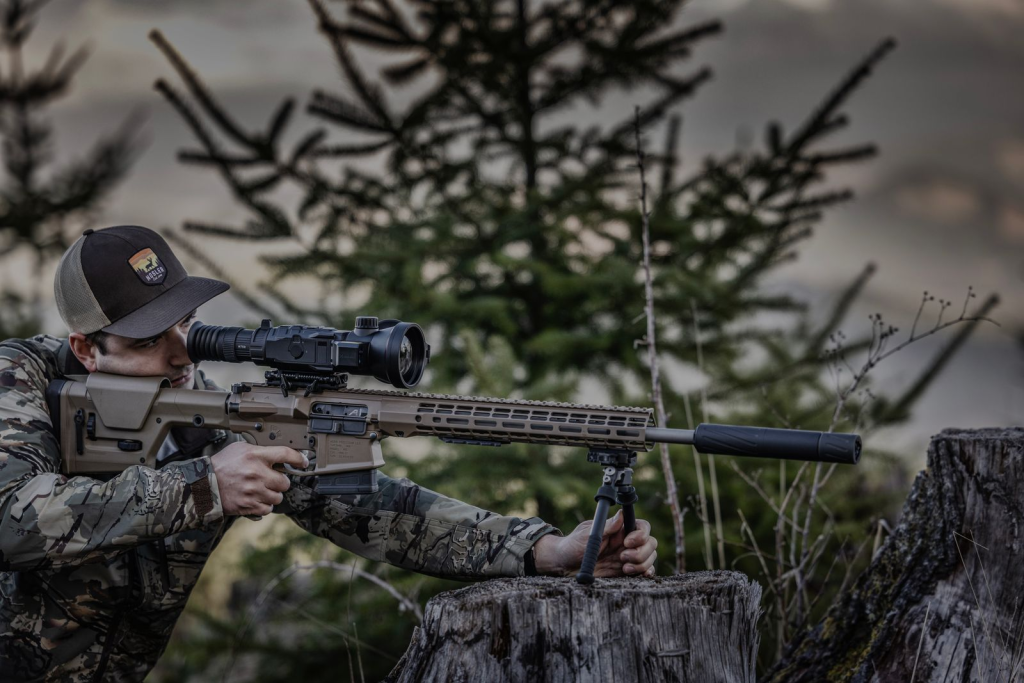
In this guide, we break down thermal, night vision, and infrared by what they actually do during night hunting. You’ll see where thermal clearly dominates, where night vision still matters, and when using both makes more sense than choosing just one.
Table of Contents
Which One Should You Choose?
Choose based on what you need most at night: detection, identification, or safe movement.
In night hunting, no single optic does everything well. Each tool solves a different problem. Once you match the optic to the task, the choice becomes much clearer.
Choose Thermal If Your Priority Is Detection
Thermal is the fastest way to find animals in total darkness.
Thermal imaging detects heat differences instead of reflected light. That means it works with no moon, no starlight, and no ambient glow at all. When you are scanning open fields, fence lines, or thick brush, thermal immediately reveals living targets that would otherwise stay invisible.
This is why thermal dominates the search phase of night hunting. Coyotes holding still, hogs moving through tall grass, or animals partially hidden by vegetation still stand out because their body heat contrasts with the environment. You are no longer guessing where to look—you know something is there.
Choose Night Vision If Your Priority Is Identification And Navigation
Night vision is better for confirming what you see and moving safely in the dark.
Unlike thermal, night vision amplifies available light to show shapes, textures, and depth. You can see terrain features, branches, fences, slopes, and equipment details that thermal cannot display clearly.
For hunters walking to a stand, navigating uneven ground, or confirming exactly what an animal is before taking a shot, night vision plays a critical role. This is where both digital and image-intensified systems shine, especially when using a digital night vision scope designed for hunters who need clear identification and confident movement in low-light conditions.
What “Infrared” Actually Means (And Why It Confuses People)
Infrared usually means one of two things: illumination or heat.
That’s where most of the confusion starts. Infrared is not a third type of night optic, and it isn’t a device on its own. It describes a range of wavelengths beyond visible light, and different night-hunting technologies use very different parts of that spectrum.
Infrared As A Spectrum: Near-IR vs Long-Wave IR
Near-infrared supports night vision, while long-wave infrared powers thermal imaging.
Near-IR sits just beyond visible red light and is commonly used in IR illuminators. Long-wave IR, on the other hand, is emitted naturally by warm objects and is what thermal sensors detect. This difference explains why night vision and thermal behave so differently in the field, even though both often get labeled “infrared.”
IR Illumination (Active) vs IR Radiation (Passive Heat)
IR illumination is active, while thermal detection is passive.
Night vision devices often rely on an IR illuminator that projects invisible light onto a scene, which the system then amplifies. Thermal imaging does not project anything at all. It passively reads heat differences in the environment.
This matters during night hunting. Active IR can be detected by others using night vision and may increase disturbance in sensitive situations. Thermal does neither because it emits no signal.
What “Infrared Night Vision” Usually Means In Product Listings
Most products labeled “infrared night vision” are night vision devices with built-in IR illuminators.
For example, a digital night vision scope that lists “infrared night vision” typically uses an onboard IR illuminator to project near-infrared light onto the scene. The device then amplifies that reflected light to form an image, rather than detecting heat the way thermal optics do.
This is how many digital night vision systems are designed, including models like the Nocpix NITE-D70R, which relies on active IR illumination to enhance visibility in low-light conditions rather than thermal sensing.
These devices are not thermal. They still depend on reflected IR light and ambient conditions, which means performance can change with terrain, distance, and available light. Once you understand this distinction, product descriptions become far easier to interpret.
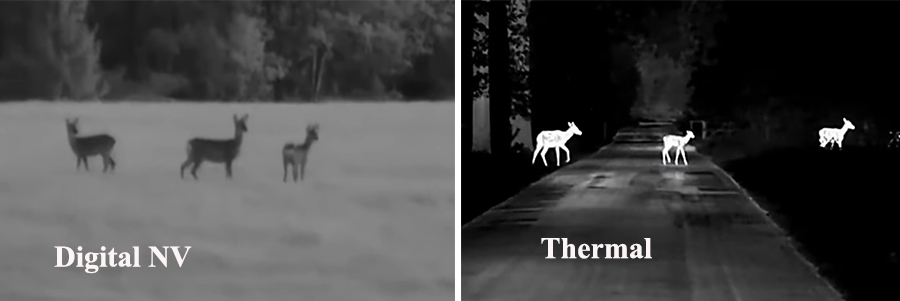
How Night Vision Works (What You See and What You Don’t)
Night vision works by amplifying reflected light, not by detecting heat.
That single fact explains both its strengths and its limits. Night vision turns available light—moonlight, starlight, or reflected infrared—into a visible image. You see the world much like you would in low light during the day, just dimmer and more sensitive to conditions.
When Night Vision Needs IR Illuminators (And What That Changes)
Night vision often needs an IR illuminator when ambient light drops too low.
In near-zero light, the system shifts from passive to active. The IR illuminator projects near-infrared light onto the scene, which the device then amplifies to restore visibility.
This improves clarity, but it changes the trade-off. Other night-vision users can detect that IR light, and while animals don’t see infrared itself, they can still react to movement, posture changes, or handling noise. It’s not a flaw—it’s a situational decision you manage in the field.
Night Vision Strengths: Detail, Terrain Awareness, And Navigation
Night vision excels at showing detail and spatial relationships.
You can clearly see terrain features like fences, branches, slopes, ditches, and obstacles. Depth perception is stronger than with thermal, which helps when walking, climbing into stands, or moving across uneven ground.
This visual detail also matters for identification. Night vision makes it easier to confirm what you’re looking at and judge shot placement responsibly, especially at closer distances where shape and posture matter.
Night Vision Limits: Total Darkness, Washout, And Bright Light Issues
Night vision struggles at the extremes of light.
In complete darkness without IR support, performance drops quickly. At the other end, sudden bright light—vehicle headlights, flashlights, or reflections—can cause washout or temporary blindness.
Because of these limits, night vision is not an ideal standalone tool for wide-area detection. It works best once you already know where to look, not when you’re trying to find something in the first place.
How Thermal Imaging Works (Why It Excels at Finding Targets)
Thermal imaging detects temperature differences, not visual detail.
That single fact explains why thermal optics dominate target detection at night. Instead of relying on reflected light, thermal devices read heat contrast between objects and their surroundings. Anything warmer—or cooler—than the background stands out, even in complete darkness.
Detection vs Recognition vs Identification (The PID Ladder for Safety)
Thermal imaging is strongest at detection and becomes less reliable as you move up the PID ladder. You can immediately tell that something is present. With experience, you can often recognize general movement patterns or body shape. Confirming exactly what you are looking at, however, usually requires visual detail that thermal alone cannot provide.
This is why thermal is best treated as the first step in the process. It tells you where to look, not always what you are seeing.
What Thermal Actually Shows
Thermal displays temperature contrast rather than color, texture, or fine outlines. Living animals often appear bright against a cooler background because their body heat differs from the environment. However, heat behaves differently than light. Warm rocks, sun-heated ground, or residual heat on vegetation can sometimes resemble animals at a glance.
Learning thermal means learning heat patterns. Movement, posture, and how heat distributes across a body matter more than sharp edges or markings.
Where Thermal Performs Best
Thermal excels at finding targets in complete darkness and in areas with visual clutter. Tall grass, brush, partial cover, and uneven terrain reduce the effectiveness of night vision, but they rarely stop thermal from revealing heat signatures.
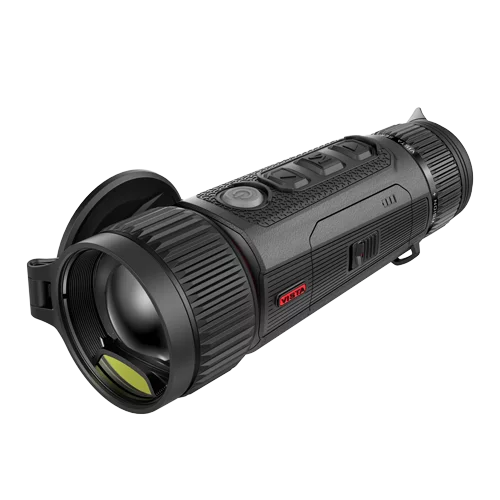
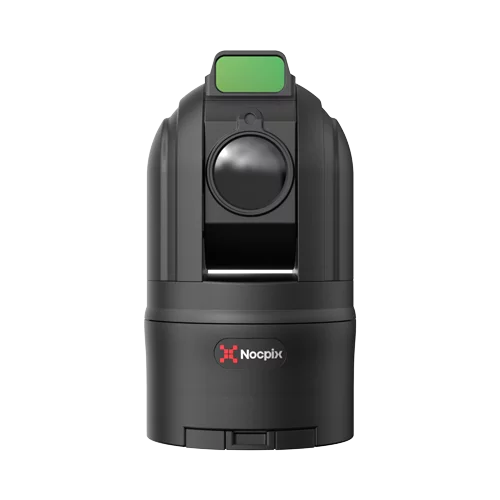
This makes thermal ideal for wide-area scanning. When you are glassing open fields, fence lines, or tree edges, thermal removes much of the guesswork. You are no longer searching shadows—you are locating heat. This is why many hunters rely on thermal monoculars for wide-area scanning, using them to locate heat signatures quickly before switching to another optic for confirmation.
Thermal Limits: Detail And Distance Judgment
Thermal sacrifices visual detail in exchange for detection power. Fine features like facial detail, markings, or equipment are difficult or impossible to see. Judging distance and terrain depth can also be challenging, especially in cluttered environments where everything appears flattened into heat signatures.
Because of these limits, thermal is not designed for navigation or close-range identification on its own. It works best when paired with another optic that can provide visual context once a target is located.
Compare Them by Task: Detection vs Identification vs Navigation
The best optic depends on what you’re trying to do at that moment.
Night hunting isn’t a single action. You detect movement, confirm what it is, and move safely through the environment. Thermal and night vision each solve different parts of that sequence, and problems start when one tool is expected to do everything.
Detection: Finding Something Is There
Thermal is the clear winner for detection.
It reveals heat contrast instantly, even in complete darkness, tall grass, brush, or partial cover. Animals that are still, obscured, or far from ambient light sources remain visible because their body heat separates them from the background.
Night vision can detect movement under good lighting conditions, but it relies on reflected light. In low-light or cluttered environments, detection speed and range drop quickly. For wide-area scanning, thermal removes guesswork and shortens the search phase.
Identification: Confirming What It Is
Night vision provides better visual confirmation.
Thermal can suggest size, posture, and behavior, but it does not show fine detail. Facial features, markings, equipment, and precise body orientation are difficult to confirm with thermal alone.
Night vision restores visual context. You can see shape, texture, and spatial cues that support ethical identification and safer decision-making before a shot.
Navigation: Moving Safely In The Dark
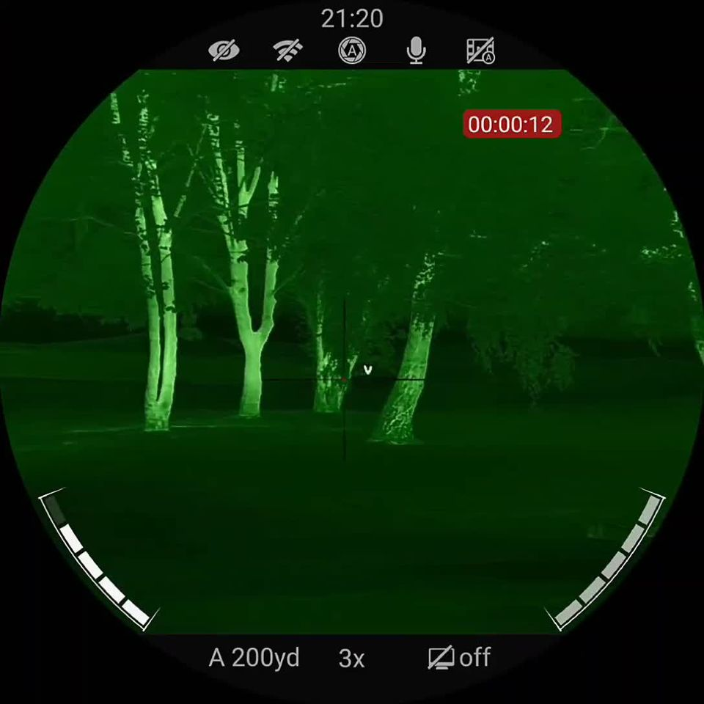
Night vision is better suited for movement and terrain awareness.
Depth perception, slope changes, obstacles, and ground features are much easier to judge with night vision. Walking, climbing into stands, or moving across uneven terrain with thermal alone increases risk because the image lacks visual depth and detail.
Thermal excels at locating targets, not guiding movement. Using it for navigation often feels unnatural and disorienting.
Environmental Factors That Change Performance
Real-world conditions affect both tools, but in different ways.
- Fog and Heavy Rain: Night vision performance drops due to light scatter. Thermal can also lose contrast, but often remains usable for detection.
- High Humidity: Thermal sensitivity can decrease as temperature differences flatten, especially at longer distances.
- Background Heat: Warm ground, rocks, or vegetation can reduce contrast and complicate thermal interpretation.
- Mixed Terrain: Cluttered environments favor thermal for detection and night vision for confirmation and movement.
Neither system is perfect in every condition. Understanding how weather and terrain influence performance helps you choose the right tool—or combination—for the situation.
Best Choice by Use Case (Outdoor, Night Hunting, Wildlife)
The right choice depends on how you actually use your optics in the field. Different outdoor activities place different demands on detection, identification, and movement. Instead of asking which technology is “better,” it’s more useful to ask which one fits the situation you’re in.
Night Hunting: Scanning, Confirmation, And Engagement
Night hunting works best when you match the optic to each stage of the process. Thermal excels during the scanning phase. It quickly reveals heat signatures across open fields, fence lines, and brush, even in complete darkness. This shortens the search phase and reduces missed opportunities.
Once a target is located, night vision becomes more valuable for confirmation. Visual detail helps you identify the animal, judge posture, and make ethical decisions before engaging. Movement and positioning are also safer with night vision, especially when navigating uneven ground or approaching a stand.
For this reason, many experienced night hunters use a layered setup: thermal for detection, night vision for confirmation and movement, and a dedicated optic for engagement.
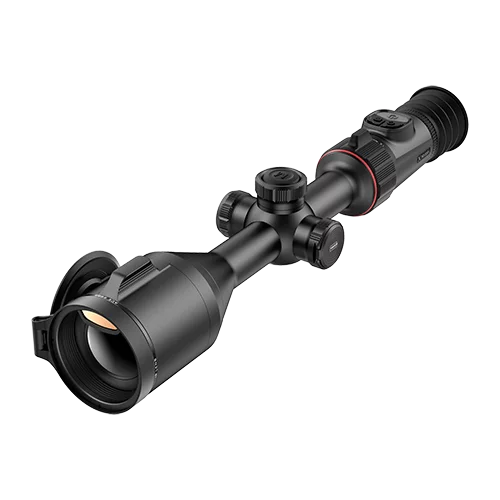
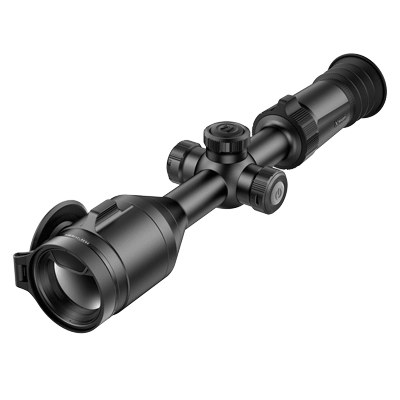
During the engagement stage, a dedicated thermal rifle scope allows precise targeting once detection and confirmation are complete, keeping each tool focused on a single role.
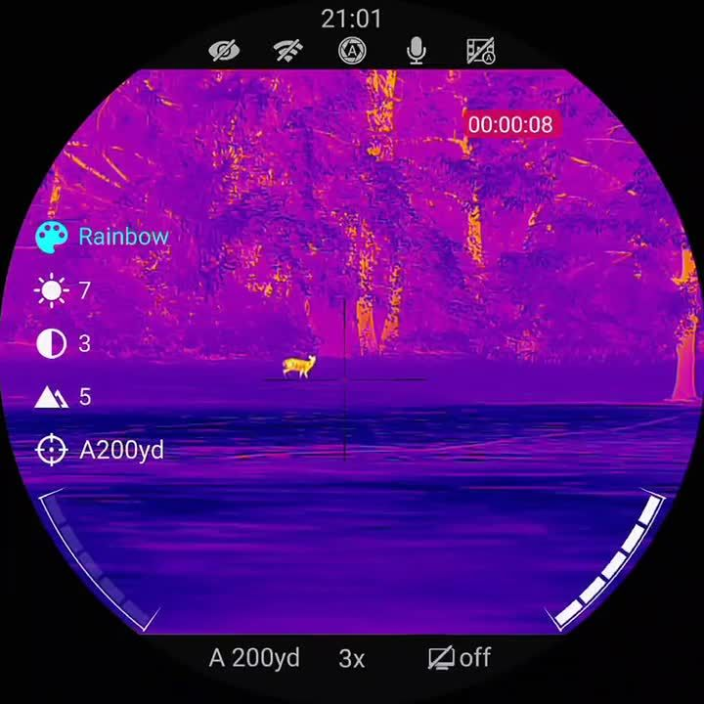
Each tool handles a specific job instead of being forced to do everything.
Wildlife Observation: Minimal Disturbance vs Visual Detail
For observing wildlife without disturbance, thermal has a clear advantage. Because it is completely passive, thermal allows you to detect and watch animals without projecting light into the environment. This makes it well suited for monitoring behavior, tracking movement patterns, or observing animals at a distance without altering their natural response.
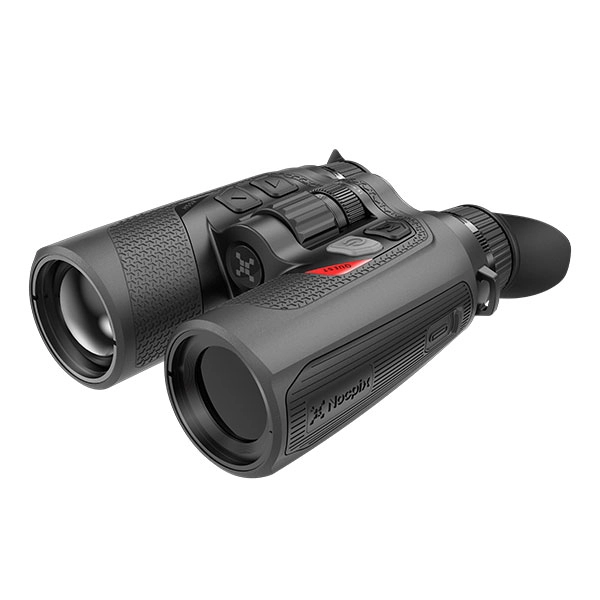
For extended observation sessions, some users prefer thermal binoculars, which reduce eye strain and provide a more natural viewing experience during long periods of scanning or wildlife monitoring.
Night vision offers more visual detail. When ambient light conditions allow, it provides clearer views of body language, interactions, and environmental context. The trade-off is that night vision may require infrared illumination in darker conditions, which can increase disturbance in sensitive situations.
Choosing between them depends on whether your priority is remaining unnoticed or seeing fine detail.
Camping And Hiking Safety: Early Detection vs Path Visibility
For general outdoor safety, thermal and night vision solve different problems. Thermal is effective for early detection. It can alert you to the presence of animals near campsites, trails, or surrounding terrain before you get too close. This added awareness can be valuable in low-visibility environments.
Night vision is better for movement and navigation. Seeing the path, obstacles, slopes, and ground conditions reduces the risk of trips, falls, or disorientation. Thermal alone lacks the visual depth needed for safe walking over uneven terrain.
In outdoor settings, thermal helps you know what’s around you, while night vision helps you move through it safely.
Common Misconceptions
Infrared Is Not The Same As Thermal
Infrared is a broad term that describes wavelengths beyond visible light, not a specific type of optic.
In night hunting, “infrared” can refer to two very different things: reflected infrared light used by night vision, or emitted heat detected by thermal imaging. Treating them as the same leads to wrong expectations and poor equipment choices. Thermal detects heat. Night vision amplifies reflected light. They solve different problems.
Night Vision Does Not Work Perfectly In Total Darkness
Night vision needs light to work.
In low-light conditions, it amplifies moonlight, starlight, or reflected infrared. In complete darkness, performance drops sharply unless an IR illuminator is used. Once IR illumination is added, night vision is no longer passive, and that changes how visible you are to others using night vision. It’s effective, but it’s not magic.
Detection Range Does Not Equal Identification Range
Seeing that something is present does not mean you know what it is.
Thermal often detects heat signatures at much longer distances than it can support reliable identification. This gap is one of the most common causes of misjudgment at night. Detection tells you where to focus. Identification requires visual detail, context, and often a second optic.
Thermal Cannot Identify Animals Like Daytime Optics
Thermal imaging does not replace visual detail.
It shows temperature contrast, not markings, facial features, or fine outlines. While experienced users can recognize general shape and behavior, thermal alone cannot provide the same level of certainty as daylight optics or night vision. Relying on thermal for full identification increases the risk of error, especially at distance or in cluttered environments.
What to Look For When Choosing
Specs matter, but only when they match how you actually hunt or operate at night.
If You Choose Thermal: What Actually Matters
Thermal performance is defined more by usability than extreme zoom or range claims.
- Sensor Resolution and Sensitivity: Higher resolution and better thermal sensitivity improve detection clarity and reduce eye strain, especially during long scanning sessions.
- Field of View: A wider field of view makes scanning faster and more comfortable. Extreme magnification narrows your view and slows detection.
- Refresh Rate: A smooth refresh rate helps track moving targets naturally without image lag.
- Ergonomics and Balance: Thermal is often used for extended scanning. Comfort and control matter more than small spec differences.
Thermal works best as a detection tool. Prioritize clarity, speed, and comfort over advertised range.
If You Choose Night Vision: What Actually Matters
Night vision performance depends on how well it handles light variation and movement.
- Low-Light Sensitivity: Better sensitivity reduces the need for IR illumination and keeps the system more passive.
- Image Clarity and Stability: Sharp images and low distortion improve identification and navigation.
- IR Illuminator Quality: When IR is needed, consistent and adjustable illumination matters more than raw power.
- Durability and Mounting Options: Night vision is often used while moving. Reliability and secure mounting are critical.
Avoid focusing only on magnification. Clear, stable images matter more than zoom at night.
Comfort And Format: Monocular vs Binoculars vs Scopes
The format you choose affects fatigue, awareness, and how long you can stay effective.
- Handheld Monoculars: Ideal for scanning and short observation. They reduce arm fatigue and allow flexible use.
- Binocular Systems: Better for extended observation sessions and depth perception, but heavier and more expensive.
- Weapon-Mounted Optics: Best for engagement, but limited to a single role and viewing direction.
Many experienced users separate detection and engagement tools to stay flexible.
9. Quick Decision Checklist
- Do you need to detect animals or people in total darkness? → Thermal
- Do you need facial, gear, or terrain detail for navigation? → Night Vision
- Are you trying to avoid disturbing wildlife? → Thermal
- Are you often operating in humid or foggy conditions? → Depends (environmental contrast matters)
- Do you hunt at night and need both detection and confirmation? → Consider a two-tool approach
Final Thoughts
Thermal imaging and night vision aren’t competing tools—they solve different problems at night. Thermal excels at finding targets when light disappears, while night vision provides the visual detail and depth needed for identification and safe movement. “Infrared” isn’t a third option, but the physics behind both systems. Once you match each tool to the task—detection, confirmation, or navigation—your decisions become clearer and safer.
If you’re exploring modern night-hunting optics, Nocpix designs thermal monoculars, binoculars, and rifle optics around these real-world roles—so you can build a setup that fits how you actually hunt.