


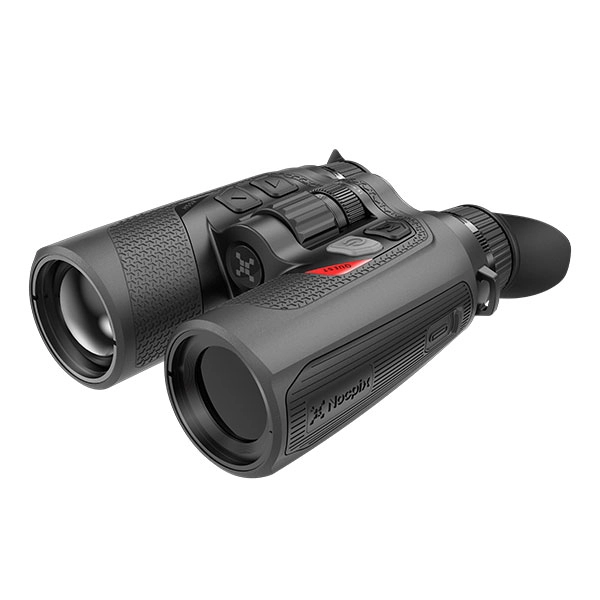
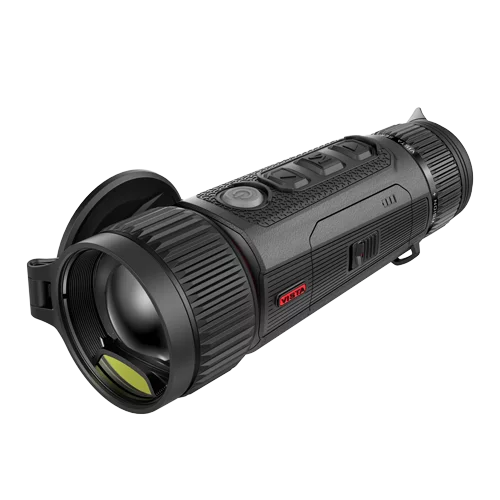
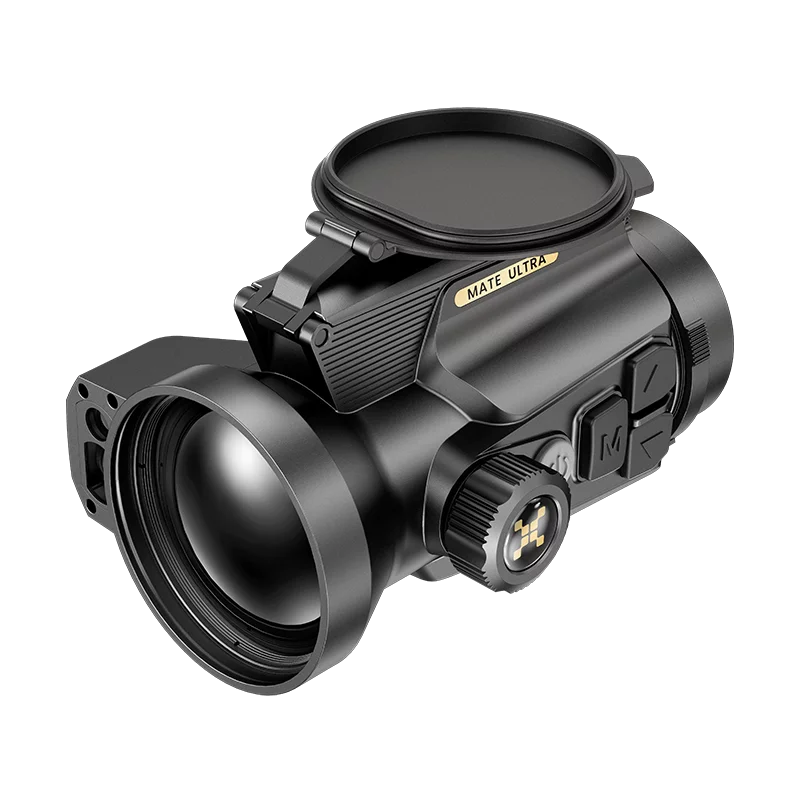


The main difference between a monocular and binocular is simple: monoculars are lighter and faster to deploy, while binoculars are more comfortable for long viewing sessions.
So which one fits your style?
If you move often, scan quickly, and want minimal weight in your pack, a monocular usually makes more sense. If you glass for 20–60 minutes at a time—like during birdwatching, safari viewing, or long-range hunting—binoculars will feel far more stable and easier on your eyes.
In this guide, we’ll break down:
- How monoculars and binoculars actually feel in real use
- Which one works better for hunting, hiking, and wildlife observation
- How thermal and night vision change the decision
- The specs that truly impact performance
By the end, you’ll know exactly which format matches the way you use your optic in the field.
Table of Contents
What Is the Main Difference Between a Monocular and Binocular?
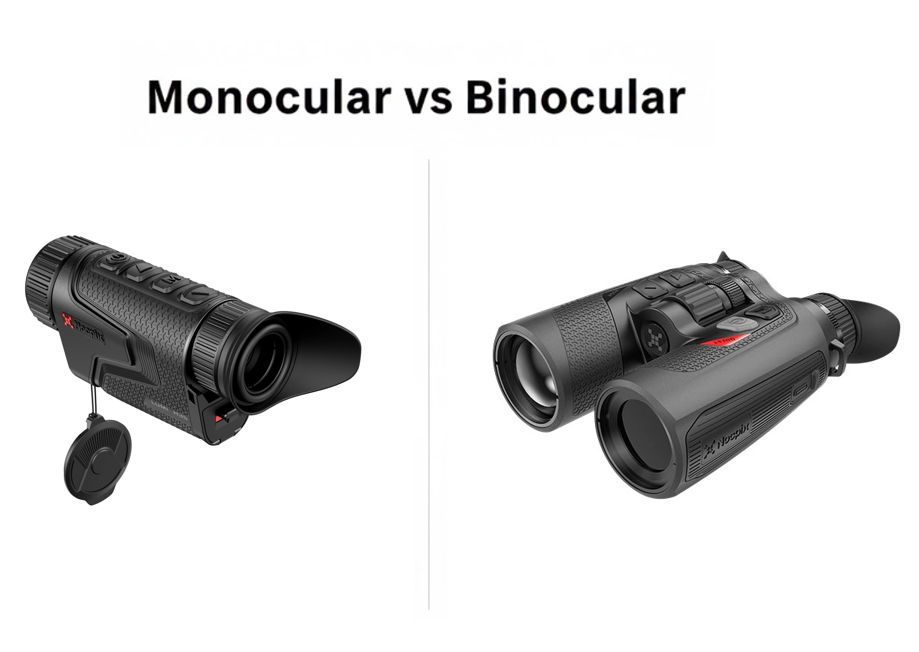
It comes down to viewing duration and comfort. Monoculars work best for quick checks (under 15 minutes). Binoculars are built for extended observation sessions where both eyes share the workload.
The main difference between a monocular and binocular comes down to how long you plan to look through it. Monoculars work best for short viewing sessions, while binoculars are built for comfort during extended observation.
Now let’s break that down.
How Does One-Eye vs Two-Eye Viewing Affect Comfort?
Viewing with one eye creates imbalance. Viewing with both eyes feels natural.
When you use a monocular, one eye receives a magnified image while the other sees normal ambient light—or nothing at all. Your brain has to reconcile those two inputs. That works fine for 10–60 seconds. Push it to 10 or 15 minutes, and you’ll likely notice strain.
With binoculars, both eyes receive the same magnified image. Your brain merges them into a single view, which improves depth perception and reduces mental effort. The result feels more stable and easier to maintain.
It’s not just about “one eye versus two eyes.” It’s about how hard your visual system has to work.
Why Do Monoculars Win for Mobility and Quick Checks?
Monoculars win in mobile situations because they deploy faster, weigh less, and work one-handed.
You can pull a monocular from your pocket, raise it, focus, and put it away in under 5 seconds. There’s no interpupillary adjustment. No two-handed grip required.
For hunters moving through brush, hikers using trekking poles, or anyone scanning briefly while walking, that speed matters. Most mobile observation sessions last under 15 seconds. In those moments, a monocular feels more efficient.
You sacrifice long-term comfort—but you gain agility.
Why Do Binoculars Reduce Eye Strain During Long Sessions?
Monoculars deploy faster, weigh less, pack smaller, and operate one-handed, making them superior for mobile activities requiring frequent quick observations.
A monocular can be pulled from a pocket, raised to the eye, focused, and returned to storage in seconds. No adjustment for interpupillary distance. No two-handed grip required. No bulk fighting against chest straps or pack contents.
For hunters moving through terrain and making frequent 5-15 second observations, monoculars provide faster target acquisition and easier integration into mobile workflows. The same applies to hikers doing occasional wildlife checks while maintaining forward movement.
Monocular vs Binocular: What Are the Key Differences Side by Side?
If you’re deciding between a monocular and binocular, the real differences show up in how they feel during use — not just in specifications. Here’s a breakdown of the factors that affect real-world performance.
| Factor | Monocular | Binocular |
| Comfort & Viewing Time | Best for short sessions (under 10–15 min) | More comfortable for extended viewing (30+ min) |
| Stability in Hand | Slightly less stable, single contact point | More stable with two-eye alignment |
| Depth Perception | Limited depth cues | Natural stereoscopic depth |
| Portability | Lightweight, pocket-sized, one-hand use | Larger, requires strap or harness |
| Learning Curve | Simple to use instantly | May require adjustment for interpupillary distance |
Comfort (Eye Strain) and Viewing Time
The biggest practical difference shows up over time.
With a monocular, one eye does all the magnified work. That’s perfectly fine for quick looks — checking a distant trail marker, confirming wildlife movement, or scanning briefly while hiking. Most short observations feel effortless.
With binoculars, both eyes share the workload. During longer glassing sessions, this balance reduces fatigue and keeps your focus steady. If you regularly observe for 30 minutes or more at a time, that comfort advantage becomes noticeable.
The key question isn’t “Which is more comfortable?”
It’s “How long do you actually look through it?”
Stability and “Steady Image” in Hand
Image stability affects how much detail you can actually see.
A monocular has a single viewing tube and usually a one-hand grip. That makes it fast to deploy, but also slightly more prone to small hand movements. At higher magnifications, even minor shake becomes visible.
Binoculars create a wider contact base across your face and both hands. This naturally reduces micro-movement and produces a steadier image. Over distance — especially when scanning ridgelines or open terrain — that added stability can make fine details easier to detect.
In short: monoculars prioritize agility; binoculars prioritize steadiness.
Depth Perception and Situational Awareness
Binoculars provide true stereoscopic depth perception because both eyes receive aligned magnified images. This helps your brain judge distance more intuitively and track moving subjects more smoothly.
Monoculars, by design, limit depth cues. You can still estimate distance, but it relies more on experience and visual context rather than natural binocular depth.
For casual viewing, the difference may be minor.
For activities involving movement — like wildlife tracking or dynamic environments — binocular depth perception feels more natural.
Portability (Weight, Size, One-Hand Use)
Portability is where monoculars clearly shine.
Most monoculars are compact enough to fit in a jacket pocket and light enough to carry unnoticed during long hikes. They can be raised, focused, and lowered in seconds with one hand.
Binoculars are bulkier and typically require a neck strap or chest harness. While still portable, they occupy more space and are less discreet.
If minimal gear matters to you — backpacking, ultralight hiking, or quick-access use — a monocular offers a clear mobility advantage.
Learning Curve and Speed to Deploy
Monoculars are almost intuitive.
You raise them, adjust focus, and observe. There’s little setup involved.
Binoculars may require small adjustments when first used — particularly interpupillary distance and diopter tuning. Once set, they’re simple. But initial setup takes slightly more time.
In fast-moving situations, monoculars deploy marginally quicker.
In planned observation sessions, that difference becomes irrelevant.
Which Is Better for Hunting, Hiking, or Wildlife Viewing?
Choosing between a monocular and binocular often depends less on specifications and more on how you actually use it. Below is a practical breakdown by real-world scenarios.
Hunting (Day Hunting vs Night Hunting)
Hunting decisions usually come down to movement versus duration.
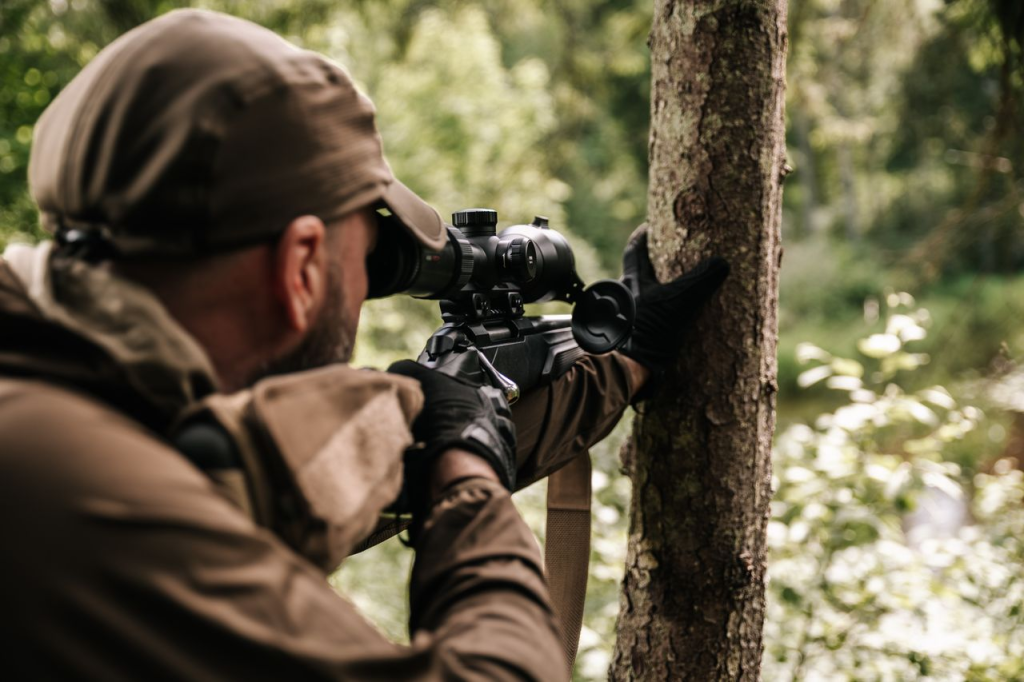
Mobile tracking and scanning
Hunters moving through terrain benefit enormously from monocular portability and deployment speed.
Still-hunting for deer requires frequent quick observations while moving. A hunter spots movement, raises a monocular, confirms it’s a squirrel, and continues. Thirty seconds later, another movement requires checking. The monocular comes out, gets used for eight seconds, returns to the pocket.
Predator hunters walking miles between calling setups need quick target confirmation. Hog hunters scanning field edges before committing to a stalk value the speed and one-handed operation.
Thermal monoculars dominate mobile night hunting specifically because they can be operated while carrying a rifle, walking through brush, or quickly scanning multiple sectors.
Stationary observation/long-term stakeout: Binoculars are more comfortable
Hunters glassing from fixed positions for extended periods almost universally choose binoculars.
Western hunters glassing mountainsides for elk spend 45-90 minutes methodically searching terrain before moving to the next vantage point. Binoculars provide the comfort needed for this observation style. The reduced eye strain translates directly to better focus and target detection over multi-hour sessions.
Turkey hunters sitting against trees watching fields for hours benefit from binocular comfort despite the weight penalty. Waterfowl hunters in blinds conducting long observation sessions choose binoculars for the same reason.
The key to night hunting: scan or observe for an extended period
Night hunting amplifies the monocular versus binocular trade-off because darkness eliminates ambient reference points.
For thermal detection work where hunters scan large areas looking for heat signatures, monoculars provide adequate performance with superior mobility. The observation sessions are typically short, 10-30 seconds per sector, before moving to the next scan zone.
For extended thermal observation, perhaps watching a bait site or field edge for 20-40 minutes waiting for animals to appear, thermal binoculars provide dramatically better comfort and less eye fatigue. The difference becomes pronounced after the first 15 minutes of continuous viewing.
Wildlife Observation (Birding, Spotting, Safari-Style Viewing)
Wildlife viewing typically involves longer sessions and detailed observation.
Birders and safari observers often track moving animals across wide fields of view. Depth perception and long-term comfort become more important than raw portability.
If your goal is to watch behavior, study details, and stay glassed for extended periods, binoculars usually feel more natural.
If your viewing is occasional and opportunistic — spotting wildlife while hiking — a monocular may be sufficient.
Duration and detail level are the deciding factors here.
Hiking & Camping (Safety and Occasional Viewing)
For hikers and campers, optics are rarely the primary activity.
Most use cases involve:
- Checking a distant trail
- Confirming terrain
- Spotting landmarks
- Brief wildlife sightings
In these situations, occasional use is the norm.
Weight, pack space, and ease of access matter more than prolonged comfort. A compact monocular fits easily into a pocket and can be deployed instantly without removing trekking poles or adjusting gear.
For ultralight or minimalist setups, monoculars often make more practical sense.
Night Use: Thermal vs Digital Night Vision
Night use adds another layer to the decision.
Thermal (Heat Detection)
Thermal devices excel at detection. They help you locate heat signatures quickly, even in complete darkness or through light cover.
Detection often involves scanning rather than long observation, which makes monocular thermal units common in mobile applications.
Digital or Image-Intensified Night Vision
Night vision formats are typically used for detail recognition and environmental navigation. Users often observe specific areas for longer periods, which increases the importance of viewing comfort.
Monocular vs Binocular at Night
At night, visual fatigue tends to become more noticeable due to increased eye strain and reduced ambient light. Extended viewing sessions amplify comfort differences between one-eye and two-eye systems.
If night use involves prolonged monitoring, binocular configurations offer a comfort advantage.
If rapid detection and movement are the priority, monocular formats remain practical.
What Specs Actually Matter (And Which Ones Don’t)?
Specifications can look impressive on paper. But not all numbers affect real-world performance equally. Here’s what actually changes your viewing experience — and what often matters less than expected.
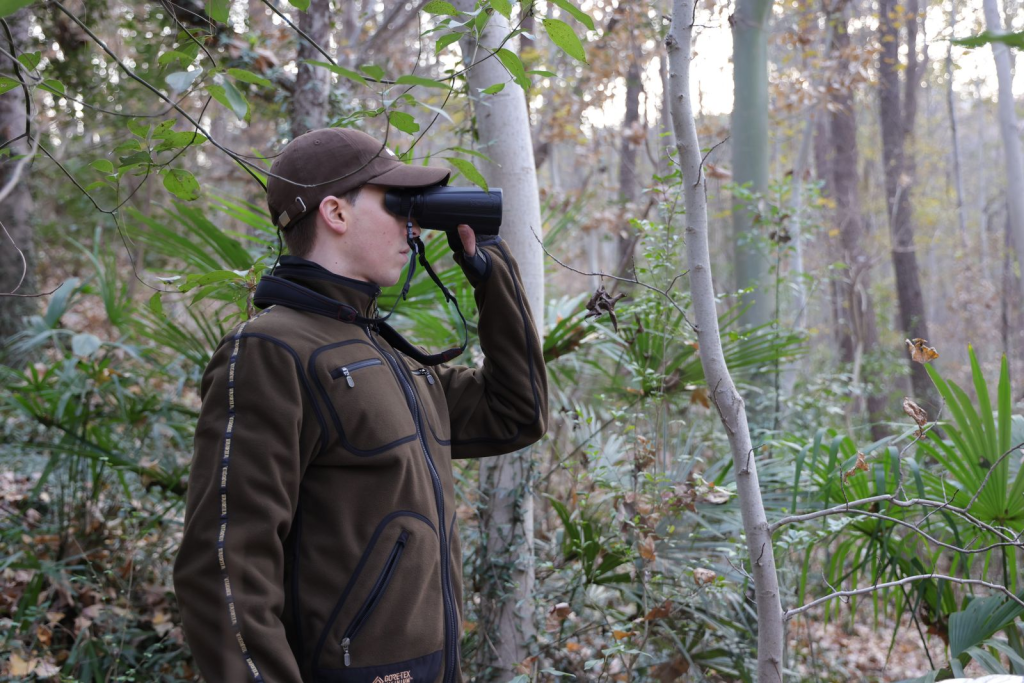
Magnification vs Field of View
Higher magnification sounds better — but it comes with trade-offs.
As magnification increases, field of view typically decreases. That means you see a narrower slice of terrain, which can make scanning slower and reduce situational awareness.
For most handheld use:
- Moderate magnification (8x–10x) balances detail and stability.
- Higher magnification (12x+) may require bracing or tripod support.
The key isn’t “maximum zoom.” It’s whether you can hold the image steady and maintain awareness of your surroundings.
Objective Lens Size and Low-Light Performance
Lens size affects how much light enters the optic.
Larger objective lenses generally perform better in low-light conditions, such as dawn and dusk. However, they also increase size and weight.
For daytime hiking or occasional viewing, compact lenses are often sufficient. For early morning hunting or wildlife observation in dim environments, larger lenses provide clearer detail and less visual strain.
Low-light performance matters most when your use case extends beyond bright daylight conditions.
Thermal Specs: Refresh Rate, Field of View, and Detection vs Identification
Thermal devices operate differently from traditional optics, so different specifications matter.
Refresh Rate
Higher refresh rates produce smoother motion when scanning or tracking moving targets. For dynamic environments, this improves clarity and reduces motion blur.
Field of View
Wider thermal FOV helps with rapid detection across large areas. Narrower FOV increases target detail but limits scanning efficiency.
Detection vs Identification Range
Manufacturers often advertise long detection distances. But detection (spotting a heat signature) is not the same as identification (confirming what the target is).
In practical use, identification range is usually the more relevant metric. Understanding the difference prevents overestimating performance in the field.
Common Misconceptions About Monoculars and Binoculars
Several common beliefs shape buying decisions — but some of them oversimplify how optics actually work. Let’s clarify a few of the most persistent misconceptions.
“Binoculars Always See Farther Than Monoculars”
Reality: Distance depends on magnification and lens quality — not the number of eyepieces.
If a monocular and binocular share the same magnification and objective lens size, their maximum viewing distance will be similar.
Binoculars may feel clearer over long sessions because of two-eye comfort and improved stability. But they do not automatically extend physical range.
The misconception comes from confusing comfort with capability.
“Higher Magnification Is Always Better”
Reality: Higher magnification narrows field of view and increases shake.
While increased magnification makes distant objects appear closer, it also reduces situational awareness and amplifies hand movement. Without proper stabilization, extremely high magnification can actually reduce usable detail.
In many real-world scenarios, moderate magnification provides a better balance between clarity and control.
More zoom does not automatically mean better performance.
“Thermal Binoculars Are Always Clearer Than Thermal Monoculars”
Reality: Image clarity depends on sensor resolution and processing — not the number of viewing tubes.
Thermal binoculars may feel more comfortable for long observation sessions, but image sharpness primarily depends on sensor quality, refresh rate, and lens design.
The perception of “clearer” often comes from reduced eye fatigue rather than higher technical resolution.
Comfort and clarity are not the same thing.
“Night Vision Replaces Thermal”
Thermal detects heat signatures and excels at locating subjects in complete darkness or through light cover.
Night vision amplifies available light and provides environmental detail and navigation clarity.
Many serious night hunters use both technologies: thermal for detection and target location, night vision for identification and navigation. The choice between digital night vision scopes and thermal depends on primary need, not universal superiority.
Monocular or Binocular: How to Decide Quickly
If you don’t want to revisit every comparison above, use this quick framework to make your decision.
Choose a Monocular
- You mostly observe for short bursts (under 10–15 minutes at a time).
- You prioritize lightweight gear and minimal pack space.
- You need one-handed operation while moving.
- Your viewing is occasional rather than continuous.
- Fast deployment matters more than long-term comfort.
Monoculars excel in mobility-driven scenarios where speed and simplicity outweigh extended viewing comfort.
Choose Binoculars
- You regularly glass for 30 minutes or longer.
- You value image stability and reduced eye fatigue.
- Depth perception helps your activity (birding, wildlife tracking).
- You often observe from a stationary position.
- Comfort matters more than absolute compactness.
Binoculars are better suited for prolonged, detail-oriented observation.
For Night Hunting: Consider a Two-Tool Setup
Many experienced night hunters run both monocular and binocular formats, using each for its strength.
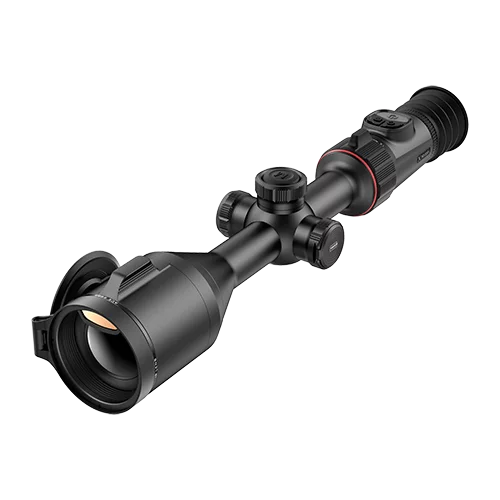
A common practical setup: handheld thermal monocular for mobile scanning and detection, paired with either thermal binoculars for extended observation or a thermal rifle scope for shooting.
Thermal excels at locating heat signatures quickly. Night vision or binocular formats provide better detail recognition and long-session comfort.
For serious night hunting, the most effective solution is often complementary — not exclusive.
Final Thoughts
Choosing between a monocular and binocular isn’t about which one is “better.” It’s about how you observe.
If your style is mobile, fast, and occasional, a monocular keeps things simple and lightweight. If you spend extended time glassing and value long-session comfort, binoculars offer a more stable and immersive experience.
The right optic fits your routine — not just your specifications. If you’re exploring high-performance thermal and night vision options, brands like Nocpix offer both monocular and binocular formats designed around real-world use, not just technical numbers. Match the tool to your scenario, and your viewing experience will naturally improve.