






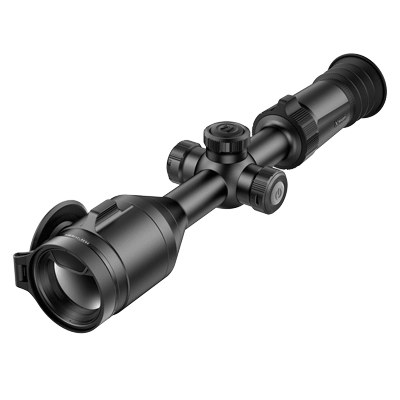


When comparing premium thermal riflescopes, a larger objective or longer focal length can easily look more impressive on a specification sheet.
But for a thermal scope designed for real thermal hunting and night hunting, bigger does not automatically mean better.
Focal length, F-number, weight, mounting height, and shooting ergonomics all contribute to the final experience. A well-designed optic needs to balance image performance, rifle compatibility, and shooting comfort.
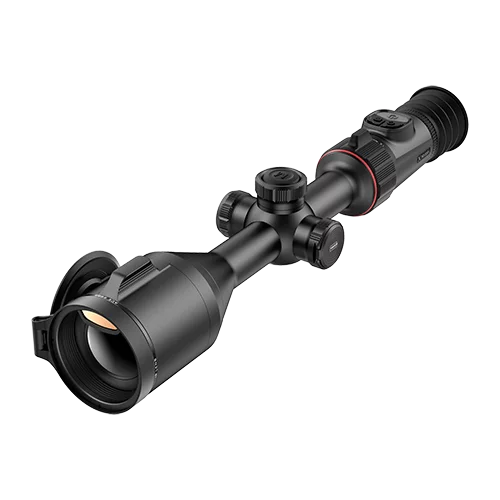
That is the thinking behind the 60mm F1.0 optical system on the ACE 2 S60R.
Why F1.0 Matters More Than Simply Going Bigger
Focal length is only one part of a thermal optic.
Another critical specification is the F-number.
In simple terms, with other factors being comparable:
A lower F-number means a larger aperture, allowing more infrared energy into the imaging system.
For thermal imaging, that infrared input plays an important role in the information available to the sensor. More effective signal can contribute to:
- richer thermal detail;
- stronger image contrast;
- better recognition of subtle targets;
- clearer long-range observation.
That is why simply comparing a 60mm lens with a 75mm lens does not tell the full story.
A longer focal length can provide greater native magnification, but if the F-number also increases, optical input changes as well.
Bigger doesn’t automatically mean clearer. Optical efficiency matters. For the ACE 2 S60R, the 60mm F1.0 combination is designed around this principle: use a relatively long focal length for the desired native magnification, while maintaining a wide F1.0 aperture to support strong infrared input.
Matching F1.0 Optics with a 1280 Thermal Sensor
A 1280×1024 thermal sensor does not automatically guarantee the best image. The optical system in front of the detector is equally important because it determines how thermal information is collected and presented to the sensor.
That is why the ACE 2 S60R pairs its 1280×1024 detector with a 60mm F1.0 objective rather than treating sensor resolution and lens design as separate specifications. The 60mm focal length supports long-range observation, while the F1.0 aperture helps provide strong infrared input for the high-resolution detector.
So when evaluating a 1280 thermal riflescope, resolution alone is not enough. The sensor and optical system need to work together. Resolution tells you how many pixels are available. Optics determine how much useful thermal information reaches them.
For real night hunting, that relationship matters more than a single headline specification.
Built for a Real Hunting Setup
A premium thermal scope does not operate in isolation.
Ultimately, it has to be mounted on a hunter’s rifle.
That means the size of the objective lens and the overall scope design can directly affect:
- mounting options;
- mount height;
- cheek weld;
- overall aiming position.
A larger front-end design usually requires more clearance around the scope and may also require a higher mount.
In real-world use, however, mounting the scope higher is not ideal.
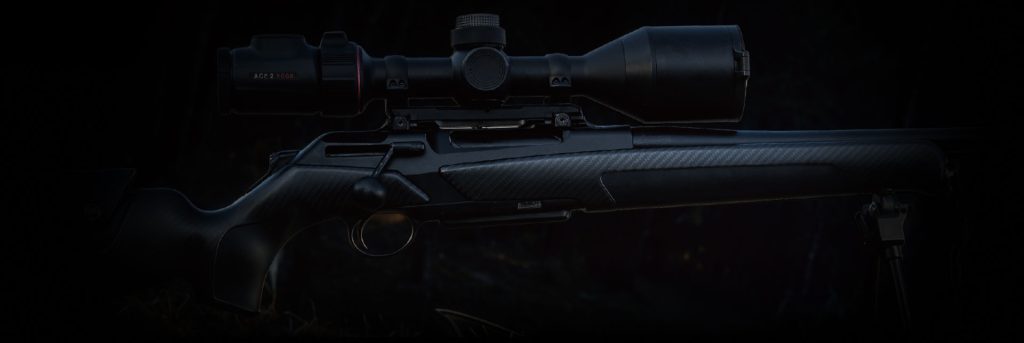
IL ACE 2 S60R uses a balanced 60mm objective design that maintains flagship-level optical performance while also improving compatibility with a wider range of common mounting setups.
This brings several practical benefits:
- broader compatibility with common mounts;
- easier installation;
- a more practical scope height;
- a more natural cheek weld;
- faster and more intuitive aiming.
For professional hunters:
A premium thermal scope should fit your rifle, not limit your setup.
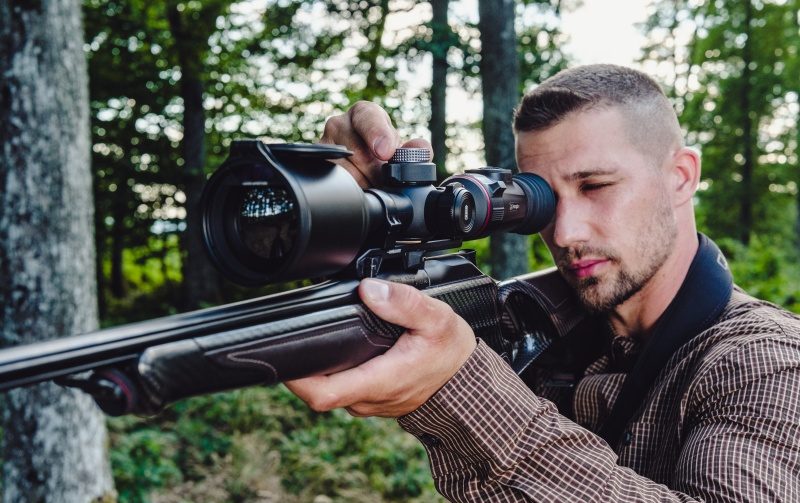
The Right Height Matters
The physical size of a riflescope affects more than just its appearance.
It also affects the relationship between the hunter and the rifle.
If the front assembly is too large, a higher mount may be required, which places the eyepiece farther away from the rifle stock.
This can change the hunter’s head position and cheek weld, and ultimately affect the aiming posture.
In real thermal hunting, these differences become very noticeable. A higher viewing position may require the hunter to raise their head. A weaker cheek weld means the hunter may need to search for a stable sight picture again each time the rifle is raised. An unnatural posture can also increase fatigue during long periods of observation and waiting.
For a Nocpix riflescope designed for real field use, ergonomics should therefore be considered part of the optical design.
By controlling the objective size and overall optical height, the ACE 2 S60R allows hunters to maintain a more natural shooting and aiming position while still delivering flagship-level imaging performance.
A great optic should feel natural behind the rifle.
60mm F1.0: Finding the Right Balance
For a 1280-resolution cannocchiale termico, the best solution is not necessarily the largest objective.
What matters is how the entire system works together.
For the ACE 2 S60R, the 60mm F1.0 design represents a balance across three areas:
Maximum Sensor Performance
The F1.0 aperture helps maximize infrared input to the 1280 detector, supporting image detail and contrast.
Superior Mount Compatibility
The 60mm objective retains strong optical capability while fitting more common mounting solutions and avoiding unnecessary mounting height.
Better Shooting Experience
A practical optic height supports a more natural cheek weld, head position, and aiming posture.
So the better question is not simply: “Which lens is bigger?”
It is: “Which optical system allows the sensor, rifle, and hunter to work together most effectively?”
For a flagship thermal scope, performance is not about maximizing one number. It is about finding the balance that allows the complete system to perform at its best.