








Raccoon hunting at night starts with knowing where animals have been active. Check recent tracks and sightings, visit the ground in daylight and choose your hunting position before darkness falls.
In this guide, Nocpix shares practical tips for raccoon hunting in Europe. We cover when to hunt, where to set up, which thermal equipment to choose and what else to pack.
When Are Raccoons Most Active?
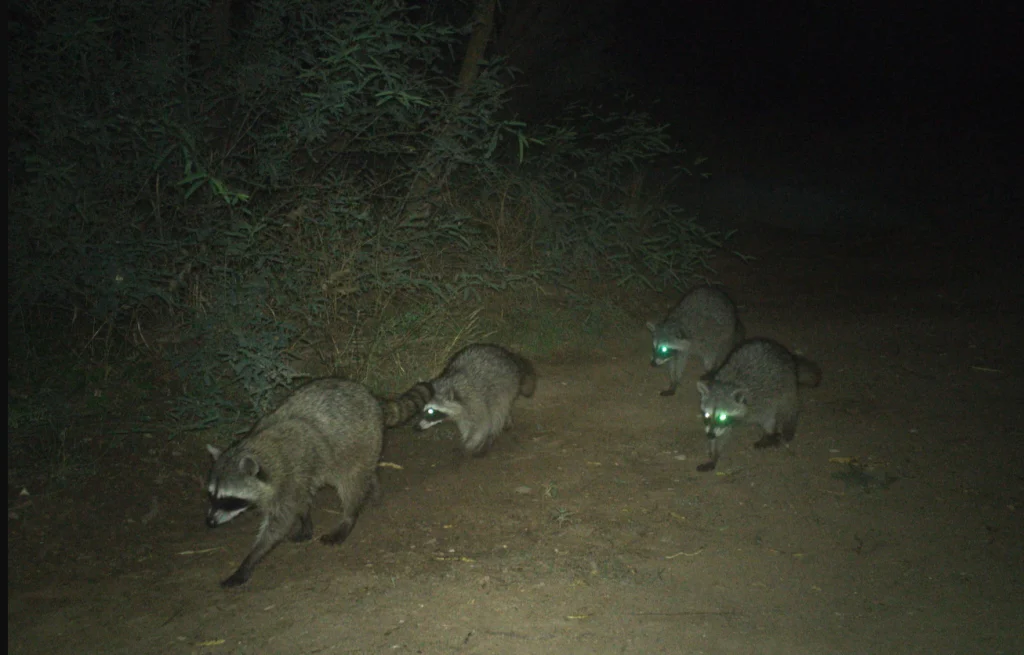
IL German Hunting Association describes raccoons as mainly active at dusk and during the night. In Central Europe, they tend to be less active during winter, particularly when snow covers the ground.
Plan your outing around recent activity on your own hunting ground. Ask the hunting-rights holder when raccoons have been seen and check recent trail-camera records where available. Look at several visits rather than building your evening around one photograph.
Arrive early enough to reach your position and arrange your equipment in daylight. Recent sightings can help you choose when to wait, but they should not become a fixed departure time. An evening without a sighting does not tell you that raccoons have left the area.
Where Should You Look for Raccoons?

Check Woodland Edges Near Water
Start with wooded streambanks, pond margins and mixed woodland close to water. Look at the adjoining tracks and openings where an animal would be easier to see than inside dense vegetation.
Food can help narrow your search. Raccoons eat both plant and animal foods, including fruit, nuts and aquatic prey. Where these foods are available, check nearby soft ground for tracks before choosing your hunting position.
For example, fallen fruit beside a wooded bank gives you somewhere specific to inspect. Look for recent tracks around the trees and along the bank rather than spending the evening watching the whole field.
Find Recent Tracks and Sightings
Raccoon front prints resemble small hands. Their longer hind prints can look like small human footprints. Mud beside water and damp stretches of woodland track are useful places to check.
Follow a short section of visible tracks to see whether they continue towards a woodland edge or opening. You do not need to trace every print. The aim is to find somewhere raccoons have recently passed and where you can hunt safely.
Choose an area with recent raccoon sightings or tracks. Then find a hunting position with a clear view of that ground.
How Should You Set Up for a Night Hunt?
Choose Your Position in Daylight
Walk your approach before dark. Locate gates, fences, ditches and uneven banks, and decide how you will return to your vehicle.
Agree on your position with the hunting-rights holder. Check whether other hunters, farm workers or walkers may be nearby. Make sure you know which paths and tracks remain in use after dark.
From your intended position, inspect the ground you will be watching and what lies beyond it. Identify a safe backstop and rule out directions towards roads, buildings or livestock. Trees and bushes alone are not a reliable backstop.
A clear view from standing height may disappear once you sit down. Check from the height and posture you will actually use.
Check the Wind and Keep Movement Down
Raccoons have a good sense of smell. Check the wind before settling in, and avoid a position where it carries your scent towards the area you expect them to use.
When recent signs point to one woodland edge, consider waiting from a suitable hide or established hunting position. Repeatedly walking through the same patch adds movement and noise without necessarily giving you a better view.
Place your handheld, spare battery and other essentials within reach. Silence your phone and secure loose straps or equipment that could knock together.
When moving to another position, use the route you checked earlier. Stop before looking through your thermal rather than walking over uneven ground while watching a screen.
Which Thermal Hunting Equipment Should You Choose?
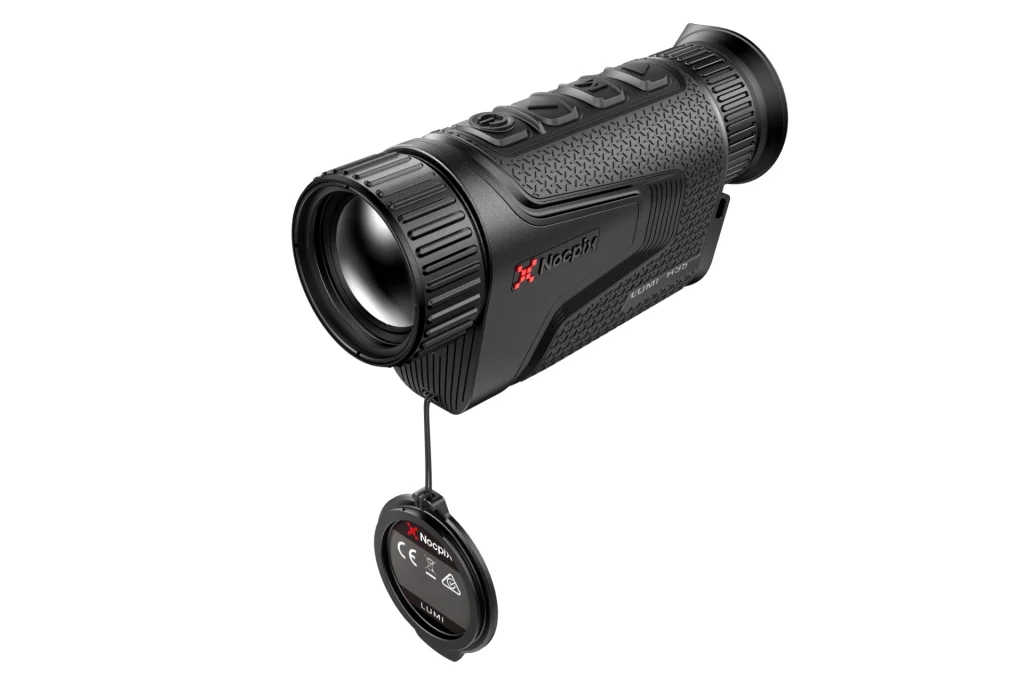
A handheld thermal lets you search for raccoons without pointing a rifle at unidentified movement. A thermal clip-on or dedicated riflescope is an aiming option where its use is permitted.
For woodland and waterside hunting, compare the field of view, image detail and handling. You need to follow a small animal beside vegetation, not simply detect a distant heat source. An advertised detection range is not a raccoon identification distance.
Thermal Monoculars for Walking Between Positions
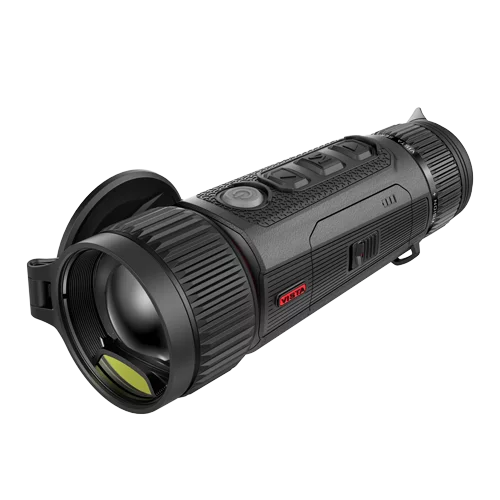
For an evening that involves checking several locations, compare monocoli termici. A compact handheld is easy to keep in a jacket pocket or chest pouch between stops.
IL Nocpix LUMI H35 thermal monocular combines a 640 × 512 sensor with a 12.5° horizontal field of view. When searching a woodland edge, that view leaves space around the animal to follow its movement and see nearby vegetation.
Its compact body is useful when carrying other hunting equipment along narrow paths. The replaceable 18650 battery also lets you carry a spare rather than relying on a charging cable during the hunt.
Keep the device accessible and use the full view when searching. Inspect an animal more closely after finding it instead of starting every scan at heavy digital zoom.
Thermal Binoculars for Longer Waits
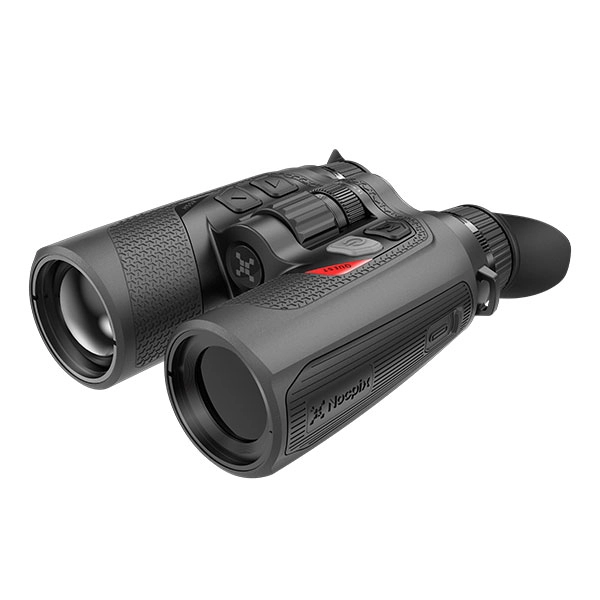
Binocolo termico offer an alternative when you expect to spend most of the evening in one hunting position. Viewing with both eyes may feel more comfortable during a long wait, although it is worth trying the format yourself.
IL Nocpix QUEST H35R thermal binoculars offer two-eye viewing, dioptre adjustment and adjustable display brightness. These controls let you set the image for your eyesight and the conditions rather than putting up with an uncomfortable view.
The built-in battery works alongside a replaceable 18650 battery, allowing battery changes without interrupting operation. That is useful when waiting for raccoons to appear along a streambank or woodland edge over several hours.
Choose between a monocular and binoculars according to how you hunt. You do not need both simply because they offer different viewing formats.
Thermal Clip-Ons for Keeping Your Daytime Riflescope
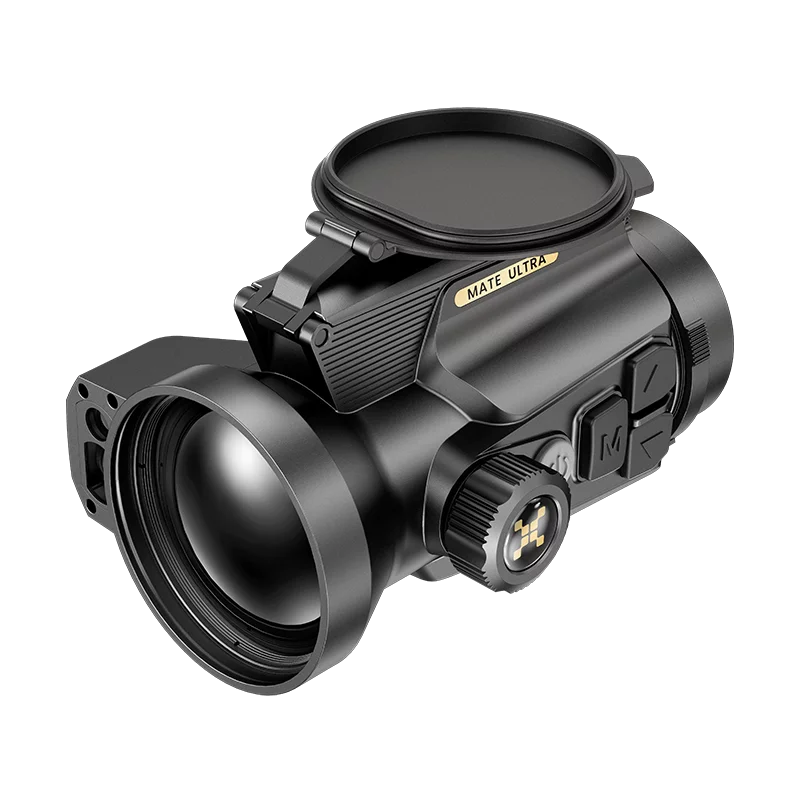
Thermal clip-on attachments work in front of a compatible daytime riflescope. They are worth considering when you want to keep that scope in place for both daytime use and permitted night hunting.
IL Nocpix MATE H38R thermal clip-on has a 640 × 512 sensor, a 38 mm lens and an 11.6° horizontal field of view. Its native view gives you room to follow a raccoon beside a hedge or woodland edge without relying on a tightly enlarged image.
The daytime scope’s magnification also affects how much of the thermal image you can see. Compare the complete combination rather than judging the attachment by its specifications alone.
Have a qualified dealer check the scope and adapter compatibility. Follow the manufacturer’s instructions and have the complete setup checked before taking it hunting.
Dedicated Thermal Riflescopes for Regular Night Use
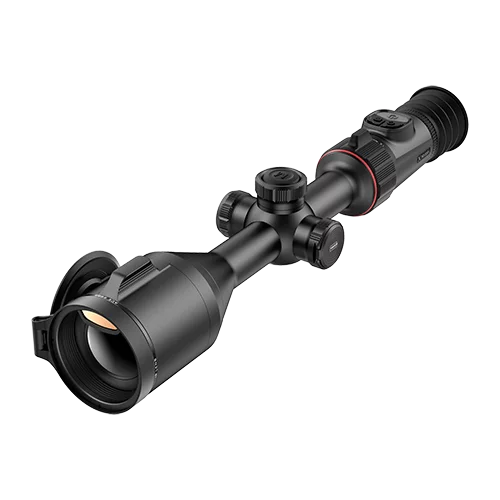
Dedicated thermal riflescopes provide their own thermal display and aiming reticle. They are an alternative to a daytime scope with a clip-on, not another device that every hunter needs to add.
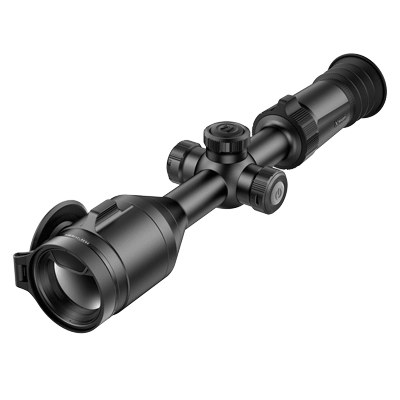
IL Nocpix ACE 2 H50R thermal riflescope combines a 640 × 512 sensor with thermal sensitivity of NETD ≤12 mK. It can pick up small temperature differences, which can help distinguish a raccoon’s outline from nearby grass and bushes.
Its central focus wheel lets you adjust focus while keeping your eye on the display. This is useful when a raccoon moves from a woodland edge into a nearer opening and the image needs refocusing. The built-in laser rangefinder also lets you check distance instead of judging it from the animal’s apparent size on the screen.
A measured distance does not make a shot suitable. You still need clear species identification, an unobstructed shot and a safe backstop.
What Other Gear Should You Bring?
Quiet Clothing and Suitable Footwear
Wear clothing that stays quiet when you lift your arms or turn in your seat. Check whether your jacket catches on straps or makes noise against the sides of the hide.
Pack enough insulation for sitting still. Clothing that feels warm during the walk may be inadequate after a long wait.
Choose boots with suitable grip for muddy tracks and wet banks. Take gloves that keep your hands warm while still allowing you to operate your equipment.
Lighting, Spare Power and Navigation
Bring a headlamp or torch for safe movement and finding equipment in your bag. Check the local rules before using artificial light to illuminate quarry.
Carry compatible spare batteries in protective cases. Keep them separate from loose metal objects, and pack the charging equipment you expect to need.
Take a charged phone and save an offline map when reception is unreliable. Let someone know where you will be and when you expect to return.
Shooting and Recovery Essentials
Bring the firearm and ammunition permitted for the hunt, together with hearing protection. Use a familiar shooting rest where the hunting position does not already provide suitable support.
Keep a small first-aid kit accessible. Disposable gloves and a suitable game bag are useful for handling and transporting quarry.
Discuss recovery arrangements with the hunting-rights holder before heading out. Know whom to contact if an animal cannot be found, rather than trying to arrange help for the first time after dark.
How Can You Identify a Raccoon at Night?
In a clear visible-light view, a raccoon’s ringed tail, facial markings and hand-like forepaws help distinguish it. Its rounded back provides another clue. A facial mask alone is not enough, because raccoon dogs have similar markings.
Thermal imaging does not show coat colours like a daylight photograph. Do not expect the familiar black-and-white tail rings to appear reliably on the thermal display.
Look for a clear view of the head, body, legs and tail. Watch how the animal moves, but do not identify it from one gesture or a single partly hidden shape.
When reeds or branches hide most of the body, wait for a clearer view. Thermal can reveal exposed parts through gaps, but it cannot show the body behind a tree trunk. Increasing digital zoom will not restore missing detail.
If you cannot confirm the species, do not take the shot.
What Local Rules Should You Check?
Raccoons appear on the EU list of invasive alien species of Union concern. That listing does not give an individual permission to hunt them.
Confirm hunting rights, seasons and protection of dependent young with the responsible local authority. Check the permitted hunting hours and methods for your location.
Ask separately about handheld thermal observation, artificial lighting and firearm-mounted equipment. Do not assume permission for one device or activity covers the others.
Prepare for Your Next Raccoon Hunt
Choose a location with recent signs, check your position in daylight and plan your approach around the ground and wind.
Match your thermal equipment to the way you hunt. A compact monocular suits moving between positions, while binoculars offer another format for longer waits. Choose any aiming optic separately, then pack the clothing, lighting and recovery equipment needed for the evening.