






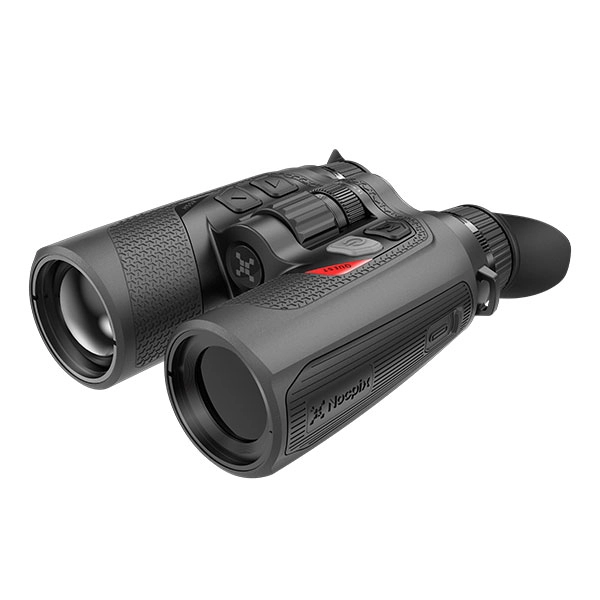
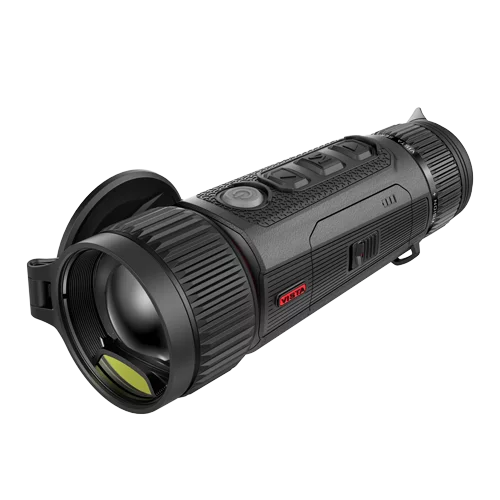
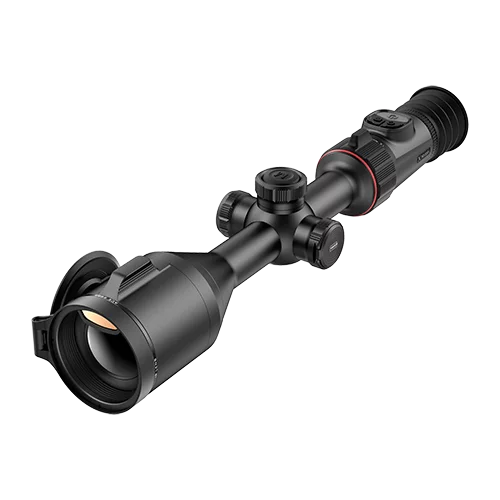
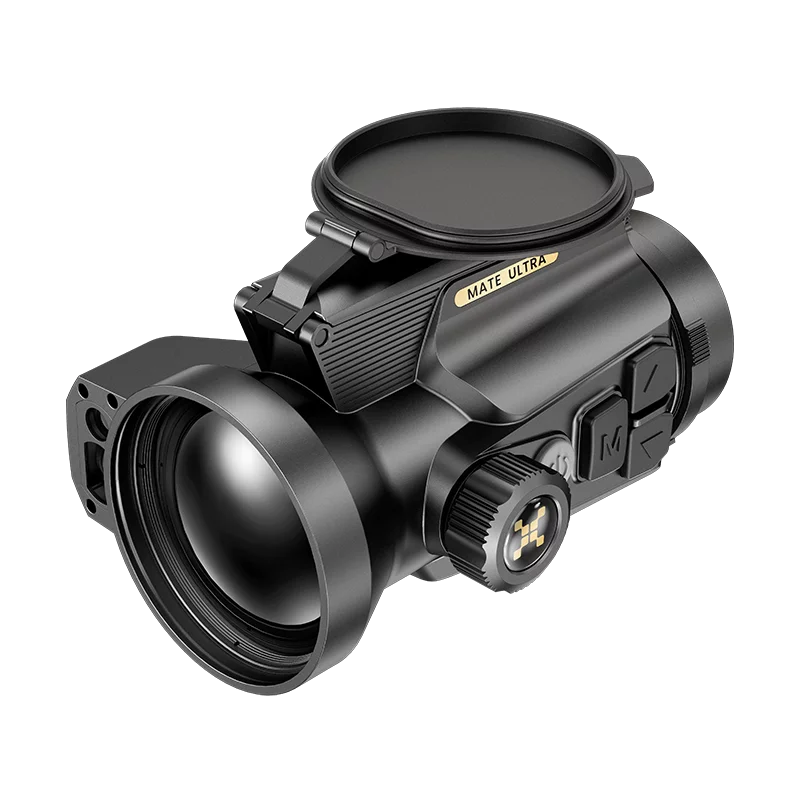
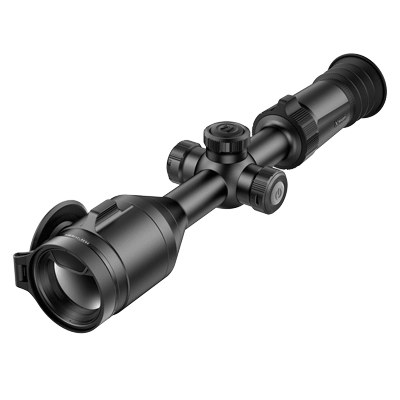


In a high-performance thermal riflescope, the sensor determines how much raw thermal information it can capture. But what hunters finally see also depends on how that information is processed. Nocpix ACE 2 Series is built around a new generation of thermal imaging technology, and R+ 2.0 is one of the key systems behind its image-quality upgrade.
In real thermal hunting and night hunting, thermal images often face several challenges: limited detail on small distant targets, difficulty separating useful texture from noise, and reduced contrast in rain or fog.
The R+ 2.0 imaging system on the ACE 2 Series addresses these problems at several levels.
It is not simply about making an image look sharper.
The larger question is:
How can a thermal scope recover more useful detail while keeping the image smooth, clean, and natural?
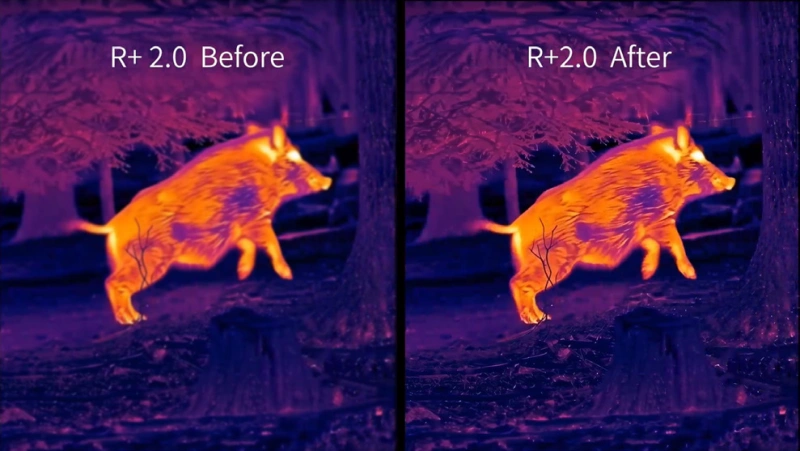
How R+ 2.0 Improves the ACE 2 Image at Base Magnification
For 640-resolution models, R+ 2.0 introduces a new approach to model training.
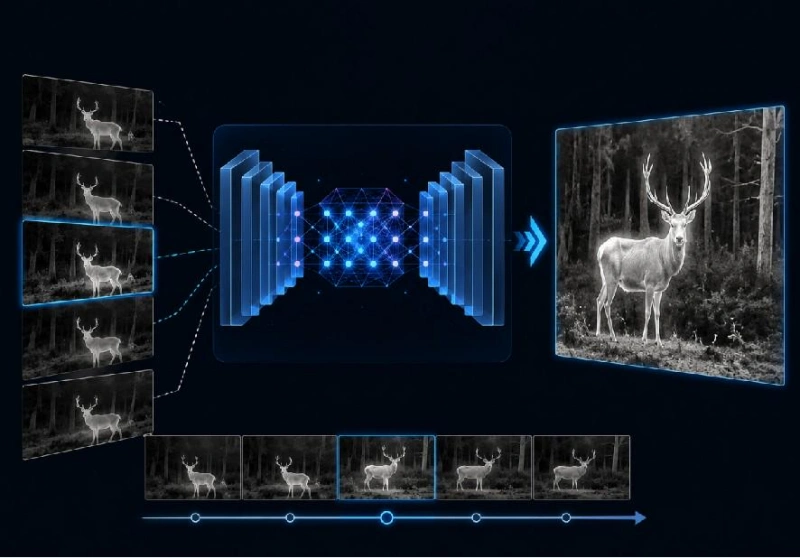
Instead of relying only on a single model, the system uses knowledge distillation.
In simplified terms, a larger AI model first learns complex thermal-image features. It then guides a smaller, more efficient model to learn from that knowledge.
This allows the device-side model to handle higher-resolution input while still maintaining real-time inference at 60fps on the 640 platform.
For a thermal scope, this balance is important.
Additional detail has limited value if the image becomes slow or unstable when the hunter pans across the field or follows a moving animal.
With R+ 2.0, the goal is to improve visible detail while maintaining fluid real-time viewing.
Why Real Thermal Data Matters for ACE 2
An AI model is only as useful as the data it learns from.
Traditional enhancement training often relies on simulated degradation — artificially adding blur, noise, or lower resolution to clean images.
But real imágenes térmicas does not always degrade in predictable ways.
Distance, background temperature, weather, target size, and different types of noise can all affect thermal images differently.
For R+ 2.0, Nocpix collected large amounts of real low-resolution infrared imagery across different environments, scenes, and noise conditions. These images were processed using a larger model to create training pairs that more closely reflect real thermal-image degradation.
The training strategy was also adapted to the characteristics of infrared imagery, where signal-to-noise ratio can be low and fine detail relatively weak.
The aim is to restore detail while reducing artifacts and ringing effects that can make enhanced images look unnatural.
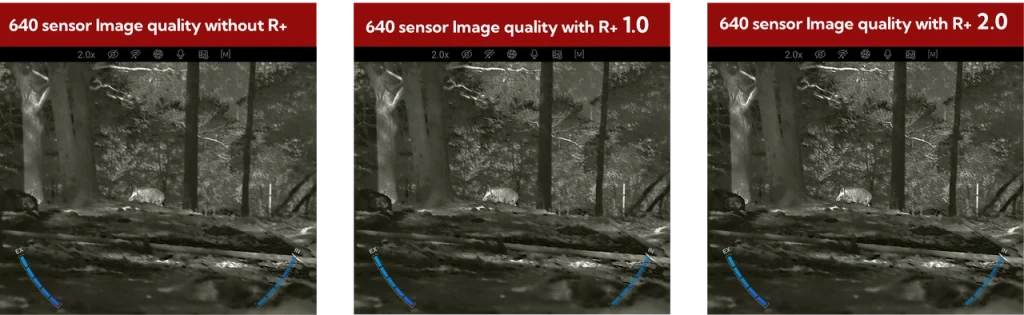
For ACE 2 users, the benefit is especially noticeable on small distant targets, where outlines and surface textures can become easier to distinguish while the system continues to deliver 60fps output.
Sharpening Is Not Enough — The System Needs to Know What to Sharpen
Conventional sharpening can make an image look more detailed by strengthening edges.
The problem is that it can also strengthen things that should not be enhanced — including noise and unwanted artifacts.
R+ 2.0 takes a more selective approach.
Its network includes a texture-noise decoupling module designed to distinguish between:
texture that should be enhanced, and noise that should be suppressed.
The model can then process image regions adaptively instead of applying the same sharpening effect everywhere.
Sharpening is also not treated as a separate final post-processing step.
It is designed and trained together with the super-resolution network. Super-resolution focuses on recovering structural and resolution information, while the sharpening-related components refine texture quality. The two share information at the feature level.
The result is intended to deliver:
- More solid detail — clearer target edges and surface texture
- Cleaner images — fewer harsh edges and artifacts
- More comfortable viewing — less visual fatigue from noise and over-sharpening
- More natural thermal imagery — improved clarity without making the scene look artificial
A Dedicated Approach for Rain and Fog
Rain and fog create a different set of challenges for a visor de caza nocturna.
Rain can produce dynamic obstruction and scattering in front of the lens, while fog lowers overall contrast and softens target edges.
An image-processing model optimized for clear weather may therefore be less effective under these conditions.
R+ 2.0 addresses this with dedicated rain-and-fog optimization.
Nocpix collected thermal data from multiple real rain and fog environments, allowing the model to learn degradation patterns specific to these conditions.
The training process also introduces a dedicated rain-and-fog feature extractor, which separates relevant features and guides the model in recovering detail weakened by weather interference.
The key idea is simple:
One processing mode does not need to compromise for every possible environment.
Users can rely on a general mode in normal conditions and switch to a dedicated mode for rain or fog, allowing each scenario to receive more targeted processing.
What Does R+ 2.0 Really Improve?
Thermal-image processing is often summarized with a simple phrase such as “AI enhancement.”
But better thermal imaging is not simply about making everything look sharper.
On the Serie ACE 2, R+ 2.0 focuses on three areas:
More Detail at Base Magnification
A redesigned model architecture and real thermal training data improve the visibility of small distant targets on 640 models while maintaining real-time 60fps output.
Sharper, Without Looking Artificial
Texture-noise separation helps enhance real detail while suppressing noise, producing an image that is clearer, cleaner, and more natural.
Optimized for Challenging Weather
Dedicated rain-and-fog training allows the image-processing system to respond more effectively to difficult weather conditions rather than forcing one general model to compromise across every scene.
For a professional thermal riflescope, the best imaging algorithm is not the one that simply makes every edge stronger.
That is the idea behind R+ 2.0 on the ACE 2 Series.
Instead of treating image enhancement as a simple sharpening effect, ACE 2 uses R+ 2.0 to bring together real thermal-image training, texture-noise separation, and dedicated rain-and-fog optimization.
The goal is straightforward: more useful detail, cleaner thermal imagery, and a more natural view when conditions become challenging.
More detail when it matters. Cleaner images where it counts.