




An 8K night vision scope is worth choosing over 4K when you regularly use heavier digital zoom and the extra resolution keeps useful detail visible. That situation is most likely on open farmland, long field margins, and broad rides where the subject remains small in the base view.
A capable 4K scope can still be the better choice when its lens and base magnification already make a distant subject large enough in the starting image. In that setup, the hunter needs less digital crop, so the resolution gap has less opportunity to appear. A 4K label does not mean short-range; optical design and starting magnification still decide how the scope frames the ground.
The real 8K-versus-4K question is therefore not which label is larger. It is how long each scope holds meaningful detail as digital magnification increases.
Does 8K digital zoom look better than 4K?
Yes. At medium and high digital zoom, a well-executed 8K scope should look cleaner than a comparable 4K scope. Fine edges should remain separated for longer, small textures should break up later, and the enlarged subject should continue revealing detail after the 4K image has started to soften.
The visible difference can be small at base magnification or a light crop. Digital zoom enlarges a cropped part of the image already captured by the sensor. With comparable framing, focus, exposure and processing, an 8K source leaves more samples inside that crop than a 4K source. As magnification rises, the 4K image reaches its useful limit sooner, while the 8K image has more room before enlargement stops adding information.
The direct answer has one condition: the rest of the image chain must be good enough to preserve the extra sensor detail. Poor focus, limited light, heavy noise reduction or a weaker display can narrow or erase the visible advantage. This is why 8K usually separates itself most clearly under stronger digital crop, not automatically in every base-view or night scene.
Nor does 8K make pixelation disappear. Its advantage is that digital zoom can go further before enlargement stops revealing useful detail; available light and image processing still set the limit.
The advantage belongs to the complete 8K scope, not to the number printed on its box. Our explanation of optical zoom vs. digital zoom covers the crop-and-enlarge process in more detail.

Where an 8K scope earns its advantage
The strongest case for 8K is a wide scene followed by a substantial crop. A hunter may begin with enough field of view to locate movement along a distant hedge, stubble field or woodland edge, then increase magnification to examine a much smaller part of that scene.
At that point, useful detail matters more than apparent size. A larger silhouette is not necessarily a clearer one. Look at whether the outline stays separate from grass or branches, whether the head and body remain distinct, and whether the ground immediately behind the subject is still readable. If the 8K view keeps those features after the 4K view has begun to smear them together, the extra resolution is doing a real job.
This makes 8K particularly relevant for hunters who often face three conditions:
- The target remains small in the base image because the ground is open.
- Digital magnification is used routinely, not only as an occasional maximum setting.
- The extra detail survives in the live eyepiece rather than appearing only in a saved still or promotional clip.
European fox control across pasture, stubble and long field boundaries is an obvious example of this type of demand. The point is not that every foxing setup needs 8K. It is that open ground gives additional crop headroom a clear purpose. When observation normally ends before the heavier crop is needed, much of that headroom remains unused.
An 8K scope may also give the hunter more room to stay at a wider starting view. A wide view helps find and reacquire a moving subject; digital crop can then be added for a closer look. Whether a particular scope achieves that balance depends on its base magnification and field of view, so those figures should be read alongside sensor resolution.
When a 4K night vision scope can still be the better choice
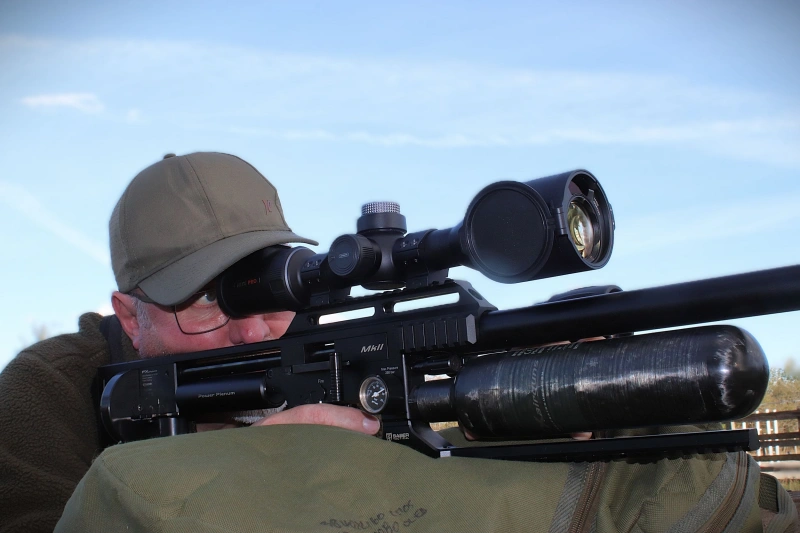
Choose 4K when the scope’s optics and base magnification already put enough detail on the subject before heavy digital zoom begins. Resolution is only one route to a larger, clearer target image. Stronger native magnification can reduce how much electronic cropping the hunter needs, including across open ground.
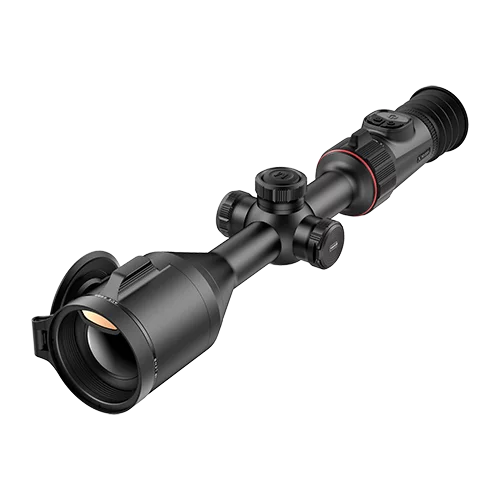
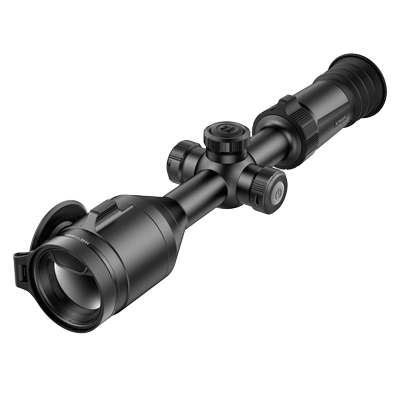
The NITE D70R 4K digital night vision scope shows how this can work. Its 70mm lens and 5× base magnification give distant subjects a larger starting image, so hunters who prefer a tighter view across open ground may not need to crop as deeply. Its narrower starting view is less flexible for scanning, but it gives 4K a clear role beyond short-range use.
At shorter distances, 4K can also be sufficient when base or moderate magnification already shows the target and background clearly. The deciding question is how much digital crop remains necessary after the scope forms its starting image, not whether the ground is automatically “long range” or “short range.”
Four situations favour staying with 4K:
- The lens and base magnification already make distant subjects large enough in the starting view.
- A narrower field of view suits the ground and hunting method.
- A moderate crop retains clear edges and background information.
- The hunter values that native framing more than the flexibility of a wider base view followed by a deeper crop.
This is not a consolation choice. It is the rational choice when 4K clears the task before resolution becomes the limiting factor.
Why NITE PRO D50R Makes 8K Useful in the Field
The NITE PRO D50R 8K digital night vision scope combines an 8000 × 6000 sensor with 3× base magnification, a 15.4 × 13m field of view at 100m and a 1.03-inch 2560 × 2560 display.
That combination gives the hunter two distinct views from one scope. The 3× starting image keeps more surrounding ground visible for finding and following a subject. When a closer inspection is needed, the 8K sensor provides more source detail for digital cropping.
The practical benefit is flexibility. On a field edge or broad ride, the hunter can retain a wider view while the subject is moving, then increase digital magnification without giving up detail as quickly as a lower-resolution source. At shorter distances, the same wider base view can reduce the need to search through an overly tight frame.
The same Country Sports field review helps define where that flexibility ends. The reviewer saw a fox clearly at about 200m around last light and retained a usable image at 274m as darkness increased. After dark, sharp views at 125m and clear views at 120–150m were obtained with an external IR illuminator; mist then prevented a longer-range night test. In practical terms, 8K provides more crop headroom, but it cannot replace suitable illumination or overcome poor atmospheric conditions.
NITE PRO’s value therefore comes from the relationship between its 3× starting view and its 8K crop headroom. The 8K sensor is most worthwhile for hunters who expect to move regularly between scene coverage and closer digital inspection.
8K or 4K: which should you buy?
| What happens during your hunt | Choose | What you gain |
|---|---|---|
| You scan broad fields or long hedgerows through the scope, then zoom in after finding a fox | 8K | A wider starting view helps acquisition, while the higher-resolution image leaves more detail for the later crop. |
| Distant animals remain small at base magnification and you often need high digital magnification to inspect them | 8K | Outlines, fur and the ground around the animal remain readable further into the zoom range. |
| A 5× starting view already makes animals large enough on the open ground you hunt | 4K may be enough | Stronger native framing reduces the amount of digital cropping required. |
| Most night work is close enough that base or moderate magnification clearly shows both the animal and its background | 4K may be enough | The image already provides the subject and surrounding-scene detail you need before sensor resolution becomes the limiting factor. |
| You are willing to pay the NITE PRO D50R premium because high digital magnification is part of most outings | 8K | The extra cost buys crop headroom you expect to use regularly. |
| You want to keep the scope budget lower and the NITE D70R’s 5× starting view already suits your ground | 4K may be enough | You retain strong native framing without paying for 8K crop capacity you are unlikely to use. |
The clearest buying rule is simple. Choose 8K when you want a wider base view and expect digital magnification to do meaningful work. Choose 4K when the scope’s native optics and base magnification already frame distant subjects the way you need, leaving little reason to crop heavily.
NITE PRO D50R is built for acquisition-to-crop flexibility: a wider starting image when the hunter needs context, followed by 8K digital enlargement when more detail is required. The terrain alone does not decide between 8K and 4K. The amount of digital crop needed after the initial optical framing does.