




The best thermal optics are the ones that match how you actually use them — not the ones with the biggest numbers on the spec sheet.
If you’re scanning open fields for hogs, monitoring livestock at night, or tracking movement across your property line, your needs are very different. A handheld monocular solves one problem. A weapon-mounted scope solves another.
In this guide, we’ll break down:
- The main types of thermal optics
- Which device fits hunting, patrol, or wildlife observation
- The specs that truly affect performance
- Common buying mistakes to avoid
By the end, you’ll know exactly which thermal setup fits your real-world conditions.
What Are Thermal Optics and What Do They Include?
Thermal optics detect heat signatures and turn temperature differences into a visible image.
Instead of relying on light, they read infrared radiation emitted by people, animals, vehicles, or machinery. That’s why a warm body stands out instantly against a cooler background — even in complete darkness.
Most thermal optics fall into three main categories:
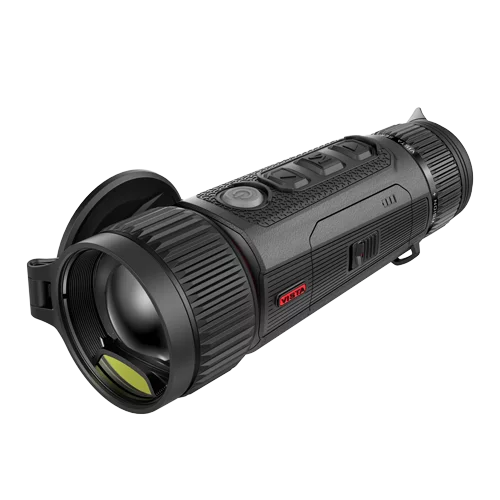
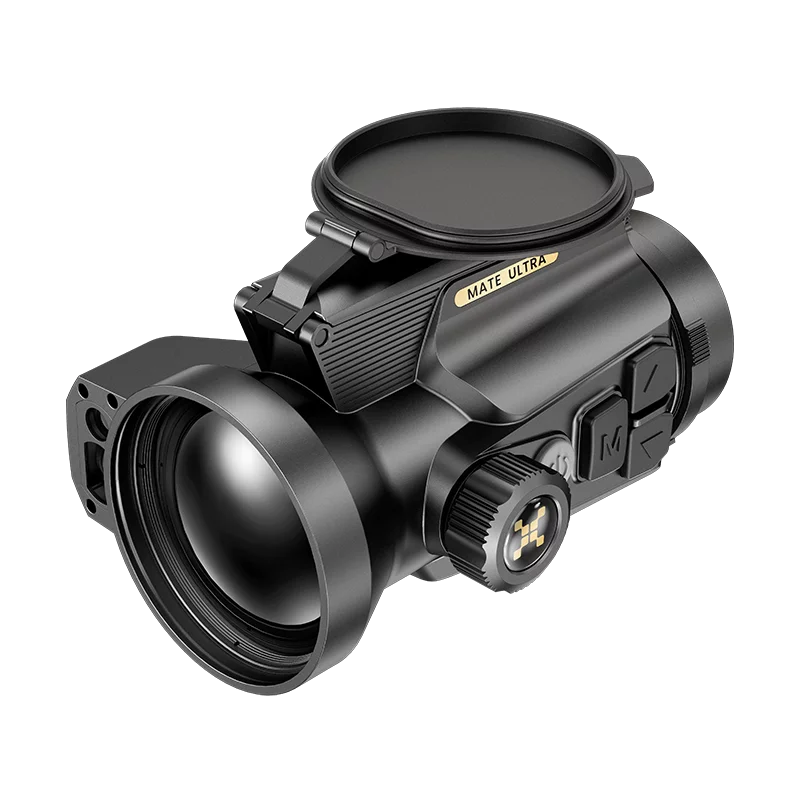
- Thermal monoculars
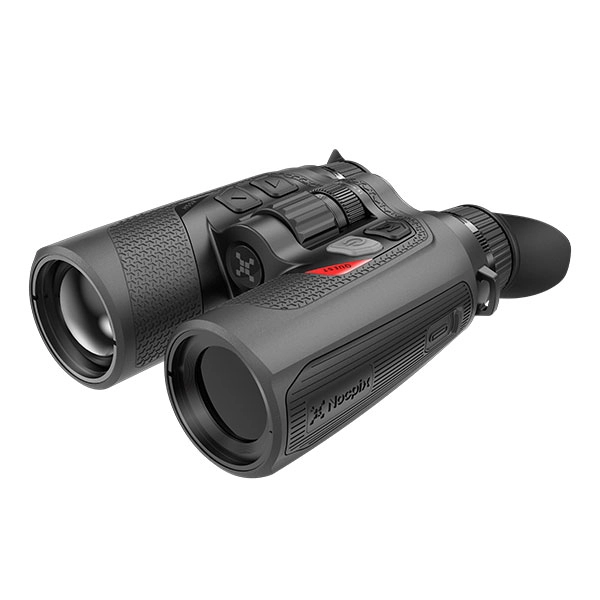
- Thermal binoculars
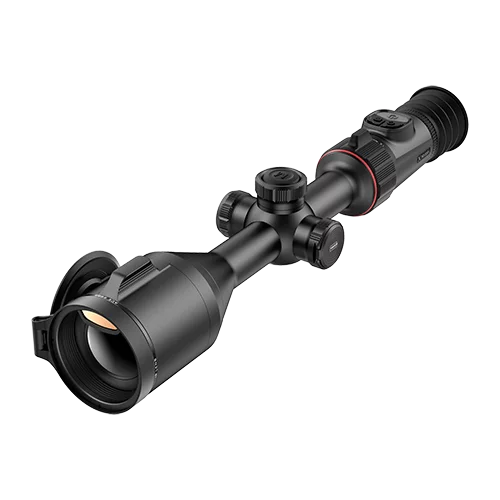
- Thermal rifle scopes
Each serves a different purpose, depending on whether you are scanning, observing, or engaging a target.
Thermal Monoculars
Thermal monoculars are handheld devices built for fast scanning and detection.
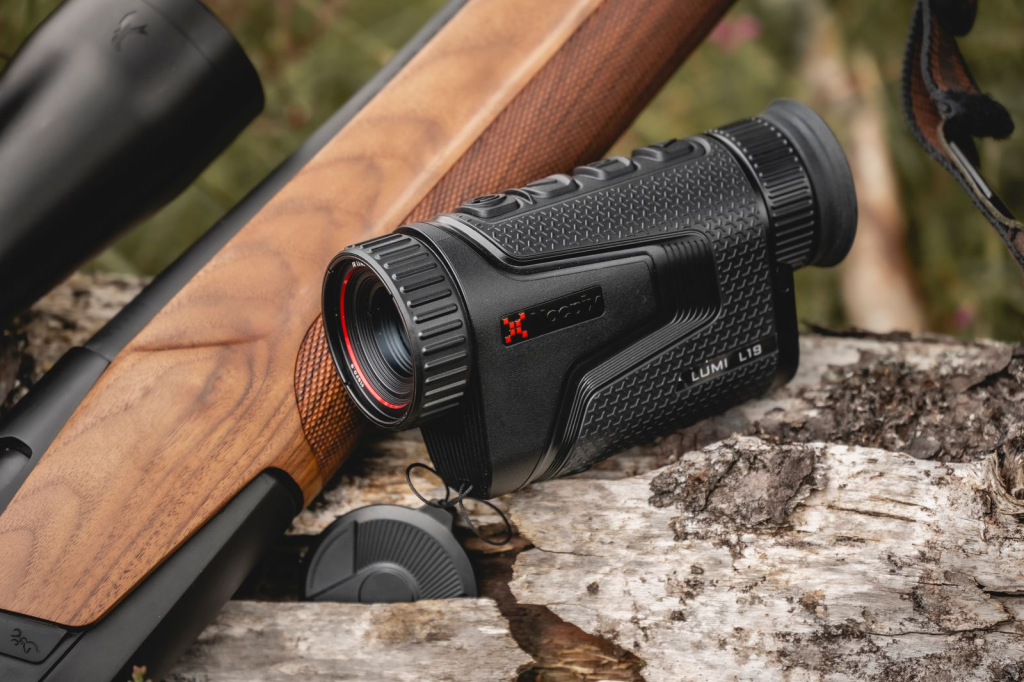
They are compact, lightweight, and easy to carry in a pocket or chest rig. That makes them ideal for quickly surveying large areas without committing to a mounted optic.
Many hunters scan with a handheld monocular first, then switch to a weapon-mounted device once a heat signature appears. This reduces fatigue and prevents unnecessary time behind a rifle scope.
They’re also a practical choice for farm patrol, wildlife spotting, and quick perimeter checks.
Thermal Binoculars
Thermal binoculars are designed for extended observation.
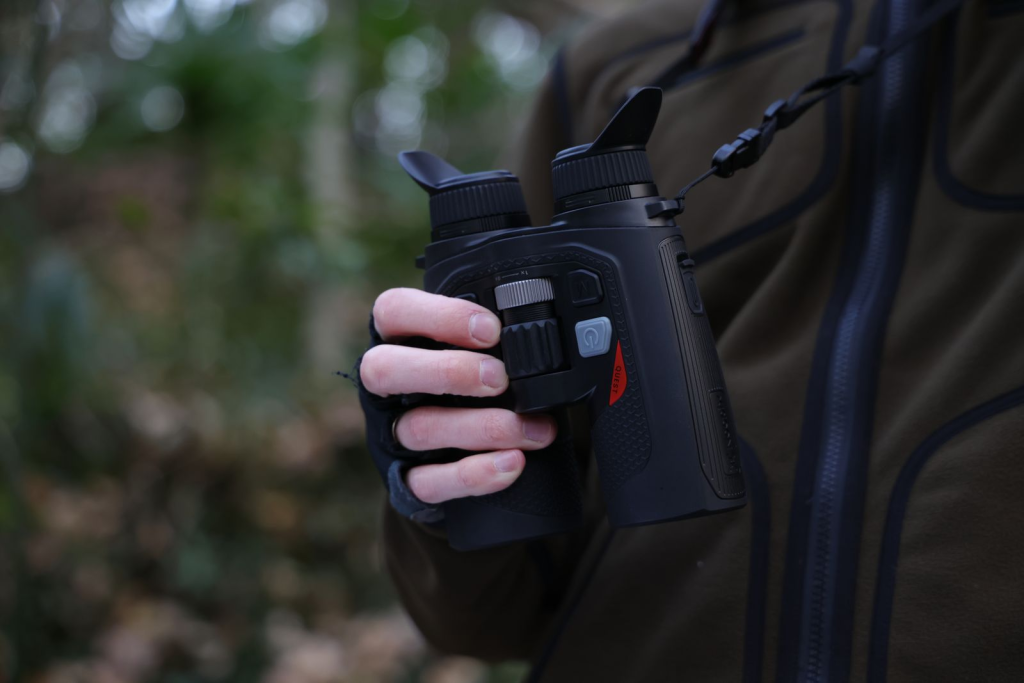
Using both eyes reduces strain during long viewing sessions. If you plan to monitor an area for 30 minutes or more, binoculars feel noticeably more comfortable than single-eye devices.
They are common in wildlife monitoring, perimeter security, and prolonged surveillance tasks. While they are not typically used for weapon mounting, they excel when detection and viewing comfort matter more than mobility.
Thermal Scopes
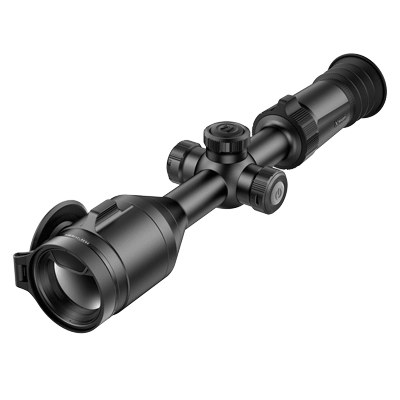
Thermal scopes are weapon-mounted optics built for engagement.
Unlike handheld devices, scopes integrate thermal detection with aiming functionality. A modern thermal rifle scope allows you to detect, track, and place a shot without switching devices.
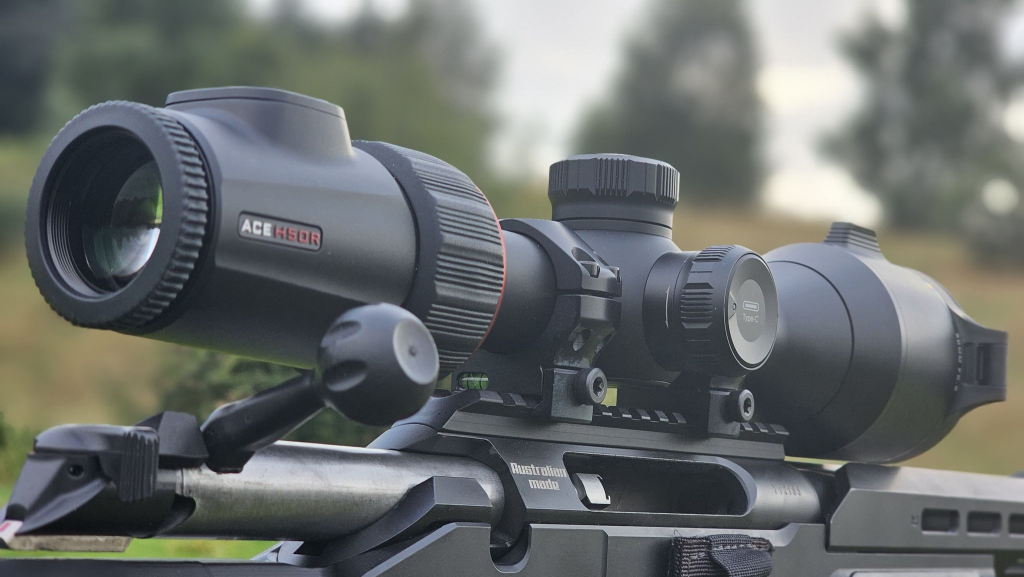
These optics focus on precision and stability rather than wide-area scanning. Most hunters and pest control professionals pair a scope with a handheld scanner to avoid constant weapon handling.
Best Thermal Optics by Real-World Use Case
The best thermal optic depends on how and where you intend to use it. Different environments demand different strengths.
Hunting
Hunting demands fast detection and confident identification — especially when you only have seconds to react.
Imagine scanning a field at midnight. Something moves near the tree line. You raise your optic and need an instant answer: animal or shadow?
That’s where thermal shines.
Most experienced hunters follow a two-step setup:
- Scan with a handheld thermal monocular
- Engage using a thermal rifle scope
The handheld device lets you cover ground quickly without constantly shouldering your rifle. Once you confirm movement, a mounted scope gives you stability and precise shot placement.
Field durability also matters. Mud, humidity, recoil, and long nights test your gear. Devices built specifically for demanding outdoor use — including models like the Nocpix ACE RM — focus on consistent detection and rugged construction.
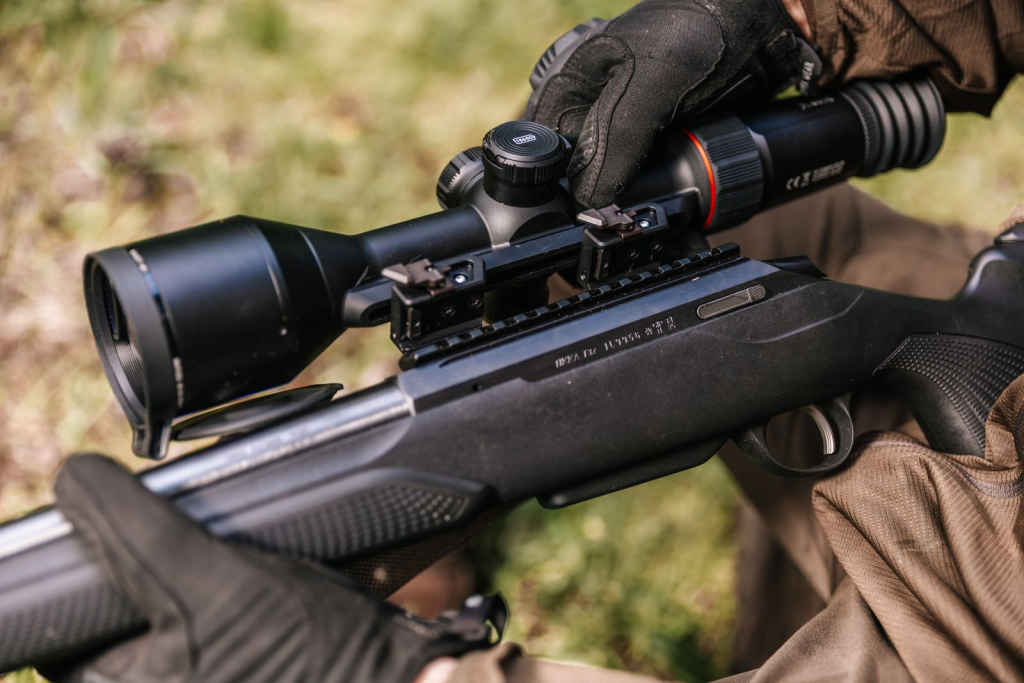
Thermal imaging works particularly well in tall grass, brush, and total darkness because it detects body heat instead of reflected light.
Farm Patrol and Predator Control
Thermal optics are widely used for livestock protection and farm patrol — not corporate security.
If you manage cattle, sheep, or poultry, predators like coyotes, hogs, or stray dogs can cause serious losses overnight. Waiting until daylight often means the damage is already done.
Thermal devices allow you to detect movement across open land, fence lines, and tree cover without relying on floodlights.
Most farm setups prioritize:
- Handheld thermal monoculars for wide-area scanning
- Thermal scopes when removal is required
Because thermal imaging detects body heat rather than reflected light, animals stand out clearly against cool ground and vegetation — even in total darkness.
For landowners and ranchers, early detection isn’t about surveillance. It’s about protecting animals and preventing loss.
Wildlife Observation
Wildlife observation benefits from passive detection that doesn’t disturb animals.
Unlike IR-assisted systems, thermal devices emit no visible light. That means animals behave naturally while you observe from a distance — no glow, no visible beam, no behavioral disruption.
If you’re studying nocturnal species or simply enjoying nature at night, thermal binoculars provide more comfort during extended viewing sessions. Monoculars remain a practical choice for hikers or casual observers who want something lightweight and easy to carry.
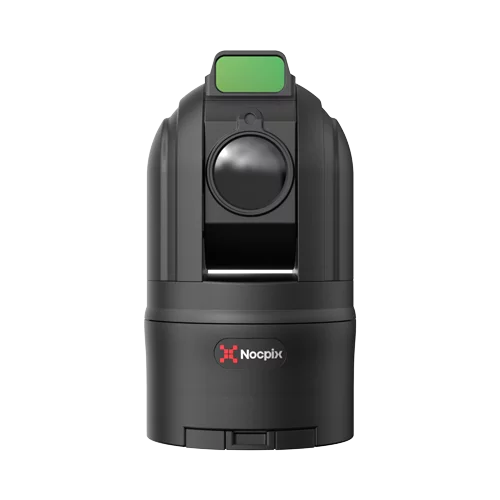
Observation-focused systems — including the Vista Series from Nocpix — are designed with extended viewing comfort and detection clarity in mind, which makes them well suited for researchers and serious wildlife enthusiasts.
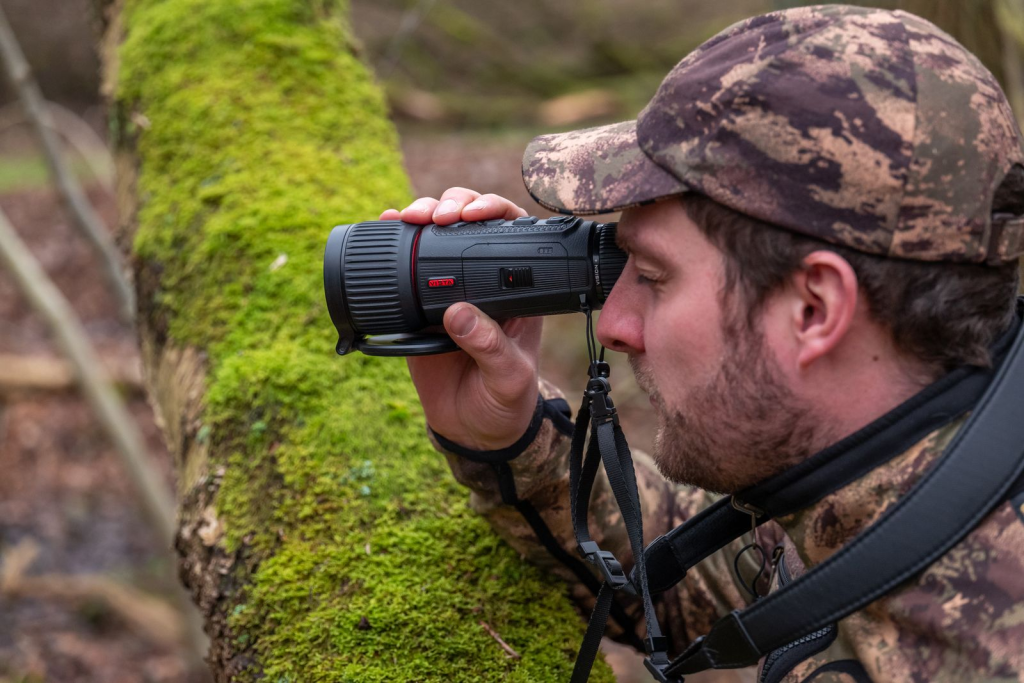
Here, the goal isn’t engagement. It’s quiet detection and uninterrupted viewing.
Thermal Optics by Device Type
Choosing between monocular, binocular, and scope depends on whether your priority is scanning, observing, or engaging.
| Device Type | Hunting Role | Typical Use Scenario | Key Advantages for Hunting | Limitations |
| Thermal Monocular | Detection & scouting tool | Spotting animals before stalking; scanning large areas at night or in low visibility | Lightweight, quick scanning, portable; extends detection range before using other optics | Not ideal for precise aiming; single-eye viewing may cause fatigue |
| Thermal Binocular | Extended observation & tracking | Long-duration wildlife observation, tracking movement patterns, wide-area scanning | More comfortable for prolonged viewing; better depth perception; immersive viewing experience | Heavier and more expensive; less compact for mobile hunting |
| Thermal Scope | Targeting & aiming device | Mounted for shot placement in low-light or nighttime hunting | Precise aiming; stable mount; optimized reticle and ballistic features | Primarily for aiming rather than scanning; higher cost; specialized use |
Monocular: Best for Scanning and Mobility
Choose a thermal monocular if your priority is fast detection across wide areas.
These handheld devices are lightweight, quick to deploy, and easy to carry for hours. You can scan fields, fence lines, or wooded edges without committing to a weapon-mounted optic.
Most hunters and landowners use monoculars as their first layer of detection. Once a heat signature appears, they decide whether further action is needed.
If mobility matters more than prolonged viewing comfort, a monocular usually makes the most sense.
Binocular: Best for Extended Observation
Choose thermal binoculars if you expect long viewing sessions.
Using both eyes reduces strain during 20–60 minute observation periods. That makes binoculars popular among wildlife observers and perimeter patrol users who need to monitor areas for extended time.
They are bulkier than monoculars, but noticeably more comfortable when you plan to stay behind the optic for a while.
Scope: Best for Engagement and Precision
Choose a thermal rifle scope if your goal is target engagement.
Scopes integrate detection with aiming capability, which eliminates the need to switch devices during a shot sequence. They are designed for stability under recoil and precise shot placement.
However, they are not ideal for constant scanning. That’s why many experienced users pair a scope with a handheld monocular.
How We Define the Best Thermal Optics?
The best thermal optics are defined by sensor performance, sensitivity, and real-world reliability — not just magnification or pixel count.
Spec sheets can look impressive. But in the field, clarity and consistency matter far more than big numbers. Here are the factors that actually determine performance:
Thermal Resolution
Resolution determines how detailed the image appears.
Higher resolution sensors produce sharper images, which helps when identifying animals at moderate distance. However, resolution alone does not guarantee better detection in challenging conditions.
A 640×512 sensor looks impressive, but if sensitivity is weak, performance will drop in humid or low-contrast environments.
NETD and Sensitivity
NETD measures how well a thermal device detects small temperature differences.
Lower NETD values mean better sensitivity. This becomes especially important during warm evenings, foggy conditions, or early mornings when temperature contrast between animals and surroundings is minimal.
Many buyers overlook NETD and focus only on resolution. In practice, sensitivity often has a greater impact on detection performance.
Detection Range vs Recognition Distance
Detection range tells you how far the device can detect a heat signature.
Recognition distance tells you how far you can identify what that heat source actually is.
Manufacturers often advertise maximum detection distance. But identification and ethical engagement happen at shorter ranges. Choose equipment that supports your realistic working distance, not just the headline number.
Field of View and Refresh Rate
Field of view affects how much area you can scan at once.
A wider field of view allows faster area coverage, which is helpful for scanning open terrain. Narrower views may provide more detail but require more movement.
Refresh rate influences motion smoothness. Higher refresh rates make tracking moving animals or people easier, especially in dynamic environments.
Battery Life and Durability
Thermal optics are often used in demanding conditions.
Cold weather, humidity, recoil, and long operational hours test equipment reliability. A device with strong battery performance and rugged housing will outperform a higher-resolution optic that fails after a few hours in the field.
Field durability is not a bonus feature. It is a core requirement.
When Thermal Optics Are the Better Choice?
Choose thermal optics when detection is more important than visual detail.
Thermal devices perform best in situations where:
- There is little or no ambient light
- Animals or people are partially hidden by brush or terrain
- Early detection prevents damage or risk
- Long-range scanning is required
For example, scanning a tree line for hogs, checking fence lines for predators, or searching open terrain for movement at night are all scenarios where thermal provides a clear advantage.
Unlike traditional night vision, thermal does not rely on reflected light. It detects body heat directly. That makes it especially effective in total darkness or when targets blend into the environment visually.
Common Mistakes When Choosing Thermal Optics
Most buying mistakes happen when buyers focus on numbers instead of real-world performance.
Here are the most common ones we see.
Overvaluing Magnification
High magnification sounds impressive, but it often reduces field of view and increases image shake.
A narrower field makes scanning slower. And if sensitivity isn’t strong, higher zoom only enlarges a weak image. In most cases, balanced magnification paired with strong sensor performance delivers better results than extreme zoom.
Ignoring NETD
NETD directly affects how clearly you see targets when temperature contrast is low.
On warm evenings or humid nights, animals may not stand out sharply from their surroundings. Devices with better sensitivity maintain clearer detection in those conditions. Buyers who ignore NETD often feel disappointed when their optic performs well in winter but struggles in summer.
Choosing a Scope When a Monocular Fits Better
Many first-time buyers purchase a thermal rifle scope when their real need is scanning.
Scopes are excellent for engagement. But using them for constant terrain scanning is tiring and inefficient. A handheld monocular often provides more flexibility for detection, especially during long patrols or hunts.
Assuming Higher Resolution Always Means Better Performance
Resolution matters, but it is not the only factor.
A high-resolution sensor with weak sensitivity can still struggle in low-contrast environments. Optical quality, sensor sensitivity, refresh rate, and processing all influence performance. Focus on balanced performance, not just pixel count.
Closing Thoughts
The best thermal optics aren’t defined by the biggest numbers on a spec sheet. They’re defined by how reliably they perform in your environment.
Hunters need fast detection and stable engagement. Landowners prioritize early warning. Wildlife observers value comfort and passive viewing. Search teams depend on sensitivity when conditions are unpredictable.
Once you understand how you actually use your equipment, the right device becomes much easier to choose.
If you’re exploring professional-grade thermal systems built for real field conditions, take a look at the latest models from Nocpix and compare them against your operational needs. Choose based on purpose — and your optic will work with you, not against you.
FAQs
How Far Can Thermal Optics Detect Animals or People?
Detection range varies by sensor resolution, lens size, and environmental conditions. Many mid-range thermal devices detect human-sized targets several hundred meters away, while recognition and identification occur at shorter distances. Always compare detection and recognition specifications before buying.
Is NETD More Important Than Resolution?
Both matter, but NETD often affects real-world performance more than resolution. Lower NETD values improve detection in warm, humid, or low-contrast conditions. High resolution helps with detail, but sensitivity determines how clearly targets stand out.
Should I Buy a Thermal Rifle Scope or a Thermal Monocular?
Choose a monocular if your main goal is scanning terrain and locating movement. Choose a scope if your priority is engagement and precise shot placement. Many experienced users combine both for efficiency.
Can Thermal Optics See Through Walls or Glass?
No. Thermal radiation does not pass through solid walls, and most standard glass blocks infrared radiation. Thermal optics detect heat emitted from surfaces, not through physical barriers.
How Long Do Thermal Optics Batteries Last?
Battery life depends on sensor type, refresh rate, display brightness, and environmental temperature. Most handheld thermal devices run several hours per charge under normal conditions. Cold weather can significantly reduce runtime.