









Hvis du er nybegynner innen termisk optikk, har du sannsynligvis stilt spørsmål som: “Kan et termisk kikkertsikte se gjennom glass?” eller “Hvor langt kan det egentlig identifisere en hjort?” Du er ikke alene. Dette er de vanligste spørsmålene jegere stiller før de kjøper sin første. termisk omfang.
Vi vil dekke hva termiske oscilloskoper egentlig ser, hva som stopper dem, hvordan deteksjon skiller seg fra identifikasjon, og hvilke spesifikasjoner som er viktige når du er klar til å velge en.
Innholdsfortegnelse
Hva betyr “se”, “oppdage” og “identifisere” med et termisk teleskoop?
Disse tre ordene brukes ofte, men de betyr veldig forskjellige ting i felten. Et termisk kikkertsikte “ser” ikke slik øynene dine eller et kikkertsikte for dagtid gjør. Det leser varme, og hvor mye detaljer du får avhenger av avstanden.
Hva betyr “se” i termografi?
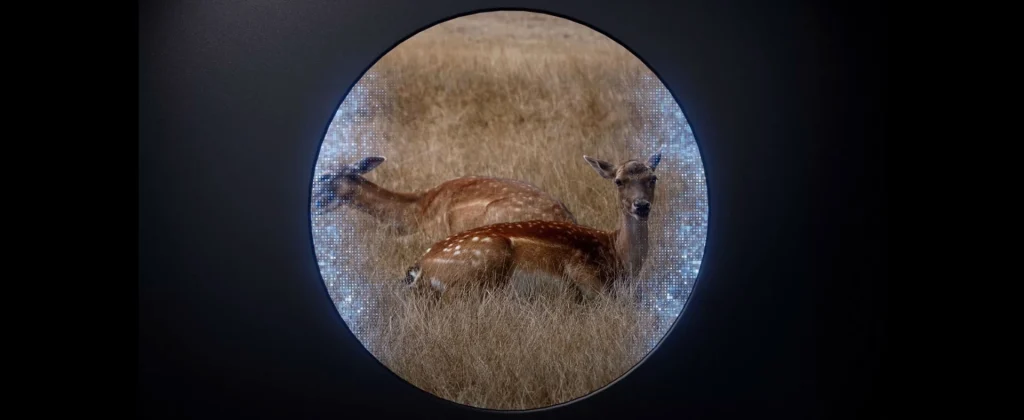
Termiske teleskoper oppdager infrarød stråling – varmeenergi – som sendes ut av objekter og konverterer den til et synlig bilde på en skjerm. Alt over det absolutte nullpunktet avgir noe varme. En hjort avgir mer varme enn gresset den står på. Teleskopet viser denne forskjellen som kontrast. Du ser ikke selve dyret. Du ser varmesignaturen kartlagt mot en kjøligere bakgrunn.
Hva betyr “oppdage” i felten?
Deteksjon er den lengste avstanden du kan se det på noe varmt er der ute. Du vil legge merke til et lyst punkt på skjermen, men du vil ikke ha nok detaljer til å vite hva det er. Deteksjon er viktig fordi det hjelper deg med å skanne store områder før noe kommer i nærheten. For mer informasjon om dette, se vår veiledning for deteksjon kontra gjenkjenning bryter ned de nøyaktige rekkeviddeforskjellene.
Hva betyr “identifisere” når man jakter?
Identifikasjon er den korteste rekkevidden – avstanden der du kan bekrefte nøyaktig hva målet er. Du trenger ikke lenger å gjette mellom en prærieulv og en kalv. Bildet viser nok detaljer om form, størrelse og bevegelse til å kunne avgjøre sikkert. Jegere er avhengige av identifikasjonsavstanden for å avgjøre om de skal skudd sikkert.
Hva kan et termisk kikkertsikte se gjennom?
En grunn til at jegere investerer i termisk optikk er at den fungerer under forhold der vanlig glassoptikk svikter. termisk avbildningssikte leser varme, ikke lys, så noen hindringer spiller mindre rolle.
Kan et termisk kikkertsikte se gjennom trær eller kratt?
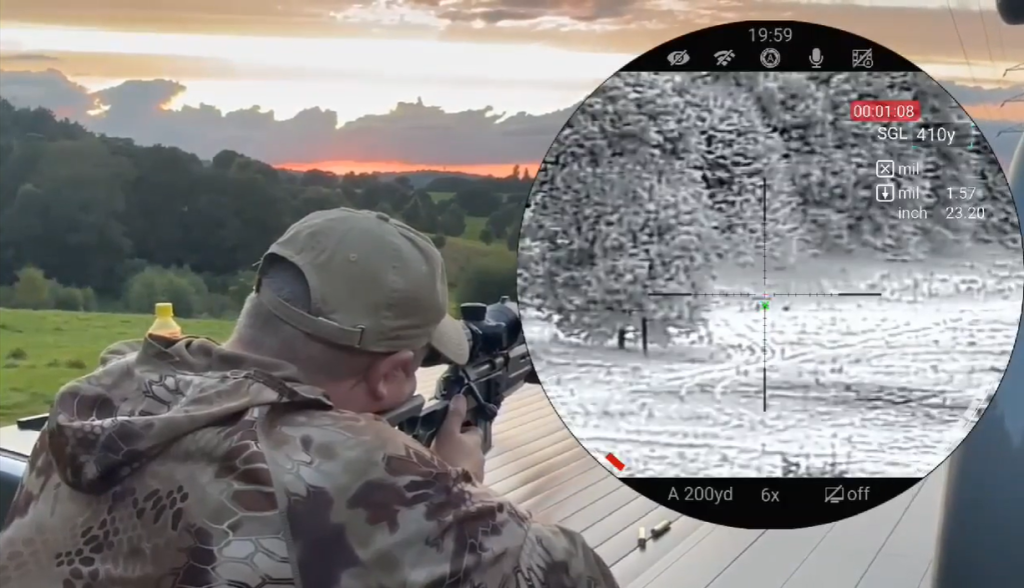
Delvis. Trestammer og tykke grener blokkerer varmesignaturer akkurat som de blokkerer synlig lys – du kan ikke se gjennom bagasjerommet. Men termiske kikkerter er utmerkede til å se inn i skog. De oppdager varmegap mellom blader og grener. En hjort som ligger i leie bak lette kratt eller under et trekrone, viser seg ofte som spredte lyse flekker. Du vil ikke få en perfekt omriss, men du vil legge merke til bevegelse og kroppsvarme som presser seg gjennom dekselet.
Kan et termisk kikkertsikte se gjennom tåke eller røyk?
Ja, i de fleste jaktsituasjoner. Termiske kikkerter oppdager langbølget infrarød stråling, som passerer gjennom vanndråper og røykpartikler mye bedre enn synlig lys. Tung tåke vil redusere bildeskarpheten og redusere den effektive rekkevidden, men lett til moderat tåke hindrer sjelden et kvalitetskikkert i å oppdage varme. Røyk er enda mindre et hinder – brannmenn bruker termisk avbildning av nettopp denne grunnen.
Kan et termisk kikkertsikte se gjennom støv eller sand som blåser?
Ja, og merkbart bedre enn synlig optikk. Støvpartikler er små og spredt med stor avstand sammenlignet med infrarøde bølgelengder, så termiske sensorer ser lettere forbi dem. Du kan miste noe skarphet i en full støvstorm, men for feltstøv som skylles opp av vind eller kjøretøy, har termisk optikk en fordel.
Kan et termisk kikkertsikte se gjennom regn eller snø?
Lett regn og snø har liten innvirkning. Kraftig regn kjøler ned alt i motivet og reduserer termisk kontrast. Regnet i seg selv blokkerer ikke det infrarøde signalet, men det kan vaske ut temperaturforskjellene som gjør at et varmt dyr skiller seg ut. Du kan fortsatt oppdage varme, men den effektive rekkevidden vil forkortes.
Kan et termisk kikkert se gjennom vann eller våte overflater?
Nei. Vann er ugjennomsiktig for de infrarøde bølgelengdene som termiske skoper bruker. En and som flyter på et tjern vil vise kroppsvarmen sin over overflaten, men du vil ikke se noe under vannlinjen. Våt pels, vått gress og regnvåt bakke virker også mørkere fordi vannet kjøler ned overflaten.
Hva kan ikke et termisk kikkert se gjennom?
Termisk teknologi har harde begrensninger. Følgende materialer blokkerer infrarød stråling fullstendig.
Kan et termisk kikkertsikte se gjennom glass?
Nei. Standard vindusglass reflekterer infrarød stråling i stedet for å la den passere gjennom. Hvis du retter et termisk teleskop mot et vindu, vil du se en refleksjon av varmen bak deg – ikke det som er på den andre siden. Dette overrasker mange nybegynnere. Du kan ikke skanne fra innsiden av et kjøretøy med vinduene oppe.
Kan et termisk kikkert se gjennom vegger?
Nei. Vegger er solide barrierer. Den termiske sensoren leser overflatetemperaturen på selve veggen. Hvis noe ekstremt varmt presses mot den andre siden over lengre tid, kan veggoverflaten bli litt varm, men du vil aldri se en klar oversikt over hva som er bak den. Hvis et dyr beveger seg bak en jordvolle eller ned i en betongkulvert under jakt, forsvinner det fra skjermen.
Kan termografi se gjennom betong eller steiner?
Nei. Tette, tykke materialer som betong, murstein og stein stopper infrarød stråling fra kulde. Du ser bare overflatetemperaturen.
Kan termografi se gjennom metall eller aluminiumsfolie?
Nei. Metall reflekterer infrarød stråling. Aluminiumsfolie, polert stål og til og med tynne metallplater viser sin egen overflatetemperatur (eller refleksjoner), ikke hva som sitter bak dem.
Kan termografi se under jorden eller inni menneskekroppen?
Nei. Smuss og jord blokkerer infrarød stråling. Termiske teleskoper viser kun overflatetemperaturer på bakken. På samme måte kan ikke termografi se inn i kroppen. Medisinske termiske kameraer oppdager variasjoner i hudens overflatetemperatur, men de trenger ikke inn i vev.
For en dypere forklaring av hvordan termiske sensorer leser overflatevarme, se vår Veiledning for hvordan termografi fungerer.
Hva kan et termisk skop oppdage i felten?
Hovedoppgaven til et termisk kikkertsikte er å finne varmblodige dyr i kjøligere terreng. Slik ser det ut under ekte jaktforhold.
Kan et termisk kikkert oppdage hjort, svin og prærieulver?
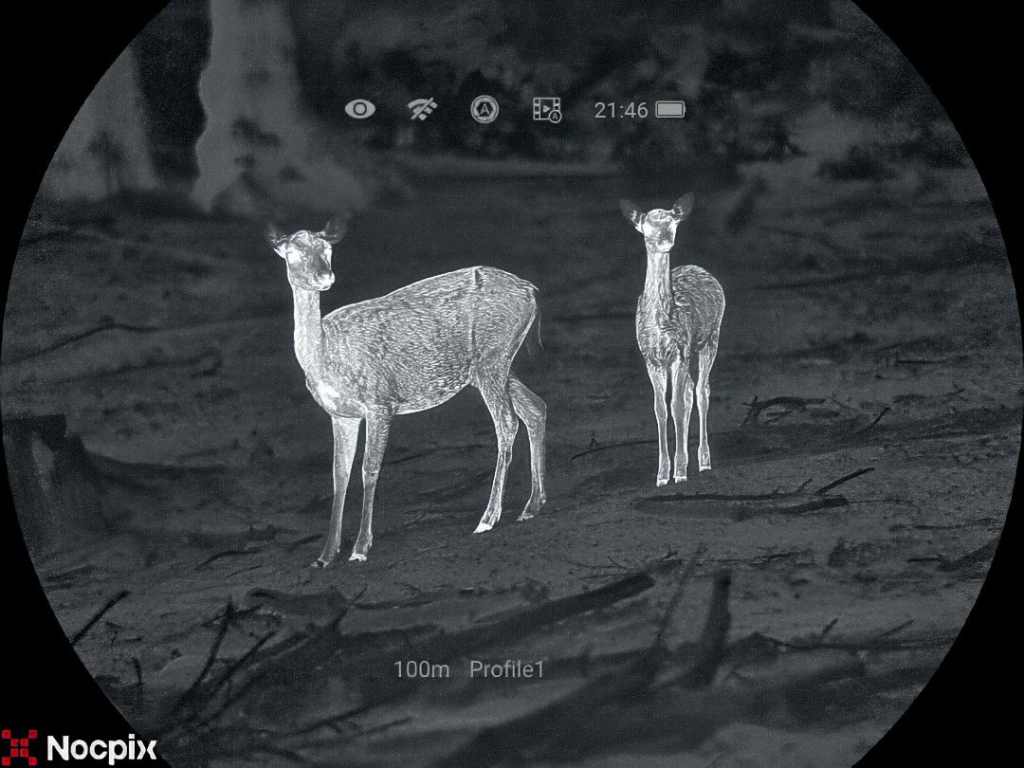
Ja, og de er de tre vanligste målene for termiske jegere. Disse dyrene genererer nok kroppsvarme til å vise seg tydelig mot gress, jord, trær og avlinger. Deteksjonsrekkevidden avhenger av sensoroppløsning, linsestørrelse og værforhold. Et kvalitetssikte som Nocpix ACE-serien kan oppdage hjortestore mål langt utover det du ville forsøke å skyte på.
Kan et termisk skop oppdage små dyr tydelig?
Ja, men på kortere avstander. Vaskebjørner, kaniner og rever viser seg som mindre varmepunkter og blander seg raskere inn i varm bakke enn større dyr. Du vil oppdage en vaskebjørn på nærmere avstand enn en hjort med samme kikkertsikte.
Kan et termisk kikkertkikkert oppdage dyr gjemt i kratt?
Ja, og dette er én av grunnene til at jegere bytter til termisk bruk. Dyr som er visuelt kamuflerte utstråler fortsatt varme. Du vil ofte se delvise varmesignaturer – en skulder, et hode, et ben – gjennom tynn vegetasjon. Tett, solid dekke som tykk sedertre blokkerer fortsatt signalet.
Kan et termisk kikkert oppdage et såret dyr?
Ja, og dette er en praktisk fordel for etisk jakt. Et såret dyr som løper i dekning holder seg varmt og synlig. Varmesignaturen falmer sakte, så hvis dyret går ned i høyt gress eller kratt, hjelper et termisk kikkertsikte deg med å finne det raskere enn en lommelykt ville gjort.
Kan du identifisere dyr med et termisk kikkertsikte?
Ja, men identifikasjon har begrensninger som deteksjon ikke har. Å kjenne til disse begrensningene holder deg trygg og lovlig.
Hvorfor er deteksjon enklere enn identifisering?
Deteksjon trenger bare en varmeklump på skjermen. Identifisering trenger detaljer – kroppsform, benlengde, hodeform, bevegelsesmønster. For å få disse detaljene må man være nærmere, eller bruke et teleskop med høyere oppløsning, eller begge deler.
Hvordan hjelper kroppsform og bevegelse med identifisering?
Ulike dyr beveger seg forskjellig. Griser beveger seg i grupper med lav, subbende gange og stopper sjelden. Hjort beveger seg med et mer oppreist, bevisste skritt og stopper ofte. Prærieulver beveger seg alene eller i par med hundegang. Etter noen netter bak et termisk kikkertsikte, vil du begynne å lese disse mønstrene naturlig.
Hvordan påvirker avstand dyreidentifikasjon?
Jo lenger unna målet er, desto færre piksler har sensoren til å definere det. På 500 meter kan en hjort bare dekke noen få piksler på en sensor med lavere oppløsning. Du vil se varme, men ikke nok formdetaljer til å identifisere den med sikkerhet. På 150 meter fyller den samme hjorten flere piksler, og omrisset skjerpes.
Kan et termisk kikkertsikte identifisere dyr på lang avstand?
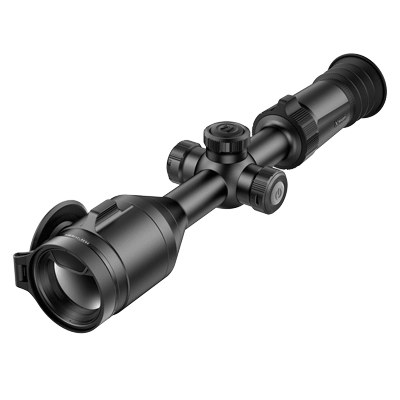
Kikkerter med høy sensoroppløsning holder identifikasjon lenger unna. En sensor på 640×512 eller 1280×1024 løser opp flere detaljer på avstand enn en enhet på 384×288 eller 256×192. For jegere som trenger identifikasjon på lengre avstander, er Nocpix RICO 2-serien, med sin Gen-2-sensor og store objektivlinser, er bygget for denne oppgaven.

Kan du se hjortegevir med termisk kikkert?
Sjelden og bare under spesifikke forhold. Gevir genererer ikke varme. Hos sommerfløyel kan geviret vise noe varme på grunn av blodstrømmen i fløyelsvevet. Når fløyelen feller, tilpasser det herdede geviret seg temperaturen i den omkringliggende luften og blir usynlig for termisk påvirkning. Du vil se hjortens hodeform, men det er upålitelig å identifisere en bukk fra en hunn utelukkende ved hjelp av termisk påvirkning alene.
Hvordan hjelper spesifikasjoner for termiske oscilloskoper med deteksjon og identifisering?
De riktige spesifikasjonene avhenger av hvordan du jakter. Her er hva som er viktig på forskjellige avstander.
Hvilke spesifikasjoner er viktigst for kortdistansedeteksjon?
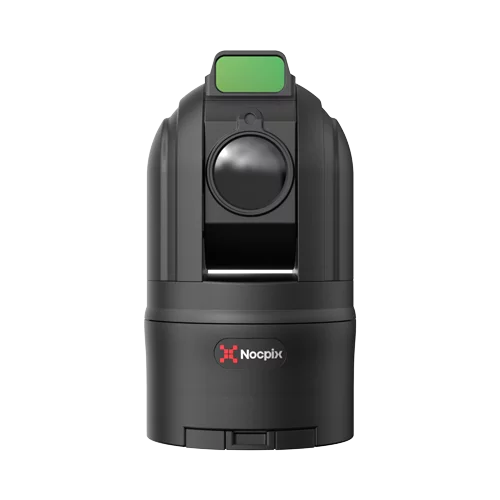
For skogjakt og skanning på nært hold innenfor 200 meter, fokuser på synsfeltet og oppdateringsfrekvensen. Et bredere synsfelt hjelper deg med å skanne uten å gå glipp av bevegelse. En oppdateringsfrekvens på 50 Hz eller 60 Hz holder bildet jevnt når dyr beveger seg raskt. Nocpix BOLT-serien balanserer disse spesifikasjonene i en tilgjengelig og brukervennlig pakke for nye termiske jegere.
Hvilke spesifikasjoner hjelper med vanlige jaktavstander?
For skyting på 200 til 400 yards er sensoroppløsning og NETD-følsomhet viktigst. NETD måler hvor liten temperaturforskjell sensoren kan oppdage. Lavere jo bedre. En NETD-vurdering på ≤15 mK eller ≤20 mK gir deg renere kontrast når dyr er nær bakgrunnstemperaturen – vanlig tidlig om morgenen eller etter regn.
Hvilke spesifikasjoner forbedrer identifikasjon på lengre avstand?
For jakt i åpent landskap på avstander over 400 meter trenger du tre ting: høy sensoroppløsning, et stort objektiv og en følsom NETD-vurdering. En sensor på 640×512 eller 1280×1024 med et 50 mm eller større objektiv og ≤15 mK NETD holder måldetaljer lenger unna. Nocpix ACE-serien og RICO 2-serien begge har disse funksjonene for jegere som regelmessig skyter på avstand.
Hvordan bør du velge basert på terreng og måldyr?
Tenk på den faktiske jakten din, ikke bare spesifikasjonsark. Frilandsgrisjegere som skyter hjort på over 500 meter trenger andre spesifikasjoner enn skogsjegere som skyter hjort på 80 meter. Start med hvor du jakter, hva du jakter på og avstanden du trenger å identifisere – ikke bare oppdage – målet ditt. Tilpass deretter oppløsningen, linsestørrelsen og følsomheten til det behovet.
Sjekk alltid lokale jaktforskrifter før du bruker termisk optikk om natten eller på offentlig land.
Ett skritt foran med riktig termisk kikkert
Termiske kikkerter ser ikke gjennom alt, men det de ser endrer spillet for jegere. De oppdager varme gjennom mørke, tåke, røyk og lysdekke – forhold der tradisjonell glassoptikk og til og med nattsyn kommer til kort. Å vite forskjellen mellom deteksjon og identifikasjon hjelper deg med å velge riktig termisk kikkert for din jaktstil og avstander.
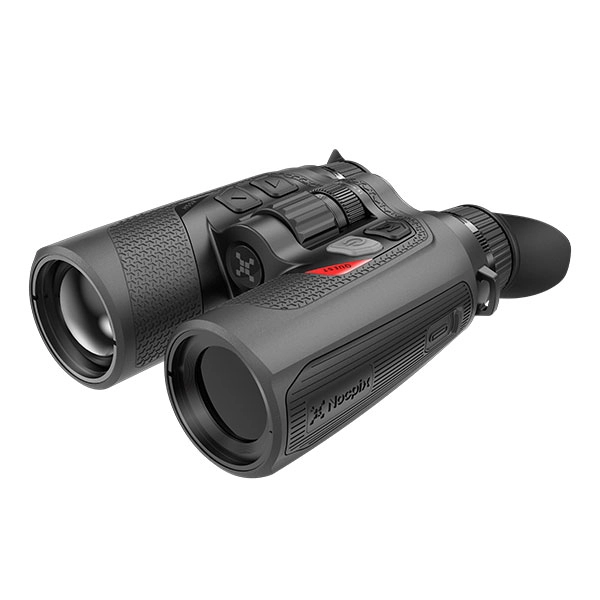
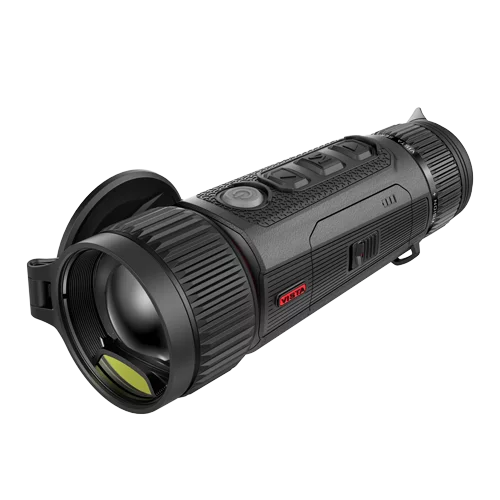
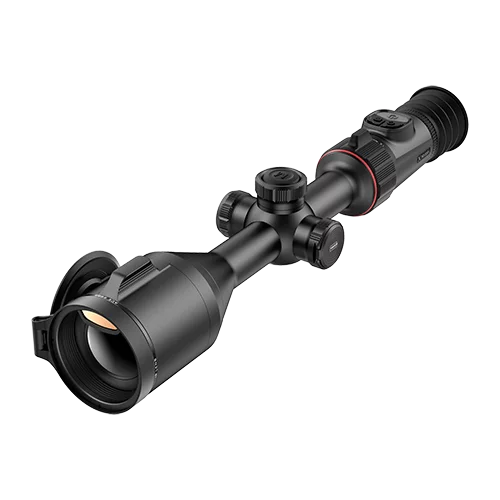
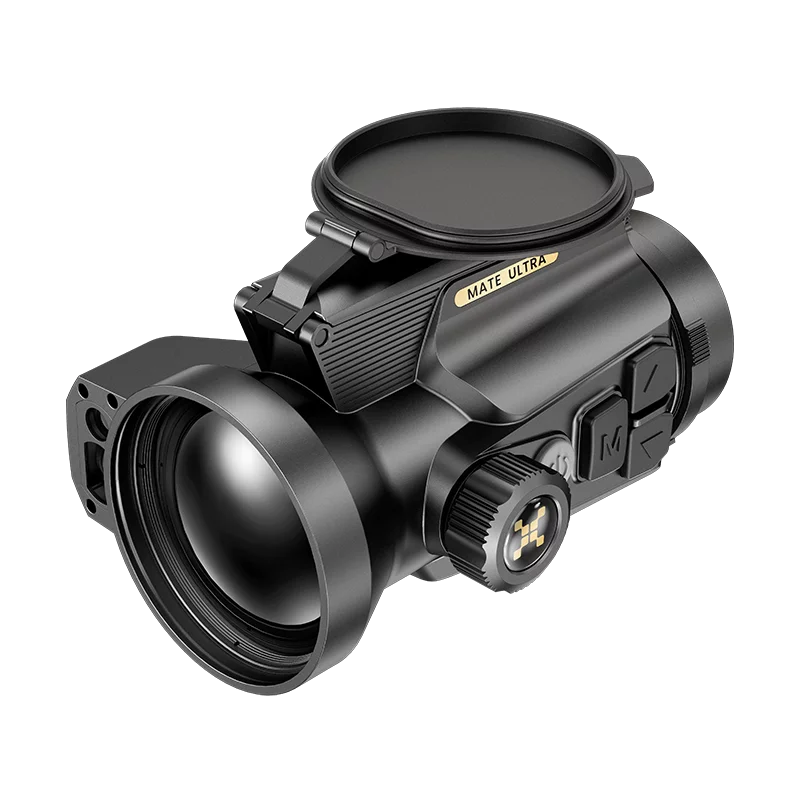
Nocpix bygger termisk optikk for jegere som ønsker klare bilder, enkel feltoperasjon og pålitelig ytelse når det gjelder. Enten du skanner med en håndholdt monokulær, monterer et dedikert riflesikte eller ser etter langdistanseidentifikasjon, Utforsk Nocpix termiske kikkertsikter for å finne den rette til din neste jakt.
Vanlige spørsmål
Kan et termisk kikkertsikte se gjennom kamuflasje?
Nei, det trenger det ikke. Kamuflasje er laget for å lure synlig lys, ikke varme. Et varmt dyr bak et kamuflasjenett eller en ghillie-drakt utstråler fortsatt kroppsvarme som et termisk kikkertsikte oppdager.
Hjelper eller skader kaldt vær termisk deteksjon?
Kaldt vær hjelper. Når luften og bakken er kalde, skiller varmblodige dyr seg ut med høyere kontrast. Varm sommerbakke kan redusere kontrasten, slik at dyrene glir bedre inn i bildet.
Kan jeg bruke et termoskop på dagtid?
Ja. Termiske kikkerter oppdager varme, ikke lys. De fungerer like bra i dagslys som i fullstendig mørke. Termisk jakt på dagtid er lovlig i mange områder, men sjekk alltid lokale regler.
Hvorfor ser bildet av termoskopet mitt kornete ut på lang avstand?
Fordi færre sensorpiksler dekker målet. Det samme dyret som fyller 50 piksler på 100 yards, fyller kanskje bare 5 piksler på 500 yards. Sensorer med høyere oppløsning og større linser reduserer dette problemet.
Trenger jeg en innebygd laseravstandsmåler?
Det hjelper mye på avstand. Det er vanskelig å gjette rekkevidde om natten. En integrert LRF gir deg nøyaktig avstand for holdover eller ballistikkberegning, noe som betyr noe på avstander utover 200 meter.