









Å vite hvordan man velger en termisk monokulær starter med å forstå hvilke spesifikasjoner som påvirker det du ser i felten, og hvilke som bare er markedsføringsstøy.
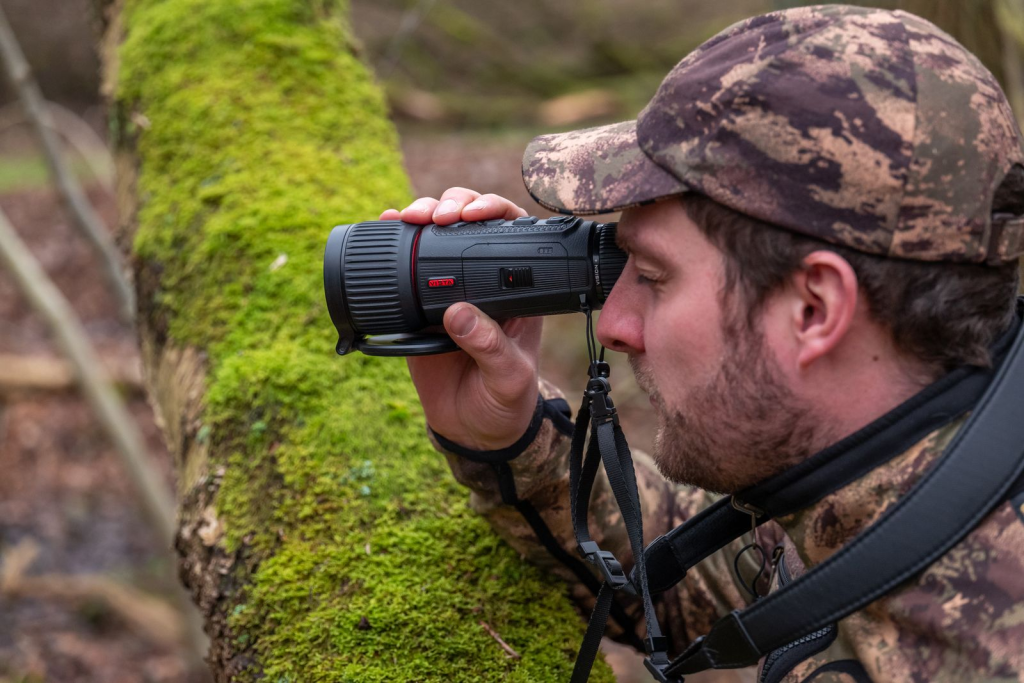
En termisk monokulær er en håndholdt enhet som registrerer varme i stedet for lys. Termografiske monokularer registrerer infrarød energi fra mennesker, dyr og gjenstander, noe som gir pålitelig deteksjon i fullstendig mørke og forhold med dårlig sikt som tåke, lett regn, røyk eller tett vegetasjon. Det gjør dem nyttige for nattjakt, gårdspatruljering, dyrelivsobservasjon og eiendomskontroller.
Men med så mange modeller på markedet kan spesifikasjonsarkene føles overveldende. Sensoroppløsning, NETD, linsestørrelse, deteksjonsområde, oppdateringsfrekvens, hva bestemmer faktisk ytelsen, og hva bør du ignorere?
Denne veiledningen går gjennom alle spesifikasjoner som påvirker bildekvalitet og brukervennlighet i den virkelige verden.
Innholdsfortegnelse
Hvilke spesifikasjoner er egentlig viktige i en termisk monokulær?
Ikke alle spesifikasjoner har samme vekt. Noen avgjør hvor godt du ser en hjort på 200 meter. Andre påvirker knapt felterfaringen din. Her er spesifikasjonene som er verdt å legge merke til.
Oppløsning på termisk sensor
Sensoroppløsningen bestemmer hvor mye detaljer termobildet viser. Tenk på det som pikselantallet på et kamera; flere piksler betyr skarpere kanter, renere former og bedre separasjon mellom et dyr og bakgrunnen.
Høyere oppløsninger, som 384×288 eller 640×512, gir klarere bilder og bedre målgjenkjenning på lengre avstander. Noen avanserte modeller bruker nå 1280×1024 sensorer for enda finere detaljer.
Her er en forenklet måte å tenke på de tre vanlige nivåene:
- 384×288: Solid for skanning på nært til middels avstand innenfor 300 meter. Bra for kratt, mateområder og smalere terreng.
- 640×512: Det sterkeste valget totalt sett. For de fleste jegere er 640×512 det optimale valget fordi det gir deg sterke bildedetaljer, nyttig zoomytelse og en pris som fortsatt føles realistisk.
- 1280×1024: Klarhet i toppklasse. Best for skanning i åpent landskap, langdistansedeteksjon og situasjoner der du ønsker den reneste zoomeytelsen som mulig.
Oppløsningen er viktigere når du zoomer, fordi digital zoom forstørrer bildet du allerede har i stedet for å legge til ny termisk informasjon. En sensor med høyere oppløsning gir deg mer data til å begynne med, slik at bildet holder seg bedre sammen ved høyere forstørrelse.
NETD (termisk følsomhet)
NETD står for Noise Equivalent Temperature Difference. Den måler hvor godt sensoren fanger opp små temperaturforskjeller mellom et mål og bakgrunnen.
Enkelt sagt betyr lavere NETD at sensoren er mer følsom. NETD påvirker direkte hvor tydelig du ser mål når temperaturkontrasten er lav. På varme kvelder eller fuktige netter kan det hende at dyr ikke skiller seg skarpt ut fra omgivelsene. Enheter med bedre følsomhet opprettholder tydeligere deteksjon under slike forhold.
Lavere verdier, vanligvis under 20 mK, gir mer stabile bilder i fuktige omgivelser eller omgivelser med lav kontrast. For eksempel Nocpix LUMI-serien har en NETD på ≤18 mK, mens Nocpix VISTA-serien skyver det ned til ≤15 mK.
Kjøpere som ignorerer NETD blir ofte skuffet når optikken deres presterer bra om vinteren, men sliter om sommeren. Hvis du jakter i varme, fuktige klimaer, bør du være nøye med dette tallet.
Linsestørrelse og synsfelt
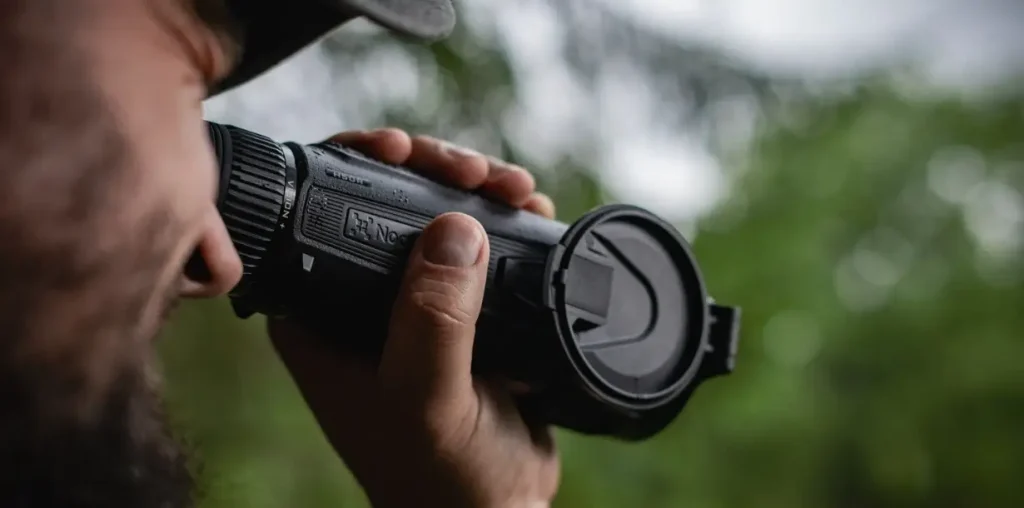
Objektivlinsen samler infrarød energi og fokuserer den på sensoren. En større linse samler mer termisk stråling, noe som vanligvis betyr lysere bilder og lengre deteksjonsavstander.
Vanlige termiske monokulære linsestørrelser inkluderer 19 mm, 25 mm, 35 mm og 50 mm. Mindre linser holder enheten kompakt og lett å ha med seg i lommen. Større linser utvider rekkevidden din over åpent terreng.
Synsfeltet er bredden på motivet du kan se på en gitt avstand. Et bredere synsfelt hjelper deg med å skanne store områder raskere, åpne åkre, beitemarker, åsrygger og eiendomsgrenser. Et smalere synsfelt gir flere detaljer om et bestemt område, men reduserer skannehastigheten.
Her er avveiningen: et 50 mm objektiv gir deg større rekkevidde, men et smalere synsfelt. Et 25 mm objektiv gir deg et bredere skannevindu i en mindre pakke. Terreng og bruksområde bør avgjøre dette valget.
Deteksjonsområde vs. gjenkjenningsområde vs. identifikasjonsområde
Dette er en av de mest misforståtte spesifikasjonene innen termisk optikk.
Deteksjonsområdet er den lengste avstanden hvor du kan se at et varmt objekt er til stede. På denne avstanden kan du bare se en liten lys flekk, ingen form, ingen detaljer. Du vet at noe varmt er der ute. Det er alt.
Gjenkjenningsrekkevidde er avstanden du kan se hva slags mål du ser. Du kan skille en hjort fra en prærieulv basert på kroppsform og bevegelsesmønster.
Identifikasjonsavstanden er avstanden der du kan bekrefte nøyaktig hva målet er. Dette er den vanskeligste avstanden å holde, og den krever det reneste bildet.
Termiske tester oppdager lenger, gjenkjenner på kortere avstand og identifiserer på kortest mulig avstand. Hvis du ønsker et rekkeviddenummer som hjelper deg med å kjøpe bedre, forteller et gjenkjenningsavstand vanligvis mer enn en maksimal deteksjonspåstand.
Mange produktsider fremhever deteksjonsområder på 1500 meter eller mer. Det høres imponerende ut, men det betyr ikke at du vil identifisere et rovdyr på den avstanden. I praksis skjer de fleste observasjoner på mye kortere avstander. Balansert bildekvalitet, forstørrelse og synsfelt betyr vanligvis mye mer enn å jakte på det lengste deteksjonstallet.
For en dypere titt på hva disse rekkeviddetallene betyr i felten, les veiledningen vår om hvor langt termiske tester kan se.
Oppdateringsfrekvens
Oppdateringsfrekvensen er antall ganger skjermen oppdateres per sekund, målt i hertz (Hz). En høyere oppdateringsfrekvens gir jevnere bevegelse.
De fleste termiske monokularer tilbyr enten 30 Hz eller 50 Hz. Premiummodeller kjører på 60 Hz.
Ved 30 Hz oppdateres bildet 30 ganger per sekund. Det fungerer fint for stasjonære observasjoner, men du kan merke en liten forsinkelse når du sporer en løpende prærieulv eller panorerer raskt over et jorde. Ved 50 Hz eller 60 Hz ser bevegelsen jevnere og mer naturlig ut. Dyr i bevegelse virker renere, og rask panorering føles mer responsiv.
Hvis du planlegger å bruke monokulæren mens du aktivt skanner eller sporer bevegelige mål, er en oppdateringsfrekvens på 50 Hz eller 60 Hz verdt å øke.
Digital zoom vs. optisk forstørrelse
Optisk forstørrelse (også kalt basisforstørrelse) angis av det fysiske objektivet. Den bestemmer hvor nært motivet vises før du bruker digital zoom.
Digital zoom beskjærer og forstørrer det eksisterende bildet. Digital zoom kan få bildet til å se større ut, men det legger ikke til noen reelle detaljer. Det er som å klype for å zoome på et telefonbilde; bildet blir større, men pikseleringen øker.
Hvis følsomheten ikke er sterk, vil en høyere zoom bare forstørre et svakt bilde. I de fleste tilfeller gir balansert forstørrelse kombinert med sterk sensorytelse bedre resultater enn ekstrem zoom.
Se først på grunnforstørrelsen. En monokulær med 2× grunnforstørrelse og 8× digital zoom gir deg et brukbart område fra 2× til 8×, men bildekvaliteten vil være skarpest ved 2×. En sensor med høyere oppløsning holder bedre på kvaliteten når du zoomer inn.
Ytterligere funksjoner å vurdere
Utover de viktigste optiske spesifikasjonene, kan flere ekstrafunksjoner påvirke opplevelsen din i felten:
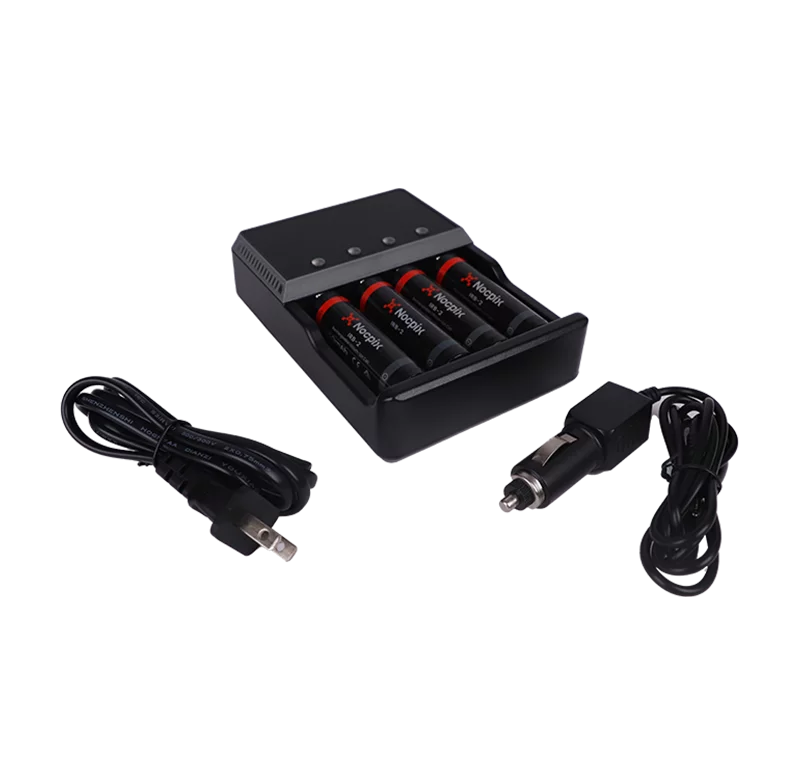
- Batteritype: Utskiftbare batterier som 18650-celler lar deg bytte strøm raskt på lange netter. LUMI drives av et utskiftbart 18650-batteri og er utstyrt med en reverspolaritetsfunksjon, som tillater både positiv og negativ strømforsyning. Denne funksjonen er ideell for å bytte batteri om natten. Innebygde oppladbare batterier er enklere, men vanskeligere å bytte i mørket.
- Laseravstandsmåler (LRF): En innebygd LRF lar deg måle avstanden til målet ditt uten å måtte bære en separat enhet. Nocpix LUMI LRF-serien Pakker en integrert laseravstandsmåler på 800 m i et lommeformat hus med rask respons og lav latens.
- Wi-Fi og tilkobling: Wi-Fi tillater strømming og opptak av bilder til en telefon eller et nettbrett. Nocpix-enheter støtter N-Link-tilkobling for deling av data i sanntid.
- Driftstemperaturområde: Hvis du jakter i ekstrem kulde eller varme, sjekk det nominelle temperaturområdet. De fleste termiske monokularer av god kvalitet tåler -20 °C til 50 °C.
- Bildeopptak: Foto- og videoopptak med innebygd lagringsplass (som 32 GB) lar deg dokumentere det du ser. Nyttig for å gjennomgå dyreaktivitetsmønstre eller dele opptak.
- IP-klassifisering: LUMI har en støvtetthetsklassifisering i henhold til IP67. En IP67-klassifisering betyr at enheten tåler støv og midlertidig nedsenking i vann, godt nok for regn, bekkekryssinger og gjørmete jordforhold.
Hvilke spesifikasjoner bør du prioritere for ditt brukstilfelle?
Det blir enklere å velge en termisk monokulær når du har definert hva du faktisk gjør med den. De samme spesifikasjonene som hjelper en prærieulvjeger, hjelper kanskje ikke en dyrelivsobservatør. Slik prioriterer du basert på din situasjon.
Jakt (hjort, gris, prærieulv)
Jegere trenger rask deteksjon på tvers av jorder, tregrenser og krattkanter, og deretter nok detaljer til å bekrefte et mål før de tar en avgjørelse. Prioriter disse spesifikasjonene:
- Sensoroppløsning: 640×512 eller høyere for sikker identifisering på mellomlange avstander.
- NETTOVIRKSOMHETSDATA: ≤20 mK. Ideelt sett ≤18 mK eller lavere for sommerjakt når temperaturkontrasten synker.
- Oppdateringsfrekvens: 50Hz eller 60Hz for sporing av dyr i bevegelse, som løpende griser.
- Linsestørrelse: 35 mm er en god balanse mellom rekkevidde og bærbarhet. Øk til 50 mm hvis du jakter på vidåpne jorder.
En kompakt håndholdt enhet som Nocpix LUMI-serien gir deg en skanner i lommestørrelse for raske feltkontroller før du hever riflen. For jegere som også trenger innebygd avstandsmåler, har LUMI LRF en 800 m avstandsmåler uten å gjøre den større.
Sjekk alltid lokale jaktforskrifter før du bruker termisk optikk. Lovene varierer fra stat til stat, provins og land.
Gårds- og ranchpatrulje
Ranchere og grunneiere trenger dekning av store områder for å oppdage rovdyr i nærheten av husdyr, sjekke gjerder og skanne fjøskanter om natten. Prioriter:
- Synsfelt: En bredere sikt hjelper deg med å dekke beitemarker og eiendomsgrenser raskt.
- Batterilevetid: Lange driftstider er viktige når du sjekker eiendommen hver natt.
- Deteksjonsområde: Nok avstand til å få øye på prærieulver eller villsvin som beveger seg mot dyrene dine fra den andre siden av et jorde.
- Ergonomi: LettvektLett vekt og bruk med én hånd gjør nattlige kontroller mindre slitsomme.
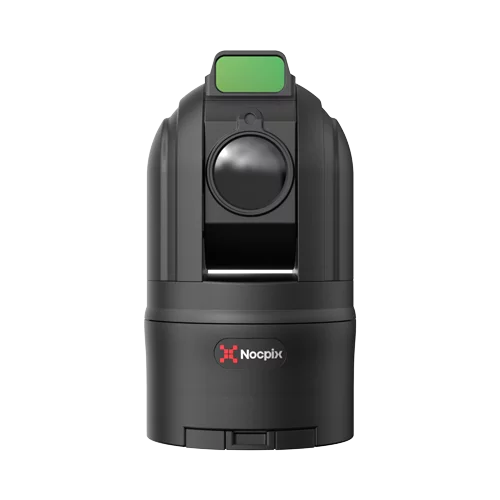
For store eiendommer som trenger kontinuerlig overvåking, en Nocpix MT termisk kuppelkamera kan skanne 360 grader automatisk mens du sover, et annet verktøy enn en håndholdt, men verdt å vurdere for sikkerhet på ranchen.
Dyrelivsobservasjon og naturtitting
Dyrelivsobservatører tilbringer lange økter med å observere åkre, enger og skogsbryn. Komfort under lengre tids observasjon er prioriteten.
- NETTOVIRKSOMHETSDATA: Lav følsomhet hjelper deg med å se subtile varmesignaturer fra mindre dyr som rever, kaniner og hekkende fugler.
- Oppdateringsfrekvens: 50 Hz eller 60 Hz gjør at panorering over en scene føles naturlig.
- Linsestørrelse: Et større objektiv (35 mm til 50 mm) gir deg rekkevidden til å observere uten å forstyrre dyrene.
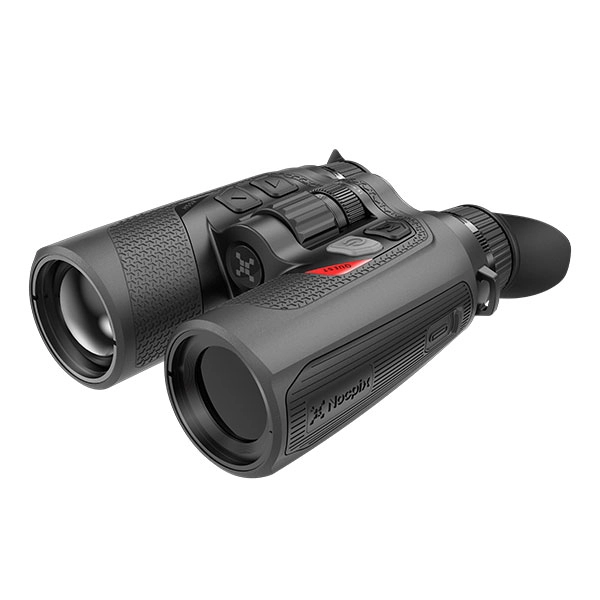
For observasjonsøkter som er lengre enn 30 minutter, bør du vurdere et kikkertformat. Nocpix Quest termisk kikkert bruk et design med to øyne som reduserer tretthet ved å tillate naturlig observasjon med to øyne og eliminerer belastningen ved å holde ett øye lukket.
Hjemmesikkerhet og perimeterovervåking
For perimeterkontroller trenger du rask oppstart, enkel betjening og pålitelig deteksjon i totalt mørke. Prioriter:
- Oppstartstid: Du vil at enheten skal være klar i løpet av sekunder.
- Deteksjonsområde: Nok til å dekke hagen, innkjørselen eller eiendomsgrensen din.
- Wi-Fi/strømming: Hvis du deler den termiske visningen med en telefon eller et nettbrett, kan noen andre overvåke mens du svarer.
- Varighet: IP67-klassifisering for utendørs bruk i all slags vær.
Du trenger ikke den høyeste oppløsningen eller det lengste deteksjonsområdet for hjemmesikkerhet. En kompakt 384×288 eller 640×512 monokulær med pålitelig ytelse og rask drift vil dekke de fleste boligbehov.
Hvilket budsjett bør du forvente for hvert ytelsesnivå?
Termiske monokularer dekker et bredt prisspenn. Budsjettet ditt bør følge bruksscenariet, ikke omvendt. Her er et generelt rammeverk:
- Inngangsnivå (under $1000): Forvent en sensor på 256×192 eller 384×288, et mindre objektiv og grunnleggende funksjoner. Bra for skanning på kort avstand, eiendomssjekker og førstegangskjøpere av termiske enheter som ønsker å teste teknologien.
- Mellomklasse ($1 000–$2 500): Det er her du finner 384×288 sensorer med sterk NETD, bedre objektiver, Wi-Fi og noen ganger innebygd LRF. Et solid valg for vanlige jegere, ranchpatruljering og dyrelivsobservasjon.
- Høy ytelse ($2500–$5000+): 640×512 eller 1280×1024 sensorer, førsteklasses linsesystemer, AMOLED-skjermer, integrert LRF og avansert bildebehandling. Bygget for seriøse jegere, langdistanseobservasjon og brukere som ønsker det klareste termiske bildet som er tilgjengelig.
En jeger som jobber med nærfôringsautomater trenger ikke en monokulær med 1280 oppløsning. Men en jeger som skanner kilometervis store gårder etter griseflokker vil sette pris på hver ekstra piksel. La jaktstilen din styre investeringen.
Nocpix termiske monokularer: Hvilken serie passer dine behov?
Nocpix tilbyr tre serier med termiske monokulærer, hver bygget for en ulik balanse mellom størrelse, funksjoner og ytelse:
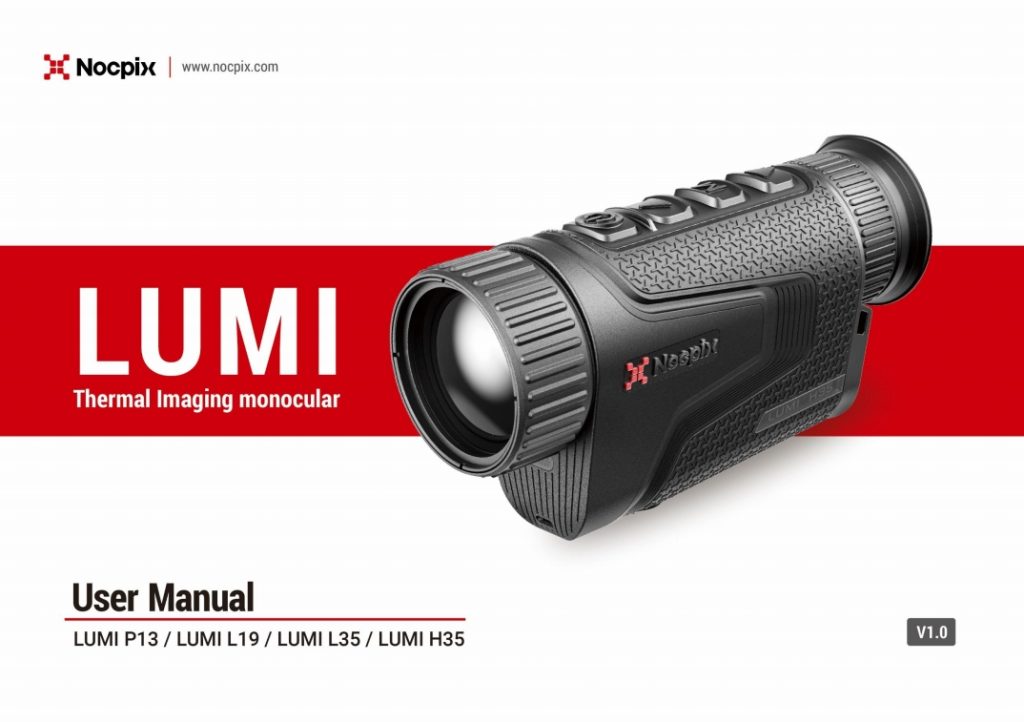
- LUMI-serien: Kompakt minikikkert med overlegne funksjoner. Med egenutviklet sensorteknologi og avanserte Reality+ AI-bildealgoritmer leverer LUMI eksepsjonell bildekvalitet i et kikkerthus som er enda mindre enn en mobiltelefon. Best for jegere og speidere som ønsker en lett og rimelig termisk monokular for rask feltskanning.
- LUMI LRF-serien: Alt LUMI tilbyr, pluss en integrert 800 m laseravstandsmåler, fortsatt i lommestørrelse. Best for jegere som ønsker én enhet for skanning og avstandsmåling.
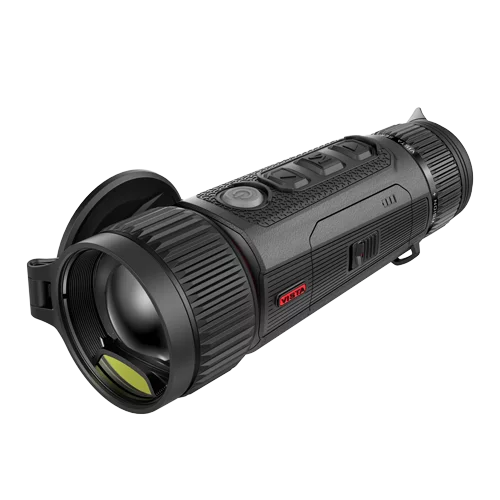
- VISTA-serien: VISTAs Vision+-system, med sin 2560×2560 AMOLED-skjerm og 8 mm utgangspupilldiameter, tilbyr en altoppslukende observasjonsopplevelse. Utstyrt med en overlegen sensor og integrert LRF, leverer VISTA førsteklasses ytelse. Best for erfarne brukere som ønsker førsteklasses bildekvalitet og lang rekkevidde.
Du kan sammenligne alle tre seriene på Nocpix termisk avbildningsmonokulærer side.
Siste tanke
Å lære hvordan du velger en termisk monokulær handler om å matche de riktige spesifikasjonene til din spesifikke situasjon. Oppløsning, NETD, linsestørrelse og oppdateringsfrekvens former det du ser i felten. Deteksjonsrekkevidde, gjenkjenningsområde og identifikasjonsrekkevidde bestemmer hvor langt unna bildet forblir nyttig.
Ikke jag etter de største tallene på et spesifikasjonsark. Fokuser på hva du faktisk skal gjøre med enheten, skanne et høyåker for griser, sjekke en tregrense for hjort, patruljere et ranchgjerde eller observere dyreliv fra en åsrygg. La terrenget, målet ditt og budsjettet ditt styre avgjørelsen.
Før du kjøper, bør du sammenligne noen modeller med spesifikasjonene som passer dine behov. Bla gjennom Nocpix termiske monokulære serie for å se hvordan sensoroppløsning, NETD, objektivalternativer og funksjoner stemmer overens på tvers av prisnivåer. Og sjekk alltid lokale jakt- og nattoptikkforskrifter før du drar ut i felten.
Ofte stilte spørsmål om hvordan du velger en termisk monokular
Kan en termisk monokular se gjennom vegger eller glass?
Nei. Termografi kan ikke se gjennom vegger. Termiske kameraer oppdager bare temperaturforskjeller på overflater. Hvis varme overføres gjennom en vegg, kan kameraet oppdage varme flekker på overflaten, men det kan ikke se objekter inne i strukturen.
Termografi kan heller ikke se gjennom vanlig glass. Glass reflekterer infrarød stråling i området 8–14 µm, slik termiske sensorer bruker. Rett en termisk enhet mot et vindu, så vil du se en refleksjon av deg selv, ikke det som er utenfor.
Hvor lenge varer et termisk monokulært batteri?
De fleste termiske monokularer varer mellom 4 og 8 timer på én lading eller batteri. Kaldt vær reduserer tiden. Funksjoner som Wi-Fi og opptak tapper batteriene raskere. Å ha med seg et ekstra 18650-batteri er standard praksis for lengre nattjakter. Modeller med utskiftbare batterier lar deg bytte strøm på sekunder uten å slå av.
Fungerer en termisk monokular i regn eller tåke?
Ja. Termiske enheter oppdager langbølget infrarød stråling, som passerer gjennom vanndråper og røykpartikler mye bedre enn synlig lys. Tung tåke vil redusere bildeskarpheten og redusere den effektive rekkevidden, men lett til moderat tåke hindrer sjelden en kvalitetsenhet i å oppdage varme.
Regn har en lignende effekt. Lett regn vil ikke blokkere termisk deteksjon, men kraftig regnskyll kan redusere kontrasten og forkorte den effektive rekkevidden.
Er en termisk monokulær bedre enn nattkikkert for jakt?
De tjener forskjellige formål. Termografi er best for å oppdage mål på lange avstander i totalt mørke uten omgivelseslys. Nattsyn er bedre for å identifisere detaljer og navigere, men trenger i det minste litt måneskinn eller stjernelys.
For skanning og deteksjon har termisk kikkert et fortrinn. For visuelle detaljer og terrengnavigasjon kan nattsyn være et nyttig supplement. Mange erfarne nattjegere har begge deler.
Trenger jeg en innebygd laseravstandsmåler (LRF)?
En LRF er ikke obligatorisk, men den sparer tid og reduserer utstyret du må bære. Hvis du jakter i åpent terreng der det er vanskelig å bedømme avstand med øyet, gir en innebygd LRF deg rask og nøyaktig avstand uten å bytte utstyr. Den er spesielt nyttig for jegere som planlegger skudd basert på presis avstand. Hvis du for det meste skanner på nært hold i skogsterreng, kan du spare penger ved å velge en modell uten.